Choosing the right vendors


The difference between a wedding where the dance floor is full by 9 PM and one where guests quietly slip out after dinner is almost entirely about the entertainment program. Food, flowers, and decor set the stage; the entertainment program determines whether guests stay, dance, and remember the evening as a party or as a long dinner.
A good entertainment program is more than a music choice. It is a time-ordered sequence: ceremony music, cocktail hour, dinner music, dance floor opening, peak-energy dancing, and wind-down. Each segment has a different role, and the couples whose receptions land consistently are the ones who thought about all six stages rather than just picking a DJ and leaving the sequencing to chance.
The choice between a DJ and a live band is the single most important entertainment decision. It sets the formality level, the budget range, and the overall energy of the reception.
DJs in 2026 typically cost $1,800 to $4,500 for a full wedding, $5,000 to $9,000 for top-tier and celebrity DJs. They offer full musical flexibility (any song your guests request), tight transitions, and strong microphone presence for announcements. Best for: couples who care about specific songs, varied music across genres, and high-energy dance floors.
Live bands typically cost $5,000 to $15,000 for a mid-tier 6-to-10-piece band, $15,000 to $35,000 for top-tier. They offer the energy of live performance, a more distinctive experience, and a better fit for formal or traditional weddings. Best for: couples who want the wedding to feel like an event rather than a dance party, and couples whose guest list skews older or more formal.
The hybrid that works: a DJ for the ceremony and dinner with a band for cocktail hour (or vice versa). Gives you the variety of both formats and the cost is comparable to a top-tier DJ alone.
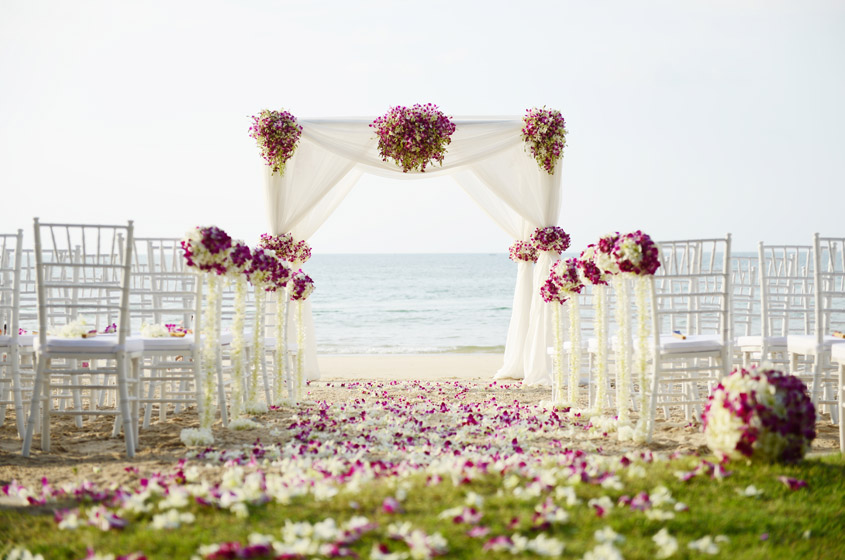
These two segments set the emotional tone of the event and are the place where most couples underspend. A ceremony that uses a processional and recessional pulled from a DJ's laptop feels markedly different from one with live string quartet, acoustic guitar, or solo singer.
Typical 2026 prices: string quartet for ceremony and cocktail hour runs $900 to $2,800, solo acoustic guitar or cello $400 to $1,200, wedding pianist $500 to $1,500. If the budget is tight, skip the quartet and use the DJ's sound system for the ceremony — but do not skip having a dedicated musical moment for the processional. The song you walk down the aisle to is one of the three most-remembered moments of the day.
Reception energy follows a predictable arc if you structure the timeline well. The pattern that reliably produces full dance floors:
The common mistake: spreading toasts throughout the night. Clumping them before dinner keeps the dance floor alive once it opens.
Wedding programs often get loaded up with extra activities that look fun on paper but disrupt the reception energy. The rule: every activity you add is a moment when the dance floor empties.
Worth adding:
Worth skipping in 2026:
Once you book your entertainer, the work is not done. The best receptions come from couples who give their DJ or band a detailed brief two weeks before the event. The brief should cover:
A DJ who reads the room well is worth the premium. Most top-tier DJs in 2026 charge more because they spend an hour at the beginning of the reception reading the crowd and adjusting their set accordingly — that is what you are paying for.
How the reception ends shapes how guests remember it. The last hour needs as much planning as any other part of the evening. The pattern that works: 30 minutes of peak-energy dancing, a deliberate slow-down song (something sentimental), a last high-energy song that everyone knows (the song of the night), and a grand exit with sparklers, bubbles, or confetti.
Communicate the end time clearly — many couples avoid telling guests when the reception ends and then end up with stragglers lingering long past the DJ's final song. A "last call" announcement 15 minutes before the end, followed by a named "last song," gives guests the closure they need to exit gracefully.