15 Wedding Favors Your Guests Will Actually Use in 2026


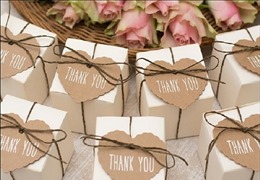
The Truth About Wedding Favors in 2026
Wedding-favor research consistently shows the same result: more than half of wedding favors are left at the table, given away at the exit, or thrown out within a week. The couples who are thoughtful about favors are not the ones who buy the most expensive or most personalized options — they are the ones who pick a favor that is either genuinely useful or genuinely delicious, and then accept that some guests will still leave it behind.
The 15 options below are organized by budget tier and venue match. None of them are universally right; the right favor for your wedding is the one that matches your guest list, venue, and budget — not the one with the most pinnable aesthetic. Pay particular attention to the "skip entirely" section at the end, which covers the favors that consistently end up in the trash.
Edible Favors: The Highest Take-Home Rate
Food favors have the highest take-home rate and the best guest reception of any category. Five that consistently work:
- Small jar of local honey ($6 to $12 per guest): sources well from regional apiaries, tastes better than store-bought, connects to a specific location
- Custom chocolate bar or truffles from a local chocolatier ($4 to $10 per guest): feels luxe, travels well
- Flavored olive oil or vinegar from a local producer ($8 to $15 per guest): works beautifully for wine-country and vineyard weddings
- Bakery cookies in a branded box ($5 to $12 per guest): especially strong for morning-after brunch bags
- Small bottle of local spirits or a distillery-specific drink ($8 to $18 per guest): works for cocktail-forward weddings
Edible favors have one strong advantage: guests feel they got value. The most common regret among couples who chose non-edible favors is that guests who did not take theirs felt mildly guilty about it, while edible favors that go unused cause no awkwardness.
Useful Small Objects
Objects that guests might actually keep. These work when the wedding has a personal theme or when the bride and groom have a connection to a specific craft or region.
- Handmade tea towel or dishcloth ($4 to $8 per guest): small, useful, folds flat
- Quality candle from a local maker ($6 to $14 per guest): works for autumn and winter weddings, terrible for summer outdoor weddings where guests carry them in the heat
- Small seedling or succulent ($3 to $7 per guest): strong at garden and vineyard venues, fails at destination weddings where guests fly home
- Printed linen napkin for each place setting ($8 to $14 per guest): doubles as both the place setting linen and the favor
- Keepsake matchbook with wedding date ($2 to $4 per guest): small, photographs beautifully at the place setting, and costs almost nothing
The test: would a guest actually use this in the six weeks after the wedding? If not, it is going in a drawer, then in the trash.
Donation-Based Favors
A single sentence on the favor card saying the couple has made a donation in each guest's name to a specific charity. Typical donation: $2 to $5 per guest.
This works when:
- The charity is specific and resonates with the couple's story (not a generic humanitarian cause)
- The donation card is beautifully designed, not a photocopied insert
- The guest list leans older or more thoughtful and will appreciate the gesture
This fails when:
- The guest list is primarily friends of the couple who expected a more tangible favor
- The donation amount is visibly trivial ($0.50 per guest reads as cheap)
- The charity is not named specifically, which reads as performative
Experience-Based Favors
A voucher, card, or small object that represents an experience rather than a physical item. Four that work well:
- A digital download of the wedding playlist (free, sent via email after the wedding)
- A small custom cocktail recipe card printed with the couple's signature drink ($1 to $3 per guest)
- A local-experience card (voucher for a nearby coffee shop, bakery, or coffee stand — works especially for destination weddings where guests are staying longer) ($4 to $10 per guest)
- A QR code linking to the couple's wedding photo gallery after the event (free; works beautifully for multi-generational guest lists who will actually revisit the gallery)
Late-Night Snack as the Favor
The underrated 2026 move: skip the traditional favor entirely and use the budget to fund a late-night snack station. Guests consistently rate late-night snacks as the single most appreciated reception element, and a snack station at $6 to $12 per guest costs the same as most physical favors.
Options that work: mini burger sliders, individual pizzas, donuts, soft pretzels, french-fry cones, grilled cheese, or dumplings. The snack lands around 10 to 11 PM when guests have been dancing for two hours and are genuinely hungry again. Unlike a physical favor, which may or may not be taken home, a late-night snack is 100 percent consumed and 100 percent appreciated.
Favors by Budget Tier
Quick matchmaker if you are choosing a favor and stuck on cost:
- Under $3 per guest: custom matchbook, cocktail recipe card, donation card
- $3 to $8 per guest: local chocolate, small tea towel, seedling, bakery cookies
- $8 to $15 per guest: local honey, olive oil, candle from a local maker, experience voucher
- $15 to $25 per guest: late-night snack station or small bottle of local spirits
For a 150-guest wedding, the favor line item typically lands between $300 (low-end matchbooks) and $2,500 (high-end local producers or experience-based). Budget it as a line item from the start rather than adding it in the final planning sprint, when cost creep is highest.
What to Skip Entirely
Favors that consistently fail — meaning they are either not taken home, not used, or actively unwanted by guests:
- Picture frames with the wedding date (guests rarely frame anything, and the frame itself is usually cheap)
- Engraved keychains, bottle openers, or shot glasses with the couple's names (novelty fades fast)
- Single Jordan almonds in a tulle bag (dated and unappetizing)
- Themed-costume items (feather boas, plastic crowns) that guests feel obligated to wear once and throw away
- Flip-flops in a basket (these work at beach weddings and fail everywhere else)
- Wedding-branded anything that does not have genuine utility — no one uses a coozie or koozie with your names on it after the weekend ends
The decision: if a favor will not be kept, used, or consumed within 30 days of the wedding, replace it with a late-night snack or a donation card. Both produce more gratitude for the same dollar.