Style and attire


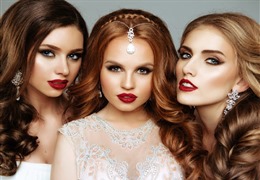
Bridal hair in 2026 has settled into a quieter, more versatile place after several years of dramatic swings between hyper-polished updos and undone beach waves. The defining feature of the season is flexibility — most of the top-requested styles translate across face shapes, dress necklines, and formality levels, which is part of why they have become so widely adopted.
The five styles below are the most-booked bridal looks at top salons and freelance stylists across the US in 2026. Each is paired with the face shapes it flatters, the dress necklines it complements, and the practical questions to bring to your hair trial. Pick based on what suits your features and your gown — not on what is trending in isolation.
A smooth, low-gathered chignon at the nape of the neck, with a center or side part and no loose face-framing pieces. Reads as elegant, intentional, and timeless. Photographs exceptionally well from every angle and stays neat through the entire reception without constant touch-ups.
Flatters: most face shapes, especially oval, heart, and square. Works best with dresses featuring statement necklines — halter, strapless, square, or illusion — because the hair stays out of the way of the neckline detail.
Ask your stylist: how will the chignon hold through dancing? The best stylists use a combination of pinning, hair elastic, and light hairspray rather than heavy hairspray alone. A chignon secured only with hairspray will fall apart by the third hour of the reception.
The top half of the hair pulled back or loosely braided, with the lower half left down in soft waves. The most requested bridal style of 2026 — flattering, versatile, and photographs beautifully in both close-up and full-length shots.
Flatters: nearly every face shape. Works particularly well for long hair. For shoulder-length hair, stylists typically add hair extensions for the trial to confirm the look will hold the intended shape — always confirm extension plans at the trial, not on the wedding day.
Works with: scoop, V, and sweetheart necklines. Less ideal with high-necked or Victorian-collar dresses, where loose waves can fight the neckline's formality.
A sleek or softly textured low ponytail, often with a thin section of hair wrapped over the elastic to hide it. Has moved from fashion-forward to mainstream in 2026 and is now the go-to choice for brides who want something polished but not traditional.
Flatters: oval, heart, and long face shapes. Less flattering on round faces unless paired with a soft center-part wave in the front.
Works with: modern silhouettes, minimalist dresses, and any gown with a statement back detail (the ponytail keeps the back clear). Less successful with highly ornate or traditional ball-gown silhouettes, where the modern ponytail can clash with the formal skirt.
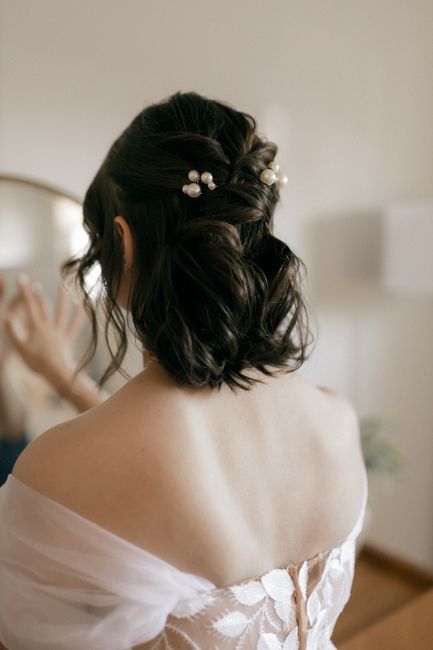
A full, textured updo with visible dimension and soft movement — the opposite of the sleek chignon. Often includes subtle side pieces, a soft French twist, or a loose bun with visible texture. The bridal style of choice for brides who want an updo but do not want to look overly polished.
Flatters: oval, heart, and round face shapes. The volume at the crown elongates round faces and balances heart-shaped ones.
Works with: strapless, sweetheart, and V-neck dresses. The visual weight of the hair balances dramatic necklines.
Ask your stylist: what is the product routine? Voluminous updos depend on the right setting products — too much mousse or hairspray and the hair goes sticky and stiff; too little and the volume falls within two hours. Bring a photo of the exact level of volume you want.
Hair worn completely down with deep, polished Hollywood waves — a dramatic side part, smooth finish, and no volume at the crown. The most distinctive of the five styles and the right choice for brides who want their hair to read as a fashion statement rather than a supporting detail.
Flatters: oval and heart face shapes most of all. The polished finish requires long hair (at least mid-back length) and hair texture that holds a set wave — naturally curly or highly textured hair will require significantly more prep and may not hold the look through the evening.
Works with: minimalist slip dresses, column silhouettes, and vintage-inspired gowns. Clashes with highly embellished or lace-heavy dresses, which compete with the hair for visual attention.
The hair trial is the single most important appointment in bridal hair planning, and the most common place where couples under-invest their attention. Book the trial 6 to 10 weeks before the wedding and treat it as a working session rather than a final decision.
Bring to the trial:
At the trial, move around. Dance for 30 seconds. Put on a sweater or jacket and take it off. Look at yourself in photographs (not just in the salon mirror). If the style falls apart or reads awkwardly in a photo, adjust now — you have 6 weeks to refine, not 6 hours on the wedding morning.
On the wedding morning, plan for the hair session to run 20 to 40 minutes longer than scheduled. Every wedding runs late; start the hair session accordingly. Eat breakfast during the session (hair is one of the few wedding-morning activities where you can eat without spoiling anything).
Budget $250 to $600 for the trial and $350 to $900 for the wedding-day service at most US markets in 2026, higher in major coastal cities. For a destination wedding, add a travel fee of $150 to $400 and confirm the stylist's setup at the hotel or venue in advance. The stylist needs power, good lighting, and a chair with the right height — none of which a standard hotel room provides without setup.