Wedding Pew Decoration Ideas for Church Aisles


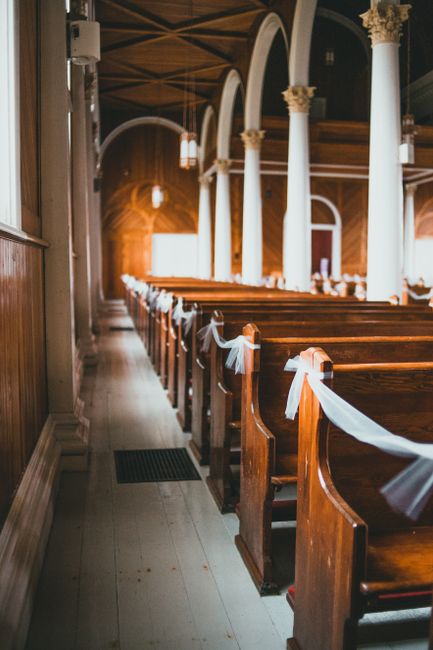
Wedding pew decoration ideas give a church or chapel ceremony its first impression. Guests walk in, find a seat, and look down a long row of identical benches. Whatever you place at the end of each pew becomes the frame for every photo taken along the aisle, and it tells people how formal or relaxed the ceremony will be before a single word is spoken.
Pews are also a tricky surface to decorate. They are old, often varnished, and sometimes protected by strict rules from the parish or the venue. A decoration that works on a folding chair may scratch, drip, or simply fall off a curved wooden end. Knowing what is allowed before you buy anything is the single most useful step you can take.
The good news is that the options are wide. A set of ribbon bows costs very little and suits almost any style. Fresh flowers add scent and softness. Greenery garlands bring a garden feel, and small lights make an evening ceremony glow. You can mix two or three of these without overspending.
This guide covers venue rules, bows, flowers, greenery, lighting, quantities, and setup, with product picks we have checked and answers to the questions couples ask most. Use it to decide on a look, count what you need, and avoid problems on the day.
Check Your Venue Rules Before You Buy
Start with a short call or email to the church office, chapel coordinator, or venue manager. Ask what may be attached to pews, which fasteners are permitted, and who is responsible for removal. Many places allow clips, ribbon, and wire-free hooks, but ban tape, adhesive strips, nails, and anything that leaves residue. Some historic buildings restrict decoration to the aisle floor and the altar area, so it is better to learn that early.
Ask about timing as well. Some venues let you set up the morning of the wedding, while others hand over the space only an hour or two before guests arrive. A short window pushes you toward decorations that go up quickly, such as pre-tied bows with hooks, rather than hand-wired flower bundles.
Finally, ask about candles and any open flame. Most churches ban flames near the pews even when they allow them on the altar, so plan on flameless lighting if you want a glow along the aisle.
Pew Bows: The Classic Option
Pew bows remain the most recognized way to decorate a church aisle, and for good reason. They are light, inexpensive, easy to carry, and they work in every color. A white or ivory bow reads as traditional, a blush or sage one looks softer, and a deep burgundy or navy suits an autumn or winter ceremony. Because they are made of ribbon, they photograph well under dim church lighting and do not wilt.
Size matters more than most people expect. A bow under about eight inches wide looks lost on a large, dark pew end, while a bow over twelve inches can overwhelm a narrow bench. Aim for around ten inches with tails long enough to hang down the side of the pew. Satin and organza hold their shape and catch the light, while plain cotton or burlap feels more casual and rustic.
Think about how the bows will attach. Pew clips are the cleanest method since they grip the wood without marking it, and they come off in seconds. Wire ties can scratch varnish, so check with the venue before using them. If the bows need to go up quickly, choose ones that arrive fully assembled with a built-in loop or clip.
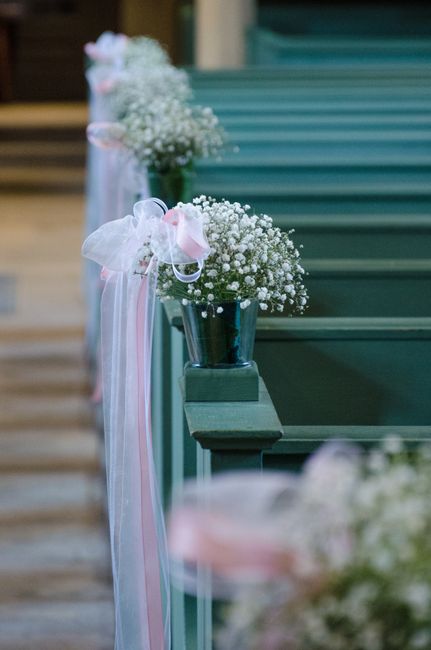
For a ready-made option, the 10-inch White Wedding Pew Bows, set of 6 come with 18-inch tails and are usually priced at a budget level per set, so buy one set for every six pew ends you plan to decorate and add a spare set in case of crushing in transit.
Fresh and Faux Flowers on the Pew Ends
Flowers turn a plain pew into a decorated one. The simplest approach is a small posy or a loose cluster tied with ribbon and hung from a hook. Fresh flowers give scent and a natural look but need a florist, cold storage, and a plan for water. Faux flowers cost more up front, can be made weeks ahead, and often get reused for the reception.
If you use fresh stems, choose varieties that last through a warm church and several hours without water. Roses, carnations, lisianthus, and hydrangea hold up well. Delicate blooms such as sweet peas and poppies fade quickly and look tired by the time guests arrive. Ask the florist to build each cluster on a wire-free base or a small damp foam cage so it hangs cleanly.
Color should repeat what the bridal bouquet and altar flowers use, but in a lighter amount. If the bouquet is full of peonies and eucalyptus, a single peony with a trailing leaf on each pew end ties everything together without crowding. Keep the clusters small, because bigger arrangements can snag a dress or a coat as guests pass.
Faux flowers have improved a lot in the last few years. Look for silk blooms with realistic petal edges and stems that bend, since stiff plastic stands out in photos. Bundle three or four stems together, wrap with ribbon that matches your bows, and attach with a clip. Our guide to wedding chair decoration ideas shows how the same floral pieces can move from the pews to the reception seating afterward.
Greenery Garlands Along the Pews
Greenery brings a fresh, garden look that suits both formal and relaxed ceremonies. A long garland draped along the pew ends, looped from one to the next, creates a continuous line down the aisle. It requires fewer individual pieces than bows or flower clusters, and it reads as a single design statement instead of dozens of small ones.
Eucalyptus, olive, ruscus, and willow leaf are the common choices. Eucalyptus has a soft gray-green tone and a clean scent when fresh, and the faux version photographs nearly as well. Olive leaf feels Mediterranean and light. Pair greenery with white or cream flowers for a classic look, or add pink and dusty blue for a spring palette.
To drape a garland, secure it at the front of each pew with a clip or a loop of ribbon and let it dip slightly between pews. Keep the dip shallow, about four to six inches, so guests do not trip or catch it with a hand. Add small floral accents at each attachment point to hide the clips.
Measure the aisle before you order. A typical church aisle has ten to twenty pews on each side, and each pew-to-pew span is about four to six feet. A nine-foot garland covers roughly two spans, so a ten-pew aisle needs around five on each side when you drape from pew end to pew end, plus a few spares for the altar or entry.
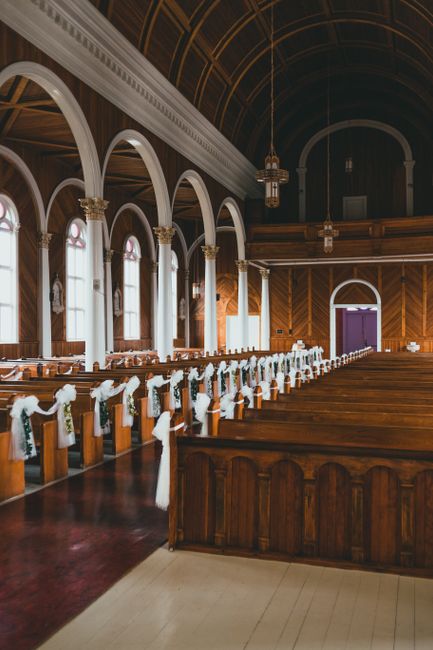
For an affordable long run, the Ling's Moment 9FT Eucalyptus and Willow Leaf Garland with White Flowers is handcrafted, nine feet long, usually priced in the mid range per strand, and works for pews, a head table, or an arch afterward.
Free-Standing Pieces for the Aisle and Altar
Not every church allows decoration on the pews, and some pew ends are too ornate to cover. In those cases, free-standing pieces placed on the floor beside the aisle give a similar effect without touching the wood. They sit on their own base or lean against the pew, and the venue staff can remove them quickly.
A common approach is to place one tall piece at every third or fourth pew on each side, rather than on every row. This keeps the look open and lets the architecture show through. Taller floral stands, garland arrangements on a metal frame, and large potted greenery all work. Keep them under about three feet so they do not block the view for seated guests.
Pair free-standing pieces with a larger display at the altar or front of the aisle. Repeating a color or flower from the aisle pieces at the front creates a connected look and gives the photographer a clear focal point. If you already plan an arch or backdrop, our guide to wedding ceremony arch ideas can help you coordinate the shapes and colors.
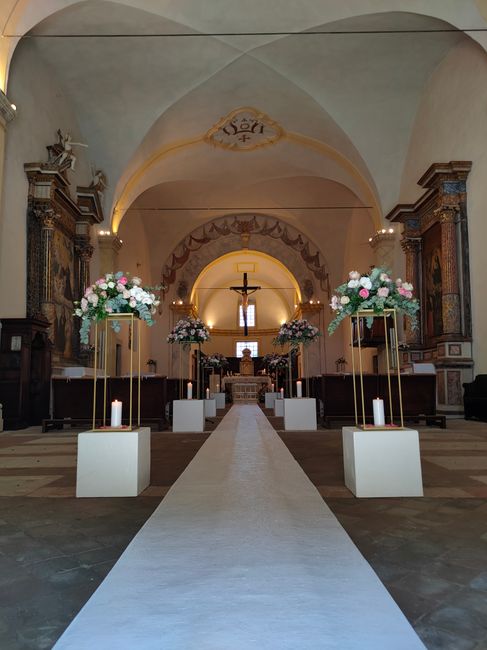
If you want pieces that stand alone, the Ling's Moment 9FT Eucalyptus and Willow Leaf Garland free-standing set of four is made for aisle and chair decoration at ceremonies, usually priced at a mid-range level for the set, and the four pieces cover both sides of a short aisle.
Lights and Glow for Evening Ceremonies
Light is easy to overlook, yet it changes how everything else looks. Church windows let in plenty of daylight at noon but offer very little at a late afternoon or evening ceremony. Soft light along the aisle makes the decorations feel intentional and gives photos a warm tone.
Open flame is usually banned near pews, so use battery or plug-in lights. Warm white fairy lights twined through a garland make the greenery glow without adding a bright spotlight. Small flameless candles on the floor at the end of selected pews add a low glow that guides guests toward the altar. Avoid cool white bulbs, which look harsh against wood and flowers.
To light a garland, the Twinkle Star 33FT 100 LED Plug-in String Lights in Warm White offer eight modes, are waterproof for indoor or outdoor use, and are usually priced at a budget level, so one strand per garland is an easy way to add glow.
How Many Pews to Decorate and What It Costs
You do not need to decorate every pew. Most couples decorate the first four to six rows on each side and then every other row, or only mark the family sections. This saves money and keeps the look from feeling busy. For a church with twenty pews per side, decorating every other row gives you ten pieces per side, or twenty in total.
Count the number of pew ends you will decorate and add about ten percent for spares. Ribbon bows are the cheapest, often just a few dollars each, and greenery garlands cost more per piece but cover more ground. Fresh flower clusters are the most expensive and depend on local flower prices and the season. A mix of bows on the back rows and flowers on the front rows gives the strongest effect for the money.
Setup Day Checklist and Removal Tips
Pack everything in labeled boxes the night before. Put clips, scissors, spare ribbon, and a small repair kit in a separate bag. Include extra hooks and a lint roller to remove dust from the pew ends. Assign two or three trusted helpers, and give each one a written plan showing which pews get which decoration, so nobody has to guess.
Work from the front to the back, one side at a time. Hang the first bow or cluster, check it from the middle of the aisle, and adjust before repeating. Use the same height on each pew end so the line stays even; a quick measuring mark on a ribbon helps. Step back and look from the entrance at the end, since that is the view your guests will have.
Wedding Pew Decoration FAQ
- Do I have to decorate every pew?
No. Most couples decorate the first few rows on each side, or every second or third row, then stop. The front rows get the most attention from guests and the camera, so concentrate your budget there. A reserved family section can also be marked with a slightly larger piece.
- What can I use to attach decorations to church pews?
Pew clips and hooks are the safest choice because they grip without marking the wood. Many churches forbid tape, adhesive strips, nails, and wire that may scratch the varnish. Always ask the church office what they allow before you buy fasteners, and test the clip on one pew during your walkthrough.
- How far ahead can I set up pew decorations?
It depends on the venue schedule. Ribbon bows and faux flowers can go up any time access is allowed, even the day before. Fresh flowers should be placed as close to the ceremony as possible, ideally within three hours, so they look crisp. Confirm the time window with the venue.
- How much do wedding pew decorations cost?
Costs vary widely. Ribbon bows are usually a few dollars each, faux garlands can cost more per strand but cover several pews, and fresh flower clusters depend on your florist and the season. Decorating every other row, reusing pieces at the reception, and mixing bows with florals keeps spending reasonable.
- Can I use candles on or near pews?
Most churches ban open flame near the pews because of fire risk and wood damage. Flameless candles and battery-powered fairy lights give a similar glow without the risk. If the church allows real candles, ask about holders, spacing, and who supervises them during the ceremony.
- What colors work best for pew decorations?
White and ivory suit traditional churches, while blush, sage, dusty blue, and burgundy bring in the season or theme. Repeat the colors from your bouquet and altar flowers so everything looks connected. If your church has dark wood, lighter colors stand out more clearly in photos.