Style and attire


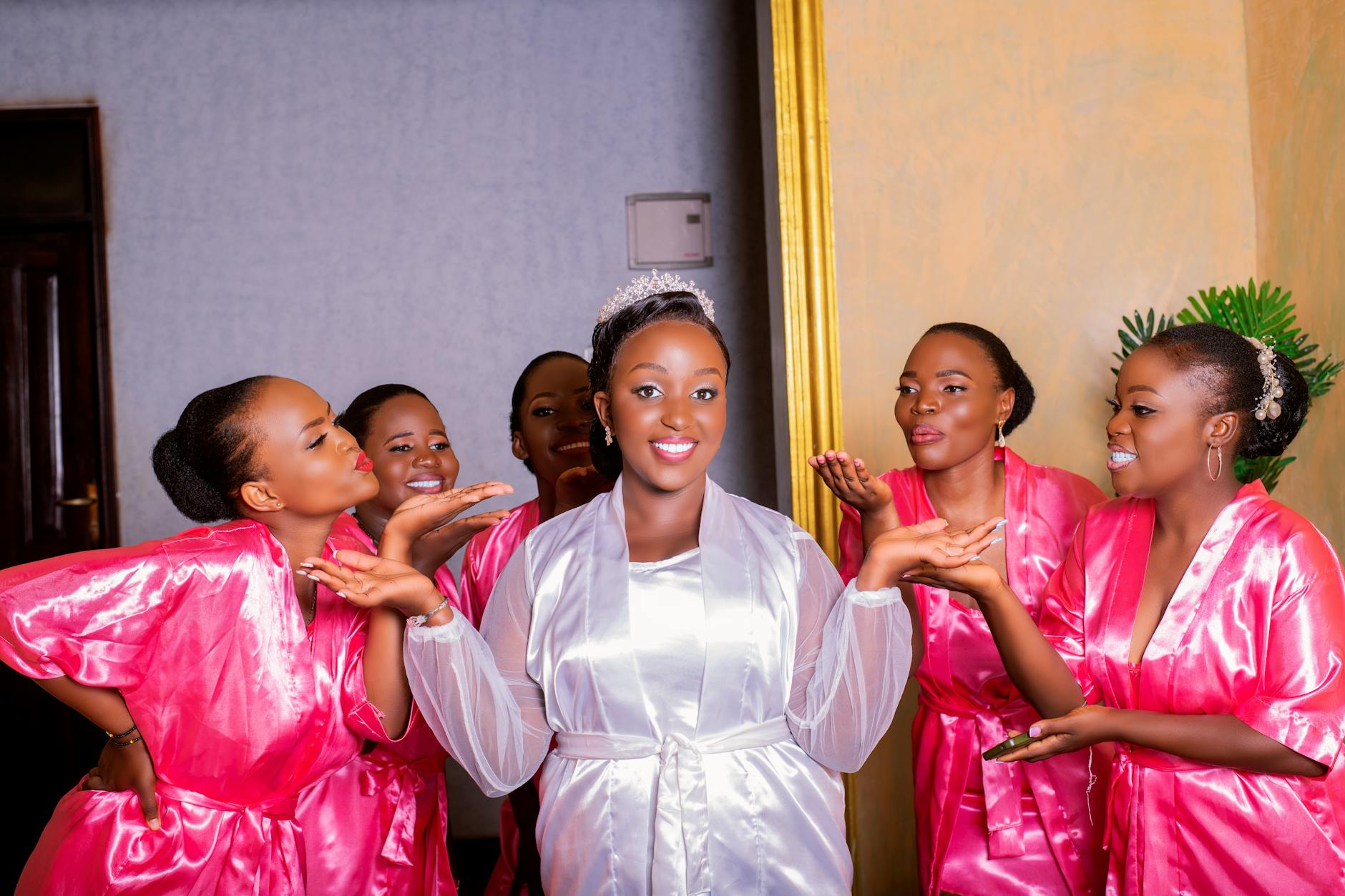
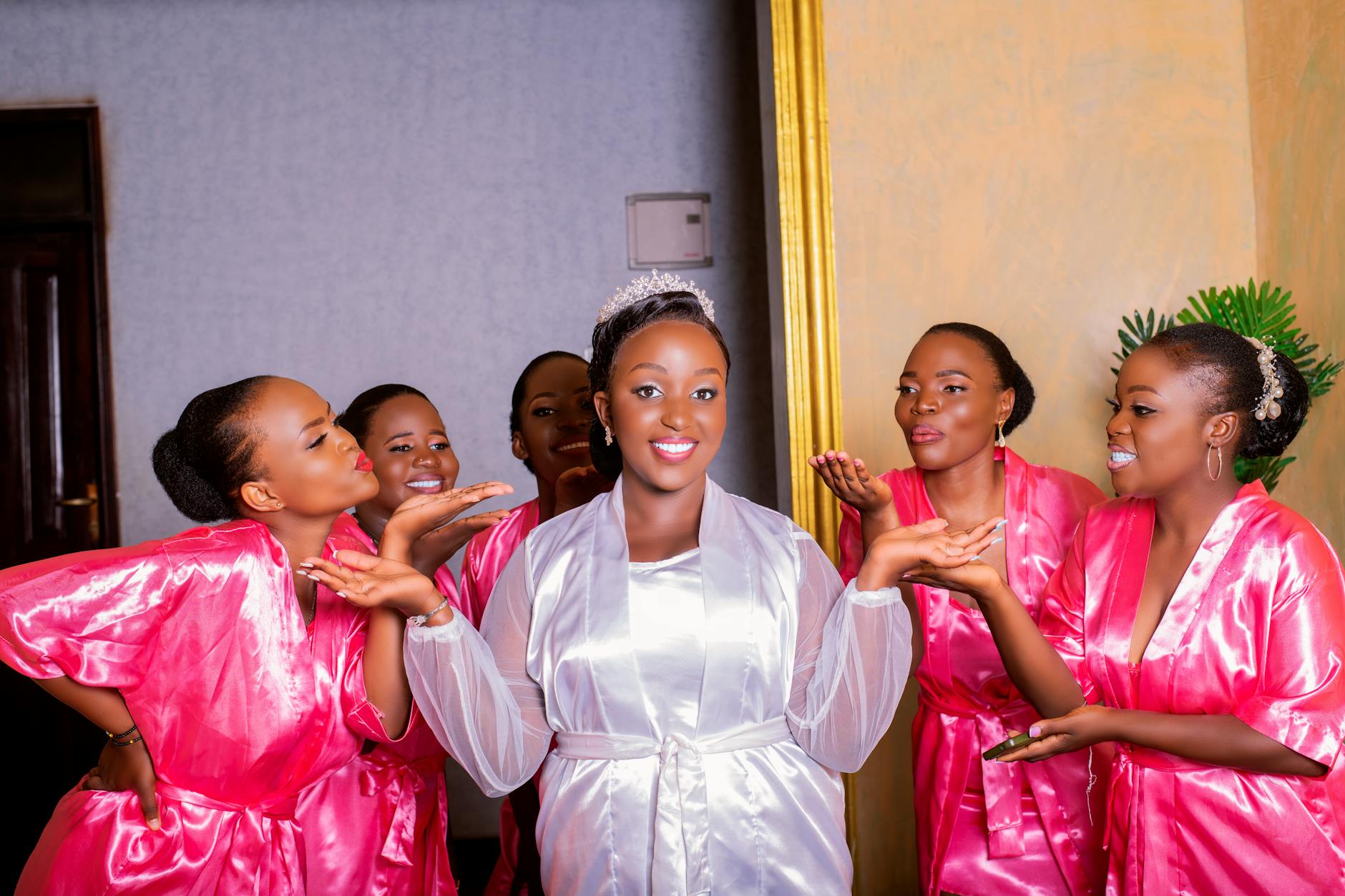
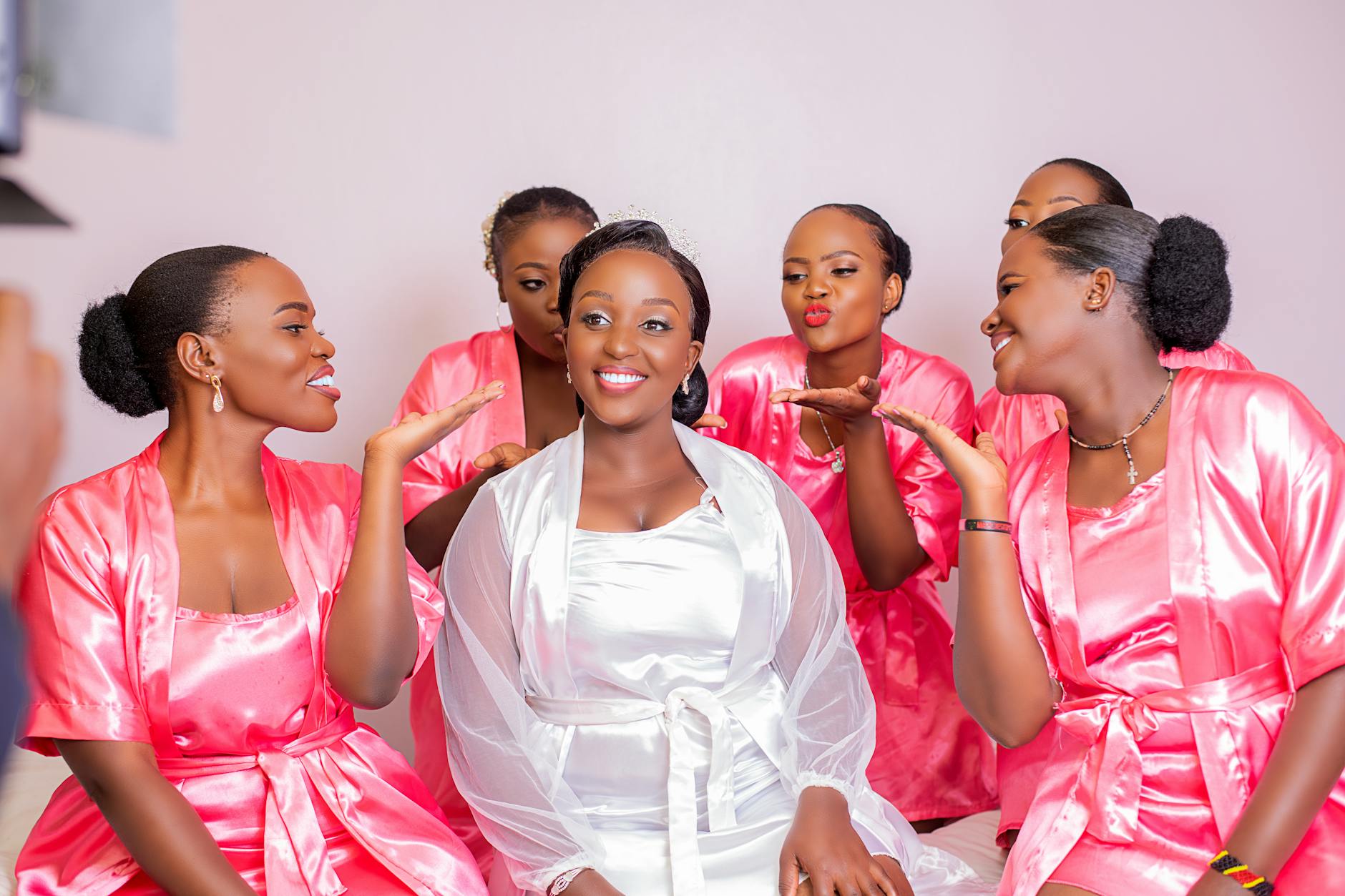
The getting-ready hour sits at the start of the wedding-day timeline, and almost every photographer agrees it is the section that produces the most candid, share-worthy frames of the entire day. Bridesmaid robes carry a surprising amount of weight in that window. They unify the group visually, eliminate the patchwork of mismatched pajamas in every photo, and give bridesmaids a soft, flattering layer to wear from hair-and-makeup through to the dress reveal.
The category has expanded considerably over the past few seasons. What used to mean "five matching pink kimonos from the same Amazon listing" now spans embroidered satin sets, robes packaged with sleep masks and headbands, plus-friendly sizing all the way through 6X, and personalization that goes well beyond a first-name monogram. There's more variety, more quality at lower price points, and more reason to think carefully about what you put your bridal party in.
This guide walks through the buying decisions that actually matter for bridesmaid robes: fabric and feel, color palettes that hold up under photo flash, personalization options worth the upcharge, sizing tactics that don't create awkward conversations, and what realistic 2026 pricing looks like once you add tax and shipping. Every product link below points to a verified Amazon listing.
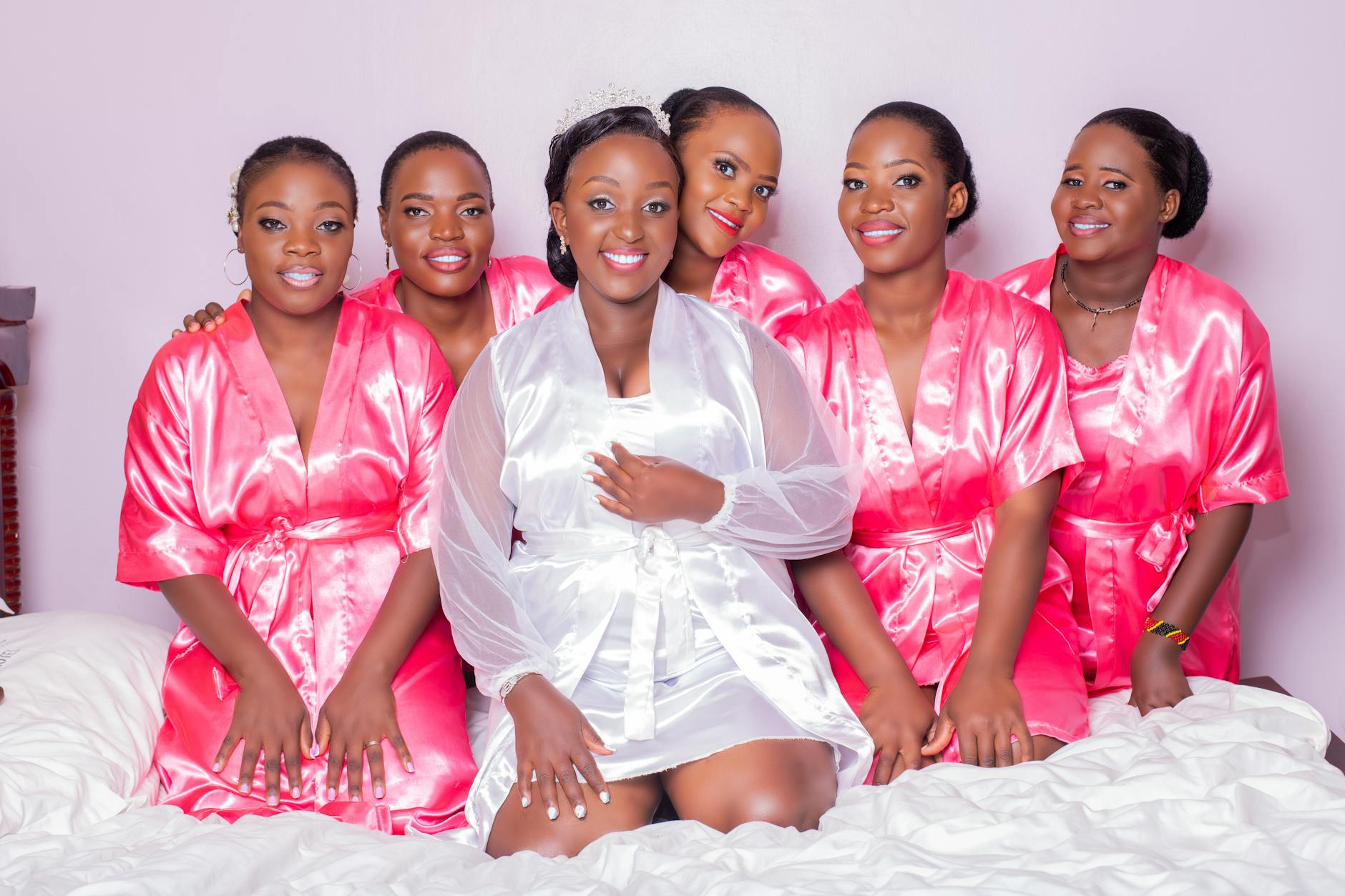
Walk through any bridal photographer's portfolio and the getting-ready section follows a predictable arc. Detail shots of the dress and shoes come first, then the bridesmaids cluster around the bride during hair, then a posed group shot with champagne, then individual reactions to the first look at the gown. Across all four moments, what the bridesmaids are wearing determines how cohesive the gallery feels.
Mismatched street clothes pull the eye in five different directions. A row of identical white tank tops looks fine in one frame but generic across the gallery. Matching robes solve the problem in the cleanest possible way: same silhouette, same drape, intentional color story. The photographer can shoot wide group frames without one bridesmaid's neon athleisure top dragging attention to the corner.
There's a secondary benefit that comes up often in vendor reviews. Robes are forgiving across body types in a way that fitted loungewear isn't. A satin wrap robe flatters a size 2 and a size 22 with equal grace, ties at the waist, and skims rather than clings. That matters when your bridal party spans different sizes, ages, and comfort levels with photos.
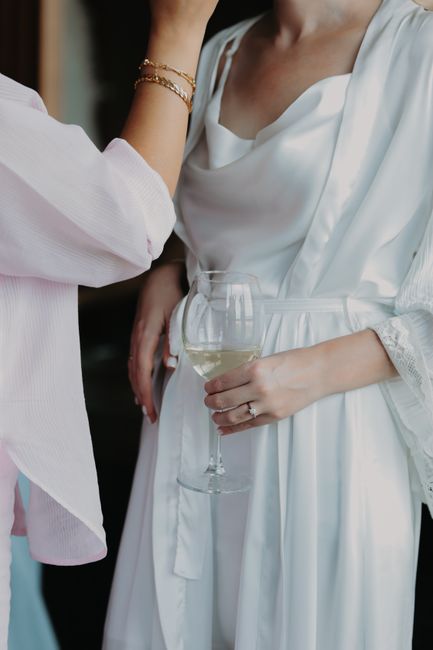
The robes also serve a practical function during hair and makeup. They don't have to be pulled over the head later, they keep collars clean from foundation transfer, and they signal to the stylist team that everyone is ready the moment the bride is. Photographers often build the timeline around the robe transition itself, using the bride's change into her gown as a deliberate visual marker in the gallery.
Fabric choice is the single biggest factor in how your robes photograph and how comfortable your bridal party feels during a three-to-four-hour styling session. Three categories cover roughly 95% of what's actually for sale in 2026.
Polyester satin is the workhorse of the category. It accounts for the bulk of the listings in the $15-$30 per robe range, photographs with a soft sheen that doesn't read as cheap, and ships from major Amazon sellers in two days. The trade-off is breathability. A glossy poly satin can feel warm during a summer hair appointment, so for July and August weddings look for "matte satin" or lightweight microfiber blends instead.
Mulberry silk and silk blends sit at the premium end, generally $60-$120 per robe. The drape is unmistakable in photos and the fabric breathes well, but the price multiplies fast across a party of six or eight. Most brides who go silk reserve the upgrade for the bride's own robe and put the bridesmaids in a coordinating satin to keep costs in check.
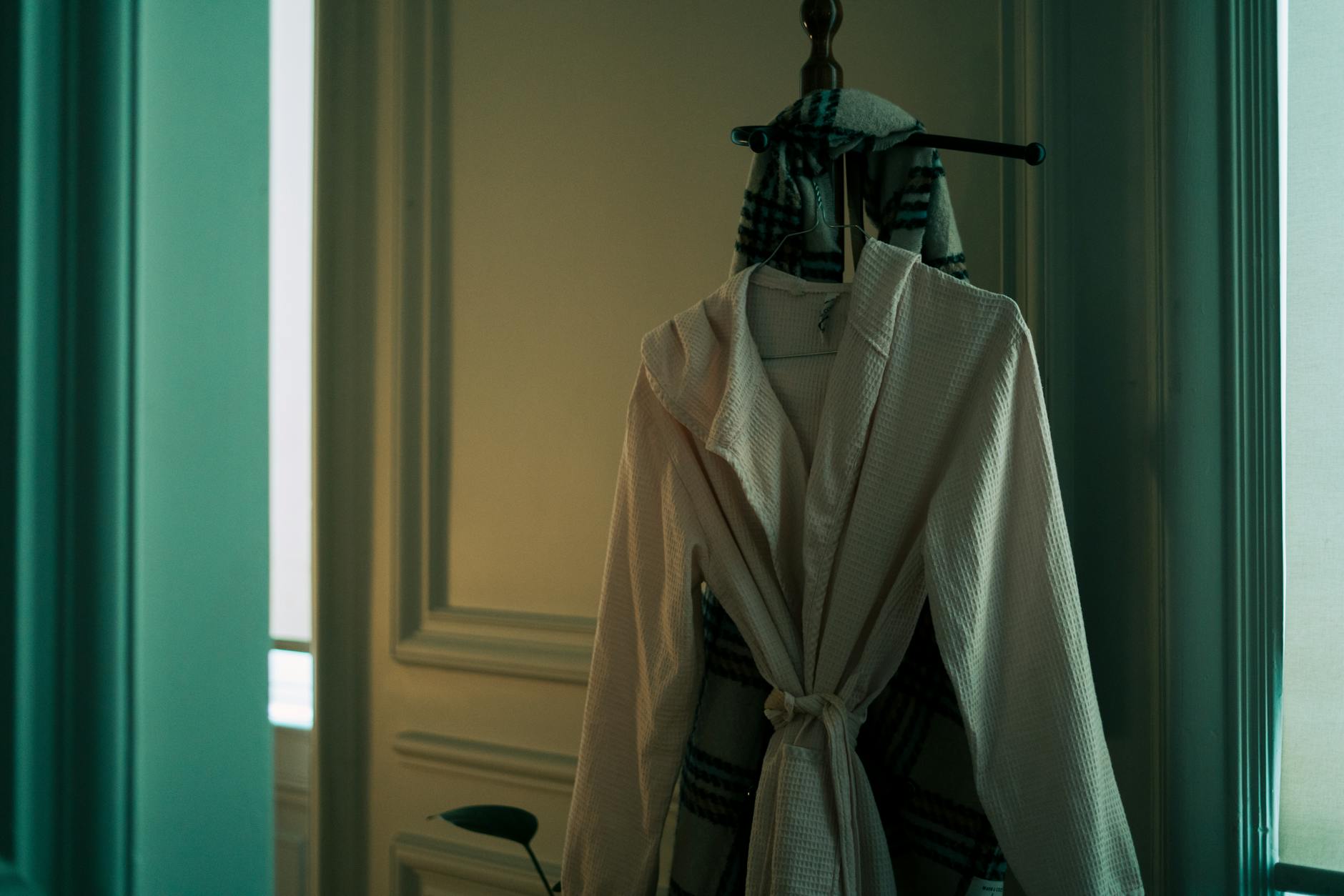
Cotton and waffle-weave robes are the most comfortable to actually wear and the least photogenic. They read as spa wear rather than bridal, which can be the right call for an intentionally casual or boho-leaning aesthetic but generally isn't the standard pick for a coordinated bridal-party look.
For an example of how satin and lace combine well, the Vamelia silky bridesmaid robe with lace trim embroidery runs around $22-$28 per robe and shows how a mid-range satin can carry visible quality detail without crossing into silk pricing.
The temptation with bridesmaid robes is to match them exactly to the bridesmaid dresses. That's almost never the right move because the wedding photos already show the dresses later. Getting-ready photos are an opportunity to introduce a complementary palette that makes the dress reveal feel like a transition rather than a repeat.
Three palettes consistently photograph well in 2026. Champagne, blush, and ivory are the most-purchased combination because they read warmly against most skin tones and pair with almost any bridesmaid dress color. They also forgive small sheen differences between robes, which matters when you're buying from a mixed-size set where dye lots may not be identical across the order.
Sage, dusty blue, and eucalyptus pull cooler and work especially well for outdoor and garden ceremonies. The cool palette also tends to flatter pale-floral bouquets and white bridal florals in shared frames, and it photographs well under both natural and warm tungsten lighting in indoor venues.
Black, charcoal, and emerald work for evening ceremonies, dark-toned bridesmaid dresses, and any aesthetic leaning modern or minimal. Dark robes are also significantly more forgiving with makeup transfer during the styling window, which is a real factor when six bridesmaids are sharing a single makeup chair on a tight schedule.
A useful tactic is to put the bride in a clearly different color from the bridesmaids — white or ivory if the bridesmaids are in a color, or a soft blush if the bridesmaids wear black. The contrast makes the bride stand out in group shots without complicated posing.
Personalization adds anywhere from $4 to $15 per robe and falls into three categories of varying utility.
Front monogramming with a first name or initial on the chest is the most common option and the one with the highest day-of payoff. Bridesmaids can quickly grab their own robe from a pile, the names appear in detail-shot photographs, and the robes function as keepsake gifts after the wedding. This is the personalization most worth paying for.
Back text such as "Maid of Honor," "Bridesmaid," or "Mother of the Bride" prints large across the shoulders and is highly photogenic in lineup shots. It works best for matching-color robe sets where the role text becomes the only visual differentiation between party members, and it makes the hierarchy of the bridal party legible at a glance in the group frames.
Wedding-date or hashtag embroidery is the personalization with the lowest reuse value. The robe becomes wedding-specific rather than reusable loungewear, which is fine if it's the intent but worth being honest about. If the goal is for bridesmaids to actually wear the robe again after the wedding, skip the date and stick to name or role embroidery.
The personalized bridesmaid robe set with front and back embroidery in 26 colors is a strong reference point for what this category offers: per-robe pricing in bulk, both front and back customization included, and broad color matching that makes it possible to find a shade close to your specific palette.
Sizing is where most bridesmaid robe orders go sideways, and the failure mode is consistent. The bride orders one size up for everyone "just to be safe," then the robes arrive billowy on the smaller bridesmaids and tight on the larger ones. The fix is to size each bridesmaid individually, not as a uniform block.
The cleanest approach is to send your party a single text two to three months before the wedding asking for their preferred dress size on top, with a note that says it's for getting-ready robes. Most Amazon sets sell by individual size rather than as a bulk small/medium/large, so size-specific ordering is straightforward once you have the data.
For mixed-size parties, prioritize sets that offer extended sizing through 5X or 6X rather than capping at XXL. Several of the higher-volume Amazon listings now publish detailed bust, hip, and shoulder measurements per size in inches, which is more reliable than the brand's S/M/L labels alone.
A wrap-style robe with a tie waist absorbs about two inches of size variance gracefully, which means a borderline bridesmaid can usually size down rather than up. Kimono-style robes with no tie are less forgiving and should be sized exactly to the bridesmaid's measurements.
Sleeve length is the dimension most often missed. Robes meant for hair appointments need wrist-length sleeves at minimum. Three-quarter sleeves photograph as awkward when arms are raised for makeup application, and short sleeves look more like beachwear than bridal in close-up shots.
The bundled "getting ready set" format has gained share rapidly over the past two seasons. Rather than buying robes alone, brides now buy sets that include sleep masks, satin headbands, and sometimes scrunchies — all in matching fabric. The accessories typically cost $2-$4 per add-on at retail but are nearly free to manufacture alongside the robe.
The advantage at the wedding is uniformity in every frame. Bridesmaids tie their hair back with matching scrunchies during makeup, sleep masks make a recurring prop in candids, and satin headbands work as soft hair protection while gowns are pulled over the head later.
The Jecery 7-piece bridesmaid robe set with sleep masks and elastic headbands is a solid mid-range example of the bundled format, sold as a complete kit for parties of seven and priced around $60-$70 for the full set with accessories. For parties of five, the UrHot 5-piece bridesmaid kimono robe set with lace trim and embroidered "Bride" and "Bridesmaid" backs covers the same need at proportionally lower cost and includes the role-text embroidery already built in.
The honest 2026 number for a bridesmaid robe set is more nuanced than the listing prices suggest. Three figures are worth knowing before you click buy.
For an unbranded set of robes with no personalization and no accessories, the average per-robe cost in May 2026 sits at $18-$24 for polyester satin, $28-$45 for premium satin with lace detailing, and $70-$110 for silk. A bridal party of six costs $108-$144 on the budget end, $168-$270 in the mid-range, and $420-$660 if you go silk for the whole party.
Personalization adds $4-$10 per robe, so a six-robe order with monogramming runs $24-$60 extra on top of the base price. Most embroidery services have a five-to-ten-day production window, so order at least four weeks before the wedding to allow buffer for shipping delays or a re-order if a name is misspelled.
Bundled sets with sleep masks and headbands typically work out about 15-20% cheaper than buying the components separately. For a party of six with full accessories, expect $130-$200 total in the satin tier, which is the price band where most brides actually land in practice.
If the bride wants a distinctly nicer robe for herself, expect to spend $35-$80 on a bridal-labeled satin or $90-$200 on silk. The contrast between the bride's robe and the bridesmaids' is visually intentional and reads clearly in photos, so it's worth budgeting for separately rather than buying a uniform set.
Add 8-10% for shipping if the seller doesn't include free Prime delivery, and a small contingency for one return if a size is off. The wedding morning routine timeline guide pairs well with this budget for deciding how early to order.
Order at least eight weeks before the wedding, especially if any robes will be personalized. Most Amazon embroidery sellers quote a five-to-ten-day production turnaround and a three-to-seven-day shipping window. Eight weeks gives buffer for a re-order if a size or color is wrong. For non-personalized robes from Prime sellers, four weeks usually suffices, but earlier is safer in spring and fall.
Generally no. The standard convention is for the bride to wear a clearly different robe — typically white or ivory if the bridesmaids are in a color, or labeled "Bride" with embroidery — so the visual hierarchy reads correctly in photographs. Identical robes across the entire party tends to flatten the group shots and obscures who the bride is in candid frames where she isn't centered.
Yes, robes are one of the more practical wedding-day gifts because they get worn during the morning and can be reused as loungewear afterward. The combined value of a robe plus a small accessory like jewelry or a hair clip is widely considered an appropriate bridesmaid gift package. If the robes are personalized with names, they double as both gift and keepsake, which lets you skip a separate gift entirely if budget is tight.
For wrap-style robes with a tie waist, size down. The tie absorbs about two inches of variance and a too-large wrap robe drags on the floor. For kimono-style robes without a tie, size up. When in doubt, send a quick measurement screenshot from the brand's size chart to the bridesmaid and let her decide. Bridesmaids almost always know their own body better than the bride does.
Most transfer comes from the collar area when bridesmaids tilt their heads. The two easiest fixes are a barrier — a small towel laid across the shoulders during foundation application — or darker robe colors like charcoal, black, or deep emerald where transfer is invisible. Satin actually resists makeup transfer better than cotton because foundation sits on the surface rather than absorbing in.
It's reasonable to give bridesmaids the option, especially if cost is a sensitivity. A common compromise is to ask everyone to wear a white button-down shirt during getting-ready instead — it photographs cohesively without requiring a purchase. Another approach is to gift robes only to the maid of honor and matron of honor and ask other bridesmaids to bring their own white or neutral robe from home.