Planning advice


Your wedding morning routine sets the temperature for everything that follows. Couples who plan the morning well walk down the aisle relaxed and photograph naturally. Couples who skip the planning often arrive at the ceremony already exhausted, with a phone full of frantic group texts and a hair-and-makeup schedule that ran ninety minutes late. The morning is not the day's headline event, but it is the foundation underneath every photograph, vow, and dance floor moment that follows.
The most useful framing is to treat the morning of as its own mini-event with its own timeline, wardrobe, playlist, and small emergency kit. A well-fed bride who slept seven hours and started hair-and-makeup on time is a different person at golden hour than one who skipped breakfast and spent the morning chasing a missing earring.
This guide walks through the wedding morning routine hour by hour, covering the night-before prep, what to wear, what to eat, how to build a survival kit, and how to keep the bridal party calm. Every product mentioned is verified on Amazon at the time of writing.
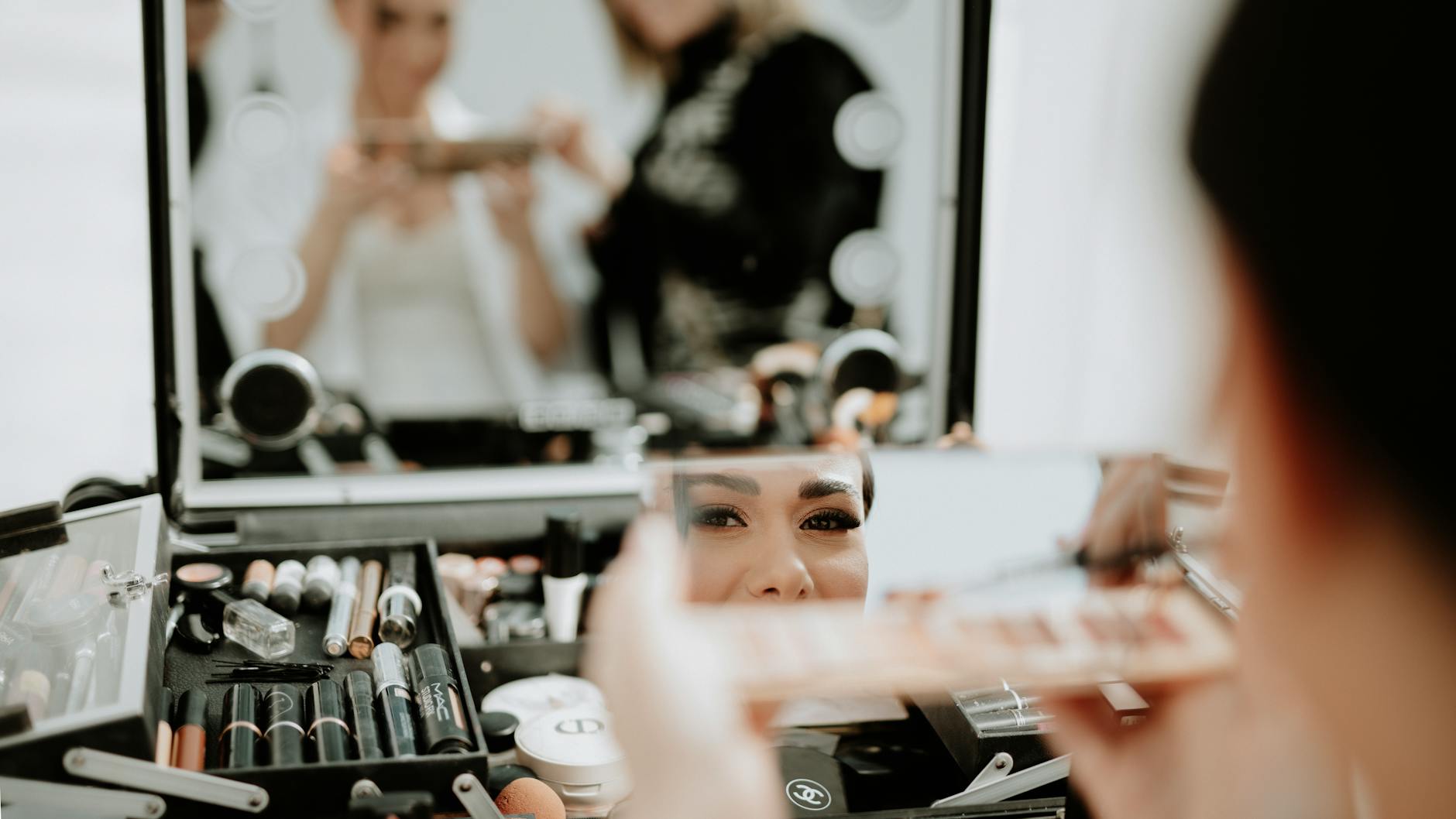
The first three hours of the wedding day determine more about how the day photographs than couples realize. Hair-and-makeup artists need a specific environment to work efficiently: good natural light, a clean surface, hot tools running, and a calm subject. When the morning is unstructured, those four ingredients turn into a parade of friends-of-friends asking where to put their bags and a bride answering vendor texts while her foundation sets unevenly.
A defined morning routine produces three downstream effects. The ceremony starts on time more often, because hair-and-makeup overruns are the single most common cause of late ceremonies. The getting-ready photographs look intentional rather than chaotic, because the photographer arrives to a styled room. And the bride arrives hydrated, fed, and emotionally present, which is the difference between teary first looks and zoned-out ones.
The morning also serves as the only quiet block of the entire wedding day. Once the ceremony begins, the schedule moves in fifteen-minute increments through portraits, cocktail hour, dinner, toasts, cake, and dancing. Treat the morning as protected space and decline anything that competes for it.
A workable wedding morning timeline starts at the ceremony start time and works backwards. The standard calculation: 45 minutes of hair per person, 45 minutes of makeup per person, 30 minutes for the bride to get into her dress, 30 minutes of buffer, plus travel time. For a six-person bridal party with one hair stylist and one makeup artist, this typically means hair-and-makeup begins five to six hours before the ceremony.
Most photographers ask to arrive ninety minutes before the ceremony for getting-ready coverage, which means the bride should be in the final thirty minutes of hair-and-makeup when the photographer walks in. Plan the schedule so the bride is one of the last in the chair — bridesmaids who finish early can re-touch, but a bride who finishes three hours before the ceremony will have wilted by the time she gets dressed.
A sample timeline for a 4:00 PM ceremony: 8:30 AM wake and breakfast, 9:30 AM hair-and-makeup begins, 11:00 AM photographer arrives, 12:30 PM bride into the chair, 2:00 PM bride into the dress, 2:30 PM detail shots and first look, 3:15 PM travel to ceremony, 4:00 PM ceremony. Build at least one thirty-minute buffer block — it almost always gets used.
Share the timeline with vendors and the bridal party forty-eight hours ahead.
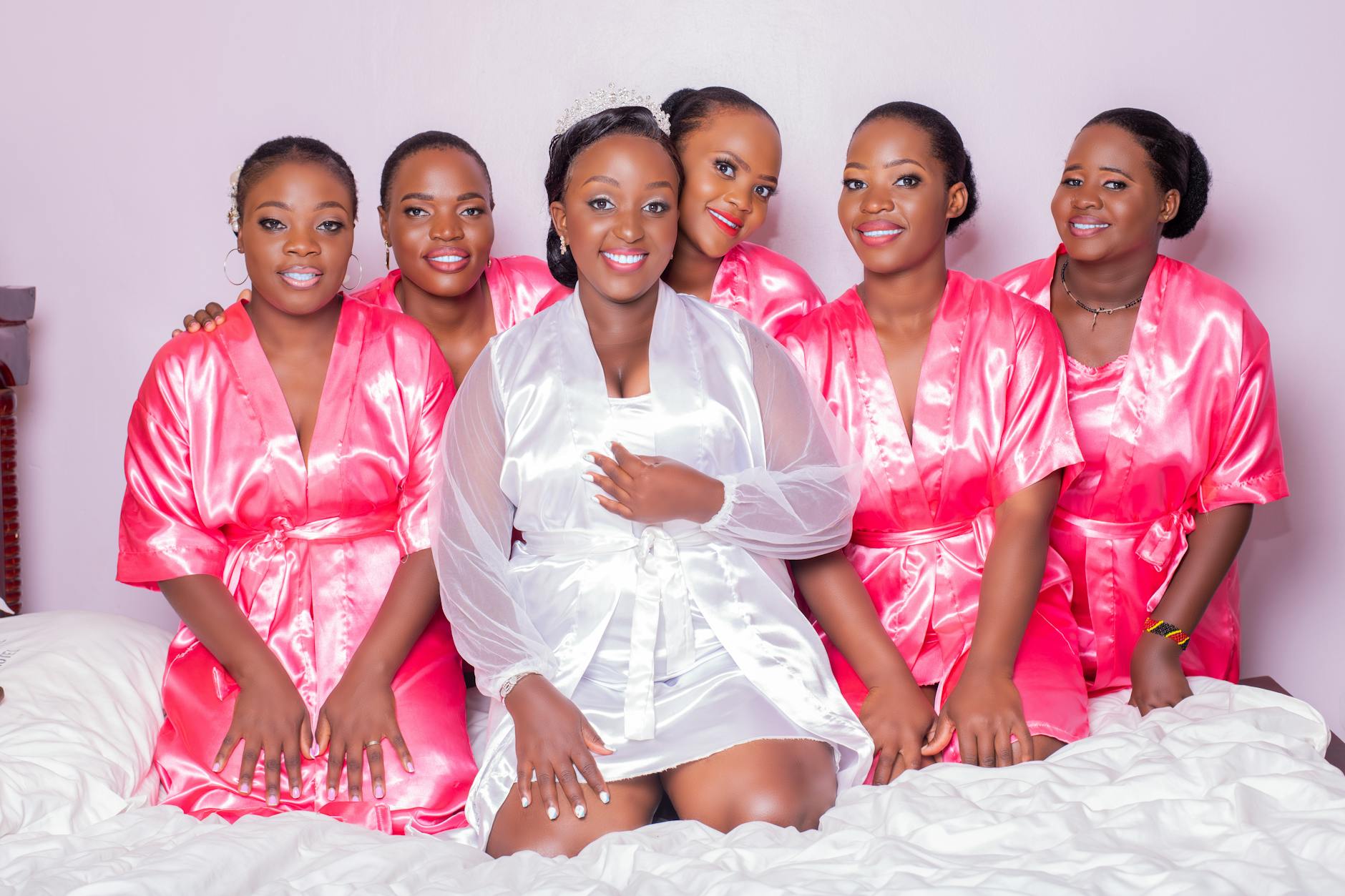
The getting-ready outfit matters because hair and makeup must come off, then go on, with finished results that survive a wedding dress being pulled overhead. Anything with a tight collar, a pullover construction, or a high neckline is wrong for the morning. The two correct silhouettes are a satin robe that opens fully at the front, and an oversized button-down shirt that comes off the shoulders without disturbing the updo.
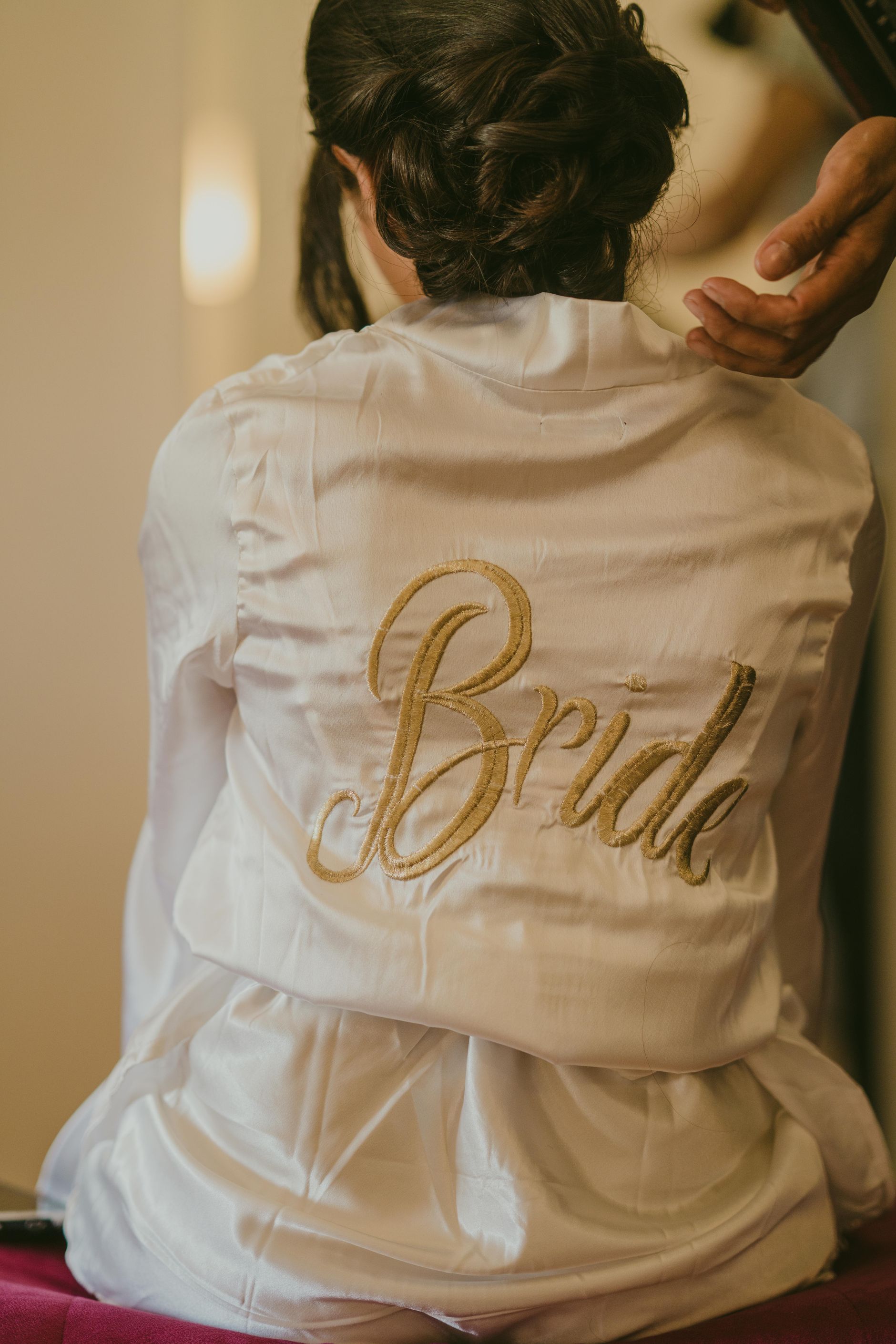
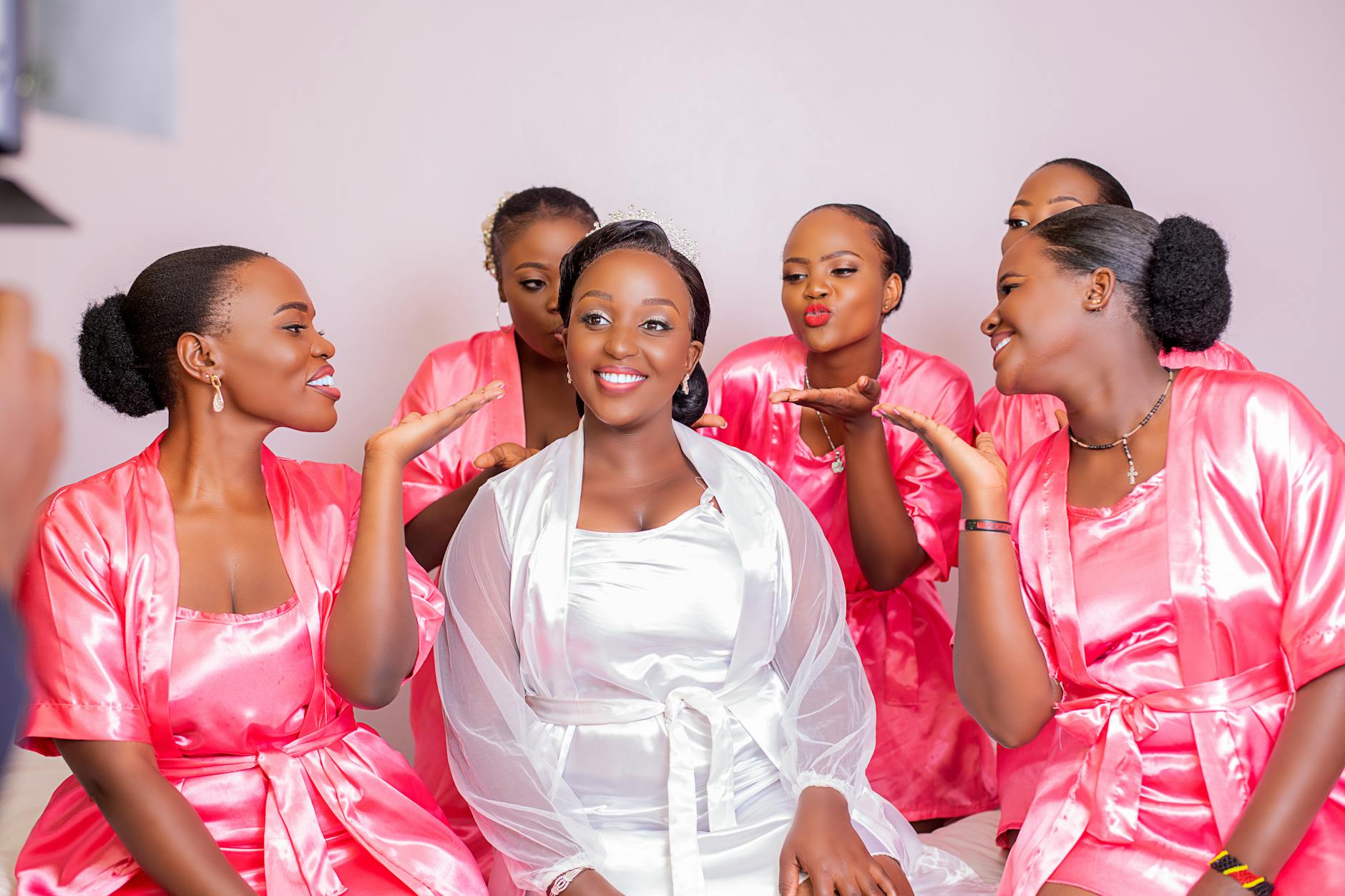
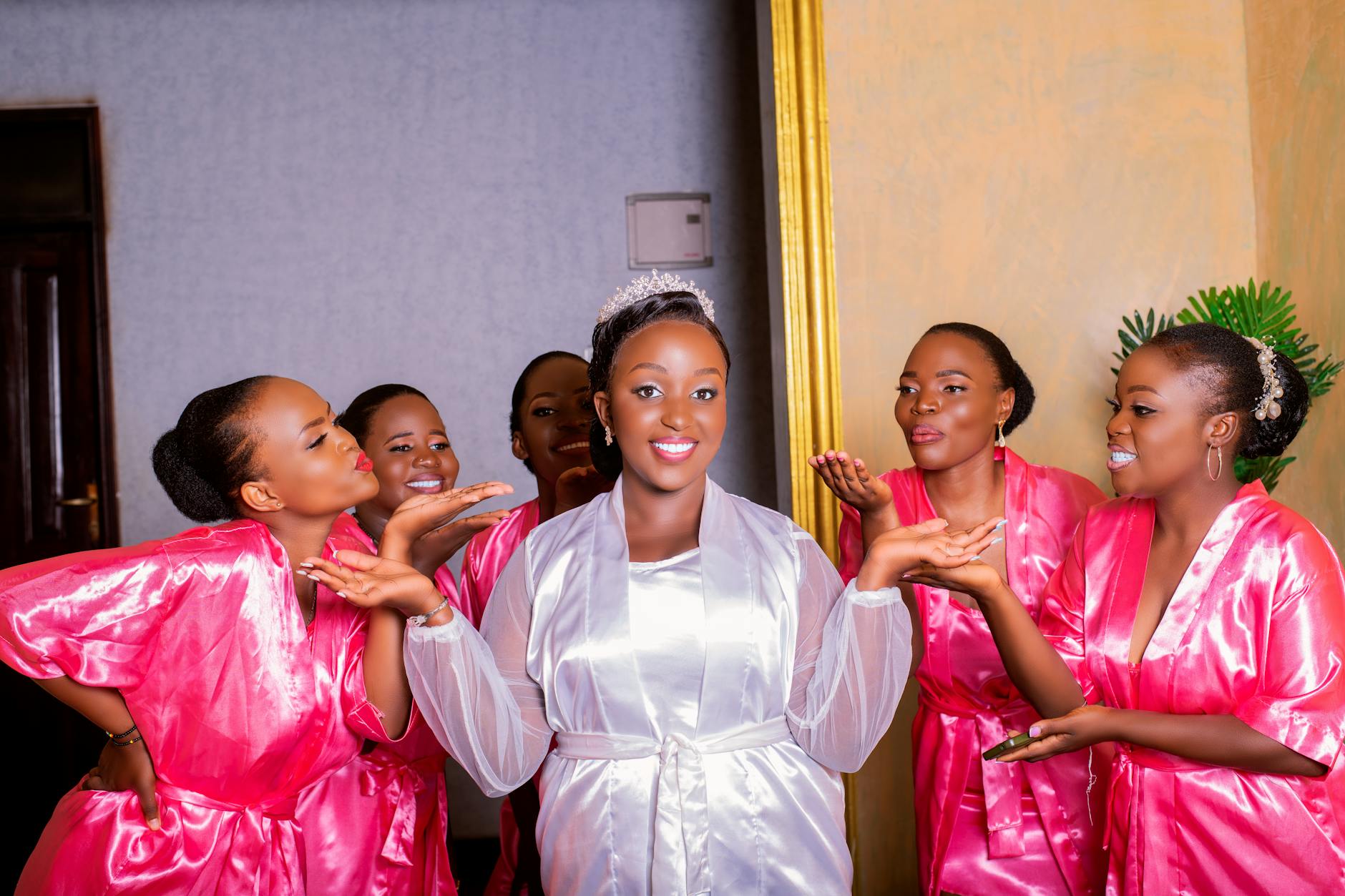
Matching satin robes for the bridal party are the most-photographed morning outfit for a reason: they read as a coordinated set without looking like uniforms, they cost less than coordinated pajama sets, and they slip off without snagging earrings or smudging lipstick. A monogrammed set like the Set of 4 Personalized Bridesmaid Satin Robes with Custom Names ships for roughly $20 per robe with the name embroidered on the back, with ten-plus satin color options to coordinate with the wedding palette. Order one size up — robes worn over leggings and a thin tank read better in photos than tightly belted ones.
For the bride specifically, many photographers favor a single contrasting piece: a white robe while bridesmaids wear blush, or a white sleep shirt with a small monogram. The ModParty Mrs. Heart Sleep Shirt in white runs around $40 in a soft cotton-rayon blend and works well for brides who prefer a tailored button-down to a robe; the boyfriend-fit collar lays flat against bare collarbones, which is how most photographers want a bride to look during makeup.
Whatever the top half, underneath should be the actual undergarments planned for the dress: shapewear, the right bra, and any sticky bra cups should already be on before makeup begins. Changing into undergarments mid-morning means smudged lipstick at minimum and re-curling hair at worst.
The single most-underrated wedding morning decision is breakfast. A bride who eats a balanced morning meal stays steady through ceremony nerves and tolerates the long stretch between getting-ready and dinner without lightheadedness. A bride who runs on coffee and champagne until 4 PM almost always feels it during the ceremony.
A workable breakfast spread covers three categories: protein for blood-sugar stability, complex carbohydrates for slow energy, and water. Practical formats that travel to a hotel suite include scrambled eggs in foil pans, a fruit-and-cheese board, smoked salmon with bagels, mini quiches, and overnight oats. Avoid heavy garlic, raw onions, and anything that lingers on the breath.
Hydration is non-negotiable. Each bridal-party member should have a 32-ounce water bottle in hand by the time hair begins, with the goal of finishing one bottle before the photographer arrives and starting a second before the dress. A single mimosa for the toast is traditional; a third tends to show up later as flushed cheeks and shortened attention during portraits.
For couples who want a small toast moment, a coordinated flute set photographs beautifully on the breakfast spread. The Be Burgundy Personalized Bridesmaid Champagne Flutes Set of 6 with Names runs roughly $50 to $60 with each flute laser-etched for a different bridal-party role; the 9-inch crystal stems are dishwasher-safe and survive a packed wedding suite without scratching.
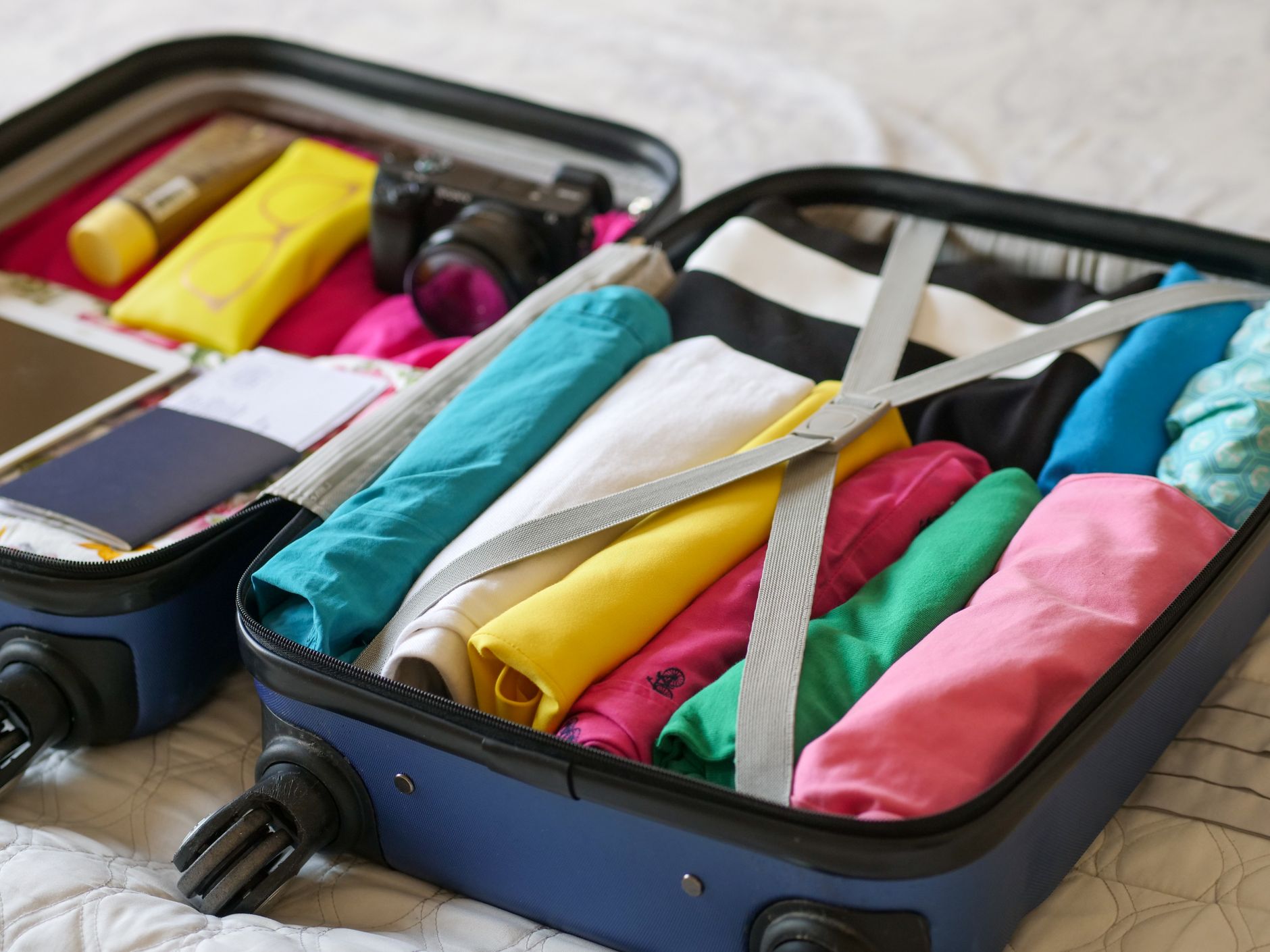
A small survival kit is the second-most-useful piece of luggage at a wedding. The absence of a kit is the most common reason morning-of texts get sent to vendors asking for basics like a sewing needle or stain remover.
The kit should cover four categories: wardrobe (sewing kit, double-sided tape, safety pins, lint roller, fashion tape, stain pen), beauty (touch-up lipstick, oil-blotting sheets, bobby pins, hair spray, cotton swabs, tweezers), health (ibuprofen, antacid, bandages, blister covers, deodorant wipes), and comfort items (mints, lip balm, eye drops, phone charger). A pre-assembled kit is faster than building one from scratch.
The Wedding Day Emergency Kit for Bride with 40+ Essentials in Pink Makeup Bag covers the wardrobe-and-beauty categories well at around $30, with bobby pins, double-sided tape, fashion tape, and a mini sewing kit pre-organized in a structured pouch. Add a personal medication baggie, a backup phone charger, and a copy of the day's timeline. For a deeper packing list, our wedding emergency kit essentials guide walks through every category. Designate the maid of honor as the kit's keeper — it should travel with the same person all day.
Hair-and-makeup runs smoothly when the bride arrives at the chair with three things ready: clean dry hair (washed the night before, not the morning of, for better grip), a clean moisturized face, and a list of inspiration photos saved on her phone. Stylists work faster from visual references than from verbal descriptions, and "soft glam, slightly more eyeliner than my engagement photos" is more useful than "make me look like myself."
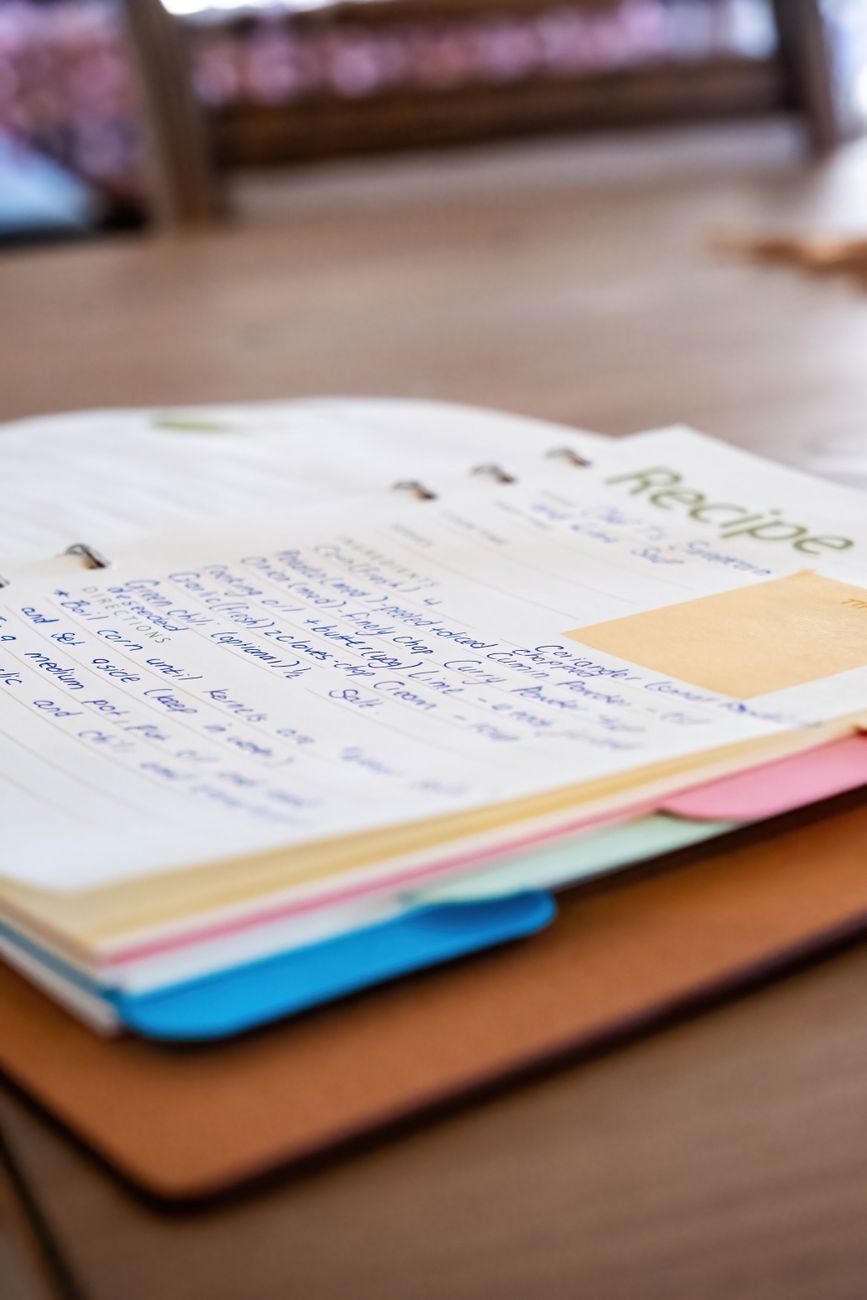
Schedule a hair-and-makeup trial four to six weeks before the wedding with the same stylist booked for the day. Trials are the moment to test how the look photographs under three lighting conditions (indoor, outdoor, with flash), how it survives a meal, and how it holds in humidity. Keep small written notes — eyebrow color, lipstick brand, contour intensity — so nothing is re-decided in the chair on the morning of.
Skin prep starts the night before. Avoid retinol, harsh exfoliants, and new skincare in the seventy-two hours before the wedding. Apply a hydrating sheet mask the night before, not the morning of, which can leave skin slightly puffy. Ask the stylist to leave a small touch-up kit: the lipstick used, a powder compact, a few bobby pins matched to hair color, and the hairspray brand on hand.
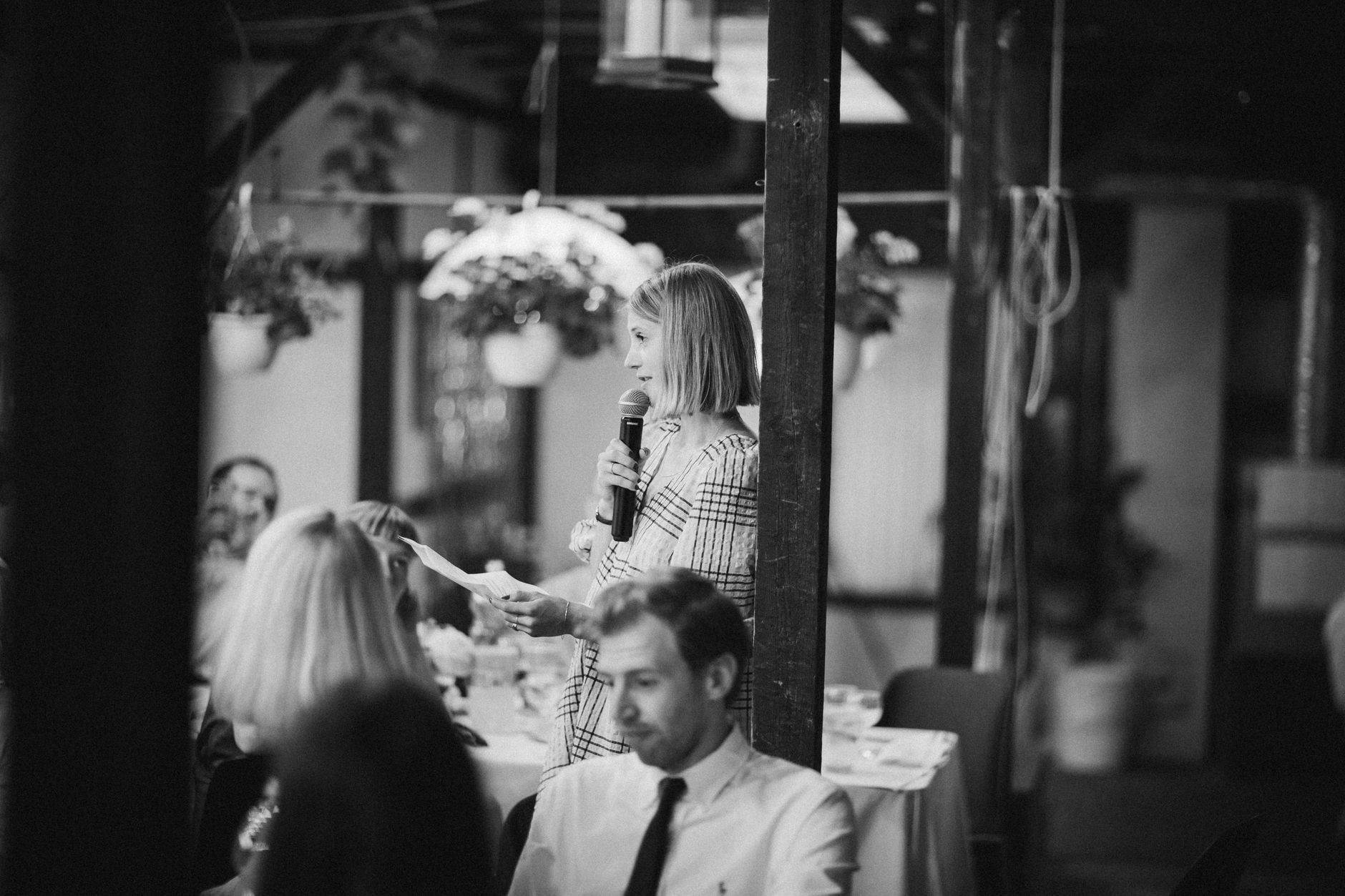
The morning's emotional rhythm matters as much as the logistical one. Bridal parties that spend the morning on phones or fielding logistics questions arrive at the ceremony tense. Bridal parties that share a single small ritual together arrive ready.
A few ritual ideas that scale well: each bridesmaid writes one short memory of the couple on an index card, and the maid of honor reads them aloud after hair-and-makeup; the bride and her parent share a fifteen-minute walk before getting dressed; the bridal party watches a five-minute slideshow from college, the bachelorette, and the engagement. The point is one anchored moment so the morning is not just transit time between the alarm and the aisle.
Matching slippers double as a useful prop. They make the morning comfortable, photograph well as a flatlay, and put the bridal party in vacation mode. The ModParty Bride and Babe Fuzzy Wedding Slippers with embroidered titles run around $20 per pair in soft white faux fur and fit US sizes 6 to 10.
Phones are the morning's biggest mood disruptor. The cleanest fix is to designate one person — usually the maid of honor — as the only point of contact with vendors and guests with logistics questions. The bride's phone goes into a drawer for the first three hours. For couples finalizing their vows that morning, our wedding vow books guide covers what to write the vows in and how to keep them dry during the ceremony.
Most brides do best with a wake-up time that allows for breakfast, a shower, and thirty minutes of quiet before hair-and-makeup. For a 4 PM ceremony with a 9:30 AM hair start, that usually means a 7:30 to 8:00 AM wake. Avoid setting an early alarm just to "have more time" — extra unstructured hours fill with anxiety, not usefulness.
No. Stylists prefer day-old hair because it grips bobby pins, holds curl, and resists product better than freshly washed hair. Wash and fully dry your hair the night before, then arrive at the chair brushed out and product-free. The exception is very fine hair that gets greasy quickly — manage that with a touch of dry shampoo at the roots.
A balanced plate with protein, complex carbohydrates, and fruit works best — for example, scrambled eggs with whole-grain toast and berries, or Greek yogurt with granola and banana. Avoid foods high in sodium (bloat), garlic and raw onion (lingering breath), and anything you have never eaten before (digestive surprises). Sip water steadily through the morning and limit alcohol to one mimosa.
Allow thirty minutes for the dress and another fifteen for accessories. Lace-up corset backs take the longest, followed by long zippers with hooks, and slip-style dresses take the least time. Have the mother of the bride or maid of honor present to help, and schedule the dress moment after hair-and-makeup is fully finished — never before. Take photos with the dress on a hanger in good window light before zipping in.
Keep the room small. The bride, bridal party, parents, photographer, and hair-and-makeup team is usually enough. Extended family and plus-ones should wait at the ceremony or a separate room. A crowded suite slows hair-and-makeup and makes detail shots harder to compose. Coordinators routinely cite "too many people in the bridal suite" as the top cause of morning delays.
Tell your photographer and planner first, then make one decision: shorten the buffer block, drop one optional photo (usually bridesmaid solo portraits), or push the ceremony by fifteen minutes if the venue allows. Do not skip the dress-on portraits or the first look — those are the photos that hang on the wall. A fifteen-minute push is almost always invisible to guests and saves the rest of the day.