How to Get a Minister or Officiant for Your 2026 Wedding


Why the Officiant Decision Deserves More Time Than It Gets
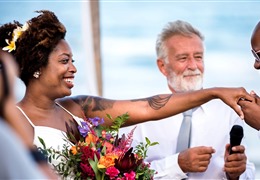
The officiant is the one vendor who actually performs the wedding. The vows are theirs to lead, the legal pronouncement is theirs to make, and the tone of the entire ceremony — formal or casual, somber or joyful, traditional or personal — is set largely by the person standing at the front. Most couples spend more time picking their florist than their officiant, and most also wish they had gotten that ratio the other way around.
The right officiant is the one whose voice, personality, and approach to ceremony match what you want the day to feel like. The four paths below cover the legitimate options for finding that person — religious clergy, civil officiants, professional secular celebrants, and friends or family members ordained for the day. Each comes with different costs, legal requirements, and trade-offs.
Path 1: Religious Clergy From Your Faith Community
If you and your partner share a faith tradition, the most meaningful officiant is often clergy from your home congregation. The officiant knows you, the service draws from a tradition that matters to you, and the spiritual weight of the ceremony comes naturally rather than being assembled from scratch.
Practical considerations: most denominations require pre-marriage counseling sessions (typically 3 to 8 hours over several months), have requirements about where the ceremony can be performed (some restrict to the church or temple), and may have limits on what music, readings, or vow text is allowed. Confirm all of this at your first conversation, not at the rehearsal.
Cost: most clergy do not charge a formal fee but expect a donation or honorarium of $250 to $1,000 to the church or to the clergy member directly. Travel costs are extra for off-site weddings.
Path 2: Interfaith or Cross-Tradition Clergy
If you and your partner come from different religious backgrounds, an interfaith officiant — clergy trained to perform ceremonies that honor both traditions — is often the right path. Interfaith ministers, certain Reform rabbis, and Unitarian Universalist ministers all routinely perform interfaith weddings.
How to find them: the Interfaith Families network, the Reform rabbinical organization (CCAR), and Unitarian Universalist churches all maintain officiant directories. Plan for a longer planning process — interfaith ceremonies typically require more conversation about which traditions to include, in what order, and how to handle the moments where the two traditions diverge.
Cost: $400 to $1,200 for the ceremony itself, plus 2 to 4 planning meetings included. Travel and accommodations extra for destination weddings.
Path 3: Professional Secular Celebrant
A professional celebrant is a trained, licensed officiant who specializes in personalized non-religious (or lightly spiritual) ceremonies. They are often the right choice for couples who want a meaningful ceremony without religious content, or couples whose religious backgrounds are not strong enough to want to involve clergy.
What a good celebrant does: meets with the couple multiple times to understand your story, writes a custom ceremony that reflects the two of you specifically, and delivers it with the warmth and pacing of a professional speaker. This is the path that produces the most-personalized ceremonies and consistently the most-praised by guests.
Cost: $500 to $1,500 in most US markets for a fully customized ceremony with 2 to 4 planning meetings. Higher in coastal cities and for celebrants with strong reputations. Worth the premium for couples who care about ceremony quality.
Path 4: A Friend or Family Member Officiating
A close friend or family member ordained online specifically to officiate your wedding. Universal Life Church and American Marriage Ministries are the two most-used online ordination platforms, and ordination is free or under $50. Most US states accept these ordinations as legally valid, with notable exceptions detailed below.
The advantages: the officiant knows you, the ceremony is automatically personal, and the cost is minimal. The risk: a friend who has never officiated before may underestimate the work involved. A good friend-officiant ceremony requires the officiant to invest significant time — drafting the ceremony, rehearsing it out loud multiple times, coordinating with the rehearsal — and not all friends will do that work.
States with restrictions: Pennsylvania, Tennessee, Virginia, and a few county-level restrictions in Massachusetts and New Jersey have raised legal questions about online-ordained officiants. Confirm with the county clerk where you will be married before assuming the ordination is sufficient. If the state is uncertain, have a backup civil officiant complete the legal paperwork while your friend leads the ceremony.
The Legal Requirements You Cannot Skip
Regardless of which path you choose, the officiant must be legally authorized to perform marriages in the state where the wedding takes place. Confirm:
- That the officiant has registered with the state if registration is required (varies by state — most do not require it, but some do)
- That the marriage license has been obtained from the correct county and is within its valid window (typically 30 to 90 days from issue date)
- That the officiant knows where to sign on the license, where the witness signatures go, and the deadline for returning the signed license to the county
- That the officiant has the legal text required by your state for the pronouncement of marriage
Failing to handle the legal paperwork correctly does not invalidate the relationship, but it does mean you are not legally married — which surfaces awkwardly months later when filing taxes or accessing benefits. Get the paperwork right.
Questions to Ask Before You Book
Whether you are interviewing professional officiants or briefing a friend, the questions are similar:
- How many ceremonies have you performed? (For professionals, look for 50+; for friends, this will be one — set expectations accordingly.)
- Will you write a custom ceremony, or are we using a standard template?
- Can we read the ceremony script in advance and request edits?
- Will you attend the rehearsal?
- Are pre-marriage counseling sessions required? How many?
- What happens if you become unavailable on the day?
- What is the legal-paperwork process you will follow?
- Are there restrictions on music, readings, or content I should know about?
Booking Timeline
Book your officiant 6 to 12 months out for popular professional celebrants (especially for Saturday dates in May through October), 4 to 8 months out for friends or family officiants who need time to prepare, and 8 to 12 months out for clergy from your home congregation if their schedule books up.
Plan to have the ceremony script finalized 4 to 6 weeks before the wedding. Last-minute ceremony changes — adding readings, swapping vow text, restructuring the order — happen at every wedding, but they are stressful for the officiant if they happen in the final two weeks. Lock the script early, and treat any later changes as exceptional rather than routine.