Why Wedding Shoe Decisions Paralyze Most Guys
Most guys getting married spend five minutes on their wedding shoes and regret it in the photographs. The reason is not that shoes are hard — they are not — but that most guys are unfamiliar with the vocabulary of dress shoes and default to whatever is quickest. The result: shoes that do not coordinate with the suit, are the wrong formality level, or look like they were bought in the final week of planning.
This guide is structured for the groom who wants to make a decent wedding-shoe decision quickly without becoming a shoe expert. The framework is simple: match shoes to suit formality, pick the right color and material, skip the small mistakes, and get them alterable-ready for the day. Fifteen minutes of reading is enough to avoid the most common errors.
Match Shoes to Suit Formality
The shoe style should match the formality level of the suit. The mismatches — dress shoes with a casual suit, or loafers with a tuxedo — are what produce the 'off' look in wedding photos.
- Tuxedo or formal black suit: patent leather oxfords, plain toe, black only. Any less formal shoe is wrong.
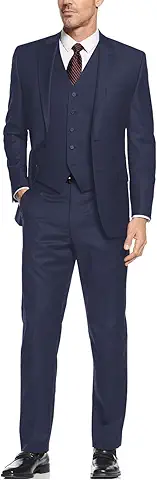
- Dark navy or charcoal suit: black or dark brown oxfords or cap-toe oxfords. Leather, not patent.
- Medium or light gray suit: brown leather oxfords or Derby shoes. Brown complements gray better than black.
- Tan, beige, or summer-weight suit: light brown or cognac brogues or Derby shoes. Informal and seasonal.
- Outdoor or garden wedding in a less formal suit: brown brogues with visible broguing or even well-maintained brown loafers. Context matters — a beach wedding allows for sandals or casual leather shoes that would be wrong elsewhere.
The simple rule: darker shoes for darker suits and more formal weddings; lighter brown shoes for lighter suits and casual weddings. Black shoes are the default when you are unsure.
The Four Shoe Styles That Cover Most Weddings
Most grooms only need to know four shoe styles:
- Oxford (closed-lacing, most formal): the default for formal and semi-formal weddings. Black or dark brown.
- Cap-toe oxford (oxford with a horizontal line across the toe): slightly more interesting visually, same formality level as a plain oxford.
- Derby (open-lacing): slightly less formal than oxford, works with medium-gray and brown suits.
- Brogue (perforated toe detail): the least formal of the four, best for outdoor and casual weddings with lighter suits.
Skip (for weddings): loafers (too casual for most weddings), double monks (distinctive but often read as fashion-over-formality), pointed-toe dress shoes in extreme shapes, shoes with visible logos.
These four styles cover nearly every wedding situation. If you can identify which style you need from the list above, you can shop efficiently.
Budget: What to Spend on Wedding Shoes
Realistic 2026 wedding-shoe budgets:
- Under $150: budget department-store dress shoes. Works for a one-time wedding but will show wear quickly.
- $150 to $300: solid mid-tier dress shoes from reputable brands. The range where most grooms should shop.
- $300 to $600: quality leather, proper construction (Goodyear welted soles), long-lasting. Worth it if you will wear dress shoes regularly in the future.
- $600+: designer and handmade shoes. Only worth it for grooms who already wear dress shoes routinely.
If you currently do not own dress shoes and will not wear them regularly after the wedding, spend $150 to $250 on a decent pair and move on. The budget that goes into shoes you will wear once is better spent elsewhere. If you will wear dress shoes for work or other occasions, spend $300 to $500 on a pair you will still be wearing in five years.
Fit: The Detail That Trumps Everything Else
A $600 shoe that does not fit will photograph and feel worse than a $200 shoe that fits perfectly. Key fit checkpoints:
- Length: thumb's-width of space at the front of the shoe when standing.
- Width: the shoe should grip your midfoot firmly without pinching. Your feet should not slide forward when walking.
- Heel: no lifting at the heel when walking. If the heel slips, the shoe is too long or too wide.
- Instep: the laces should close to a reasonable distance (about half an inch between the eyelets) when tied normally. Too much space means the shoe is too narrow; too little means the shoe is too wide.
Wedding shoes need to be broken in before the wedding — at least 2 to 4 weeks of wearing them at home and for short walks. Wedding-morning blisters are one of the most preventable wedding problems, and they originate from shoes worn for the first time on the day.
Small Details That Matter
The difference between shoes that read as polished and shoes that read as adequate often comes down to details:
- Shine: have them professionally polished the week before the wedding, or do a thorough polish yourself. Dull leather photographs poorly in wedding photos.
- Laces: flat waxed laces for formal shoes; round waxed laces for casual. Replace any worn laces before the day.
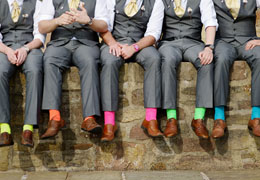
- Socks: over-the-calf dress socks in a dark color matching the suit. Ankle socks or no-show socks show skin when seated and read as sloppy in photos.
- Insoles: add a cushioned insole if you will be standing for more than 2 hours. The insole adds comfort without changing the shoe's look.
- Weather backup: keep the shoes in a garment bag until dressing. Polish again if they get scuffed during travel.
The 2026 Shoe Trends Worth Noting
Most wedding shoe decisions should lean classic rather than trendy — the photos will be looked at for decades, and trend-forward shoes date the photos to their era. That said, a few 2026 shifts worth knowing:
- Slightly chunkier leather-soled shoes (moving away from the very thin soles of the 2010s). A more substantial sole reads current.
- Slightly pointier toes in modern dress shoes, but not extreme. Avoid the shoes whose toes extend an inch beyond the shoe structure — that is a trend that will date.
- Lower-formality options (Derbies and brogues) are more acceptable at fully formal weddings than they were a decade ago.
- Colored shoes (burgundy, dark green) are having a small moment with fashion-forward grooms. Works only for grooms whose entire style is fashion-forward; otherwise sticks out.
Final Checklist
A week before the wedding, confirm:
- Shoes are the right style for the suit and wedding formality
- Shoes have been broken in through multiple wearings
- Shoes have been recently polished
- Socks are the right length and color
- Laces are new or clean
- Shoes are packed separately from the suit in a garment bag
Wedding shoes are rarely remembered individually — the best compliment your shoes can get is that no one noticed them. The right shoes recede into the background of the outfit, which is exactly what they should do. Pick them to disappear, and the rest of the look will land.