Why the Suit Decision Gets Underweighted
Most engaged couples spend dozens of hours on the wedding dress and a single afternoon on the suit. The result, predictably, is wedding photos where the dress looks spectacular and the suit looks adequate. The suit deserves more attention — not just because the groom and groomsmen are in nearly every photograph, but because the suit's fit is one of the elements that most reliably distinguishes a polished wedding from a slightly off one.
The framework below covers what actually matters in a wedding suit decision: fit fundamentals, the rent-vs-buy question, fabric and color options, the alterations that pay off, and the timeline for getting it right. The goal is not to spend more — it is to spend the same money on the right elements rather than the wrong ones.
Fit Fundamentals: What to Look For
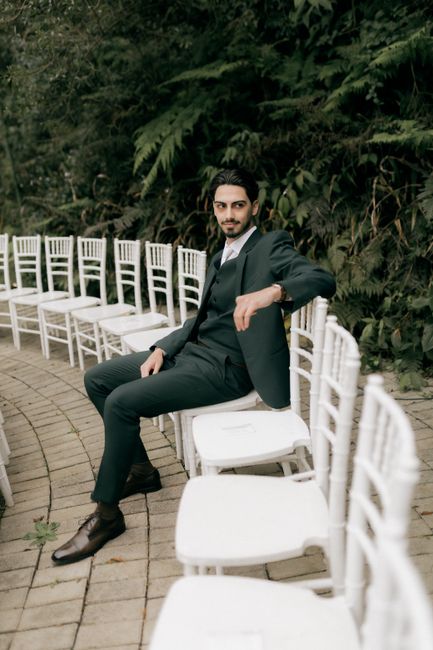
Fit matters more than brand, fabric, or price. A perfectly fitted $400 suit will photograph better than a poorly fitted $2,500 designer suit. The five fit checkpoints that distinguish a good suit from a bad one:
- Shoulders: the seam at the top of the shoulder should sit exactly where your shoulder ends, not before or after. A poorly fitted shoulder cannot be alterations-fixed; it has to be right off the rack.
- Chest: when buttoned, the jacket should have minimal pulling at the chest. Look for the X-shaped wrinkle pattern when buttoned — that means the jacket is too tight.
- Sleeve length: the jacket sleeve should end at the base of the thumb when arms are at the sides, with about half an inch of shirt cuff visible.
- Jacket length: should cover the seat of the trousers but not extend past the second knuckle of your hand when arms are at sides.
- Trouser break: the trouser hem should rest gently on the shoe with one slight crease (a 'medium break'). No bunching at the ankle, no gap above the shoe.
Trying on suits, evaluate fit before fabric or style. A great-feeling fabric in a poor fit photographs worse than a basic fabric in a great fit.
Rent vs Buy: The Honest Calculation
The rent-vs-buy decision depends on three factors: how often you will wear suits in the future, whether you have an existing suit you can upgrade, and whether you want a meaningful keepsake from the wedding day.
- Rent if: this will be your only formal occasion in the next several years, you are wearing a tuxedo (which is rarely worn outside formal weddings), or you are coordinating multiple groomsmen who would each be buying. 2026 rental: $200 to $450 per outfit.
- Buy off-the-rack if: you wear suits occasionally, you want the suit to last 3 to 5 years for other formal events, or you want to invest in a single quality piece. 2026 off-the-rack quality: $400 to $1,500 for a versatile mid-tier suit.
- Buy made-to-measure if: you regularly wear suits for work, you want a wedding photo that looks unmistakably tailored, or you have an unusual body type that off-the-rack does not fit well. 2026 made-to-measure: $1,200 to $4,500.
- Buy bespoke (fully custom) if: you want a piece of clothing that lasts decades. 2026 bespoke: $5,000 to $15,000+.
The most common mistake is buying when renting is the right call. If you have not worn a suit in the last 12 months and cannot list three future occasions where you would wear one, rent.
Fabric and Color: What Reads as Current in 2026
Fabric and color choices have shifted in recent years. The 2026 honest landscape:
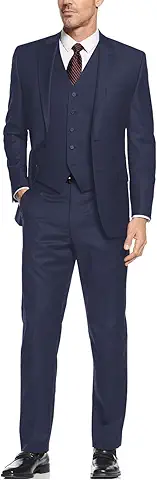
- Navy: still the most photogenic and most versatile color. Works in every season, every venue type, and every formality level. The default if you cannot decide.
- Charcoal gray: classic, photographs well in evening settings, slightly more formal than navy.
- Light gray: fresh and modern, best for spring and summer outdoor weddings, less formal.
- Beige and tan: trending strongly in 2026 for outdoor and garden weddings. Risk: requires more careful styling to avoid looking dated.
- Black: traditional for tuxedos and formal weddings; less common for full suits in 2026 because it can read severe in casual settings.
- Burgundy, forest green, and deep blue: distinctive choices for fashion-forward grooms. Best for grooms with strong style identities; risky for those who do not normally wear color.
Fabric: a wool or wool-blend in a 'four-season' weight (250 to 320 grams per square meter) is the most versatile choice. Skip linen for fall and winter weddings (wrinkles too much in heated indoor settings); skip heavy worsted wool for summer outdoor weddings (too hot).
The Alterations That Make a Budget Suit Look Custom
Even an off-the-rack suit transforms with the right alterations. Budget $150 to $400 for alterations on a typical wedding suit, with most of the spend going to the four highest-impact adjustments:
- Shoulder taper: thinning the shoulder line so it follows your actual frame. Difficult and expensive to do well, but transformative.
- Side taper: bringing in the jacket waist and torso so it follows your body's V-shape rather than hanging boxy.
- Sleeve length: hemming sleeves to the right length and adjusting cuff treatment.
- Trouser hem and break: setting the right break on the shoe, often slimming the trouser leg slightly.
Find an alterations specialist who works specifically with suits, not a generic dry-cleaner tailor. Suit alterations require technical skill that not every tailor has. Word-of-mouth referrals from menswear stores are usually the best source.
Coordinating Groomsmen Without Disasters
Coordinating groomsmen is the place where most groom-side wedding stress originates. The principles that make it manageable:
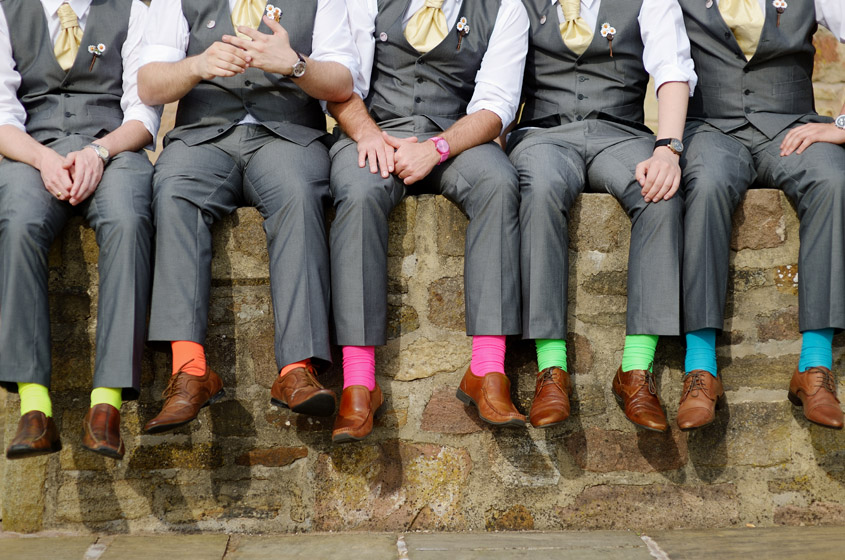
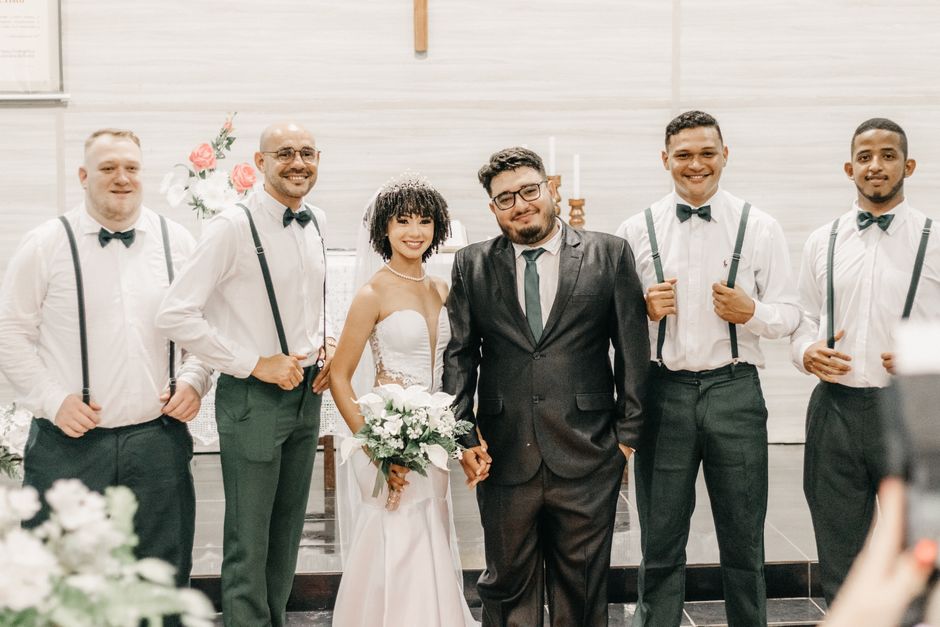
- Pick one approach: matching exact suits (most coordinated, simplest for photos), matching colors with mixed details (more variety, slightly less coordinated), or coordinating tone with mixed colors (most flexible, hardest to execute well).
- Communicate in writing, with images. Send a single document with the exact suit specification, the place to order or rent, the deadline, and the cost. Verbal communication leads to inconsistency.
- Build in time for groomsmen to handle their own alterations. Out-of-town groomsmen often arrive 2 to 4 days before the wedding and need an alterations slot.
- Have a backup plan for the groomsman who arrives without their suit — it happens at one in twenty weddings. A nearby menswear store with same-day rental availability is the bailout.
Set a clear deadline for groomsmen to confirm sizing and place orders. Six weeks before the wedding is the latest workable date for most rental and made-to-measure paths.
Accessories and Final Details
The accessories that most affect how the suit reads:
- Shoes: dark leather oxfords or derby shoes for formal; brown brogues for casual. Whatever you pick, polish them to a high shine.
- Belt or suspenders: belt for casual, suspenders for formal (and never both).
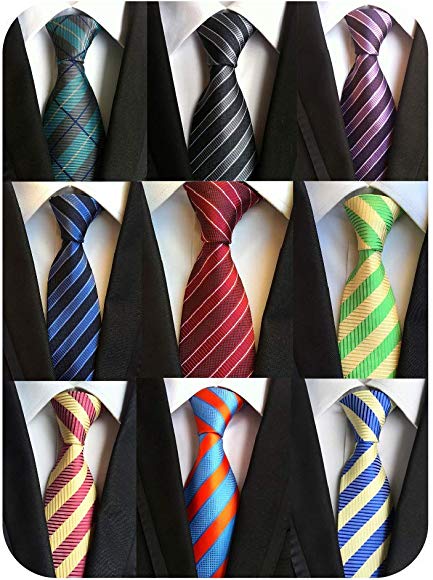
- Tie or bow tie: a tie should reach the top of the belt buckle when standing. Bow tie is more formal and pairs with tuxedo or formal suit.
- Pocket square: matching the tie too closely reads dated; complementary contrast reads current.
- Boutonniere: small, usually attached to the left lapel. Coordinate with bridal bouquet.
- Watch: a simple leather-strap dress watch reads current; oversized sport watches photograph as out of place at most weddings.
Confirm every accessory at the final fitting, with the full outfit assembled. Accessory mismatches are the most common day-of style problem and the easiest to fix in advance.
Timeline Summary
Plan the suit timeline backward from the wedding date:
- 6 to 9 months out: research the rent-vs-buy decision, look at color and fabric options
- 4 to 6 months out: place the order or schedule the first fitting; confirm groomsmen sizing
- 2 to 3 months out: first fitting and initial alterations
- 4 to 6 weeks out: final fitting and last alterations adjustments
- 1 week out: final inspection of every accessory; pack everything in a garment bag
Skip any of these steps and you risk arriving at the wedding with a suit that does not quite fit. The work is not glamorous, but the photographs reward it.