Select the Right Vest, Shirt, and Tie for a Wedding in 2026


Why the Vest, Shirt, and Tie Decide How the Suit Actually Looks
The jacket and trousers are the frame; the vest, shirt, and tie are the face of a wedding suit. Most grooms and groomsmen treat these three elements as afterthoughts, which is why so many wedding photos show a well-cut suit with mismatched details that pull the whole outfit down half a grade. Getting the suit right and the details wrong is the most common menswear mistake in wedding photos.
The framework below covers the rules for pairing each of these three elements with the rest of the suit, the formality considerations that shape the choices, and the coordination moves that keep an entire groom's party looking coherent without requiring identical outfits. None of this is complicated — it just requires paying attention to decisions most guys would otherwise skip.
The Shirt: The Foundation of Every Decision
The shirt is the base layer that every other decision is built on. Get the shirt right and the rest of the outfit has a solid foundation; get it wrong and nothing else quite works.
The shirt checkpoints:
- Color: white for formal and semi-formal weddings; light blue for casual weddings or when you want a subtle color break. Avoid: pink, yellow, and any saturated color — these read as too much in wedding contexts.
- Collar: spread collar for most wedding suits (flattering on most face shapes, works with ties and bow ties equally well). Wingtip collar for tuxedos only. Button-down collar: casual; skip for weddings.
- Fabric: crisp cotton poplin or a cotton-blend with a smooth finish. Linen and flannel read too casual for most weddings.
- Fit: fitted enough that there is no extra fabric at the waist when the jacket is buttoned, but not so fitted that it pulls across the chest.
- French cuff vs button cuff: French cuff for formal (requires cufflinks); button cuff for everything else.
A fresh, well-pressed white shirt is the safest choice for any wedding. Unless you have a specific reason to pick blue, go white.
The Tie: Where Most Looks Succeed or Fail
Tie selection is where most wedding menswear outfits succeed or fail. The rules that produce a consistently good outcome:
- Width: match the tie width to the lapel width. Wide lapel = wide tie; narrow lapel = narrow tie. Mismatch is visually jarring.
- Length: the tie tip should hit the middle of your belt buckle when standing. Longer is dated; shorter reads sloppy.
- Color: complement the wedding palette without matching it exactly. If the bridesmaids are sage, the tie can be a deeper forest green or a complementary neutral — not the same sage.
- Pattern: solid, subtle stripe, small dot, or small geometric. Avoid: loud patterns, novelty prints, wedding-specific themed ties.
- Knot: half-Windsor or full-Windsor for most suits (balanced, symmetrical). Four-in-hand knot for casual. Skinny ties work with narrow lapels and modern-fit suits only.
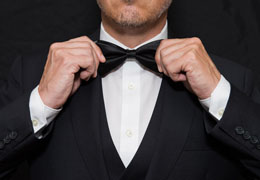
Bow ties are appropriate for tuxedos and formal weddings. They read more distinctive than standard ties but are harder to pull off confidently. If you have never worn a bow tie, the wedding is not the place to start unless you have practiced the tie-up in advance.
The Vest: When to Wear One and When to Skip
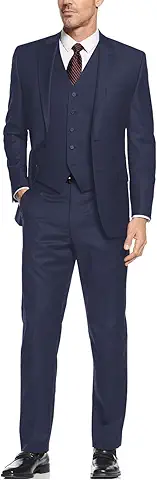
The vest is optional. It adds formality, completes the three-piece look, and provides a visible layer when the jacket comes off. It also adds heat (significant for outdoor summer weddings) and visual complexity.
When a vest helps:
- Formal weddings where a three-piece suit is the appropriate formality level
- Cool-weather weddings where an additional layer is comfortable
- Looks where you plan to remove the jacket for the reception and want a complete look underneath
- Weddings where you want a visible distinction between the groom and groomsmen (groom wears the vest; groomsmen do not)
When to skip:
- Hot-weather outdoor weddings (comfort matters)
- Casual weddings where a three-piece suit reads overformal
- Anytime you are wearing suspenders instead (never both)
The vest should match the suit fabric exactly — mismatched vest fabrics read as costume rather than coordinated. If you are renting, the vest comes matched automatically. If you are buying, confirm the vest fabric matches the jacket.
Coordinating the Groom's Party
Coordinating the groom's party visually is a project management challenge as much as a fashion one. Three approaches work:
- Fully matching: all groomsmen wear identical suit, shirt, tie. Most uniform, easiest to photograph. Works for formal weddings.
- Same suit, matching tie, accent difference for the groom: groomsmen wear one tie color, groom wears a slightly different but complementary tie. The 2026 default.
- Same suit, different ties: each groomsman picks his own tie within a defined palette. Less formal, more personal.
Whichever approach you pick, communicate it in writing: the specific suit (brand, color, size range), the exact tie (retailer, color, pattern), and the shoe guidelines. Verbal communication leads to inconsistency across 5 to 7 groomsmen. Written specifications with links to retailer product pages eliminate ambiguity.
For groomsmen wearing their own suits (rather than renting as a group), limit variation by specifying suit color only (e.g., 'navy suit'). Most groomsmen can source a navy suit they already own; picking a specific brand and style creates purchase obligations that may not be realistic.
Accessories: The Small Details That Complete the Look
Small accessories turn a solid outfit into a polished one:
- Pocket square: complementary to the tie but not identical. A matching pocket square reads dated; complementary contrast reads current.
- Boutonniere: small, on the left lapel, coordinated with the bridal bouquet. Keep it simple — a single bloom and a sprig of greenery is enough.
- Watch: a simple leather-strap dress watch. Oversized sport watches read as out of place at most weddings.
- Tie bar or tie clip: optional, and only if the tie is long enough to need securing. Place between the third and fourth shirt buttons.
- Cufflinks: for French-cuff shirts only. Simple metal or enamel — not novelty.
Skip: lapel pins with wedding text, themed sock choices visible when seated, oversized belt buckles, and any accessory that draws attention away from the outfit as a whole.
Common Pairing Mistakes to Avoid
The mismatch patterns that show up most often in wedding photos:
- Skinny tie with a wide-lapel suit (or vice versa)
- Patterned shirt with a patterned tie (pick one pattern, not both)
- Vest that does not match the suit fabric or color
- Brown shoes with a tuxedo (always black)
- Casual watch or fitness tracker with formal attire
- Boutonniere placed on the right lapel (always left) or secured with a visible pin
- Shirt sleeves that are too short or too long (should show half an inch of cuff beyond the jacket sleeve)
- Ill-fitting collar (gaps around the neck or pinches when buttoned)
These are small but photograph-visible mistakes. Eliminate them and the outfit reads as polished; leave them in and the photos will feel slightly off even if you cannot articulate why.
Final Checklist Before the Wedding
One week before the wedding, confirm:
- Shirt is clean, pressed, and the right size
- Tie is wrinkle-free and has been practiced for the knot you will use
- Vest (if worn) fits correctly over the shirt
- Pocket square is coordinated and pre-folded
- Boutonniere coordination has been confirmed with the florist
- All accessories (cufflinks, watch, tie bar) are in a single grab bag
- Shoes are polished and the laces are fresh
- An emergency kit (safety pins, lint roller, stain remover wipes, deodorant) is set aside for the morning of the wedding
Pack everything together in a garment bag. Morning-of missing items are one of the most preventable wedding-day stressors, and they all come down to packing a week in advance.