Wedding Boutonniere Ideas: Styles, Colors & Buying Guide


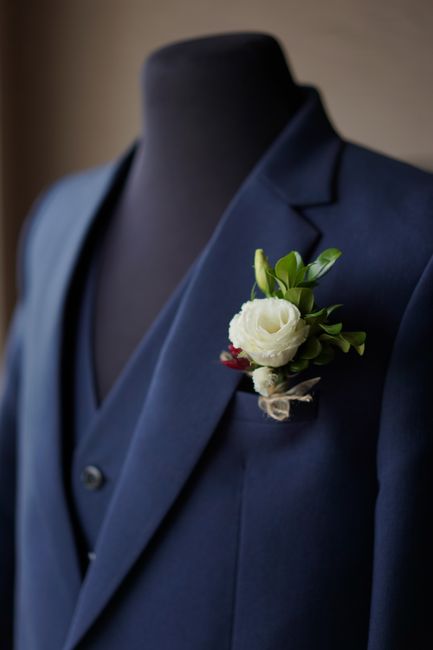
Wedding boutonniere ideas can feel like an afterthought next to the bouquet, the centerpieces, and the cake, but this small pinned flower does a lot of visual work in every photo of the groom, groomsmen, and family members standing at the altar. A well-chosen boutonniere echoes the bridal bouquet, reinforces the wedding color palette, and adds a finished, formal look to a suit or tuxedo lapel that would otherwise sit bare.
Couples planning their florals in 2026 have more options than ever, from classic single-rose designs to succulent and dried-flower arrangements that hold up through an entire reception without wilting. The right choice depends on the season, the formality of the dress code, and how much time is available on the wedding morning for pinning a dozen or more boutonnieres before photos begin.
This guide walks through the most popular boutonniere styles, how to coordinate colors across the wedding party, the tradeoffs between silk and fresh flowers, and practical advice on pinning and storage so nothing wilts or falls apart before the ceremony. Along the way, we point to specific products worth ordering ahead of time, since boutonnieres are one of the easier wedding details to source online rather than through a florist.
Whether the goal is a traditional rose boutonniere for a black-tie affair or a relaxed sprig of eucalyptus for a backyard wedding, there is a version of this small detail that fits nearly any theme and budget.
Classic Wedding Boutonniere Styles
The single rose boutonniere remains the most requested style for a reason: it is instantly recognizable, pairs with almost any bridal bouquet, and photographs well in both close-up and wide shots. A rose boutonniere typically includes one bloom, a few sprigs of greenery like seeded eucalyptus or ruscus, and a length of coordinating ribbon wrapped around the stem.
Beyond the rose, popular 2026 styles include boutonnieres built around a single ranunculus or garden spray rose for a softer, less formal look, and textured designs that mix dried lavender, wheat, or pampas grass with a small bloom for a boho aesthetic. Succulent boutonnieres have also grown in popularity for outdoor and destination weddings, since a small succulent cutting can survive hours without water and later be planted as a keepsake.
For couples who want a coordinated but budget-conscious option, silk versions of these classic styles hold up just as well in photos and can be ordered well in advance. The ChicChic Silk Rose Boutonniere is a handmade red silk rose with a pin already attached, priced well under what most florists charge per stem, and it arrives ready to wear with no refrigeration or last-minute florist pickup required.
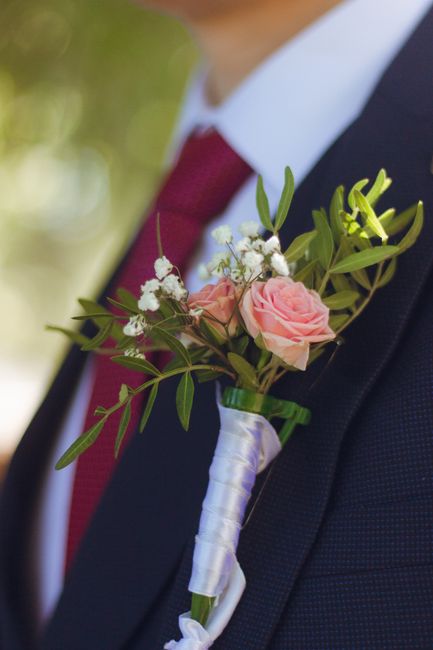
Whatever style is chosen, it helps to order or design the groom's boutonniere slightly larger or with a distinct ribbon color than the groomsmen's, so he stands out subtly in group photos without clashing with the rest of the party.
Choosing Boutonniere Colors to Match Your Wedding Palette
Boutonniere color choices generally follow one of two approaches: matching the bridal bouquet exactly, or picking a complementary accent color that ties into the broader wedding palette without duplicating the bride's flowers. Both approaches work, and the right one often comes down to how much floral budget is available and how coordinated the couple wants the wedding party to look in photos.
White and ivory boutonnieres remain the most popular choice for traditional and black-tie weddings because they pair with any suit color and never clash with other decor. Deep red, burgundy, and blush tones are common for fall and winter weddings, while sage green, dusty blue, and terracotta have become go-to choices for garden and rustic-themed celebrations. For a wedding built around a specific palette, it is worth reviewing broader wedding centerpiece ideas alongside boutonniere choices, since repeating one or two accent flowers across centerpieces and lapels creates a more cohesive look throughout the venue.
A practical tip: order one extra boutonniere beyond the confirmed headcount. Between last-minute plus-ones, a father who forgot he was supposed to wear one, or a pin that snaps during setup, an extra boutonniere on hand avoids a scramble twenty minutes before the ceremony starts.
Metallic accents, such as thin gold wire wrapped around the stem or a small brooch pinned into the greenery, have also become a popular way to tie a boutonniere into a wedding's overall metallic color scheme without changing the flower colors themselves.
Silk vs. Fresh Boutonnieres: Which Is Right for You
Fresh boutonnieres offer the most natural look and can be created to match any bouquet exactly, since a florist works from the same flowers used elsewhere in the wedding. The tradeoff is timing and cost: fresh boutonnieres typically need to be assembled the day before or morning of the wedding, refrigerated until the last possible moment, and are priced per stem, which adds up quickly for a large wedding party.
Silk and other artificial boutonnieres solve most of these problems. They can be ordered weeks or months ahead of time, require no refrigeration, survive travel for a destination wedding without wilting, and typically cost a fraction of what a florist charges for fresh arrangements assembled to order. Modern silk flowers, especially "real touch" latex-coated varieties, are difficult to distinguish from fresh blooms in photos taken from a normal viewing distance.
The White Silk Rose Boutonniere is a good example of this middle ground: a single ivory rose with a pin, priced for easy multiples across a wedding party, and durable enough to be kept afterward as a keepsake rather than pressed and discarded.
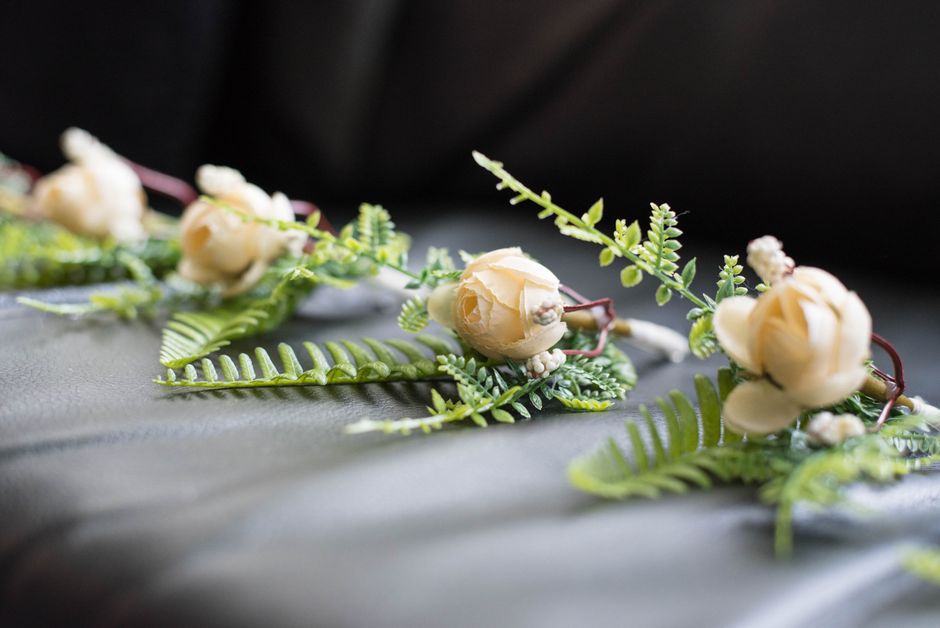
Many couples land on a hybrid approach: fresh flowers for the immediate family and wedding party, and silk versions for anyone standing further back in photos, such as ushers or greeters, where the cost savings matter more than an exact match.
Boutonnieres for Groomsmen, Fathers, and Ushers
Coordinating boutonnieres across a full wedding party gets complicated fast once fathers, grandfathers, stepfathers, and ushers are added to the groomsmen count. A common approach is to keep every boutonniere in the same flower and color family, but make small distinctions: the groom's boutonniere might use a slightly larger bloom, while groomsmen wear a matching but smaller version, and fathers or grandfathers wear a simplified single-stem design without the extra greenery.
Buying boutonnieres in bulk is one of the more efficient ways to outfit a large wedding party without individually pricing out florist orders for eight or ten people. A set like the 12-Pack Silk Groom Boutonnieres covers most wedding parties in one order, with each boutonniere already assembled and ready to pin, which is especially useful for weddings with a tight morning-of timeline.
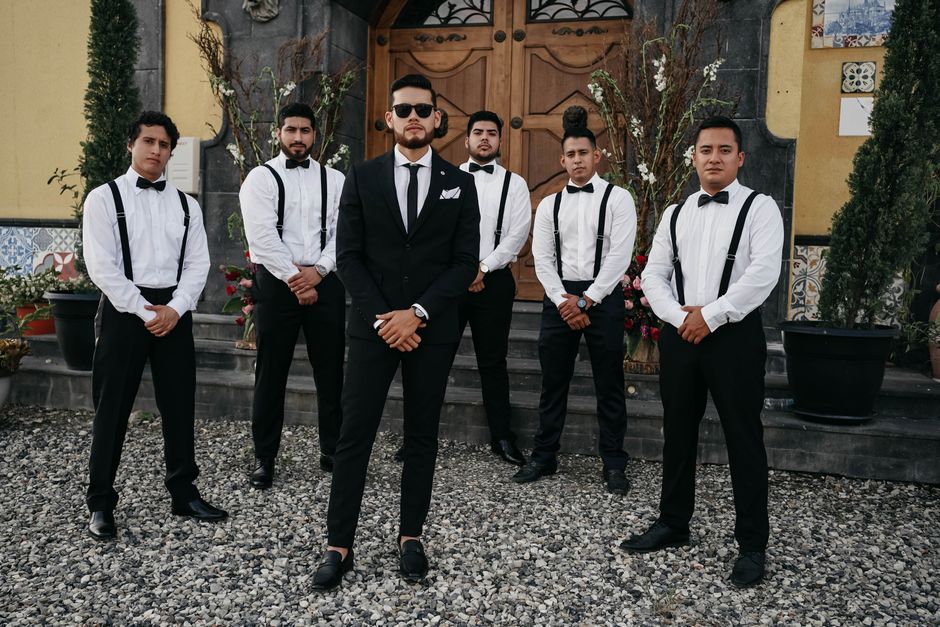
If the wedding party is picking up gifts around the same time boutonnieres are ordered, it is worth browsing groomsmen gift ideas together, since many retailers offer discounts for bundling multiple wedding-party orders, and it keeps two related tasks off the to-do list at once.
How to Pin a Boutonniere Correctly
A boutonniere that is pinned incorrectly is one of the more common small failures at weddings, either falling off mid-reception or visibly drooping in photos. The standard technique places the stem at a slight diagonal angle on the left lapel, pointed up and to the left, roughly at the height of the second buttonhole. The pin should run through the back of the lapel fabric, through the stem, and back out through the fabric again at a slight angle, which anchors the flower more securely than a single straight pin-through.
For fresh boutonnieres, florists often provide a magnetic backing as an alternative to pins, which avoids putting a hole in an expensive rented tuxedo, though magnets can struggle to hold heavier flower heads through a full reception of dancing and hugging. For silk boutonnieres, a longer, sturdier pin generally holds better since the stem is thinner and lighter than a real flower stem.
Quality pins matter more than most people expect. A pack like Corsage and Boutonniere Pins provides enough pearl-head pins to outfit an entire wedding party with spares left over for last-minute repairs, and having extras on hand during the getting-ready hours prevents a single lost pin from becoming a real problem.
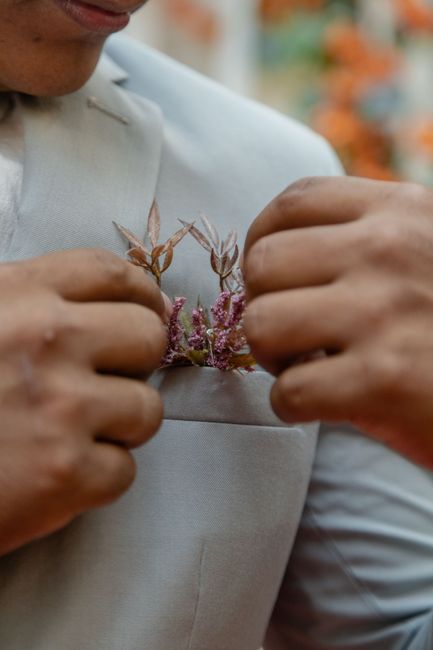
It helps to assign one person, often the best man or a parent, to handle all the pinning on the wedding morning rather than leaving each groomsman to figure it out alone, since a consistent hand produces a more uniform look across every photo.
Keeping Boutonnieres Fresh Before the Ceremony
Fresh boutonnieres are fragile in the hours between assembly and the ceremony, particularly in warm weather or outdoor venues where heat and direct sun can wilt petals within an hour. The safest approach is to keep boutonnieres refrigerated in a sealed container until as close to photo time as possible, then hand them out just before the wedding party lines up.
Clear plastic flower boxes are the standard tool florists use for this, and they work just as well for a couple handling their own flowers. A set of Clear Plastic Boutonniere Boxes keeps each boutonniere protected from crushing, moisture loss, and stray pin scratches while it sits in a refrigerator or cooler bag overnight or on the morning of the wedding.
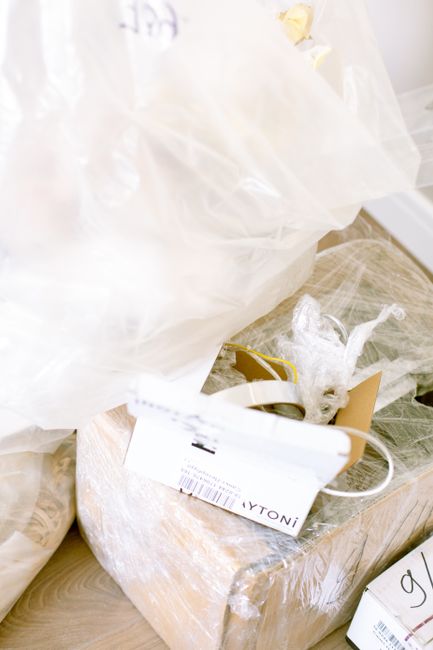
If refrigerator space at the getting-ready location is limited, a cooler bag with a few ice packs works as a reasonable substitute for a few hours, as long as the boutonnieres are kept in their boxes and away from direct contact with the ice.
Budget-Friendly and DIY Boutonniere Tips
Boutonnieres are one of the more approachable DIY wedding projects, since each one takes only a few minutes to assemble once the materials are gathered and the wiring technique is practiced once or twice. A basic DIY boutonniere needs a small bloom, a few pieces of greenery, floral wire, floral tape, and ribbon, all of which are inexpensive and widely available online or at a craft store.
For couples not confident in floral wiring, silk boutonnieres remove the assembly step entirely and can be ordered in bulk well ahead of the wedding, which also protects against a florist running short on a specific flower closer to the date. Buying in bulk packs rather than ordering individually assembled boutonnieres from a florist is consistently the biggest cost saver for larger wedding parties.
Repurposing a boutonniere design element elsewhere in the wedding, such as using the same greenery in a smaller form for place settings, is another way to stretch a floral budget without buying entirely separate arrangements for every part of the day. Couples working with a florist for the ceremony arch or aisle décor can often request coordinated boutonnieres as part of the same order at a lower combined price than sourcing everything separately.
Wedding Boutonniere FAQ
- How many boutonnieres does a typical wedding need?
Most weddings order one boutonniere for the groom, one for each groomsman, and one each for fathers, grandfathers, and any other male family members standing in formal photos. A typical count runs between six and twelve, though large wedding parties can need fifteen or more. Ordering one or two extras covers pin breakage or a last-minute addition to the lineup.
- What is the average cost of a wedding boutonniere?
Fresh boutonnieres from a florist typically run between $12 and $25 per stem depending on the flower and region, while silk versions bought in bulk online often cost a fraction of that per piece. For a wedding party of eight to ten, the difference between fresh and silk can add up to several hundred dollars.
- Should the groom's boutonniere be different from the groomsmen's?
Many couples make the groom's boutonniere slightly larger, use one additional bloom, or add a distinct ribbon color so he stands out subtly in group photos while everyone still matches overall. This is a common convention but not a strict rule, and plenty of weddings keep every boutonniere identical.
- Can silk boutonnieres look as good as fresh ones in photos?
Yes, especially real-touch latex-coated silk flowers, which are difficult to distinguish from fresh blooms at normal photo distances. Fresh flowers still have an edge in extreme close-up shots, but for most wedding photography, silk boutonnieres hold up well and offer the added benefit of not wilting through a long reception.
- How far in advance should boutonnieres be ordered?
Silk boutonnieres can be ordered months ahead of the wedding since they do not degrade in storage, which is one of their main advantages. Fresh boutonnieres from a florist are typically finalized two to four weeks out and assembled the day before or morning of the wedding itself.
- What is the best way to attach a boutonniere without damaging a suit?
A pin run through the back of the lapel fabric and back out at a slight angle holds most securely for a full day of movement. Magnetic backings are a pin-free alternative that avoids marking a rented tuxedo, though they hold heavier fresh flowers less securely than a proper pin does.