Wedding Cake Alternatives: 9 Creative Dessert Ideas for 2026
Couples have been quietly retiring the tiered wedding cake for a few years now, and 2026 is the year it stopped feeling like a rebellion and started feeling like a default. Today's wedding cake alternatives let you serve something that fits your reception — your menu, your guest count, your budget, and the dessert you'd actually want to eat at someone else's wedding.
The shift makes practical sense. A traditional five-tier cake routinely runs $700 to $1,500 once you factor in delivery, cutting fees, and the per-guest math venues bill. Most couples leave half the cake uneaten and box up a top tier for an anniversary tradition more often broken than kept. Meanwhile, dessert displays priced at a fraction of that have become some of the most-photographed details of the night.
This guide walks through nine of the strongest wedding cake alternatives for 2026, covering when each format works, what to budget, and the specific stands or display pieces that turn a tray of treats into a centerpiece-worthy moment — whether you're planning a 60-guest backyard wedding or a 250-person ballroom celebration.
Why Wedding Cake Alternatives Are Trending in 2026
The shift away from traditional wedding cake isn't really about cake itself — it's about what couples want their reception desserts to do. Three forces have lined up to make alternatives the dominant choice for 2026.
First, dietary variety. The average wedding now has guests managing gluten sensitivities, dairy intolerance, vegan diets, and nut allergies — and a single sheet cake can't serve all of them. Dessert displays with multiple formats give guests real options without singling anyone out at the dessert moment.
Second, photography. Wedding photographers consistently rank dessert displays as one of the strongest detail shots of the day, especially when the wall, tower, or cart includes height, color, and a styled sign. A flat sheet cake doesn't carry the visual weight of a six-foot donut wall framed by greenery.
Third, the economics. A donut wall serving 150 guests typically costs $250 to $400 all-in, compared with $900-plus for an equivalent tiered cake. The savings get redirected toward things guests notice more — a late-night snack bar, a better photographer, or an upgraded bar package.
Donut Walls and Doughnut Tower Displays
The donut wall is the alternative most likely to win over couples who weren't planning to skip cake at all. A wooden or acrylic pegboard mounted vertically holds 50 to 200 donuts in a grid, framed with greenery, florals, and a hand-lettered sign — and photographs like installation art rather than a dessert table.
The format works across aesthetics: whitewashed wood for garden and barn weddings, black metal for industrial venues, acrylic for modern ballrooms. Couples typically order glazed, chocolate, sprinkle, and one specialty flavor — maple-bacon, lavender, or rose — from a local bakery the morning of the wedding.
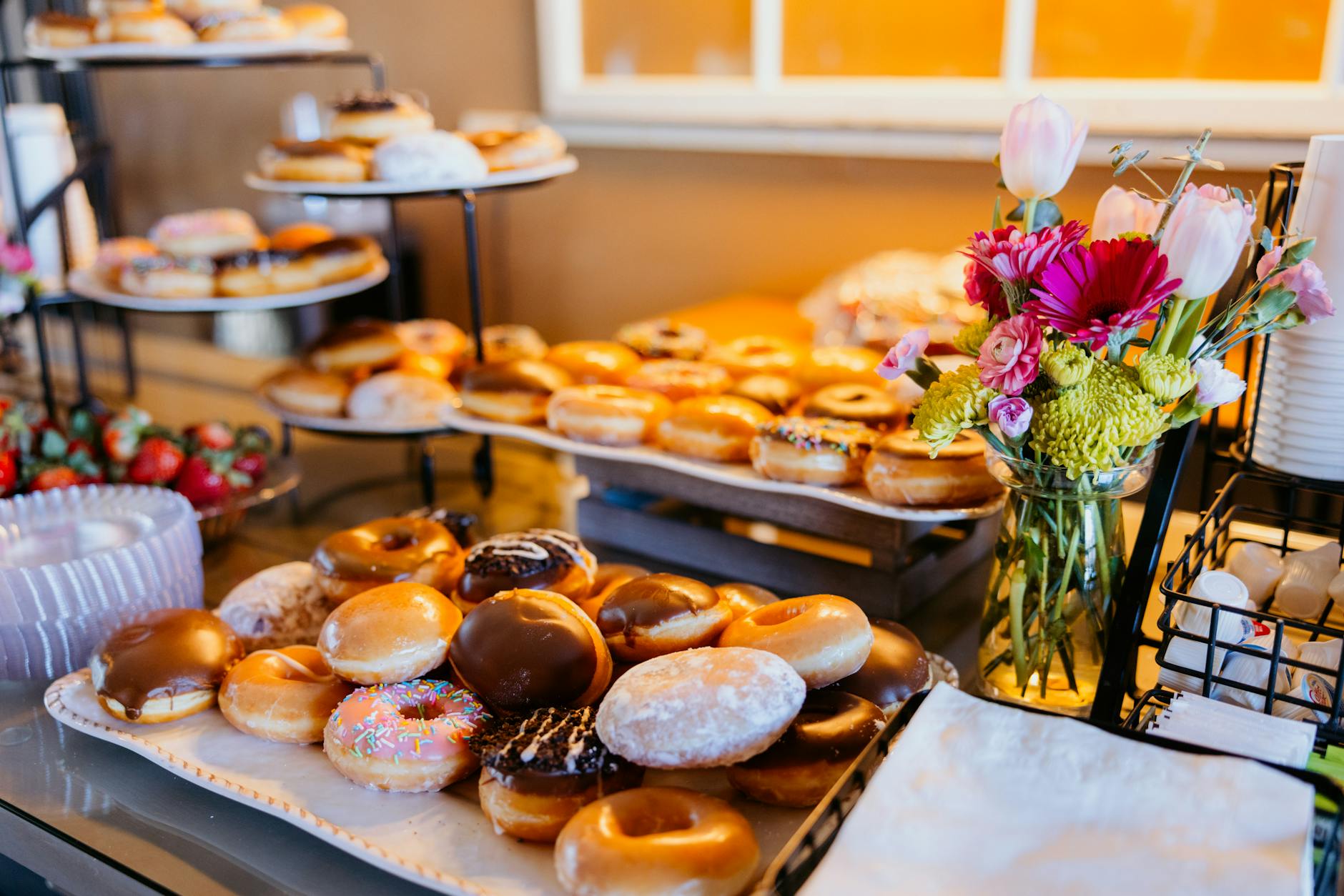
For couples building the display themselves, the Pearhead Wedding Donut Wall Stand with Pegs is the reliable workhorse — a pre-drilled wood frame roughly 24 by 24 inches holding about 25 donuts on removable pegs, with a freestanding back. It runs around $40 to $55 and pairs well two side-by-side for larger guest counts. After the wedding, many couples repurpose it as a wall organizer.
Plan two to three donuts per guest as the primary dessert, one to two as part of a larger spread. Set up no more than 90 minutes before service — fresh donuts dry out fast, and a sparse wall photographs worse than no wall at all.
Cupcake Towers and Mini Cake Bars
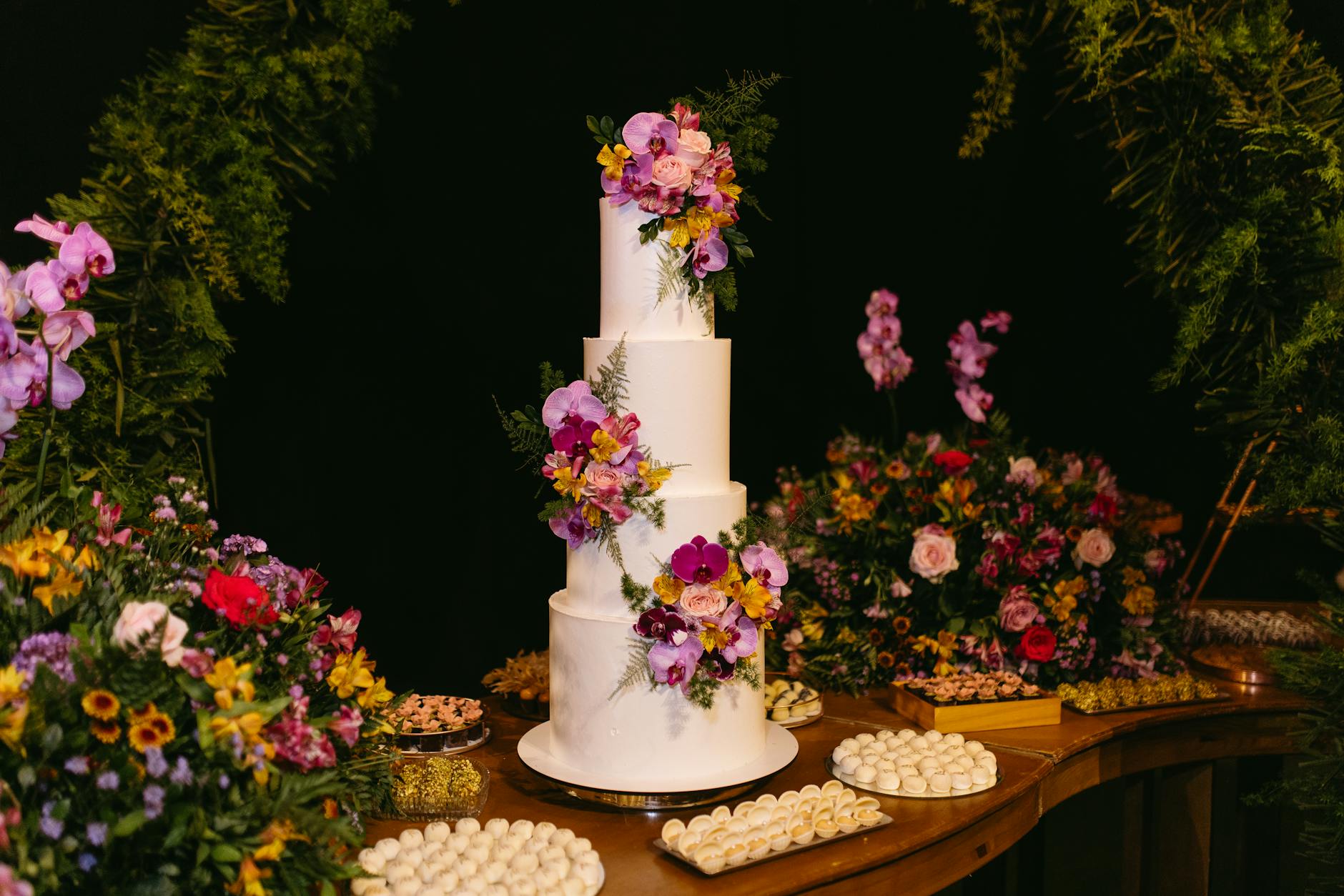
Cupcake towers were the original wedding cake alternative, and they've quietly matured into a confident, refined option rather than the kitschy version of a decade ago. A well-styled tower built from 100 to 200 cupcakes anchors a reception just as effectively as a tiered cake, with the bonus of zero cutting logistics — guests serve themselves the moment the dessert hour opens.
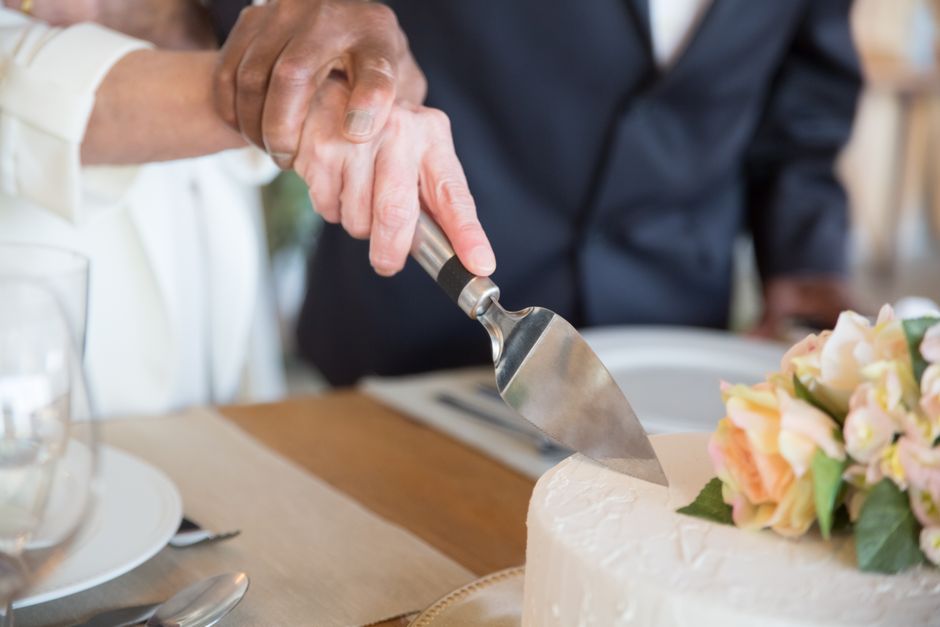
The current 2026 take leans cleaner: matte-finish or porcelain tiered stands, three to five flavors maximum, neutral wrappers, and a small two-tier cutting cake on top for the bride and groom's cake-cutting moment. That last detail matters — without something to cut, photographers lose one of the reception's most reliable shots.
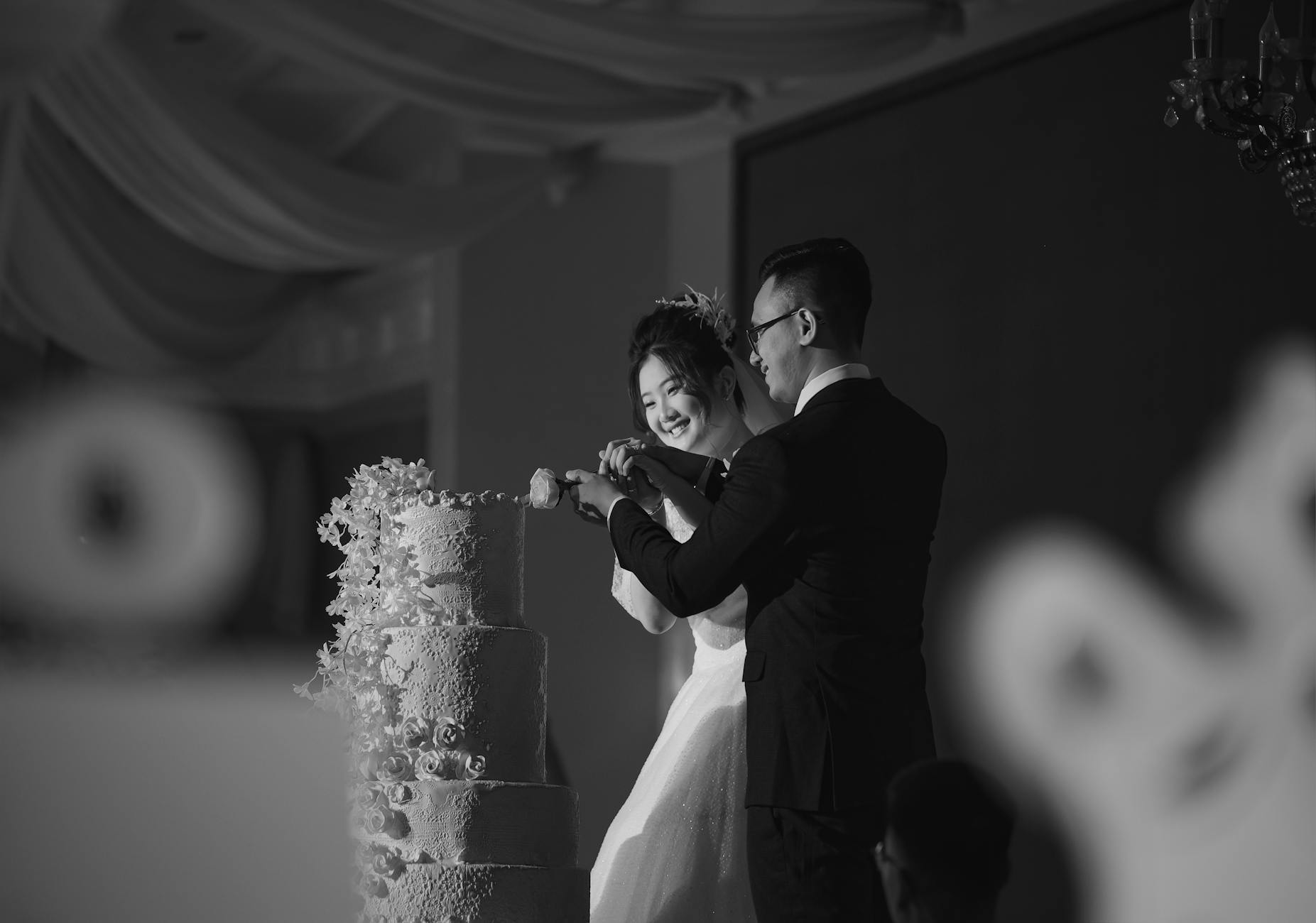
A reliable display piece is the Amalfi Décor 4-Tier Round Acrylic Cupcake Stand, a clear acrylic stand with a 14-inch base and graduated tiers holding 50 to 60 cupcakes plus a small cake on top. It runs around $60 to $85, ships flat, and the acrylic finish reads contemporary against either rustic or modern decor. The base is rated for the weight of a real cake, not just a foam topper, which matters if you want the cake-cutting moment to be real.
Plan on 1.5 cupcakes per guest, plus a six-inch cutting cake. Order a mix of flavors — vanilla bean, dark chocolate, lemon, and one seasonal pick like brown butter or strawberry rhubarb — and ask the baker to deliver in flat boxes you can build into the tower onsite to avoid frosting damage in transit.
Cheese Wheel "Cakes" for Savory Lovers
For couples whose guests would rather toast with a cheese board than cake, a cheese wheel "cake" is the most theatrical alternative on this list. Whole wheels of brie, cheddar, gouda, and blue stacked from largest to smallest create a five-tier savory cake that gets cut with a long knife at the dessert moment — same ceremony, completely different flavor profile.
The look works best at wineries, evening receptions following plated dinners, and any wedding where the bar program is part of the story. Pair it with crackers, honeycomb, fig jam, dried fruits, and herbs cascading down the tiers, and the styling rivals any sugar-flower cake at less than half the cost.
To present and serve, a solid wooden board makes a meaningful difference. The Picnic at Ascot Hardwood Cheese Board with Cutlery Set is a 13-inch hardwood board with a built-in slide-out drawer holding three cheese knives, a cheese fork, and a spreader — around $35 to $50, restaurant-grade, and large enough to anchor the bottom tier of a cheese cake. After the wedding it slots straight into your kitchen as a charcuterie board for years of dinner parties.
Order cheeses from a local cheesemonger two days ahead and let them temper for an hour before service — cold cheese loses most of its flavor. A typical five-tier cheese cake serves 80 to 120 guests as a dessert course or 50 to 70 as a main cheese moment.
Macaron Towers and French Pâtisserie Spreads
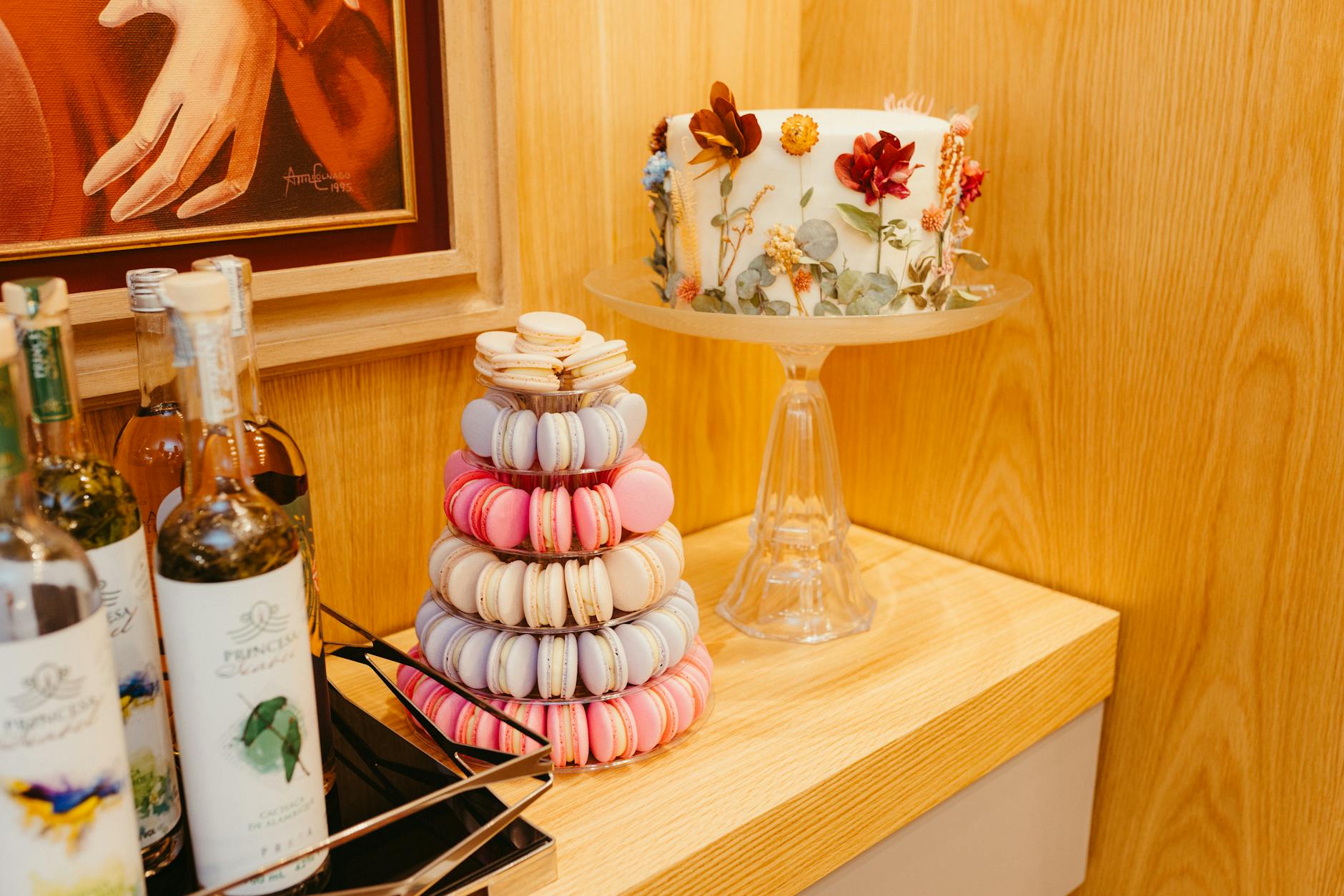
A macaron tower is the wedding cake alternative most likely to make guests pull out their phones before anyone has touched it. The format — a conical stand stacked with 100 to 300 macarons in graduated colors — reads as edible architecture and works equally well in romantic garden weddings, modern lofts, and ballroom receptions.
The trend in 2026 leans into ombré palettes: blush fading to deep coral, pale blue grading into navy, or a moody black-to-rose progression that photographs dramatically against gold or marble surfaces. Couples typically order three to four flavors — pistachio, salted caramel, raspberry, and rose are reliable favorites — from a French bakery one to two days ahead.
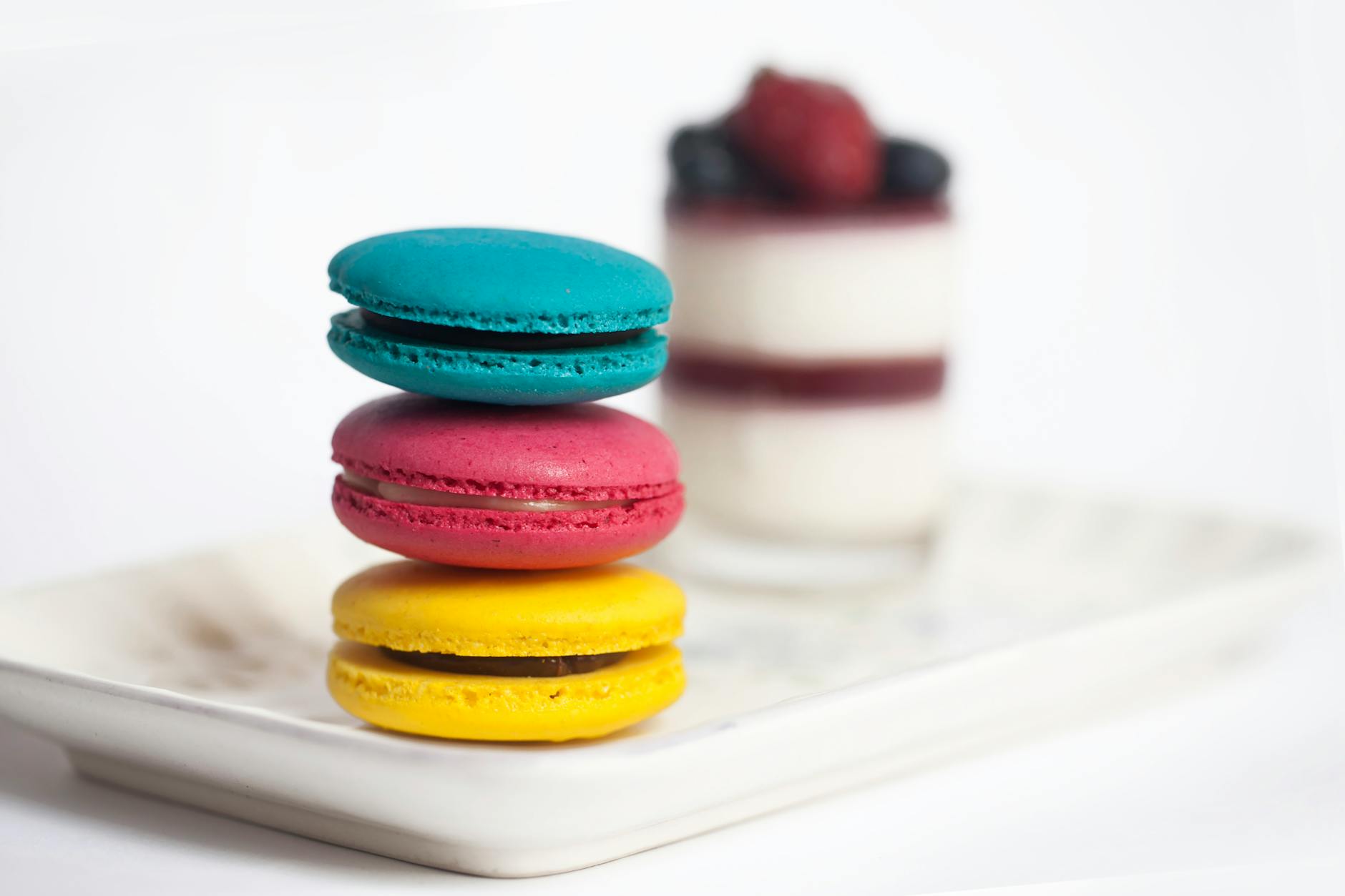
The display itself is where stands earn their keep. The Coopay 9-Tier Acrylic Macaron Tower Stand is a clear acrylic conical stand roughly 18 inches tall, holding around 100 macarons across nine graduated tiers — about $25 to $40 and remarkably stable once assembled. The clear finish lets the macarons themselves carry the color story, which is what you want with an ombré palette.
Plan on three to four macarons per guest, accounting for the fact that they're small and guests will take multiples. Set the tower up no more than two hours before service — humidity is the enemy, and macarons left out too long develop soft, sticky shells. Pair with a complementary pastry like canelés or madeleines for guests who want something a little more substantial.
Pie Spreads, Ice Cream Carts, and Other Sweet Options
The long tail of dessert alternatives runs deep — pie bars, ice cream carts, gelato pushcarts, churro stations, crêpe carts, s'mores bars, and Italian cookie tables. These work as the second wave of dessert when you've also served a small cutting cake, or as the main event at casual outdoor weddings.
Pie spreads have been the strongest performer in this category for the past two years. A table of six to eight whole pies — bourbon pecan, apple crumble, key lime, salted honey, and seasonal stone fruit — with a few cake stands for height and small chalkboard labels reads warm, generous, and a little nostalgic. It works especially well for fall weddings.
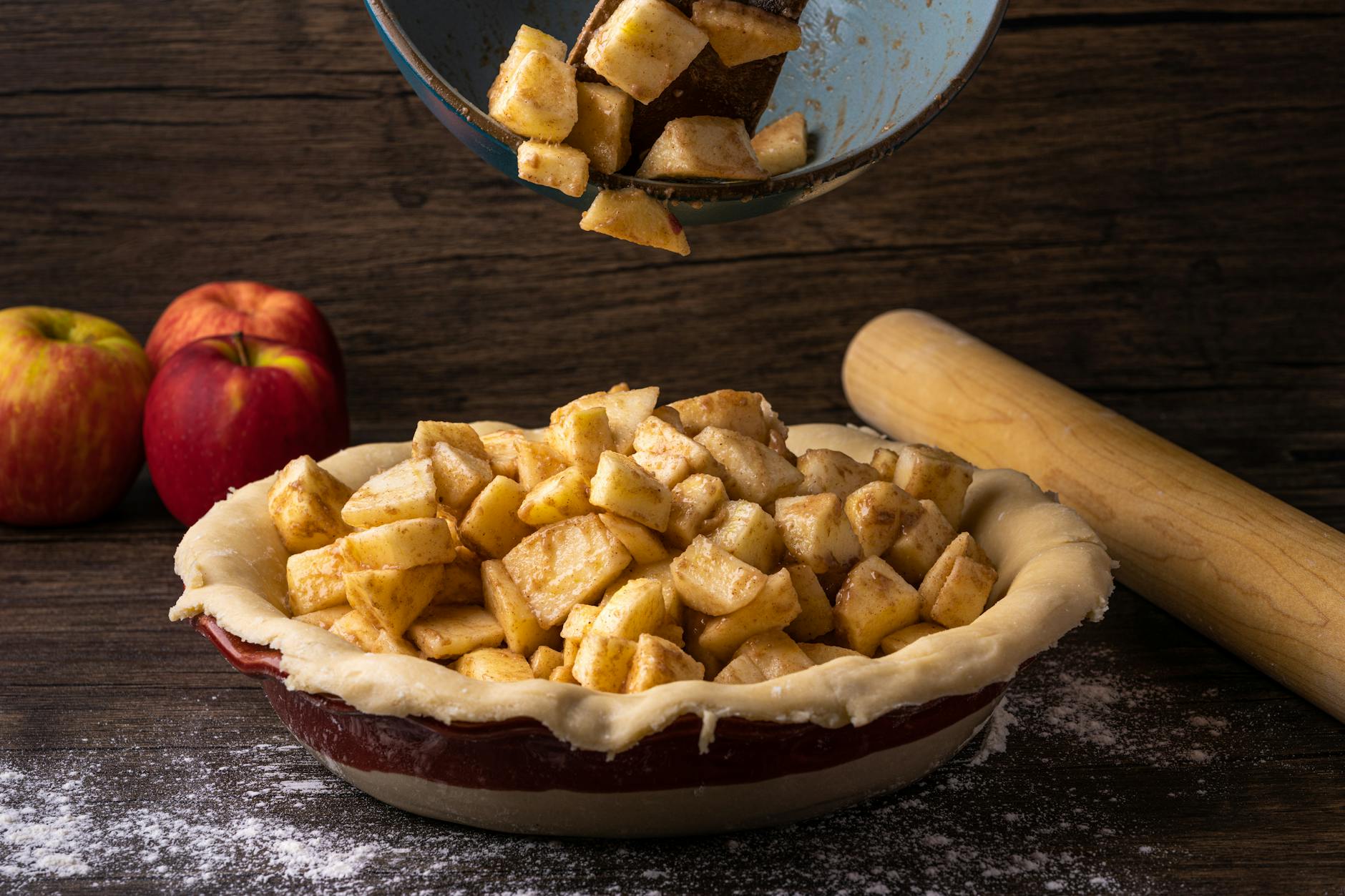
A clean way to add height to a pie table is a footed glass stand — the Mosser Glass Footed Cake and Pie Stand is a 12-inch American-made pressed-glass stand around $55 to $75 that handles real weight and photographs beautifully under string lights. Use two or three on a long table at staggered heights with the remaining pies flat.
Ice cream carts and gelato pushcarts have also moved into the mainstream for summer weddings. A rented vintage-style cart with two to four flavors and an attendant runs $400 to $800 for a three-hour window — comparable to a mid-range cake and far more memorable. Look for vendors who scoop into mini cones so guests can graze rather than commit to a full serving.
How to Choose the Right Wedding Cake Alternative
The right wedding cake alternative comes down to four practical questions, in roughly this order of importance.
First, what time is dessert served? Late-night dessert (after 9 p.m.) favors handheld formats — donuts, cupcakes, macarons, mini pies — because guests are circulating, dancing, and not interested in plated service. Early dessert hours (right after dinner) can support seated formats like cheese cakes and full pie slices.
Second, what's the venue temperature? Ice cream and gelato need a venue with reliable air conditioning or shaded outdoor space. Macarons hate humidity. Pies travel best of all and forgive a warm room for an hour or two. Match the dessert to the climate you'll actually have.
Third, how many guests, and how much do they snack? Cocktail-hour-heavy receptions where guests have grazed continuously need less dessert volume than receptions with a single seated dinner. As a general rule, plan two to three pieces per guest for handheld desserts, or one full serving per guest for sliced/cut formats.
Fourth, what cuts for photos? If you want a cake-cutting moment, build it in — a small cutting cake on top of a cupcake tower, a wheel of brie at the top of a cheese cake, or a single tier alongside a donut wall. The cake-cutting photo is one of the few traditional shots that consistently moves families, and skipping it entirely is a common regret a year out.
If you're weighing the broader reception flow, our guide to wedding cake topper ideas covers cutting-cake styling, wedding favors guests will use helps if you'd rather redirect budget to a take-home moment, and wedding signature drink ideas pairs dessert with a bar program.
Wedding Cake Alternatives FAQ
- How much should I budget for a wedding cake alternative compared to a traditional cake?
Most alternatives come in 40 to 70 percent below a tiered cake for the same guest count. A donut wall for 150 guests typically runs $250 to $400, a cupcake tower $300 to $500, a macaron tower $400 to $700, and a cheese wheel cake $350 to $600 — versus $900 to $1,500 for a comparable tiered cake. Gelato carts with attended service are the exception, often landing at $500 to $900 once labor is included.
- Do I still need a cutting cake if I'm doing a dessert alternative?
It's optional but worth considering. A small six-inch cutting cake — typically $60 to $120 — preserves the cake-cutting tradition and the first-bite-of-marriage photo for older family members who associate that moment with the wedding itself. Many couples place the cutting cake on top of a cupcake tower or beside a donut wall so it doubles as styling.
- How far in advance should I order each format?
Donut walls should be locked in eight to twelve weeks ahead and donuts picked up the morning of the wedding. Macaron towers need a four to eight week order window since they're typically baked one to two days before delivery. Cheese cakes can be sourced as late as two weeks out from a local cheesemonger.
- What's the best wedding cake alternative for an intimate wedding?
For weddings under 60 guests, a small two-tier cutting cake paired with a pie spread or single tier of macarons hits the sweet spot — guests get variety without leftover dessert filling your fridge for a week. Cheese wheel cakes also work especially well at intimate weddings since guests can sit, graze, and talk rather than rush a station.
- Are donut walls and cupcake towers still trendy or are they overdone?
Both have moved firmly into "classic" rather than trendy. Donut walls hit peak saturation around 2022 and have since matured into a reliable, expected option that doesn't read dated when executed cleanly. What dates a dessert display is usually styling — kitschy props, over-the-top monograms, mismatched colors — rather than the dessert format itself.
- How do I keep my dessert display looking fresh through the reception?
Stage it rather than serving everything at once. Donuts dry within two hours, macarons soften with humidity, and cheese loses flavor warm. Set out enough to look generous at the start of the dessert hour, then have backup trays in the kitchen that staff bring out as the display thins. A sparse wall at 10 p.m. photographs worse than no wall at all.
PREV ARTICLE
NEXT ARTICLE
Related articles
Flowers and decor
Wedding Cake Stand Ideas for Every Style and Budget
Flowers and decor