Unique ideas


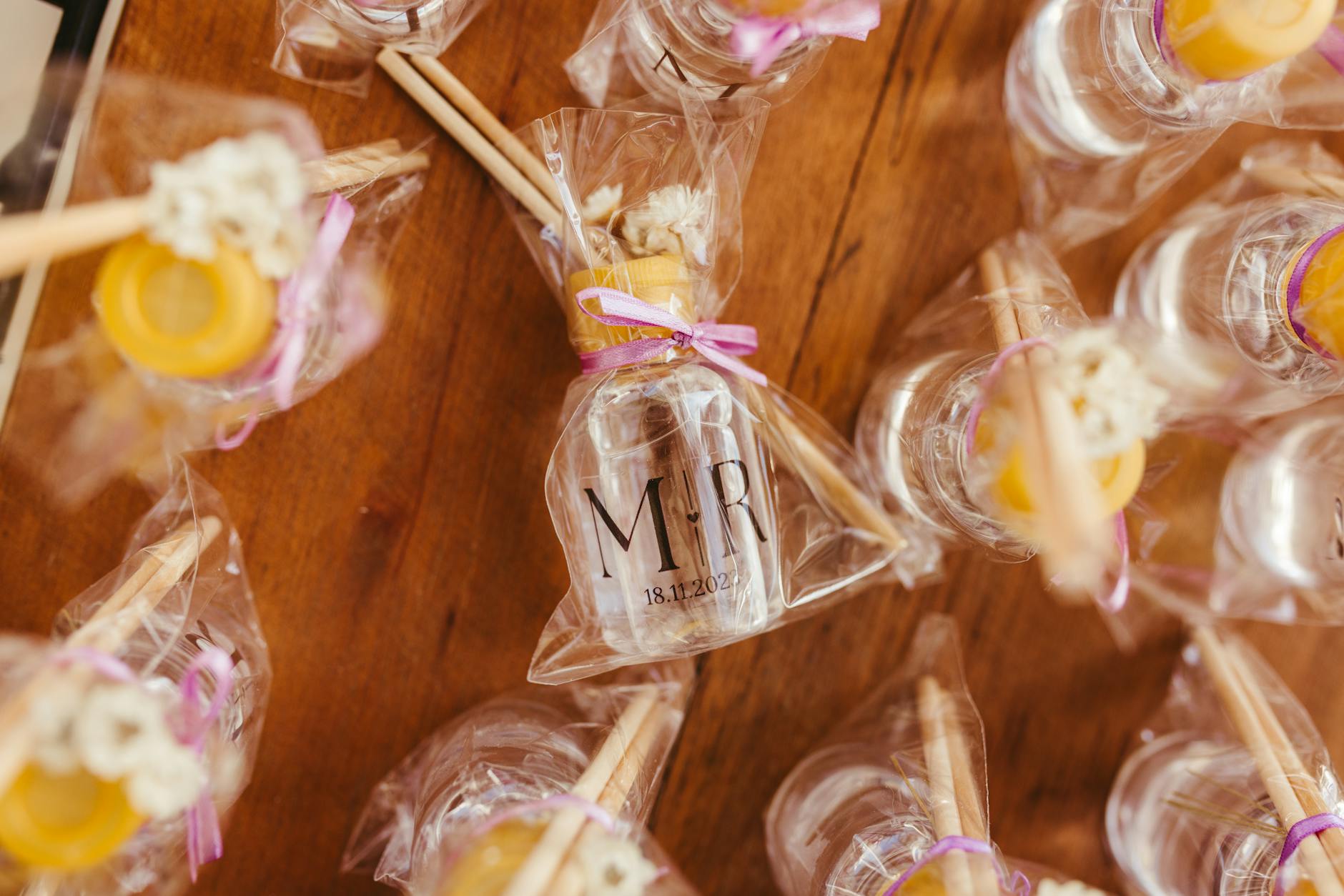
Wedding favor tag ideas do more than label a parting gift. They turn a tiny token — a jar of honey, a candle, a bag of almonds — into a finished keepsake that carries your names, your date, and a small thank-you that guests actually read on the drive home. Most couples spend weeks choosing the favor itself, then leave the tag as a last-minute scribble in marker. That tag is the one piece of stationery your guests touch, hold, and often save, so the design deserves more than an afterthought.
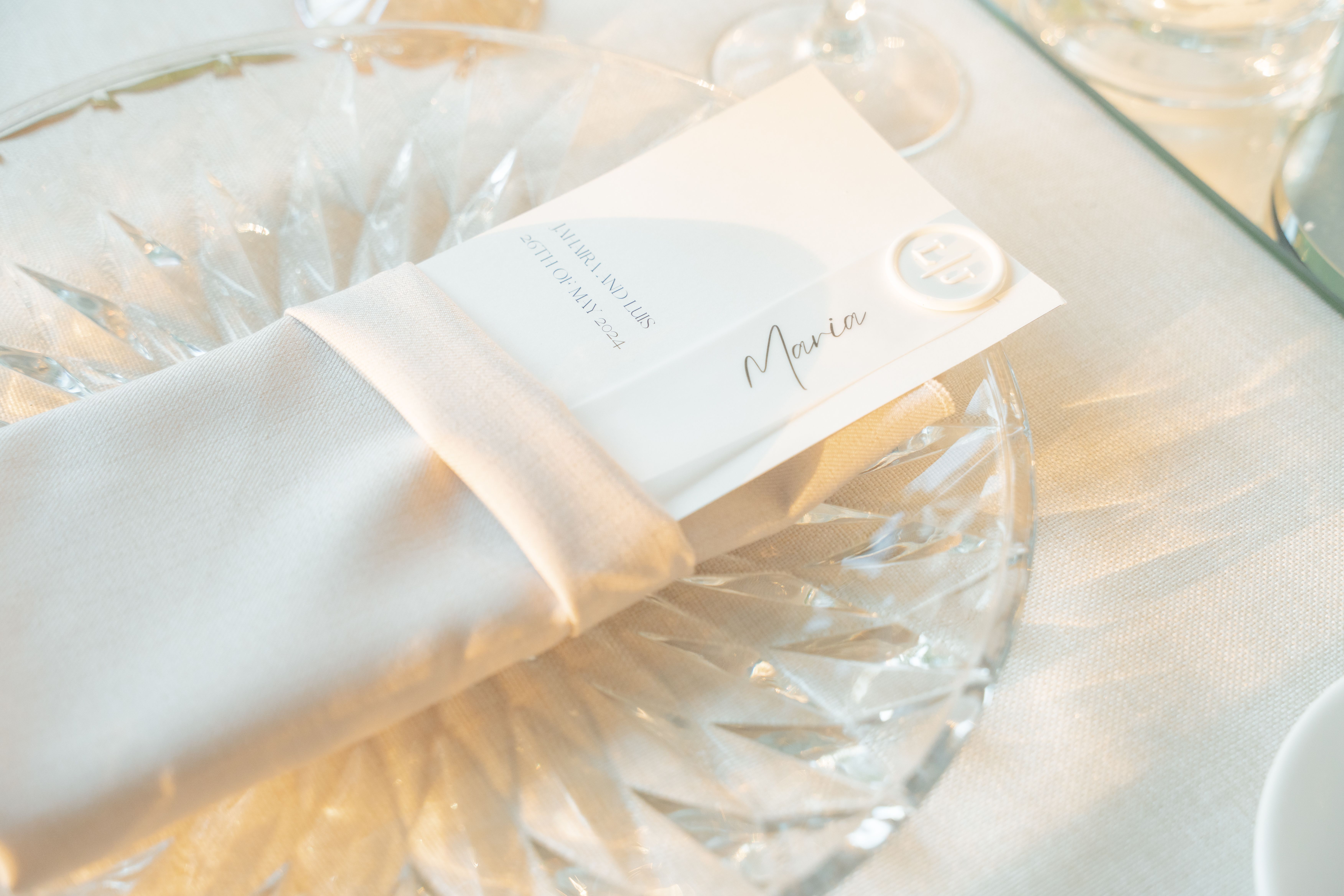
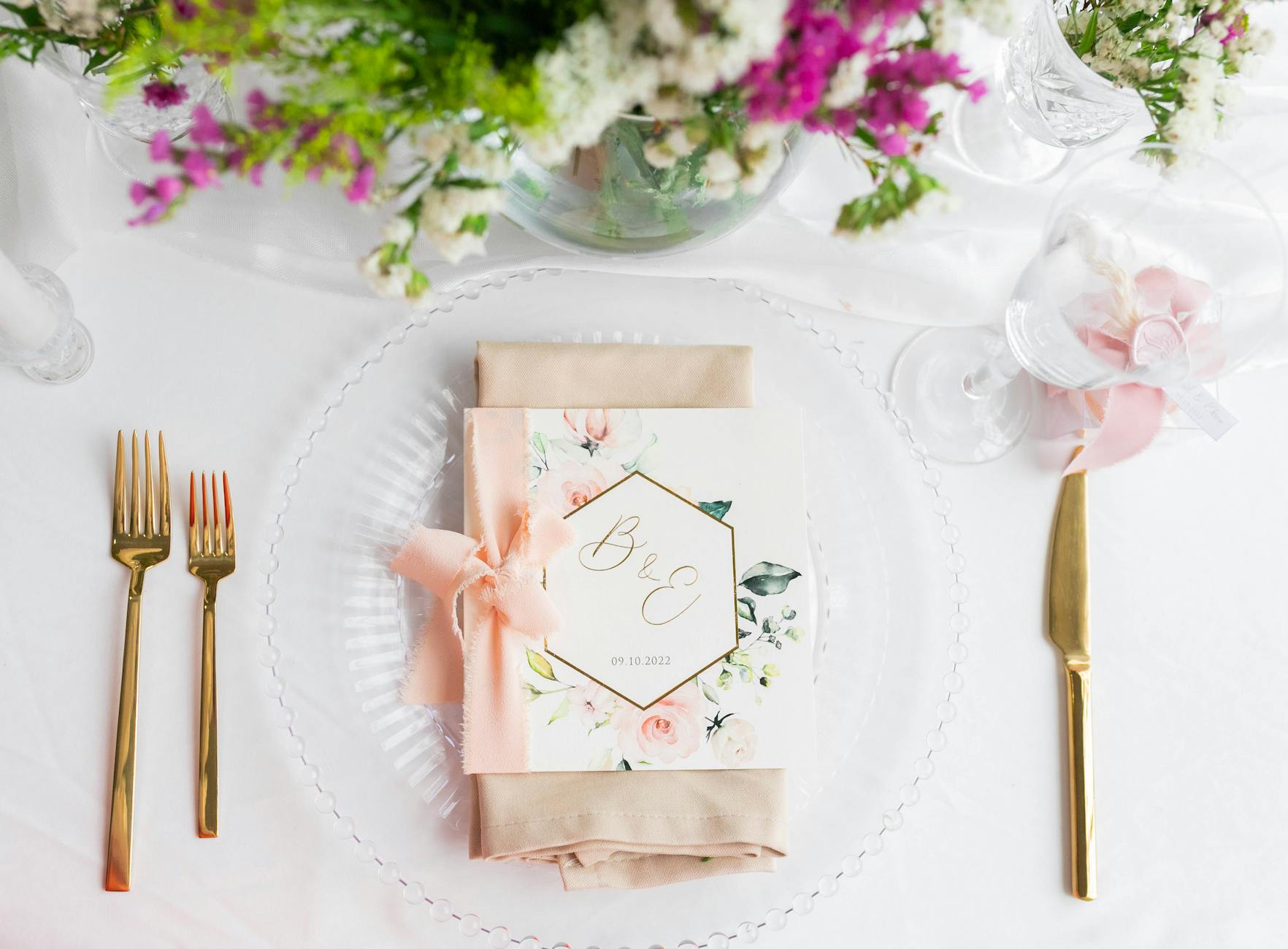
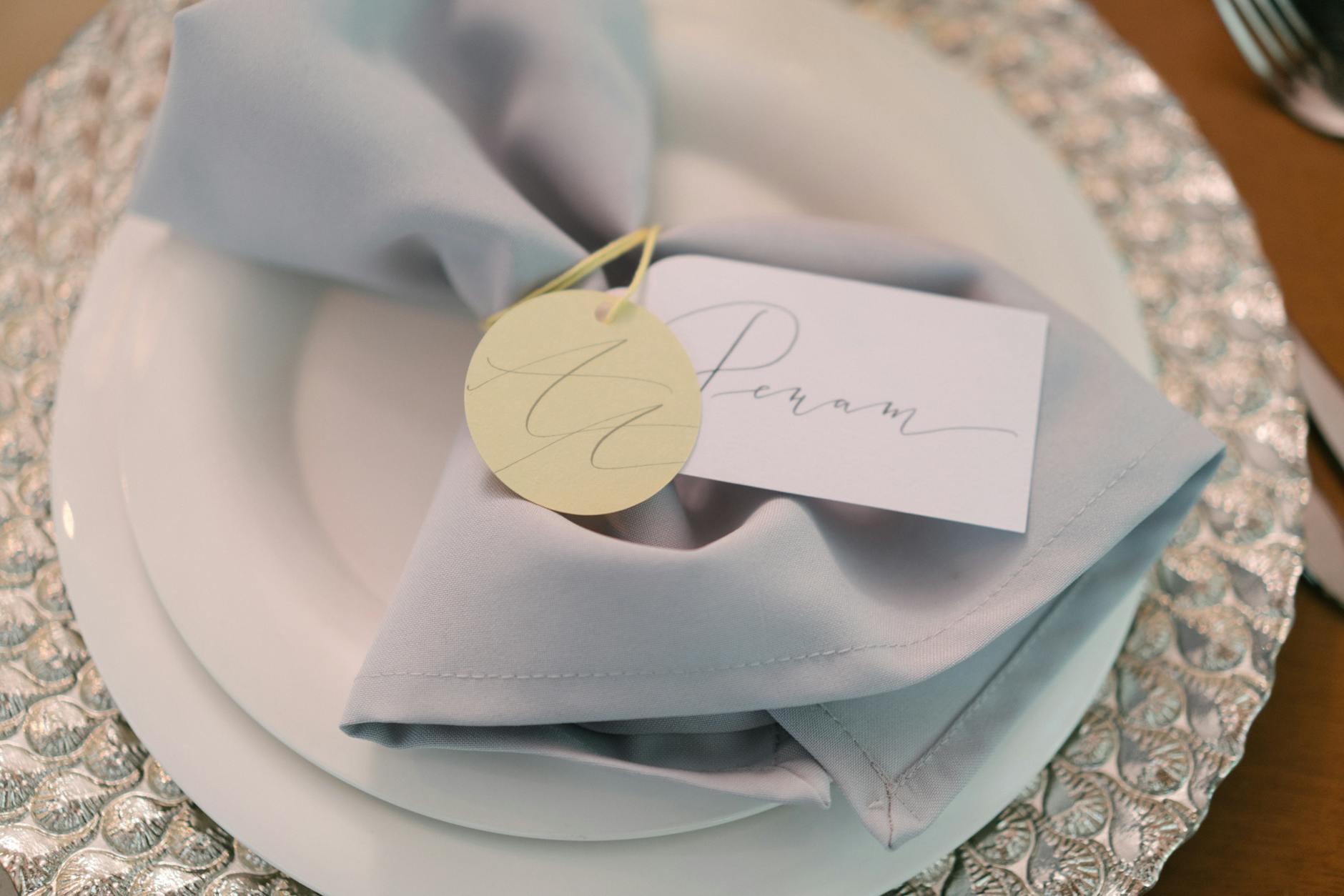
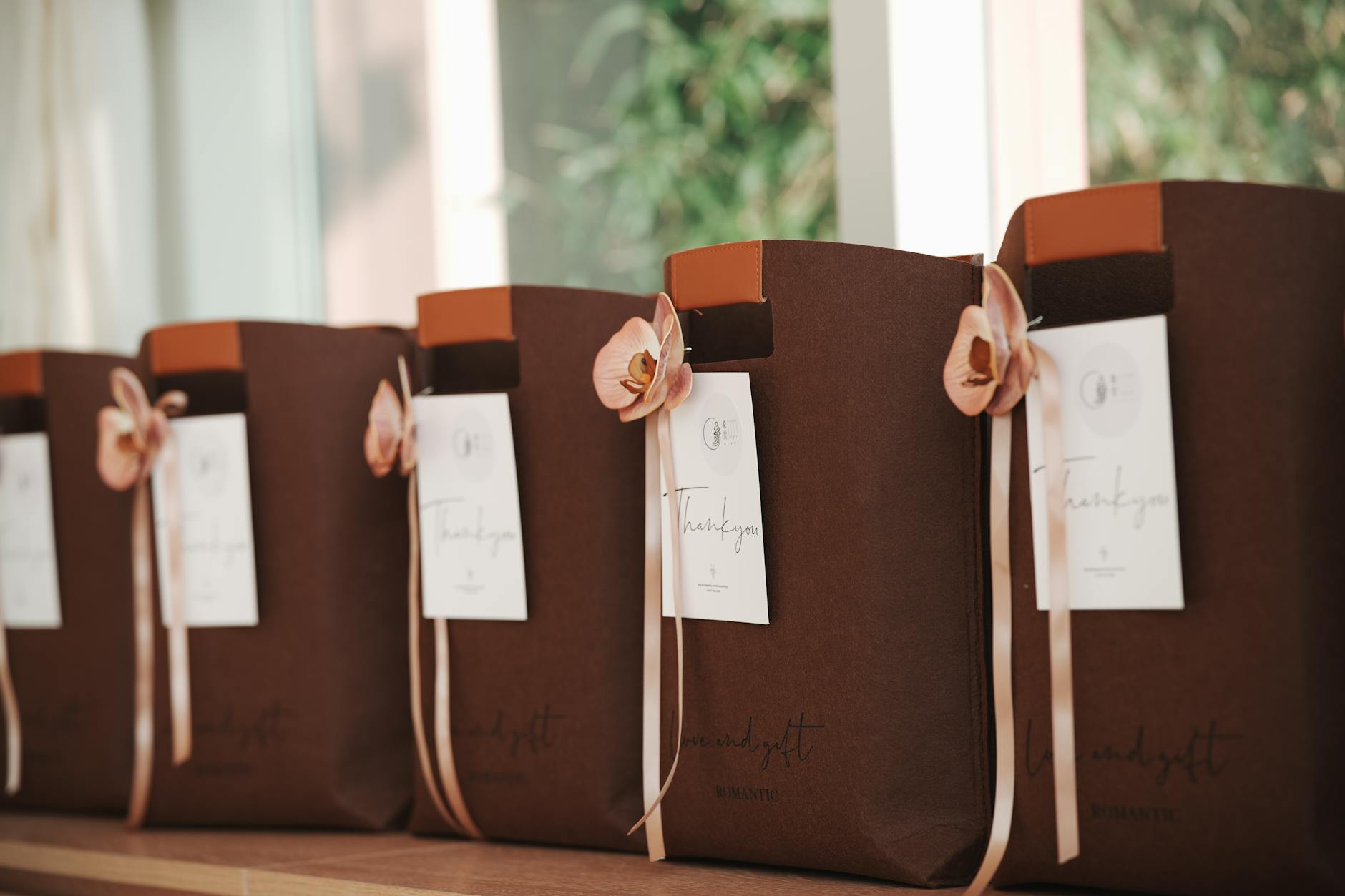
The right tag also doubles as decor. Stack favors near the entry, hang tags from a welcome ladder, or tie them onto napkins as a place-card-and-favor hybrid, and the tag itself becomes part of your tablescape. The good news: you do not need calligraphy lessons or a $400 printing order to pull this off. Kraft paper, twine, ink stamps, and printable templates have multiplied in the last two seasons, and the tools to make them yourself usually come in under $50 for 100 guests.
This guide walks through more than thirty wedding favor tag ideas, from five-minute kraft-and-twine setups to fully printed foil designs. You will find templates, wording that does not sound generic, ASIN-verified Amazon supplies, and the finishing tricks — corner punches, deckled edges, faux wax seals — that make a tag look custom even when 200 of them are identical.
Favor tags are the smallest piece of paper goods at a wedding, and that small size is exactly why they matter. Guests pick up the favor, read the tag, and that is the last printed message they take from your reception. Couples often invest in custom invitations, menus, and place cards, then attach a generic "Thank You" tag — the visual mismatch makes the favor feel like an afterthought.
Pull a strip of color, a font, or a small motif from your invitation suite and carry it through to the tag. If invitations used a sage-green watercolor laurel, repeat the laurel on the tag. If your monogram appears on the welcome sign, shrink it down and stamp it onto every tag. Designers call this a "design through-line," and it is the single biggest reason some weddings look styled while others look pretty-but-disconnected.
Tags also solve practical problems. They tell guests what the favor is (not everyone recognizes a wildflower seed packet on sight), confirm the bag on their seat belongs to them, and can double as a place card by adding a name. Designed well, the tag becomes a small ambassador for the entire wedding for years after.
Kraft paper hang tags are the most-used favor tag in modern weddings for a reason. The warm-brown card stock plays well with greenery, dried florals, terracotta, sage, dusty blue, and almost any wedding palette outside of strict black-and-white. The natural texture forgives uneven handwriting, hides minor smudges, and photographs beautifully under both candlelight and noon sun. For couples who want a finished look without a custom print run, kraft is the safest starting point.
The bulk packs make the budget math easy. A 200-piece pack of pre-strung kraft tags like the SallyFashion 200-piece Gift Tags with String Attached runs around $12 to $15 — well under ten cents per tag, with the jute string already threaded and double-knotted at the top. The scalloped "water ripple" edge mimics vintage apothecary tags, suiting rustic, garden, vineyard, and boho aesthetics without any extra trimming.
If your guest count is closer to 100, look at kits where the wording is already done. The G2PLUS "Hugs and Kisses from the New Mr & Mrs" 100-piece kraft tag set ships with the message preprinted and roughly 66 feet of twine — useful for chocolate kisses, cookie bags, or honey jars where the wording fits the favor automatically.
Three small upgrades make kraft look intentional rather than default. Swap the included thin jute twine for thicker bakers twine in a wedding color — 2-millimeter cotton string in soft white, blush, or sage instantly elevates the same kraft tag. Add a single ink stamp in waterproof ink (your monogram, a date, a botanical). And layer the kraft tag onto a slightly larger cardstock backer in your wedding color; the two-tone effect makes a ten-cent tag look like a boutique one.
Custom-printed tags are where favor stationery feels truly bridal rather than crafty. The category includes circular tags with your monogram, rectangular tags with names and date, foiled tags in gold or rose gold, and watercolor tags that match your invitation suite. Print quality has improved enough that a digital-print tag at $0.30 each is now nearly indistinguishable from letterpress at five times the price.
For couples doing personalization themselves, a self-inking rubber stamp is the single best return on investment. The Printtoo Personalized Family Address & Wedding Invitation Rubber Stamp lets you upload two to four lines (names, date, hashtag, or short message) and ships a wood-mounted stamp around $25. One stamp can personalize 300+ kraft tags in under an hour, and the stamp itself becomes a keepsake. Pair it with archival pigment ink so the design does not smudge after a humid ceremony.
Design choices that work consistently well include first names only (Emma & Theo) rather than full legal names, the wedding date in a clean format (08.15.26 or August 15, 2026), and a small symbol that ties to the venue — an olive branch for Tuscany, a pine sprig for a mountain wedding, a sand dollar for the coast. The classic stationer rule applies: empty space is part of the design.
Foil-stamped tags are having a strong 2026 moment, particularly in soft champagne and antique copper rather than brighter golds. If you order online, request a press proof at 100% size before approving the print run — foil sometimes lifts slightly differently than the digital preview suggests, and a half-millimeter shift on a tiny tag changes the whole composition.
Making favor tags yourself is the right call when you want a very specific aesthetic, you have at least two weeks before the wedding, and you have one or two people willing to do an assembly-line evening. Below 100 guests, DIY usually saves $40 to $80 over comparable custom-printed tags; above 200, the time cost outweighs the dollar savings and a print order makes more sense.
The minimum supply list is short: cardstock in your chosen color and weight (110-pound is the sweet spot), a paper trimmer, a hole punch, twine or ribbon, and either a stamp or a desktop inkjet printer. A circle or scalloped punch turns plain rectangle cuts into shaped tags in seconds; the EK Tools 1-inch Circle Punch with Safety Lock is the go-to for small round tags meant for chocolate kisses, mini liquor bottles, or seed-packet corners, and it survives 200+ punches without dulling.
For string, a 328-foot spool of 2-millimeter cotton bakers twine like the G2PLUS White Cotton Bakers Twine covers roughly 300 tags at 10 inches per tag, with leftover for menu cards and napkin ties. White, ivory, and natural jute are the most versatile; colored bakers twine works beautifully with a committed palette but can fight with mixed-color florals.
A realistic timeline: order supplies two-to-three weeks out, print or stamp tags two weekends out, punch and thread one week out, and store finished tags flat in a shoebox so corners do not curl. Attach tags to shelf-stable favors the day before; attach tags to perishable favors morning-of.
Printable templates are the fastest path from idea to finished tag. Etsy, Canva, Creative Market, and Minted all sell editable templates from $5 to $25 — the price typically buys you a Corjl or Templett editing link where you change names, dates, and small wording fields, then download a print-ready PDF on standard letter-size sheets. Most templates fit 8 to 12 tags per page, so a 100-guest wedding prints on roughly 10 sheets of cardstock.
When choosing a template, look for three things. Check the export resolution — anything under 300 DPI will look soft at final size. Confirm the template includes trim marks, because guessing where to cut on a sheet of identical tags is the biggest source of crooked stacks. And look at font availability; for invitation-suite continuity, the ability to drop in your invitation's display font is worth paying $5 extra.
Free templates exist too, especially in Canva's wedding section, but they are often used by hundreds of other couples. Middle-ground move: download a free template and customize it heavily (swap the font, recolor the border, add a botanical illustration) so the result reads as custom. Print on at least 100-pound cardstock — flimsier paper curls when twine is threaded.
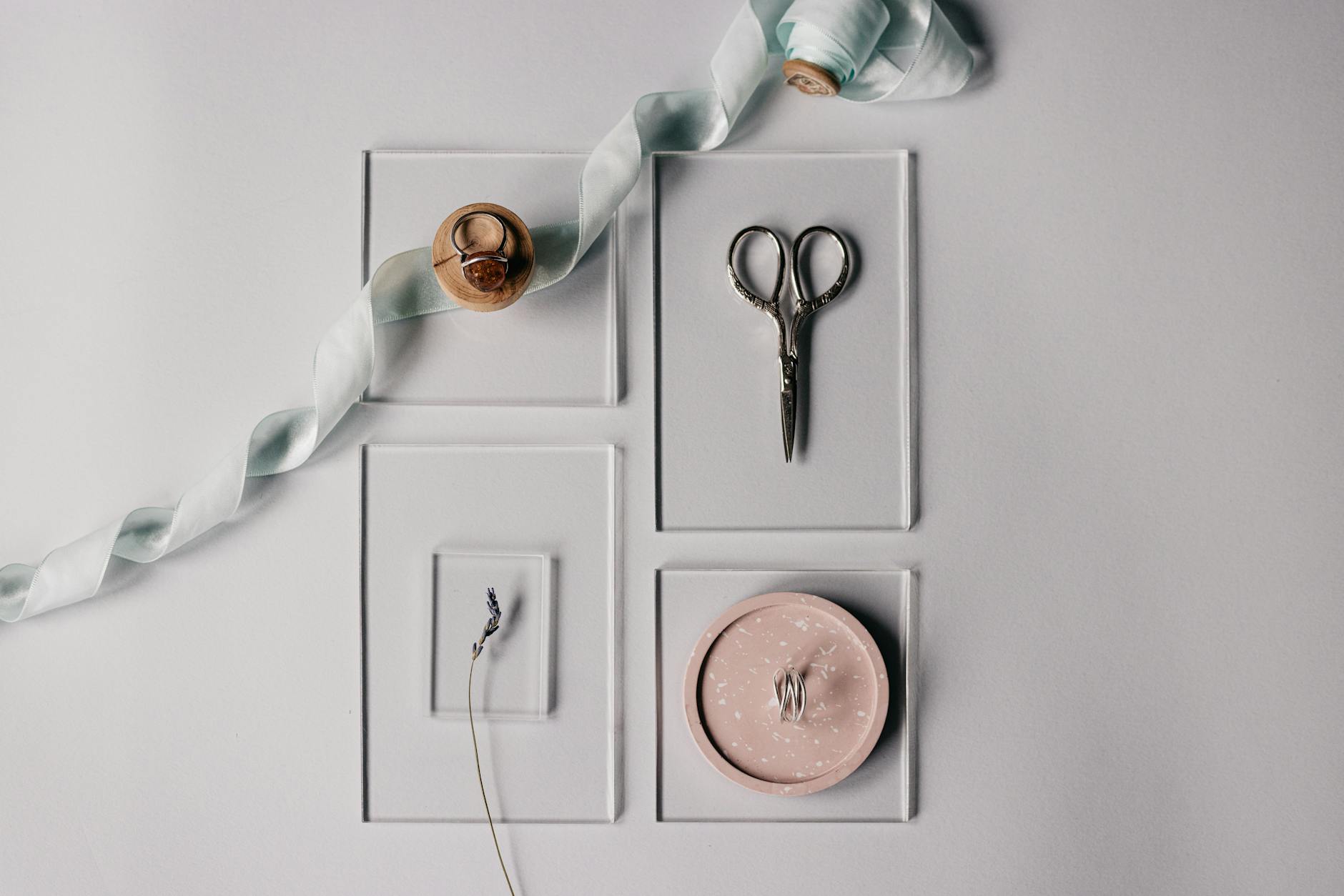
The string holding the tag is doing more visual work than most couples realize. A kraft tag on natural jute reads rustic. The same tag on satin ribbon reads classic-bridal. On velvet, it reads moody and editorial. Same tag, three different weddings. Before ordering in bulk, buy a sample yard of three stringing options and test them against the actual favor in your actual lighting — the difference between "perfect" and "almost right" usually shows up under venue bulbs, not at home.
Silk ribbon (the bias-cut kind, often called "silk hand-dyed ribbon" on Etsy) is the highest-end option, $0.50 to $1.00 per tag. It is the right choice for fewer than 80 favors at intimate, design-forward weddings. Cotton bakers twine sits in the middle — affordable at scale, soft enough to feel intentional, available in dozens of colors. Jute twine is the budget option and the most rustic; pair it with kraft tags and dried botanicals for a barn or vineyard wedding.
Three finishing touches upgrade the look without much cost. Faux wax seals (peel-and-stick) come in colors matched to most palettes and add a sealed-envelope formality at $0.25 to $0.40 each. A sprig of dried lavender, eucalyptus, or baby's breath under the twine adds dimension. And deckled edges (torn rather than cut) make even printer-paper tags look like they came from a stationer; tear over the edge of a ruler for a clean effect.
The text on a favor tag should be short — under fifteen words is the sweet spot — and feel like something the two of you would actually say. The classic "Thank you for celebrating with us" is fine but worn-out; consider what about the favor itself you want to highlight, or what feeling you want the guest to take home.
For consumable favors, lean into the favor itself: "Locally roasted, just like our love story" works on coffee favors; "Sweet endings, sweeter beginnings" suits caramels or honey; "From our hive to yours" is honest and warm on honey jars. For seed-packet favors, "Let love grow — plant me!" plays the dual meaning. For champagne minis or coupes, "Pop, fizz, clink — to Emma & Theo" replaces a generic thank-you with something specific.
For non-consumable favors like candles, ornaments, or coasters, more personal wording works because guests will keep the item: "A little light to remember our day — Emma & Theo, 08.15.26" feels handwritten even when printed. Keep the date format consistent: if invitations used "August 15, 2026," the tag should match. One template-busting trick: ask each guest a tiny question on the tag — "If you had one word of marriage advice, what is it?" — turning the favor into a slow-burn conversation starter.
The most common sizes are 2 x 3.5 inches (rectangular) and 1.5 to 2 inches (round). Rectangular tags are easier to read at a glance and fit more wording without crowding. Round tags look softer on glass jars, candles, and curved favors but limit you to two or three words. If the favor is larger than a tea-light candle, default to a rectangle; smaller items get round or scalloped tags. Always test one finished tag on the actual favor before ordering 100, because perceived scale shifts between an empty tag and a tag against a 3-ounce jar.
Print or order tags four to six weeks before the wedding, and complete assembly (stringing, attaching) two to four weeks before. This buffer absorbs reprints, twine shortages, and the inevitable last-minute design tweak when you see the printed tag in person. Attach tags to perishable favors the morning before the wedding, and tags to shelf-stable favors (candles, soaps, ornaments) up to a week ahead. Store finished tags flat in a shoebox between sheets of parchment so the cardstock corners do not curl in transit.
Use pigment-based archival ink instead of dye-based, and let stamped tags dry undisturbed for at least 30 minutes before stacking. For inkjet-printed tags, run a light spray of clear matte sealant from 12 inches away to fix the ink against humidity and fingerprints. Avoid felt-tip pens for handwritten tags at outdoor weddings, since dew can reactivate the ink. A pigment fineliner like Sakura Pigma Micron in size 03 or 05 holds up reliably.
Yes, and combining them is one of the easiest stationery savings for guest counts under 100. Add the guest's first name to one side of the tag and your thank-you message to the other, then tie the tag to a favor placed at each seat. The tag now does the work of a place card, a favor tag, and a take-home memento in one piece of paper. For 150+ guests, the personalization workload becomes harder to manage and separate place cards usually make sense.
White and metallic gold are the highest-contrast options on natural kraft, with white reading cleaner and gold reading more formal. Black ink works but disappears slightly into the brown — heavier font weight or larger size compensates. Avoid pastels like pale pink, mint, or lavender on kraft; they fade into the brown background in any photograph not taken in bright sun. If your palette is built on soft pastels, switch from kraft to ivory or blush cardstock for the tag itself rather than fighting kraft with low-contrast ink.