Wedding Ring Bearer Pillow Ideas: Classic to Modern in 2026


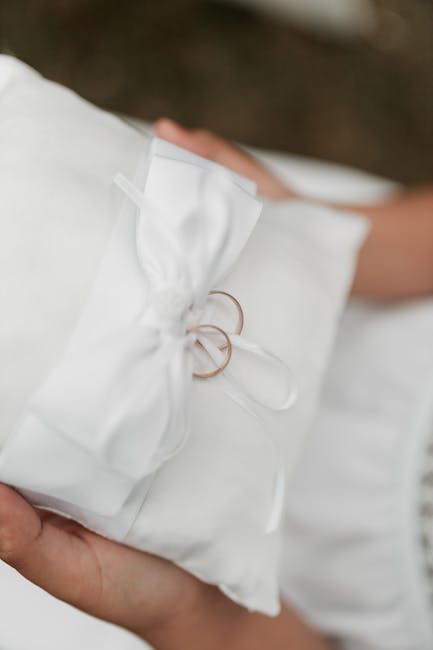
The wedding ring bearer pillow sits in an interesting place in modern weddings — it is one of the few traditional ceremony details that has actually gotten more personalised, not less, in the last few years. Most of the wedding ring bearer pillow ideas couples used a decade ago focused on white satin and a single ribbon bow. Today the same role is filled by everything from hand-embroidered linen to engraved wooden boxes that the couple keeps on a nightstand long after the ceremony ends.
Part of that shift is photographic. The pillow shows up in close-up detail shots that photographers post and that couples save in their album, so texture, palette, and personalisation now matter as much as the simple function of carrying two rings down the aisle. The rest is sentimental — the pillow or box becomes a keepsake displayed on an anniversary, or passed to a child who serves as a ring bearer at a future family wedding.
This guide walks through the full range of options for 2026, from the classic ivory satin pillow that still photographs beautifully in a black-tie ceremony to the modern wooden and velvet boxes that have replaced pillows entirely in many ceremonies. We'll cover how to choose the right size and material, how to personalise without going over the top, the modern alternatives worth considering, and the practical day-of details — like how to actually secure the rings — that determine whether the pillow makes it to the altar without a six-year-old dropping a band in the grass.
Why ring bearer pillows still work for the 2026 wedding
The ring bearer pillow has survived every shift in wedding fashion for one simple reason: it solves a small but real problem. You need to get two rings, safely and visibly, from the start of the aisle to the officiant. A best man's pocket works, but it is invisible in the photos and it removes a charming role from a child in your family. A pillow, by contrast, is a tangible prop, gives the ring bearer a clear job, and creates a clean detail shot that anchors the ceremony's visual storyline.
Modern pillows have also evolved past the all-white satin square. Couples now treat the pillow as another piece of soft styling — fabrics that match the bridesmaids' palette, embroidery that echoes the invitation suite, and ribbon colors that reappear in the bouquets. The pillow becomes part of the visual design rather than a generic accessory.
The role itself is more flexible than it used to be. Couples often hand the pillow to a child too young to carry the actual rings — the real bands stay in the best man's pocket while the pillow holds two silver stand-ins. That keeps the photo and the moment without putting your wedding bands at risk.
Choosing a wedding ring bearer pillow: size, style, and material
The standard ring bearer pillow is roughly seven to nine inches square. Anything smaller looks lost in the ring bearer's hands; anything larger reads as a couch cushion rather than a ceremony prop and tends to dwarf younger children. The 7–9 inch range hits the sweet spot for kids aged three to eight, which covers the typical age range of a wedding ring bearer.
For the material, the three styles that show up most reliably in 2026 wedding albums are ivory satin with lace overlay, plain natural linen, and modern velvet. Lace and pearl details photograph particularly well in indoor and church ceremonies because the texture catches available light and gives the close-up detail shot the visual depth that flat satin lacks.
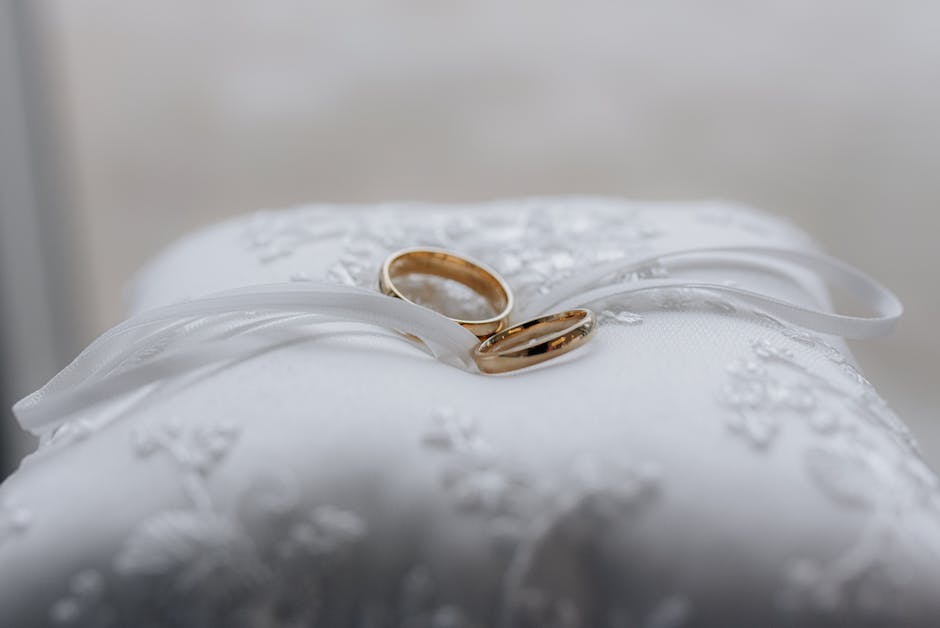
A reliable starter pillow that hits all three points — right size, right material, photogenic detail — is the ATAILOVE Wedding Ring Pillow Lace Pearl Ivory. It comes in 7.8 by 7.8 inches with matte ivory satin, a delicate lace overlay, and tied pearl detail at the centre, for around $15 to $25. The lace edge gives photographers something to focus on, and the small fabric loops at the centre let you tie the rings on with thin ribbon — a setup detail that prevents the rings from sliding off mid-ceremony, which we'll come back to in the practical section.
Color matters more than couples expect. Pure white pillows photograph blue under most reception lighting, while ivory and cream read warmer and pair better with both warm-toned outdoor ceremonies and traditional church palettes. If your bridesmaids are in dusty blue, sage, or terracotta, a coordinated ribbon on an ivory base reads more intentional than ordering a fully colored pillow that may not match your photographer's edit later.
Personalised ring bearer pillow ideas guests will remember
Personalisation is where the ring bearer pillow has changed most in the last few years. The trend has moved away from elaborate embroidered phrases and toward small, restrained details — a monogram in the corner, the wedding date in a single stamped line, or the couple's initials worked into the lace pattern. The shift is partly aesthetic and partly photographic — small details photograph as elegant in close-up shots, while larger phrases tend to look busy and date the pillow within a couple of years.
The most-used personalisation styles in 2026 are a small embroidered monogram in the lower corner, a single stamped line with the wedding date, the couple's initials worked into a centre tied bow, and a hand-stitched short phrase like "I do" along one edge. Etsy sellers offer monogram embroidery on linen pillows for around $35 to $65 with a 10–14 day lead time, and most Amazon pillows can be paired with a separate engraved keepsake item for couples who want a personalised element without paying for full custom embroidery.
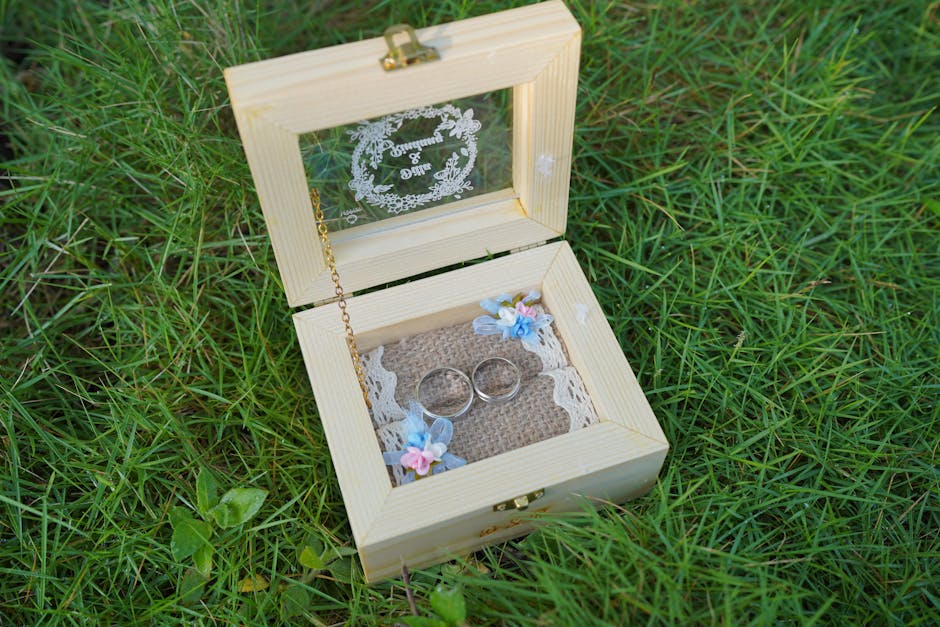
A popular pairing — and an alternative for couples who want a heavier-feeling personalised piece — is to skip the embroidered pillow entirely and put the engraved keepsake at the centre instead. The Aeiniwer Custom Wood Wedding Ring Box for Ring Bearer is a rustic walnut-stained box, engraved with the couple's names and date on the lid, lined with felt, sized at roughly 4 by 4 inches, for around $20 to $35. It sits inside a fabric ring bearer pillow tray, or is carried solo as a more modern alternative. Couples often keep the box afterward as a jewellery tray on a dresser, which gives the personalisation real long-term value.
If you do choose embroidery, keep the font simple — a single-weight serif or hand-script in muted thread reads better in photos than ornate calligraphy in metallic thread. The same restraint applies to our wedding flower girl basket ideas guide: matched, restrained personalisation across both kid-carried props feels more polished than two heavily customised pieces competing for attention.
Modern alternatives: ring boxes that double as keepsakes
The modern shift in 2026 weddings has been toward replacing the soft pillow with a hard ring box — usually a small velvet hexagon box, a rustic wooden round box, or an acrylic transparent box — that holds the rings during the ceremony and then becomes a keepsake afterward. The replacement is partly aesthetic (boxes photograph better than pillows in flat-lay detail shots that have become the wedding photographer norm) and partly functional (a closed box prevents the lost-in-the-aisle moment that pillows occasionally create).
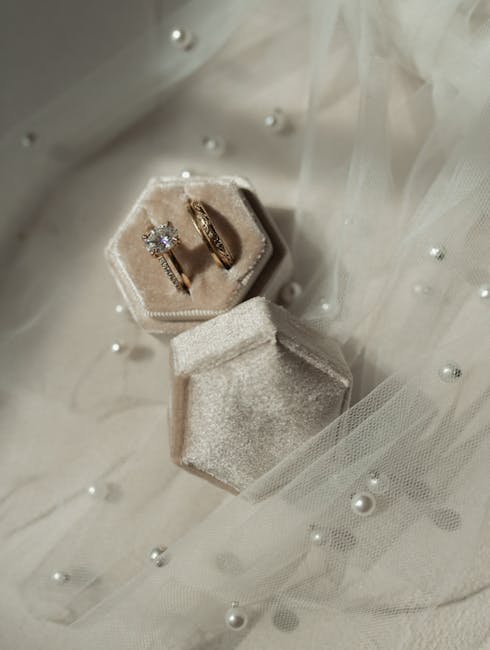
The most popular modern style is the hexagon velvet double-slot box, which holds two rings side-by-side in fitted slots and clicks shut to keep both rings secure. The Hexagon Double Slots Vintage Velvet Ring Box comes in a clean white finish, has two foam slots with velvet overlay, and runs around $10 to $18. It sits naturally in a child's hand at roughly 3.5 inches across, photographs well from any angle, and is small enough to also serve as the engagement ring photo prop weeks before the wedding.
Wooden round boxes have a similar appeal in rustic ceremonies. The 2-inch round walnut style sits flatter than the velvet hexagon, has a magnetic closure that keeps rings from rattling, and pairs naturally with outdoor and barn-style weddings.
A small note on practicality: if you go with a closed box, brief the ring bearer (and whichever adult walks them down) on opening it at the right moment. The most common minor stumble is a five-year-old who walks straight to the officiant with the box still firmly closed. A 30-second rehearsal at the wedding rehearsal dinner usually solves it. Bring a backup pillow or box in your day-of stash — see our wedding emergency kit essentials guide for what else to pack.
Pairing the pillow with a ring bearer sign
A coordinated sign carried by the ring bearer is one of the most-requested upgrades to the traditional pillow walk. It gives photographers a clean detail shot before the bride enters, and it gives a slightly older ring bearer (six and up) a more meaningful task than just walking with a pillow.
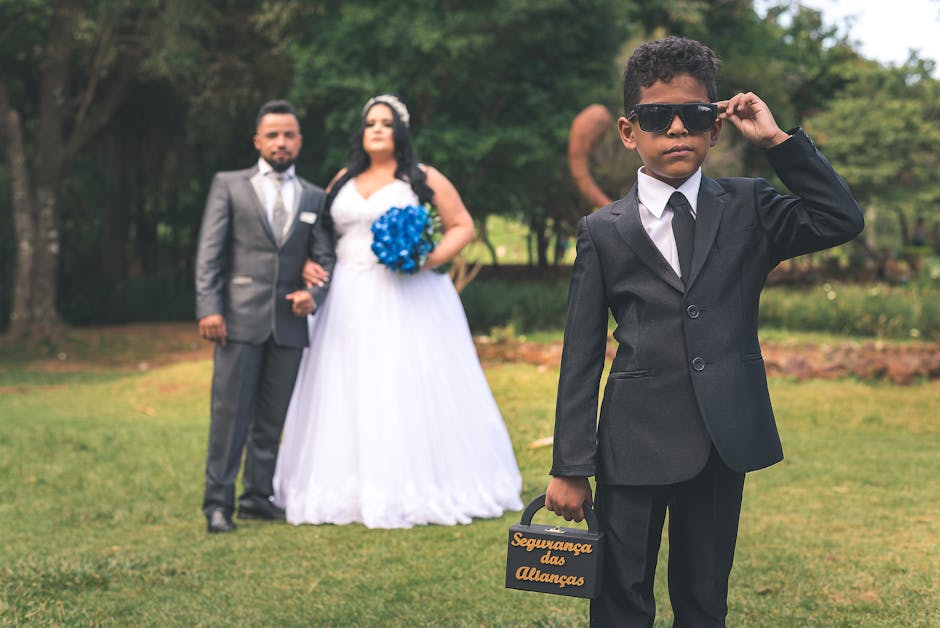
The most common signs are a "Here Comes the Bride" or the playful "Uncle, Here Comes Your Girl" carried by the child as they walk. A reliable pick is the Rustic Here Comes the Bride Sign with Ribbon — a 12 by 6 inch wood-grain board with painted lettering and a satin ribbon for hanging or carrying, for around $12 to $20. The size is intentionally larger than the pillow so the sign reads clearly in ceremony video and photos taken from the back of the aisle.
Most couples carry the pillow OR the sign rather than both — a young child handling two props rarely arrives with both still presentable. If the ring bearer is older, splitting the duties between two children (sign in front, pillow second) works well and gives both kids a defined role.
A note on positioning: have the ring bearer hold the sign at chest height with both hands rather than at the side. Side-carry tends to drag and turn the sign away from the camera. Many signs have a hanging ribbon for guest seating display after the entrance — a small detail that gives the sign a useful second life.
Practical day-of tips for the ring bearer pillow
The single most important detail is securing the rings to the pillow with thin ribbon rather than letting them sit loose in the pillow loops. A four-year-old running down a 50-foot aisle will, statistically, drop a loose ring once in every ten ceremonies. Tie each ring with a four-inch length of thin ivory ribbon in a loose bow the officiant can untie in two seconds — not a tight knot that requires scissors at the altar.
Most couples do not actually put the real wedding bands on the pillow. The standard approach is two unmarked sterling silver or aluminum stand-in rings on the pillow, with the actual bands in the best man's pocket. The substitution is invisible in photos and removes the chance of a dropped band rolling under the seating.
Brief the ring bearer at the rehearsal — not on the wedding day — on three things only: where to start, where to finish, and what to do with the pillow once they arrive. The "what to do with it" detail is the one most couples skip, and it creates the most awkward moment when the child stands at the altar holding the pillow for the entire ceremony. Have them hand it to the best man or place it on a small side table you set up in advance.
Ask your photographer in advance to capture the pillow in a flat-lay detail shot during the getting-ready hour, alongside the rings, the marriage license, and the bouquet. That single shot is the one most couples actually save and frame.
Wedding Ring Bearer Pillow FAQ
- What size should a ring bearer pillow be?
Most ring bearer pillows are seven to nine inches square. That range fits comfortably in the hands of children aged three to eight, which is the typical age range. Anything smaller looks lost and anything larger feels more like a couch cushion than a ceremony prop. If your ring bearer is younger, lean toward seven inches; for older kids, eight to nine inches sits more naturally in their hands.
- Do you put real rings on the pillow?
Most couples use stand-in rings — usually plain silver or aluminum bands — and keep the real wedding bands in the best man's pocket. The stand-ins photograph identically to the real rings from any normal viewing distance, and the substitution removes the risk of dropping a wedding band during the walk down the aisle. Brief the best man at the rehearsal to hand the real rings to the officiant on cue.
- How do you keep the rings from falling off?
Tie each ring to the pillow with a four-inch length of thin ivory or white ribbon in a loose bow. The officiant can untie the bows in seconds during the ring exchange. Avoid tight knots or thick ribbon — anything that takes more than two seconds to undo creates an awkward pause at the altar. The fabric loops on most pillows are decorative.
- Can a ring box replace the pillow entirely?
Yes — and it has become one of the more common alternatives in 2026. A small velvet hexagon box, a rustic wooden round box, or an acrylic transparent ring box all hold two rings securely, photograph well in flat-lay detail shots, and serve as a keepsake afterward. The trade-off is that the ring bearer needs a one-minute rehearsal on whether to open it at the altar.
- Who is supposed to carry the pillow at the wedding?
The traditional role goes to a young boy in the immediate family, usually aged four to eight. Modern weddings use the role for a child of any gender — sometimes called a "ring child" interchangeably — and some couples skip the role entirely if they have no children of the right age. Nieces, nephews, godchildren, and the children of close friends are all common choices.
- Do ring bearers usually walk alone or with someone?
Younger ring bearers (three to five) typically walk down the aisle with the flower girl, who guides them at the same pace. Older ring bearers (six and up) tend to walk solo or just ahead of the bridesmaids. If the ring bearer is shy or very young, having a parent walk alongside is completely normal and not a breach of tradition.