Wedding Thank You Card Ideas: 30+ Designs for 2026


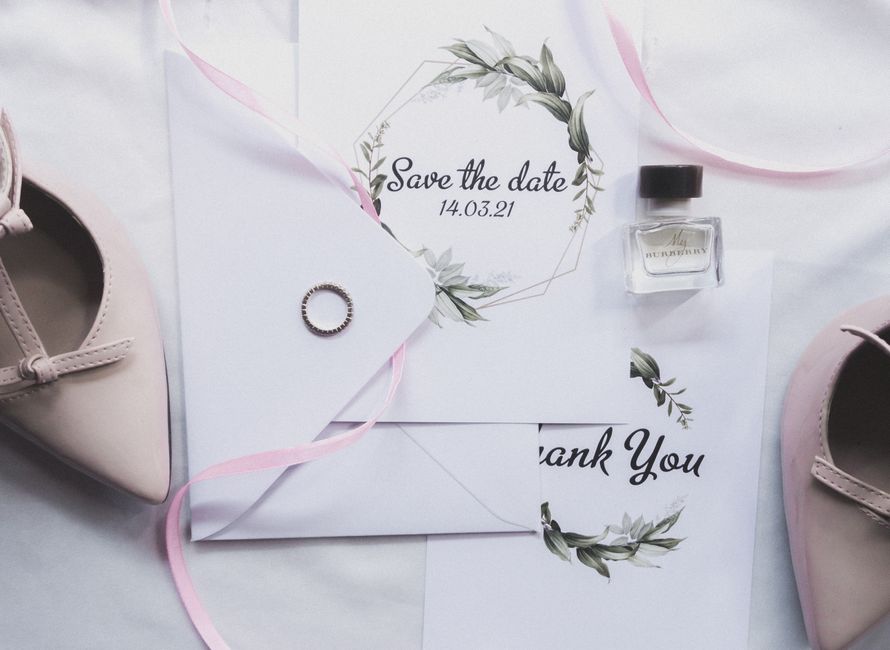
Good wedding thank you card ideas solve two problems at once: they give you a design guests will actually enjoy receiving, and they give you a system so two hundred handwritten notes don't sit half-finished on the kitchen table for months. Most couples underestimate how long this task takes, then feel guilty when a card goes out ten weeks after the gift arrived.
The good news is that thank you cards are one of the few wedding tasks that gets easier the more specific your plan is. Once you've picked a card format, settled on wording that sounds like you instead of a template, and built a simple tracking system, the actual writing goes fast — most couples clear fifteen to twenty cards in a sitting once they stop overthinking each one.
This guide walks through the main card formats couples use in 2026, from budget-friendly boxed sets to personalized photo cards, along with wording that avoids sounding generic, a realistic sending timeline, and a few mistakes that are easy to avoid once you know to look for them.
When to Send Your Wedding Thank You Cards
Etiquette guides have long recommended sending thank you cards within three months of the wedding, and that window still holds up in 2026. But the better rule is simpler: send the card within two to three weeks of receiving the gift, whenever that happens. If a guest sends a gift before the wedding, thank them before the wedding. If someone hands you an envelope at the reception, you have a bit more runway, but not much.
The three-month rule exists as a backstop, not a target. Waiting until the deadline usually means facing a stack of a hundred-plus cards at once, which is exactly the scenario that causes people to give up halfway through. Spreading the task out as gifts arrive — during the engagement, right after the registry opens, and again in the weeks after the wedding — keeps the pile manageable.
One practical tip: keep a small notebook or a shared spreadsheet next to your gift table or registry account from day one. Write down the gift and giver the moment it arrives, before the wrapping paper gets tossed. Trying to reconstruct who gave what three months later, from memory, is where most thank you card delays actually start.
What to Say: Wording That Doesn't Sound Generic
A wedding thank you card only needs four things: a greeting, a specific mention of the gift or gesture, a sentence about how it will be used or what it meant, and a warm close. The specificity is what separates a card someone keeps from one that gets recycled.
Compare "Thank you for the lovely gift" with "Thank you for the KitchenAid mixer — we already used it for banana bread this weekend and thought of you." The second version takes ten extra seconds to write and is the entire reason the card exists. If a guest gave cash or a check, it's fine to say so directly: mention the amount is unnecessary, but naming what you plan to put it toward (the honeymoon, a down payment, new plates) reads as more thoughtful than a vague reference to "generosity."
For guests who traveled, attended without gifting, or contributed time — a reading, a toast, help with setup — the thank you is about their presence or effort rather than an object. Naming the specific thing they did (the reading during the ceremony, the ride to the airport) works the same way a gift mention does. Keep each note to three or four sentences; guests are not expecting a letter, and a note that's too long can start to feel like a chore to read.
Choosing Your Card Style: Photo Cards vs. Classic Foldover
The two most common formats are personalized photo cards and classic blank or pre-printed foldover cards. Photo cards use a wedding-day image on the front, which guests tend to hold onto and display, while foldover cards leave more room for a handwritten message and photograph better when you're writing by hand at a table with several other people.
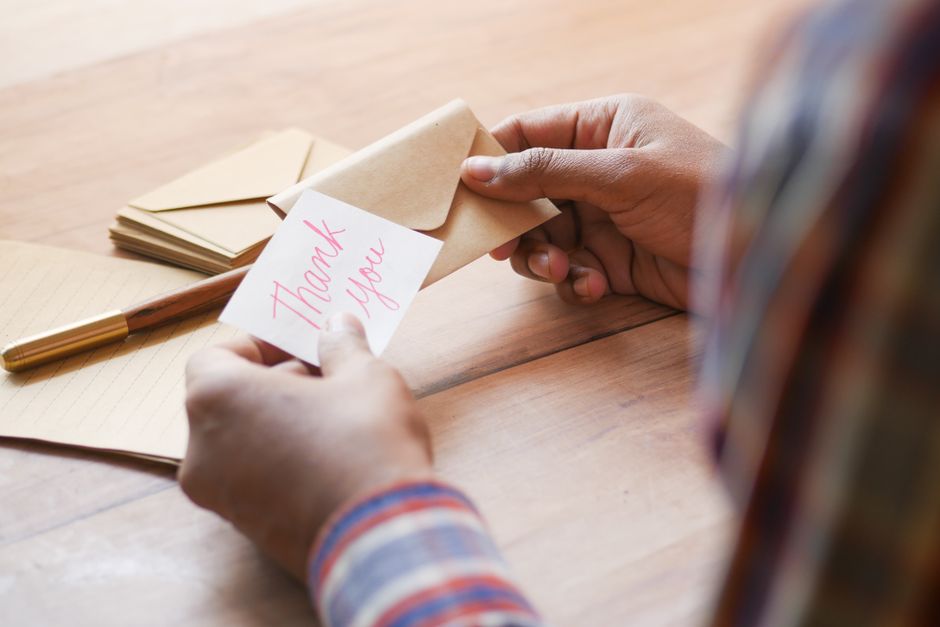
If you want the photo route, Andaz Press Personalized 5x7-Inch Photo Wedding Thank You Cards with Envelopes, 24-Pack prints your own image on heavy cardstock with a pre-set message and space left for a personal line, and runs in the $25–$35 range depending on the pack size you choose. It's a strong pick if you already have a favorite ceremony or reception shot back from your photographer, since the card doubles as a small keepsake for guests rather than a note that gets tossed after reading.
Budget-Friendly Bulk Sets for Large Guest Lists
For guest lists over 150, cost per card starts to matter, and this is where blank boxed sets earn their keep. A hundred-count set works out to a fraction of the per-card price of individually personalized options, and blank cards give you full control over wording without printing constraints.
Wedding & Baby Shower Thank You Cards — Set of 100 Blank Cards & Envelopes is a straightforward option in this category: matte cardstock with gold foil accents, blank inside, sized at 4x6 so it fits standard envelopes without trimming. Buying blank cards in bulk also means you're not locked into a single wording style — some couples write more casually to college friends and more formally to their grandparents' generation, which a pre-printed card doesn't allow.
Elegant Gold Foil and Premium Designs
If your wedding leaned formal — black tie, a hotel ballroom, a multi-course dinner — a plainer blank card can feel like a mismatch with the rest of your stationery suite. Gold foil and metallic accents are the easiest way to carry a formal aesthetic through to the very last piece of correspondence guests receive from you.
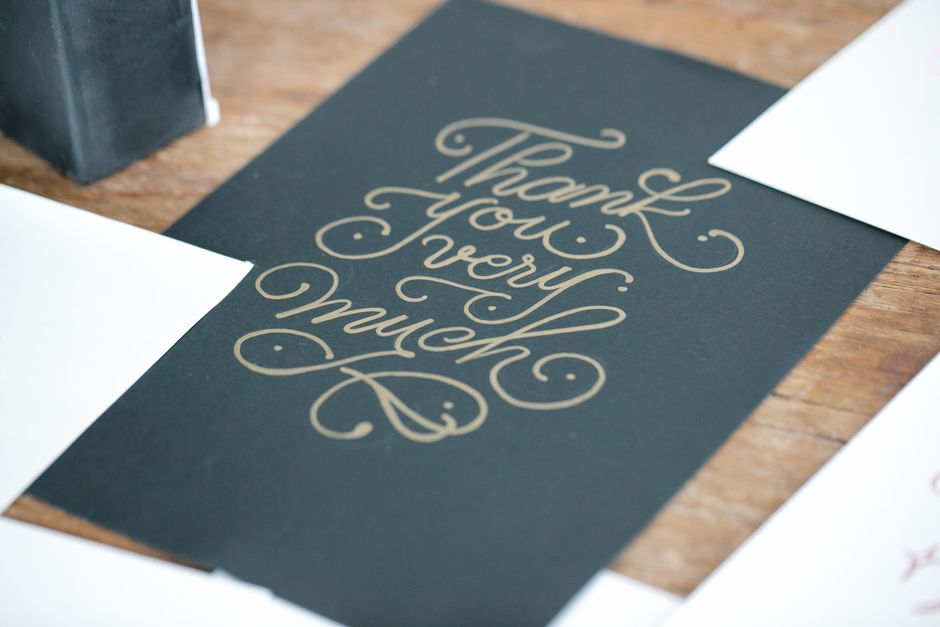
Rileys & Co Gold Foil Thank You Wedding Cards, 50 Count with Stickers & Envelopes comes in five coordinating greenery-and-gold designs per pack, which is useful if you'd rather not send two hundred identical-looking cards — mixing a few designs within the same set still reads as intentional rather than mismatched. The included stickers double as envelope seals, which is a nice touch if you're mailing internationally and want the envelope to hold up.
Heavyweight Cardstock That Actually Survives the Mail
Card weight matters more than most people expect, especially if cards are traveling through the postal system rather than being handed out in person. Thin cardstock bends in transit, and a bent card is the kind of small detail that undercuts an otherwise thoughtful note.
120 Heavyweight Blank Wedding Thank You Cards with Envelopes & Stickers is built for exactly this — thick cardstock paired with moisture-seal kraft envelopes that hold up better in transit than standard gummed flaps, especially in humid climates where envelopes can seal shut prematurely in storage. The 4x6 size also mails at standard postcard-adjacent rates in many cases, which is worth checking with your local post office before buying stamps for two hundred cards at once.
Building a Sending System: Timeline, Tracking, and Postage
The mechanics of getting cards out the door matter as much as the wording. Start by batching: address and stamp envelopes in one sitting, write messages in another, and mail in small batches of twenty to thirty rather than waiting to send everything at once. This keeps the task from feeling endless and gets cards moving to guests who have been waiting the longest.
Buy stamps early and buy slightly more than you think you need — a card with an extra insert, a heavier cardstock, or an oversized envelope can push postage above a standard first-class rate, and running out mid-batch is a common reason cards sit finished but unmailed for another week. If your card size is nonstandard (square, oversized, or on very thick stock), a quick check with your post office before buying stamps in bulk saves a return-to-sender headache.
Keep your gift-tracking notebook or spreadsheet open until the very last card is mailed, and mark each entry off as you go. It's a small step, but it's the difference between confidently knowing you're done and wondering, months later, whether you missed someone.
Wedding Thank You Card Ideas FAQ
- Do we need to send a thank you card for every gift, even small ones?
Yes. A card is appropriate for any gift, gesture, or contribution, regardless of size — a small gift still took thought and money, and the card is about acknowledging that, not matching the note's length to the item's price.
- Is it okay to send thank you cards by email instead of mail?
For most gifts, a physical card is still the expected format, especially from older relatives. Email or a text can work as a quick initial acknowledgment when a gift arrives, but it shouldn't replace the mailed card entirely unless the guest specifically prefers digital communication.
- What if we still haven't sent thank you cards and it's been over three months?
Send them anyway. A late thank you card is far better than none, and most guests won't remember the exact timeline — they'll remember whether they received one at all. Skip apologizing extensively for the delay; a brief, genuine note works better than a long explanation.
- Should the bride and groom sign every card together, or can we split the list?
Both work. Splitting the list by who knows each guest better is often faster and produces more personal notes, as long as both names appear in the closing signature so the card reads as being from the couple.
- Can we reuse the same wording for cards going to guests who gave similar gifts?
You can reuse a structure, but change at least one specific detail per card — the guest's name, how the gift is being used, or a small personal reference. A card that's word-for-word identical to a dozen others is easy for guests to spot if they compare notes.
- How many thank you cards should we order?
Order for your full guest count plus a 10–15% buffer for addressing mistakes, last-minute additions, or gifts received after the wedding from guests who couldn't attend.