Bridal Headband Ideas for Every Hairstyle and Dress


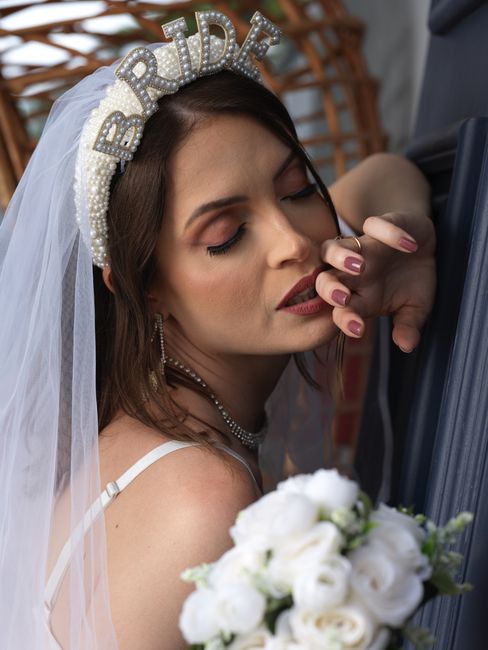
Bridal headband ideas are a smart place to start if you want a hair accessory that is easy to wear, easy to style, and kind to your scalp. A headband needs no pins pushed deep into an updo and no teeth gripping a braid. You slide it on, adjust it once, and it frames your face for the entire day, which is exactly what many brides want from a wedding accessory.
Headbands also suit more hairstyles than people expect. They work with loose waves, a sleek low bun, a half-up twist, a braided crown, and even short cuts. Because the piece sits near the front of the head, it appears in nearly every portrait, so it is worth choosing one that matches the mood of your dress and your venue rather than grabbing the first sparkly option.
The range is wide. Pearl bands feel classic, crystal bands feel formal, floral crowns feel soft and garden-inspired, and slim metal halos feel modern. Each one changes how your hairstyle reads, and each pairs differently with veils, earrings, and necklines.
This guide walks through the main styles, shows where each one sits best, and explains how to combine a headband with a veil. You will also find a few specific pieces worth considering and practical advice on fit, comfort, and trial runs.
Choose a Headband Style That Matches Your Dress
Start with the dress, because a headband sits close to the face and will be noticed in every photo. A gown with heavy lace, beading, or a detailed bodice looks best with a simple band, perhaps a slim line of pearls or a single row of crystals. A clean satin or crepe gown can carry a bolder piece, since nothing else is asking for attention.
Neckline matters as well. A high neckline or off-the-shoulder cut draws the eye upward, so a wider, more decorated band can balance it. A plunging neckline or open back already makes a statement, which suggests a lighter, more delicate band so the overall look stays calm.
Consider the formality of the venue too. A ballroom or church wedding pairs well with crystal and pearl bands, while a vineyard, barn, or beach wedding suits flowers, leaves, and soft ribbon ties. Hold your earrings and necklace beside the headband photos and check that the metal tones agree. Silver and crystal look cool and classic, gold looks warm and vintage, and rose gold sits between them with a gentle blush tint.
If you cannot decide, place a photo of your dress next to photos of three headbands and look at them together on a screen. Scale and contrast are much easier to judge that way than by picturing the result in your head.
Pearl and Flower Headbands for a Classic Look
A pearl headband is the most dependable choice for brides who want something romantic without too much sparkle. Pearls catch light softly, flatter nearly every skin tone, and look polished with ivory, white, and champagne gowns. Small flowers worked into the band add a feminine touch without turning the piece into a full crown.
The KAYZON Bridal Pearl Flower Headpiece Headband, around $10 to $16, is a soft, adjustable style that fits most head sizes without needing combs or clips that can pull on fine hair. It is a good option for brides who dislike the feeling of pins, or who want a piece they can put on in seconds.
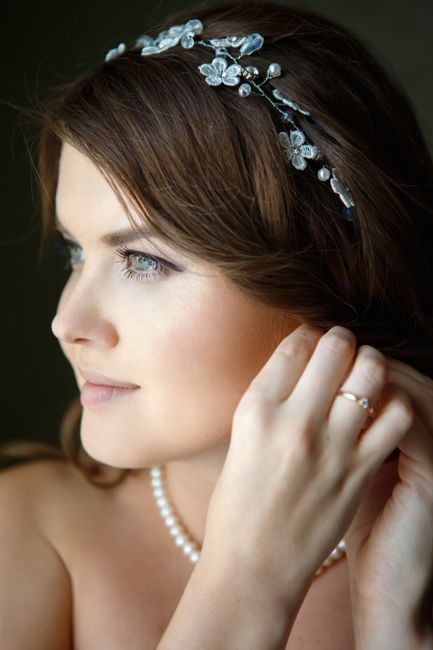
Wear a band like this slightly back from the hairline rather than directly on the forehead. Setting it about an inch behind the hairline looks more natural and keeps it from sliding forward as the day goes on. If you have bangs or curtain fringe, let them fall in front of the band for a relaxed, vintage effect.
Keep the rest of your styling simple. Small stud earrings and a delicate bracelet let the headband remain the focal point. If your bridesmaids wear their hair down, a matching but plainer band in the same color family can tie the group together without copying your look exactly.
Flower Crowns for Garden and Outdoor Weddings
A flower crown is the right call when your wedding leans toward gardens, meadows, vineyards, or rustic barns. Silk flowers on a flexible band look soft in photos and feel lighter than most metal pieces. They also move naturally with loose waves, which makes them a favorite for brides who want an unstructured, romantic hairstyle.
For a garden-inspired look, the Chanaco Handmade Flower Crown, priced around $15 to $22, uses silk flowers on an adjustable ribbon band, giving you a soft, natural look that pairs especially well with outdoor and rustic wedding settings.
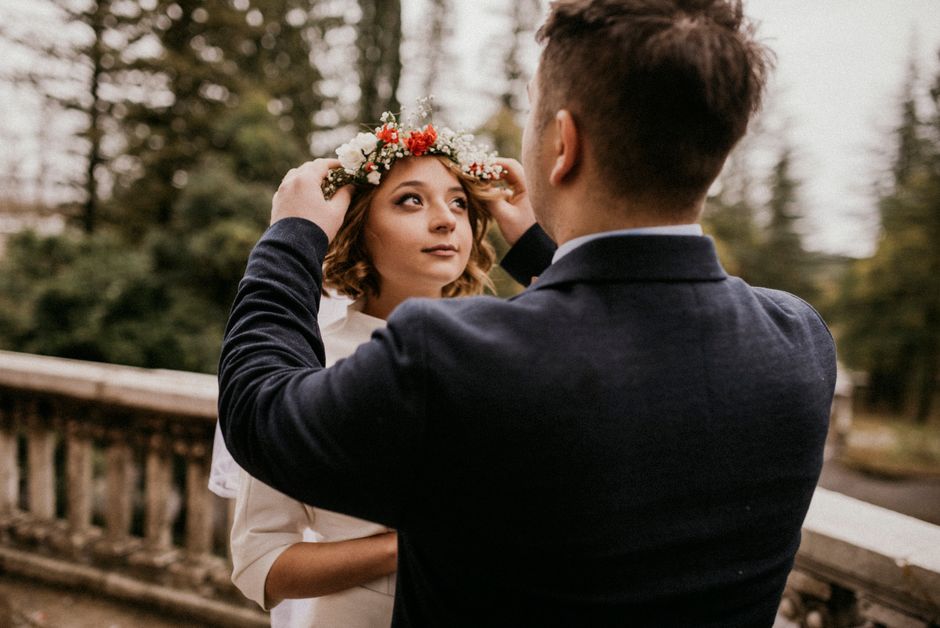
Pick a flower palette that echoes your bouquet. If your bouquet is blush and cream, choose a crown in the same tones so the two pieces look related in portraits. If your bouquet is bright, a quieter crown in white or sage keeps the look balanced.
Silk crowns hold up well in warm weather, since they will not wilt before the reception. They are also easy to pack, so you can bring a spare to the venue. Consider asking your florist whether she can add a few fresh blooms from the bouquet to match, then use the silk crown as a backup if the weather turns humid.
For flower girls, a smaller crown in the same palette makes a charming coordinated detail.
Headbands for Loose Waves and Half-Up Styles
Loose waves and half-up styles are where a headband truly shines. With hair down, the band becomes the one decorative element, so it frames the face and draws the eye to your curls. Place it at the crown, a couple of inches back from the forehead, and tuck the hair behind your ears if you want the band fully visible.
For a half-up style, wear the band behind the gathered section. That way the pinned portion appears intentional and the band adds a finished edge. A pearl or crystal band looks sophisticated with a slightly volumized crown, while a floral one softens a sleeker pull-back.
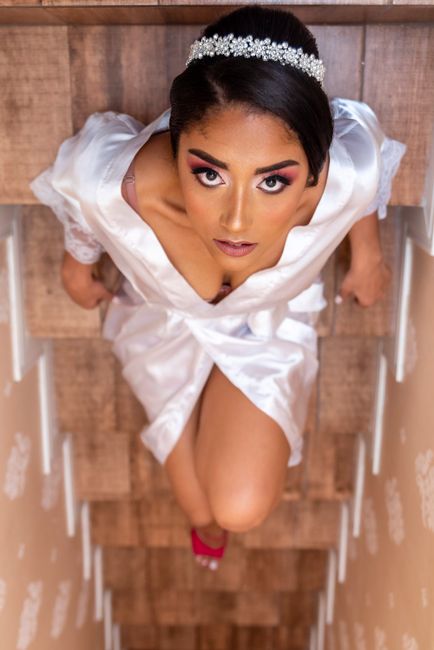
If your hair is fine and smooth, a headband can slip, so ask your stylist to add one or two bobby pins crossed behind the band. A little texture spray at the roots also helps grip. If your hair is thick or curly, a wider band usually sits better because it spreads the pressure and does not dig in behind the ears.
Test the fit during your trial. Turn your head, nod, and dance a little. A good band should stay comfortable for several hours without a tight spot at the temples or behind the ears.
Add Pins for Extra Sparkle and Security
A headband can work beautifully alone, but small pins let you extend the look around the back of the head. A few pearl or crystal pins scattered through a low bun or along a braid make the hairstyle look decorated as a whole, rather than showing sparkle only at the front.
A large multipack like the Maitys 44-Piece Wedding Hair Pin Set, around $11 to $16 and rated 4.3 stars across thousands of reviews, gives you a mix of pearl and crystal pins in different sizes, so you and your stylist can experiment and still have plenty left over for the bridesmaids.
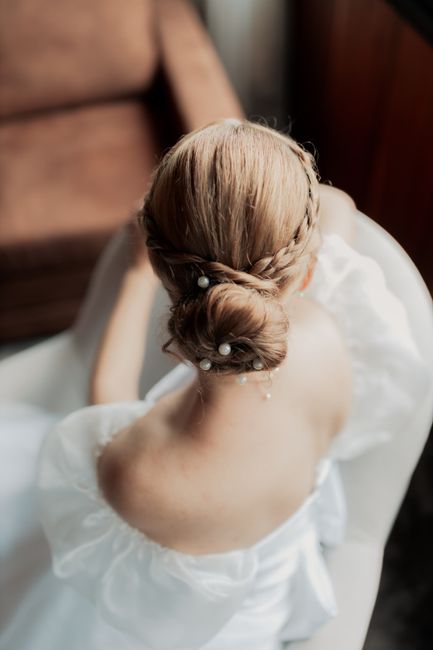
Use odd numbers when you can, since clusters of three or five usually look more natural than pairs. Match the pin color to your headband so the pieces look like a set. If the headband is pearl, choose mostly pearl pins with only a few crystals for variety.
Pins also help when the headband needs extra security. Crossing two pins through the band at each side anchors it against movement, and a few matching pins in your emergency kit let your maid of honor fix a slipped piece quickly. Keep a mini brush and hairspray in the same pouch.
Wearing a Headband With a Veil
Many brides ask whether a headband and veil can be worn together. They can, and the combination is more flexible than a comb and veil. The usual approach is to anchor the veil comb at the back of the head, below the crown, and wear the headband in front, so each piece sits in its own zone.
A short or fingertip veil leaves the headband fully visible from the front and the side. A longer cathedral veil is heavier, so ask your stylist to pin the veil comb securely and avoid placing it directly beneath the band, where the two can pull against each other. A blusher veil that covers the face during the processional lifts away easily and leaves the band in place afterward.
If you plan to remove the veil after the ceremony, the headband gives you an instant reception look, because the hair already looks finished. Our guide to wedding veil ideas explains lengths and attachment styles in more detail, and the tips in wedding hair vine ideas are helpful if you would prefer a slimmer, more flexible piece.
During the trial, practice taking the veil off while the band stays on. Knowing how the pieces release saves a stressful moment at the reception, and it shows your stylist exactly where to place each pin.
Fit, Comfort, and Budget Tips
Comfort decides whether a headband survives the whole day. Wear your chosen piece for at least thirty minutes during the trial and notice any pressure behind the ears or at the temples. A band that feels fine for five minutes can become annoying by the second hour, and by then you will not want to adjust it in front of guests.
Measure your head if the band is not adjustable, and check the return policy before buying. Soft ribbon ties and flexible wire bands usually fit more head sizes than rigid metal ones. If you wear glasses, try them with the band, since the arms sit in the same area.
Budget is rarely the problem here. Many good headbands cost between $10 and $25, and the price difference between a basic and a more elaborate piece is small compared with other wedding expenses. Spend more attention on size, color, and how it looks in photos.
Order at least six weeks before the wedding so there is time to return or exchange. Bring the headband, your veil, and photos of the hairstyle to your trial, and ask your stylist to take a photo of the finished look. If you want a floral look without the weight, a pearl vine such as the Edary Bridal Pearl Hair Vine with Flowers, typically $12 to $18, can be worn like a halo and is lighter than a rigid band.
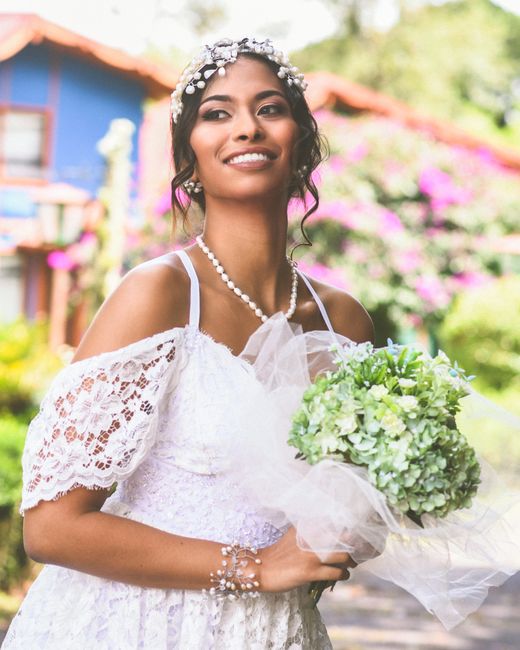
Finally, think about how the headband will look from behind and from the side. Guests watch you walk the aisle, so a band with a small cluster of flowers or pearls at one side gives the profile some interest, while a continuous band looks tidy from every angle. Ask a friend to photograph you from three directions during the trial, and choose the version that looks best in all of them.
Bridal Headband FAQ
- How should a bridal headband be worn?
Set it at the crown, about an inch or two behind the hairline, so it frames the face without sliding forward. With loose hair, tuck the hair behind the ears if you want the band fully visible. Your stylist can adjust the position during the trial.
- Can I wear a headband with a veil?
Yes. Most stylists anchor the veil comb behind or below the headband so each piece grips a separate section of hair. This keeps the band visible from the front and lets the veil lift away easily after the ceremony.
- Will a bridal headband stay on all day?
An adjustable, well-fitted band usually stays comfortable for a ceremony and reception. Fine or very smooth hair may need a couple of bobby pins crossed behind the band. Test it by moving, turning, and dancing a little during your hair trial.
- What hairstyles work best with a headband?
Loose waves, half-up styles, low buns, and braided crowns all pair well with a headband. Short hair works too, particularly with a slim band set slightly back. Bring photos of your chosen style to the trial.
- How much should I spend on a bridal headband?
Many brides spend between $10 and $25 on a quality pearl, crystal, or flower headband. Spending more does not always mean a better fit. Focus on comfort, color, and how well it matches your dress and bouquet.