How to Select Bridesmaid Dresses for Your 2026 Wedding


Why Bridesmaid Dress Decisions Cause More Stress Than They Should
Bridesmaid dresses sit at the intersection of fashion, relationships, and budget — which is why they produce so much wedding-planning tension. The bride has a vision for how the bridal party will look. The bridesmaids have their own preferences, varying body types, and different budgets. Each decision requires navigating all of those inputs, and a single misstep early can snowball into resentment that lasts through the wedding weekend.
The framework below treats bridesmaid dress selection as a project management problem as much as a style problem. It covers the matching-vs-mismatched question, the color and fabric decisions that matter most, how to handle body-type variation across a group, and the timeline that avoids the last-minute panics that otherwise seem inevitable.
Matching vs Mismatched: The First Decision
The matching-vs-mismatched spectrum has three main positions:
- Fully matching: same dress, same color, same fabric for every bridesmaid. The traditional choice. Most formal, most uniform, easiest to photograph. Works best when bridesmaids have similar body types or are willing to accept a dress that was not chosen for their specific shape.
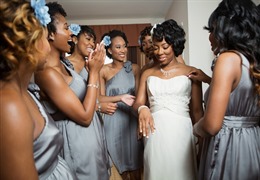
- Same color, mixed styles: one color (or palette) with each bridesmaid choosing her own silhouette. The most popular 2026 option. Flatters varied body types, reads as intentional and modern.
- Mixed colors, coordinated palette: each bridesmaid picks a different color from a defined palette of 3 to 5 complementary tones. Photographs as an intentional gradient rather than randomness. Harder to execute well but distinctive when done right.
- Fully mismatched: each bridesmaid picks her own dress with loose guidelines. Works only for very casual or bohemian weddings and for bridal parties with strong individual style identity.
The single best decision for most bridal parties in 2026 is same color, mixed styles. It flatters every body type, allows for real personal preference, and photographs beautifully. Pick it unless you have a specific reason to choose otherwise.
Color: The Practical Considerations
Bridesmaid dress color needs to complement the wedding palette, flatter a range of skin tones, and photograph well in the ceremony lighting. The colors that consistently work:
- Dusty blue, sage, dusty rose, mauve: the most flattering across skin tones. Read as current without being trendy.
- Champagne, cream, blush: soft and romantic, photograph beautifully in natural light. Work well for garden and romantic weddings.
- Deep navy, forest green, burgundy: the 2026 move toward richer, more saturated bridesmaid colors. Flatter all skin tones and read as elegant rather than pastel-sweet.
- Slate gray, taupe: neutral enough to work with any wedding palette.
Colors to approach carefully: bright saturated colors (royal blue, emerald, hot pink) can overwhelm lighter skin tones; very pale pastels can wash out some complexions; black bridesmaid dresses are fine for formal weddings but read as somber in outdoor settings.
Pick a color family, then let bridesmaids choose their preferred shade within a 2-to-3-tone range. This simple adjustment — color family rather than exact color — eliminates the most common bridesmaid fit issue: the dress color that flatters one bridesmaid washes out another.
Fit: Handling Body-Type Variation
Any bridal party of four or more will include significant body-type variation. The fit strategies that work:
- Mixed silhouettes within the same color: each bridesmaid picks A-line, sheath, fit-and-flare, or empire waist based on what flatters her shape. This is why same-color-mixed-styles works so well.
- Full-price from one retailer vs individual shopping: retailers that carry bridesmaid lines (Birdy Grey, Revelry, BHLDN, Azazie) typically have multiple silhouettes in the same color and fabric. Ordering from one retailer in one color across multiple silhouettes produces the cleanest match in photos.
- Extended sizing: confirm that the retailer carries sizes fitting all bridesmaids before starting the selection process. Standard bridesmaid-line sizing typically runs 0 to 24; extended-size lines run to 30 or 32.
- Maternity options: if any bridesmaid is pregnant (or might be), pick a retailer that offers the same color and fabric in a maternity-friendly silhouette.
- Alterations: allow 4 to 6 weeks for alterations on bridesmaid dresses, plus time for out-of-town bridesmaids to coordinate with local tailors.
Bridesmaids of very different heights or body types may never look uniform even in the same dress — and that is fine. The goal is coordinated, not identical.
Fabric: What Works in 2026
Fabric affects how the dresses photograph, how comfortable they are to wear, and how well they travel.
- Chiffon: light, drapey, flattering on most body types. Best for spring and summer weddings, outdoor ceremonies, and flowy silhouettes.
- Satin: has returned to popularity after a decade of matte dominance. Photographs with a soft sheen. Works for formal and evening weddings. Watch for fabric pulls at the bust.
- Crepe: matte, structured, modern. Best for column dresses and more architectural silhouettes. Works across seasons.
- Velvet: fall and winter weddings only. Photographs beautifully in evening light.
- Tulle and lace: specialty fabrics for specific wedding styles. Can feel costume-y if overused.
Avoid shiny synthetic satins (read as cheap), excessive sequins (dated), and heavily embellished fabrics that fight the bride's dress for visual attention.
Budget and Payment: The Tricky Conversation
The honest 2026 bridesmaid dress budget: $150 to $400 per dress is reasonable; $400 to $700 is mid-range; $700+ is luxury. Bridesmaids typically pay for their own dresses, but the bride is responsible for keeping the price in the range her bridal party can afford.
The conversation to have: ask bridesmaids for their maximum comfortable spend before picking the dress. If one bridesmaid can afford $150 and another $500, pick a dress in the lower range — the embarrassment of asking someone to exceed their budget is worse than the slight disappointment of picking a less-luxe dress.
For bridesmaids facing financial hardship, some brides offer to pay the difference between the budget and the chosen dress. This is a personal choice, but it prevents the bridesmaid-drops-out scenario that can destabilize a bridal party in the final months.
Timeline: When to Order What
Plan bridesmaid dress ordering backward from the wedding date:
- 6 to 8 months before: pick the color, retailer, and general style approach
- 5 to 6 months before: each bridesmaid picks her specific silhouette and orders
- 4 to 5 months before: dresses arrive (standard order time is 12 to 16 weeks)
- 3 to 4 months before: initial alterations fittings
- 2 months before: final alterations complete
- Wedding week: bring dresses to the hotel or venue for a final steam and any emergency adjustments
Start earlier if any bridesmaid is based internationally or if the retailer has longer production times. Some designer bridesmaid dresses take 20 to 24 weeks.
Accessories and Shoes
Accessories can match across bridesmaids or coordinate loosely. The 2026 default is loose coordination — matching shoe style (all heels or all flats) and matching jewelry formality, but not exact-match pieces.
- Shoes: give bridesmaids a color guideline (nude, metallic, black) and a heel-height range. Let them choose the specific shoe. Comfort matters; bridesmaids stand for hours.
- Jewelry: many brides provide matching earrings or a small pendant as a gift to each bridesmaid. This is a thoughtful touch and also solves coordination.
- Hair and makeup: if budget allows, cover hair and makeup for all bridesmaids. This is one of the highest-impact bride-to-bridesmaid gifts because it both coordinates the look and reduces day-of stress.
Hold the bridesmaids to a single shared clothing vocabulary (colors, formality level, shoe height range) and give them flexibility within it. The bridal parties that look best in photos are the ones that were coordinated but not identical — and the bridal parties that feel best emotionally are the ones where every bridesmaid felt she had agency in the process.