

Truly Memorable Wedding Proposal Ideas for 2026

What Actually Makes a Proposal Memorable
The proposals that become stories — the ones couples tell their children about 30 years later — are not the ones with the most production value. They are the ones that genuinely fit the couple. A surprise proposal at a crowded restaurant works beautifully for an extroverted couple who loves dramatic moments; it is terrible for an introverted partner who would be overwhelmed by public attention. A quiet proposal in the couple's home on a Saturday morning works beautifully for a low-key couple; it might underwhelm a partner who dreamed of something more elaborate.
The proposal framework below organizes ideas by what kind of partner and relationship they suit. Match the idea to the person — not the other way around — and the proposal will land as meaningful regardless of how simple or elaborate it is.
Private Proposals: The Most Underrated Format
The private proposal is more common in 2026 than public proposals for the first time in at least two decades. The reasons: social pressure has normalized what used to feel 'not romantic enough,' and couples have realized that the most emotionally charged moments are often the quietest ones.
Private proposal formats that work:
- At home on a Saturday morning, with coffee and the ring presented quietly
- During a walk in a place that means something to the relationship — the park where you had a first date, a favorite hiking trail
- At a specific spot where a meaningful memory happened
- During a private moment at a travel destination, without an audience
- After a shared meal at home, cooked together, with the ring brought out during coffee
The private proposal lets the emotional reaction be genuine and unfiltered. The partner being proposed to can cry, laugh, need a moment — and the experience belongs to the couple rather than to an audience.
Travel-Based Proposals
Travel proposals combine a meaningful trip with the moment itself. Some of the most memorable proposals happen in travel contexts where the couple is already relaxed and open.
Travel proposal ideas that consistently work:
- At a sunset vista during a trip both partners anticipated
- On the balcony of a hotel room during the first morning of a long-awaited vacation
- At a favorite restaurant in a travel destination (without turning into a spectacle)
- During a shared activity — a boat trip, a guided tour, a cooking class
- At a location specific to the relationship (the place you met, the city where you had your first serious date)
Logistics to plan: where to hide the ring during travel (carry-on only, in a discrete case), whether to tell the hotel or restaurant in advance for coordination, how to photograph the moment without tipping off the partner. Many couples arrange for a local photographer to quietly document the proposal from a distance.
Public Proposals: When They Work and When They Fail
Public proposals have become less fashionable but still work for the right couples. They work when: the partner being proposed to is extroverted and enjoys being the center of attention, the setting has genuine meaning to the couple, and the partner has clearly indicated in advance that they would love a public proposal.
Public proposals fail when: the partner is introverted, the setting is a generic public place without personal meaning, the proposal is more about the show than about the relationship, or there has been no prior conversation about the partner's preferences.
If you are going public, get the details right. Have a professional photographer documenting. Coordinate with the venue (restaurant, concert, sports event) well in advance. Confirm the ring is in your own pocket until the moment (never trust ring delivery to wait staff). Have a backup plan if the partner is clearly uncomfortable with the format.
Surprise Proposals: The Art of Not Being Too Clever
Most proposal success comes from matching the format to the partner, not from being clever. The proposals that couples remember happily are rarely the ones with the most elaborate misdirection.
What works for surprise:
- A consistent cover story that makes the day feel ordinary until the last moment
- A location or activity the partner was expecting for other reasons
- Keeping the circle of people who know to an absolute minimum (secrets are hard to keep)
- A single well-executed moment, not a series of escalating surprises
What fails for surprise:
- Over-complicated plans with multiple stops, actors, or props
- Social media components that tip off the partner
- Moments where the proposer is obviously nervous, which tips off the partner before the moment arrives
- Proposals planned for when the partner is exhausted, hungry, or stressed
Simple works. A 15-minute proposal with one thoughtful moment is nearly always remembered more happily than a 2-hour proposal production.
Planning Proposals That Include Others
Some proposals work better with family involvement. This is a personal choice and should align with the partner's preferences — but for partners who are very family-oriented, a proposal that includes parents or close friends can be deeply meaningful.
Formats that include others:
- Proposal at a family dinner where the parents are in on it
- Proposal at a quiet gathering with the partner's closest friends present
- Proposal during a pre-planned family event (holiday, birthday) where the family is already together
- Proposal with the partner's parents giving a blessing beforehand
- Proposal at a location where close friends have been waiting to celebrate
These formats require careful coordination. Everyone involved needs to know the timeline and their role. Over-communication is the safest path — send a group text or call each participant the day before to confirm.
Proposal Logistics: The Practical Details
Regardless of format, the logistics of a proposal matter:
- Ring sizing: confirm the ring size in advance. Guessing wrong is the most common proposal regret. Borrow a ring from the partner's jewelry box, trace it, and measure.
- Ring box: use a small, flat box rather than a traditional large box for easier carrying in a pocket without obvious bulge.
- Photography: arrange professional or friend photography in advance if you want documentation. Aim for a photographer positioned 30 to 50 feet away, not obvious to the partner.
- Privacy: if the proposal is public, scout the location in advance to minimize strangers in frame.
- The ring speech: prepare 2 to 4 sentences you genuinely want to say. Do not try to memorize a long speech — it will come out robotic. Speak from the heart with rough notes in mind.
- Emotional preparation: the partner may cry, laugh nervously, take a moment before answering. Give space for genuine reaction rather than expecting an immediate 'yes.'
After the Proposal
The first 24 hours after the proposal set the tone for the engagement. Plan for:
- Calling both sets of parents within the first few hours (in the order each partner prefers)
- Sharing the news with closest friends personally, not via group text or social media
- Posting to social media only after key people know, and preferably not the same day — give yourselves 24 hours of private celebration
- A celebratory dinner or quiet evening together
- A thoughtful moment to discuss what the engagement feels like and what you each are looking forward to
The proposal is the beginning of the engagement, not the end of the courtship phase. The couples who treat it as a meaningful transition rather than a single photographable moment consistently describe the engagement period afterward as some of the best time in their relationship.
PREV ARTICLE
NEXT ARTICLE
Related articles
Unique ideas
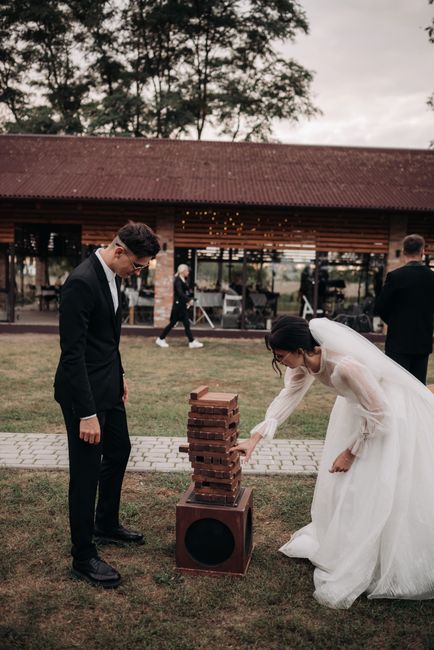
Wedding Lawn Game Ideas Guests Will Actually Play
Unique ideas