Flowers and decor


Wedding balloon arch ideas have moved well past the stiff, uniform garlands of a decade ago. Today's arches mix latex, chrome, and matte finishes in organic clusters that read as intentional as a floral installation, at a fraction of the cost. Couples are framing ceremony arbors, reception entrances, and photo backdrops with balloon garlands because they scale to any budget, pack down small for travel weddings, and can be built by a friend or planner in an afternoon rather than requiring a florist's lead time.
The appeal isn't just price. Balloon arches photograph beautifully, especially in the golden-hour light many outdoor ceremonies are timed around, and they hold color saturation that fresh flowers can't always match on a hot day. They're also forgiving: a lopsided cluster is easy to fix, unlike a wilting bloom.
This guide walks through the arch styles worth considering, how to choose a color palette that matches your venue, which kits are actually worth ordering, and the setup tools that turn a multi-hour project into a one-hour one. Whether you're building the arch yourself the morning of or handing the brief to a day-of coordinator, you'll leave with a clear plan.
Balloon arches solved a real problem for modern weddings: how to make a ceremony backdrop or reception entrance feel designed without booking a florist weeks in advance. A well-built garland arch reads as a cohesive design statement in photos, whether it frames an arbor, a sweetheart table, or a step-and-repeat for guest photos.
Cost is the other draw. A fresh floral arch installation from a florist commonly runs several hundred to a few thousand dollars depending on size and flower type, while a DIY balloon garland kit covering a similar footprint typically costs well under $100 in materials. That price gap matters most for couples allocating a larger share of their budget to venue, catering, or photography.
Balloon arches also travel. For a destination wedding or a venue with strict vendor rules around fresh florals, latex and foil balloons pack flat in a suitcase and inflate on-site, something no flower arrangement can do. Many couples now treat the balloon arch as the anchor decor piece for the ceremony, then repurpose the same balloons as a reception backdrop later that evening, getting two design moments out of one build.
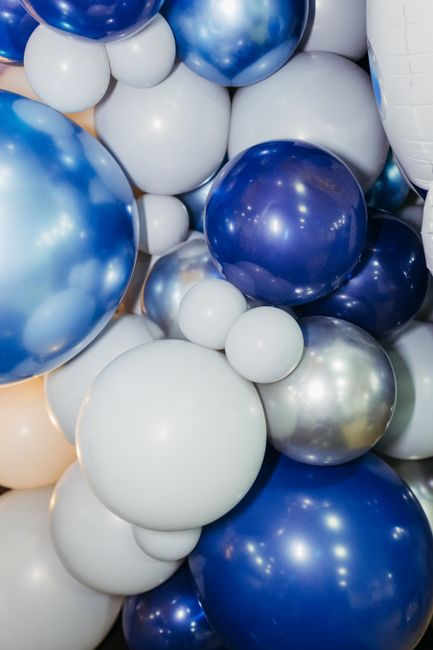
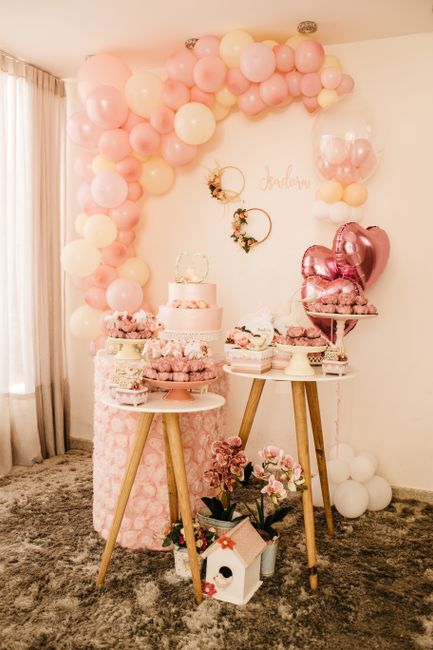
The organic garland style, sometimes called an "asymmetrical cluster," is the most requested balloon arch look for weddings right now. Instead of a uniform row of same-size balloons, it mixes three or four balloon sizes (usually 5-inch, 11-inch, 18-inch, and a few oversized 24-inch or 36-inch focal balloons) along a single strip, with visible gaps that give it a loose, hand-tied feel closer to a floral garland than a birthday party decoration.
This style works over an arbor, along a mantel, framing a ceremony arch structure, or draped along a reception head table. Because the sizing is irregular, small assembly mistakes are far less visible than on a uniform garland, which makes it a forgiving first project for a couple building their own decor.
Most organic garlands use a plastic balloon strip as the base, with balloons attached using glue dots rather than string, since glue dots hold position better across a long horizontal or curved run. A kit like the Balloon Arch Kit with Garland Strip and Glue Points (around $15) gives you 32.8 feet of strip and 200 glue dots, enough for a full arbor plus a smaller accent piece elsewhere on-site.
The single biggest factor separating an elegant balloon arch from one that looks like a birthday party is color restraint. The strongest wedding palettes use two to three main colors plus one neutral (white, ivory, or nude) and one metallic accent (chrome gold, chrome silver, or rose gold) rather than a full rainbow spread.
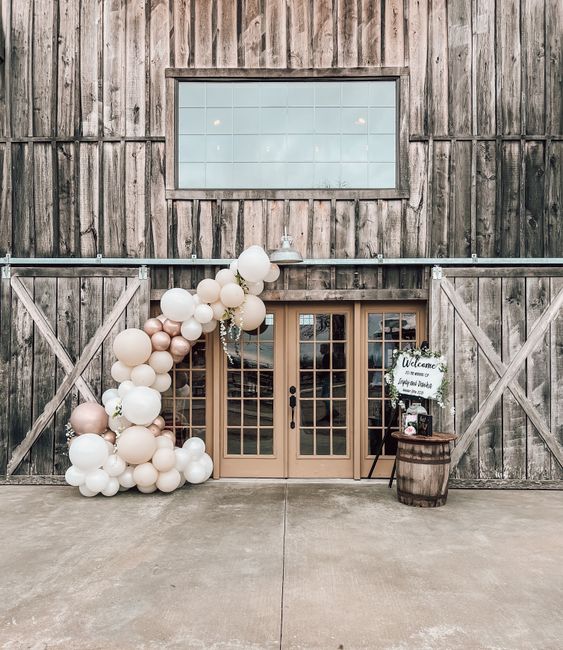
Sage green, dusty blue, and terracotta have been the most requested combinations for garden and barn weddings this year, paired with a warm white base. For black-tie or ballroom receptions, an all-neutral palette of white, champagne, and chrome gold reads more formal and photographs well against dark linens. Jewel tones like emerald and burgundy work for fall and winter dates, especially layered with a matte finish rather than glossy latex, which can look plasticky in flash photography.
If your venue has strong existing colors, like exposed brick, dark wood beams, or a colored ceiling, pick your balloon palette to contrast rather than blend, or the arch will visually disappear in photos. A prebuilt kit takes the guesswork out of ratio and sizing: the Gold Metallic Chrome Balloon Garland Kit (around $20) bundles 102 balloons across four sizes with a pre-measured ribbon, which is enough to test a palette on a small accent piece before committing to a full arch.
Not every balloon arch kit is created equal, and the difference usually comes down to two things: whether it includes a free-standing structural base, and whether the balloon quality is thick enough to avoid wrinkling within a few hours of inflation.
For a ceremony backdrop or arbor frame that needs to hold its shape without leaning on furniture, a kit with its own base and poles is worth the extra cost over a garland-only kit. The Large Balloon Arch Kit with Heavy Base (around $40) builds an adjustable arch roughly 8.5 feet tall and 12.5 feet wide using water-filled bases for stability, which matters for any outdoor setup where wind is a factor.
If your venue already has a structure to decorate, such as a wooden arbor, iron arch, or existing pergola, you likely only need a garland-strip kit rather than a full stand. Order balloons in bulk from a single manufacturer batch when possible; mixing brands or lots can create visible color and sheen mismatches once inflated side by side, which is one of the most common complaints in kit reviews.
Order any kit at least two to three weeks ahead so you have time to test-inflate a sample and confirm the color reads the way you expect under your venue's lighting, not just on a laptop screen.
The single biggest time-saver for a DIY balloon arch is an electric pump. Hand-inflating the 150 to 250 balloons a typical wedding arch requires by mouth or hand pump takes hours and leaves you light-headed; an electric pump cuts that down to well under an hour and produces more consistent balloon sizing, which matters for a clean garland look.
Look for a dual-nozzle model so two people (or one person alternating hands) can inflate simultaneously, and confirm it's rated for continuous use rather than short bursts, since a wedding-size arch is a lot of nonstop inflating. The YIKEDA Electric Balloon Pump (around $30) is a dual-nozzle 600-watt model that most DIY reviewers cite as fast enough to inflate a full arch's worth of balloons in 30 to 45 minutes.
Beyond the pump, a balloon-sizing template (often included in garland kits, or a printable circle guide) keeps inflation consistent across all 150-plus balloons, which is the difference between a garland that reads as professionally styled and one that looks visibly mismatched. A hand-held tying tool also saves finger strain over a full build session and is worth the few extra dollars if your kit doesn't already include one.
The three most common placements are the ceremony backdrop, the reception entrance, and a dedicated photo-op wall, and each has slightly different sizing needs. A ceremony arch needs to be tall and wide enough to frame the couple without balloons crowding the officiant or crowding out the view for seated guests, typically 7 to 9 feet tall and 8 to 12 feet wide depending on aisle width.
A reception entrance arch can be narrower and more vertical, since guests walk through it rather than stand in front of it; think of it as a doorway moment rather than a backdrop. A dedicated photo-op wall benefits from a flatter, denser garland pinned against a plain surface, since it needs to read well in tightly cropped phone photos all night, not just from a distance.
If budget allows only one arch, most planners recommend prioritizing the ceremony backdrop, since it appears in the most formal photography and the most guest phone photos during the vows. The reception entrance is the next highest-value placement, since nearly every guest walks through or past it and it sets the tone for the night. See our wedding photo booth backdrop ideas guide for more on building a dedicated photo wall if that's a separate priority from your ceremony decor.
Outdoor balloon arches face two real risks: wind and heat. Latex balloons left in direct sun for several hours can expand, shift color slightly, or pop, so build outdoor arches as close to the ceremony start time as the schedule allows, ideally within two to three hours, rather than the night before. Anchor the base with sandbags or a water-filled stand rather than relying on stakes alone, since even a light breeze can topple a top-heavy arch.
Indoor arches are more forgiving on timing since temperature and wind aren't factors, but check with your venue about ceiling height and any restrictions on adhesive use on walls or structures. Many event spaces prohibit tape or adhesive hooks on painted walls, which is where a free-standing arch frame becomes necessary even indoors.
Humidity affects both settings: balloons inflated in a humid room or tent can develop a slightly matte, cloudy look within a few hours, which is worth knowing if you're building the day before rather than the morning of. If your venue has a climate-controlled indoor space available for the build, use it even if the arch will ultimately stand outside, then move it into position closer to the event start.
A DIY balloon arch using kit materials typically runs $60 to $150 total for a single ceremony-size installation, covering the garland strip, 150 to 250 balloons across sizes, glue dots, a stand if needed, and pump rental or purchase. That range assumes a couple or a willing member of the wedding party handles assembly, which takes two to four hours for a first-time build.
Hiring a professional balloon artist for the same footprint generally runs $300 to $800 depending on region and complexity, and can climb higher for organic garlands with fresh floral integration or oversized statement pieces. The trade-off is time and consistency: a professional builds faster and produces a more uniform result, but for a straightforward arch in a controlled palette, most DIY reviewers report a result close enough to professional work to justify the savings.
A middle option worth considering is renting a pre-built arch frame or hiring an artist for just the structural base while DIYing the garland yourself, which splits the difference on cost while still giving you a sturdier, more wind-resistant foundation than most kit stands provide. Whatever route you choose, our wedding centerpiece ideas guide covers complementary decor that can extend the same color palette across your reception tables.
A ceremony-size arch (roughly 8 feet tall by 10 feet wide) typically uses 150 to 250 balloons across three or four sizes. Reception entrance arches or smaller accent pieces can use as few as 75 to 100.
Latex balloons hold their shape and color best when inflated within 24 hours of the event, and ideally within a few hours for outdoor setups exposed to sun and wind. Foil (mylar) balloons hold longer, sometimes several days, if kept indoors and out of direct light.
Yes, with precautions. Anchor the base securely, avoid direct midday sun for several hours before the ceremony, and have a backup plan (extra balloons and glue dots) in case of wind damage or popping.
Many couples do, moving the arch from the ceremony space to frame the reception entrance or a photo backdrop later in the evening. Confirm with your venue coordinator that the timeline allows for the move between events.
A garland kit includes only the balloon strip, balloons, and glue dots, meant to attach to an existing structure like an arbor. An arch kit adds a free-standing frame or poles and a base, so it doesn't require an existing structure to decorate.
Most DIY wedding balloon arches cost $60 to $150 in materials for a ceremony-size installation, compared to $300 to $800 for a professionally built equivalent.