Wedding Garland Ideas: Greenery for Arches, Aisles and Tables


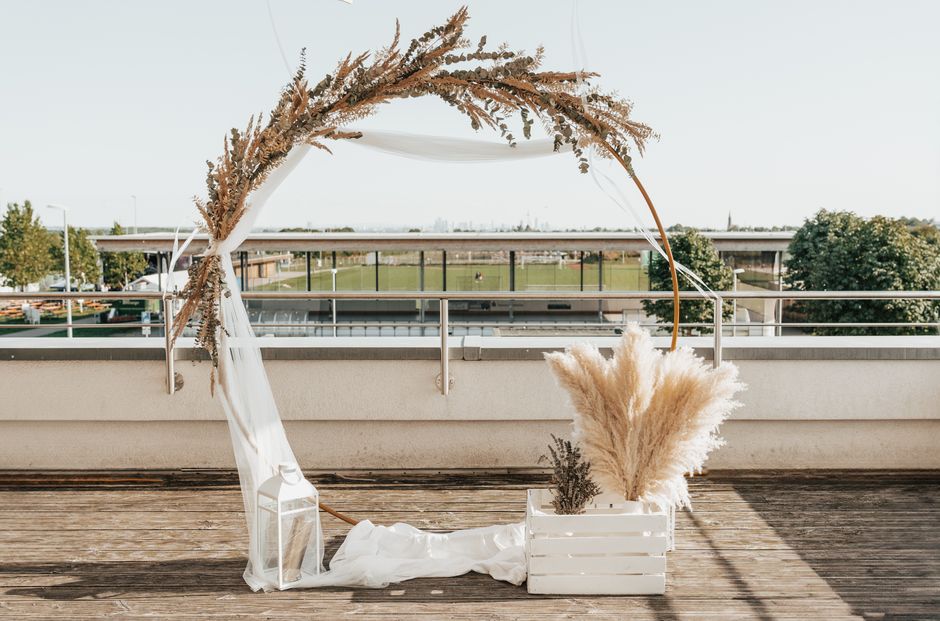
Wedding garland ideas are some of the most useful decor ideas to collect early, because a single length of greenery can dress an arch, line an aisle, run down a head table and frame a doorway. It adds color, texture and softness to hard edges, and it suits nearly every style, from relaxed garden parties to formal ballrooms.
Garlands also solve a practical problem. Fresh floral installations are expensive, tied to a florist's schedule and impossible to prepare far in advance. Artificial garlands can be bought months ahead, fluffed at home, stored in a closet and reused at the rehearsal dinner, the reception or even in your first home afterward. That flexibility makes them popular with couples who want a full look without a florist-sized bill.
The trick is choosing the right length, density and color for each spot. A thin strand that looks lovely on a mantel can disappear on a ten-foot arch, while a heavy one can sag from a light chair back. Venues add their own limits, since many ban tape, nails or anything that could mark walls and furniture.
This guide walks through how to measure and plan, which garland styles work where, and how to attach and care for them. You will also find specific products you can order, so you can compare real options and build a shopping list before you commit.
Plan Your Lengths Before You Shop
Garlands are sold by the strand, but you need to think in total feet. Start by listing every place you want greenery, then measure each one with a tape or a piece of string. An arch usually needs the full outer curve plus extra for drape, a head table needs the front edge plus a little overhang at each end, and a doorway needs the width plus both sides.
Add 20 to 30 percent to every measurement. Real installations rarely use the exact length, because garlands are layered, swagged and doubled up to look full. If a strand is nine feet long and your arch needs about eight, you will probably want two strands so you can overlap them and hide the joins.
It also helps to decide your priority spot. Most couples get the most impact from the ceremony backdrop, since it appears in nearly every photo, so spend there first and let smaller areas share what is left over. Tables and chairs can take cut sections of leftover strands, which keeps the budget under control.
Lastly, count how many people will help with setup. A long, heavy strand is a two-person job on a tall arch, and you will want a ladder or step stool you can trust. If you are still choosing a frame to dress, our guide to wedding ceremony arch ideas covers sizes and shapes so your garland measurements match the structure you actually have.
Eucalyptus and Willow Garlands for Arches
Eucalyptus is the classic wedding garland. Its soft gray-green leaves photograph beautifully, pair with white, blush and dusty blue flowers, and look natural without much styling. Willow leaves add a longer, flowing shape that moves slightly in the breeze, which makes them a good fit for outdoor ceremonies.
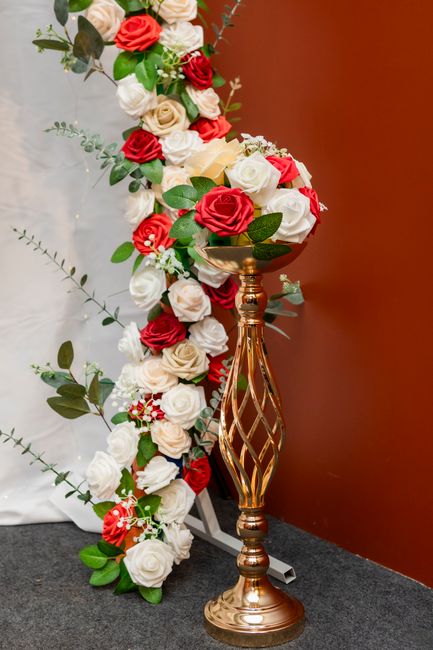
For an arch or a head table, the Ling's Moment 9FT Eucalyptus and Willow Leaf Garland with White Flowers is a steady choice. It is a handcrafted nine-foot strand of eucalyptus and willow leaves with sparse white blossoms in a blush-blue palette, usually around $50 to $70, and it is light enough to attach to a metal arch in about fifteen minutes. Afterward it can move to the sweetheart table backdrop or a rehearsal dinner mantel.
To get a fuller look, buy at least two strands and layer them rather than stretching one tight. Fluff each stem by hand, bend the leaves outward and let the ends trail down one side of the arch so the shape looks asymmetrical and natural. A few extra stems tucked in near the base will hide zip ties or wire.
If you want a heavier look, mix in some flowers at the corners. Peonies, roses and ranunculus all sit well against gray-green leaves, and they add a focal point so the eye has somewhere to rest. Keep any fresh flowers in water tubes tucked behind the garland so they stay fresh through photos.
Freestanding Garlands for Aisles and Ceremony Edges
Not every venue lets you attach anything to chairs or walls, and not every aisle has a convenient place to hang greenery. Freestanding garlands solve this by standing on their own, so they can line an aisle, frame an entrance or flank the front of a ceremony without touching the furniture.
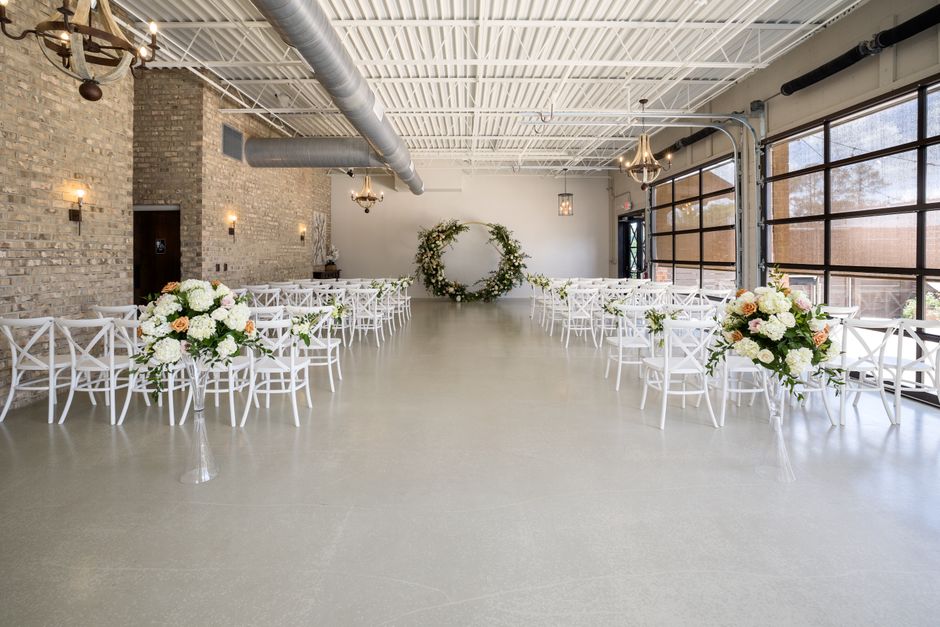
The Ling's Moment 9FT Eucalyptus and Willow Leaf Garland free-standing set of four is made for aisle and chair decoration at ceremonies. It is usually priced at a mid-range level for the set, and the four pieces cover both sides of a short aisle. Because they stand on their own, they help when your venue limits what you can fix to furniture.
Place them in matching pairs at the start of the aisle and again near the front, so the greenery frames the walk without blocking guests' views. Outdoors, check the ground first. Soft grass and sand can let a freestanding piece lean, so push the base down firmly or weigh it with a flat stone hidden behind the leaves.
For longer aisles, combine freestanding sections with smaller touches on the aisle chairs. Alternating the two keeps costs down and makes the whole space feel designed rather than repeated. Our guide to wedding aisle decoration ideas shows how to mix greenery with lanterns, candles and lights so you get a layered look.
Long Table Garlands for Reception Tables
A table garland is one of the most budget-friendly ways to dress a long rectangular table. Instead of paying for a separate arrangement at every seat, you run a continuous line of greenery down the center and add candles, small vases or votives along the way. The effect is lush, organized and easy to photograph.
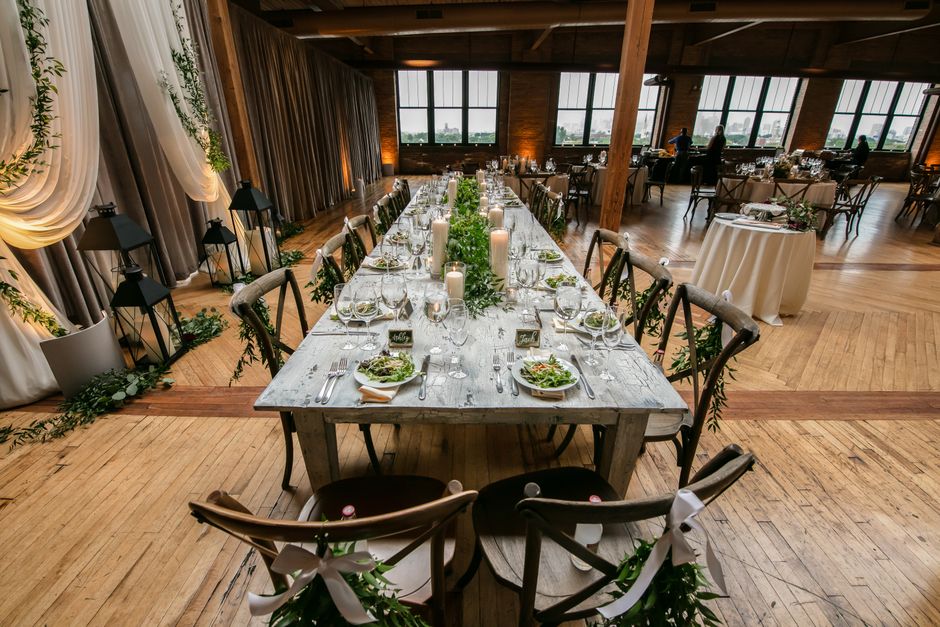
For this, the CQURE Eucalyptus Garland 12 Pack is a practical option. It costs around $20 to $26 for roughly 84 feet of bendable vines, which lets you run greenery across multiple tables and reuse or resell it afterward rather than watching fresh foliage wilt by the end of the night. The lighter weight also makes it easy to cut to length for round tables or to wrap around a sign.
Keep the garland low enough that guests can see each other across the table, ideally under about six inches at the highest point. Weave in small candles in glass, tealights or short bud vases, and leave gaps so plates and glasses fit comfortably. Flameless candles are the safer choice near dry leaves.
If you use the same strand for the head table or sweetheart table, wrap it around the front edge as well as the top. This ties the table into the rest of the room and gives the couple a backdrop that looks finished from every angle. Our wedding centerpiece ideas guide explains how to combine a garland with taller pieces when you want more height.
Floral Swags for Chairs and Signs
Chair decor is one of the best uses for a smaller floral piece. A swag on the end of an aisle chair, a sweetheart chair or the couple's seats at the reception signals where the important people sit, and it repeats the color from the arch without needing a large amount of greenery.
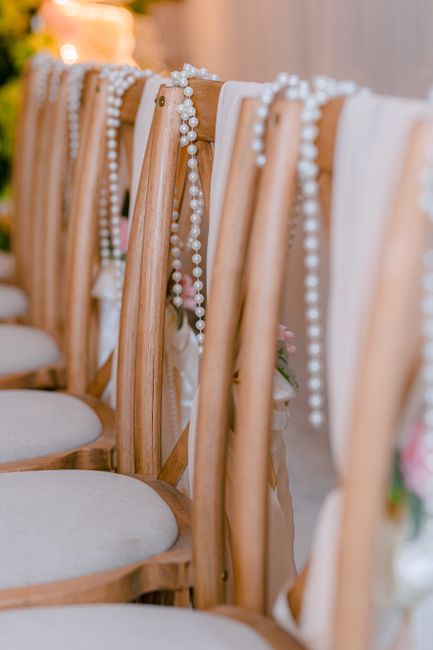
The artificial flower swag pair attaches to chair ends with the included wire and cable ties, and because the flowers are silk rather than fresh, they can be assembled the week before instead of the morning of. A pair gives you matching decor for two chairs, which is ideal for the couple or for the ends of the first row.
Use the same swag idea on a welcome sign, a seating chart or the corner of an easel. Tuck the ends behind the frame, secure them with floral wire and let one side hang slightly longer than the other. It takes only a few minutes and ties the signage into the arch and the tables.
Whatever you choose, keep the colors consistent. If your arch uses blush and white blooms, repeat those colors in the swags. If the greenery is mostly leaves, a single accent color in the flowers is usually enough. The goal is a small number of repeated elements, not a different style in every corner.
Add Flowers to Soften and Personalize a Garland
Greenery looks lovely alone, but a few flowers can change the entire mood. Blush peonies feel romantic, white roses feel classic, and wildflowers feel relaxed and informal. You do not need to cover the whole strand, since a cluster at each end and one in the middle is often enough to lift the design.
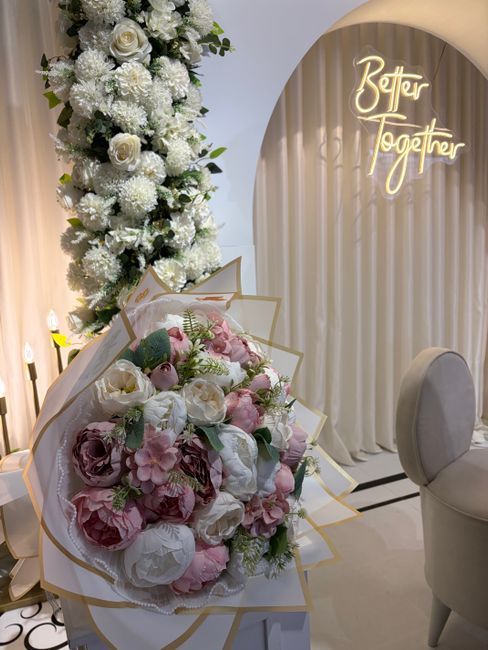
To add that color, the Pusuny Artificial Peonies Silk Flowers 4 Bundles Faux Peony Bouquet bundles four bouquets of light-pink peonies for around $20 to $30, which is enough for one corner cluster on a 7-foot arch when paired with a greenery garland. Because they are silk, you can arrange them in advance and photograph a test layout at home.
Cut the flower stems to about four inches and push them into the garland near a thick section of leaves. Secure each one with floral wire, then twist the wire around the garland's frame so nothing slips. Place the largest bloom slightly off center and let smaller ones trail outward, which looks more natural than perfect symmetry.
If you want to match real bouquet flowers, ask your florist for a few spare stems and compare colors in daylight. Artificial flowers vary slightly in tone, and sunlight can make some look brighter than they do indoors, so a quick comparison in the venue's actual light prevents surprises.
Hanging, Budget and Care Tips
How you attach a garland matters as much as which one you buy. Metal arches take zip ties or floral wire easily, wooden frames usually accept small hooks or ties, and rental furniture often bans anything that could mark it. When in doubt, use clear fishing line, removable hooks that are rated for the weight, or wire that wraps around without piercing anything.
Plan your setup order. Hang the largest garlands first, then add flowers, then fill gaps with spare stems. Take a photo from the guests' viewpoint and from the entrance, since that is where the first pictures will happen. Leave a stepladder and a small kit of extra ties, wire, scissors and pins with a trusted friend for last-minute repairs.
For budget, a realistic range is $60 to $150 for an arch, $30 to $80 for table greenery and $20 to $40 for chair swags, depending on length and quality. Reusing sections from the ceremony at the reception stretches those numbers further. For a full-room view of how greenery fits alongside other pieces, see our guide to wedding aisle decoration ideas.
Finally, plan storage. Fluff the garlands before you pack them, store them flat in a large box with tissue, and keep them away from damp basements. Done well, they can be reused for an anniversary photo shoot or a home mantel for years afterward.
Wedding Garland FAQ
- How long should a wedding garland be for an arch?
Measure the outer curve of the arch and add 20 to 30 percent for drape. Most standard arches need between 8 and 14 feet of greenery. Two nine-foot strands layered together usually look fuller than one stretched tight, and they hide joins and ties more easily.
- Are artificial garlands better than fresh ones?
Artificial garlands are easier to prepare in advance, travel well and can be reused. Fresh garlands smell lovely and look natural but cost more, wilt faster and need a florist's schedule. Many couples combine the two, using artificial greenery as the base and adding fresh flowers on the day.
- How do I attach a garland without damaging the venue?
Use zip ties, floral wire or clear fishing line on metal or wooden frames. For walls or furniture, ask the venue about removable hooks rated for the weight. Never use nails or tape without written permission, because many venues charge for damage.
- How many garlands do I need for a long table?
Measure the length of the table and buy about the same length in greenery, plus 20 percent. A ten-foot table needs roughly twelve feet of garland if you want a lush look. Multiple tables can share one long strand cut into sections.
- Can I make my own wedding garland?
Yes. Buy plain greenery strands, then add flowers, ribbon or small lights with floral wire. Allow a few evenings to assemble it, and test the layout on the floor before attaching it. Photograph the finished piece so you can recreate the shape on the day.
- How far ahead can I set up an artificial garland?
Artificial garlands can be hung several days before, as long as the venue allows early access and the pieces are protected from wind and rain. Most couples set up the day before or the morning of, which gives time for last-minute fluffing.