Wedding Aisle Decoration Ideas for Ceremonies Indoors or Out


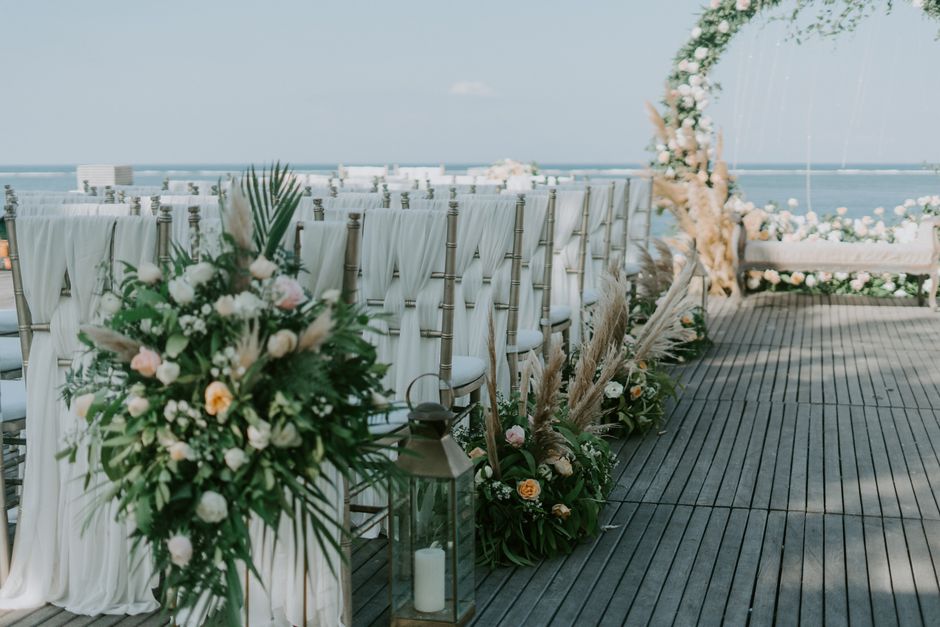
Wedding aisle decoration ideas matter more than most couples expect, because the aisle is the one part of the ceremony every guest sees at the same moment. It frames your entrance, leads the eye toward the arch or altar, and shows up in nearly every photo taken during the processional. A few well-chosen pieces repeated along both sides can do far more than a single large display.
The good news is that an aisle does not need to be expensive to look finished. Greenery, candles, lanterns and string lights are all affordable, easy to transport and simple to set up in an hour or two. The real work is deciding what suits your venue, your season and the time of day, so you buy the right quantities once instead of making several rushed trips.
Venue rules shape the choices too. Many churches and historic buildings ban open flame, loose petals or anything stuck to the floor, while outdoor sites have wind, uneven ground and sometimes no power outlet nearby. Checking the rules early prevents the disappointment of finding out on the morning that your plan is not allowed.
This guide covers how to measure and plan your aisle, then walks through greenery, lanterns and candles, glass vases, lighting, runners and petals, and a realistic budget and setup timeline. Along the way you will find specific products you can order, so you can compare real options and build a shopping list.
Start With the Layout and Measurements
Before you buy anything, walk the aisle or ask your venue for exact measurements. A typical ceremony aisle is between 20 and 50 feet long, and the length decides how many pieces you need. A simple rule is to place a marker every 4 to 6 feet on both sides, so a 30-foot aisle needs about six to eight markers per side, or roughly twelve to sixteen in total.
Think about the surface as well. Grass and sand will not hold a freestanding stand unless the base is heavy or staked, while hard floors rarely allow taping or nails. Decorations that hang from chairs, sit in glass or stand on weighted bases work almost anywhere, which makes them the safest starting point if you are still waiting on venue confirmation.
Decide where the visual weight should go. Many couples put the largest pieces at the front near the arch and keep the back rows lighter, which draws guests forward as they take their seats. Others prefer identical pieces the whole way down for a clean, symmetrical look. Both work, as long as the pattern is consistent.
Finally, think about the view from the entrance. The aisle should look balanced from the point where you will begin walking, because that angle appears in the first photos and the video. If you are still choosing a focal point for the front, our guide to wedding ceremony arch ideas pairs well with an aisle plan so the colors and textures match from start to finish.
Greenery Garlands for a Natural Look
Greenery is the most forgiving aisle decoration. Eucalyptus, willow leaves and ivy suit almost every style, from rustic barns to modern ballrooms, and they photograph in soft tones that do not compete with your dress or flowers. Artificial garlands also let you set up days in advance, which takes pressure off the morning.
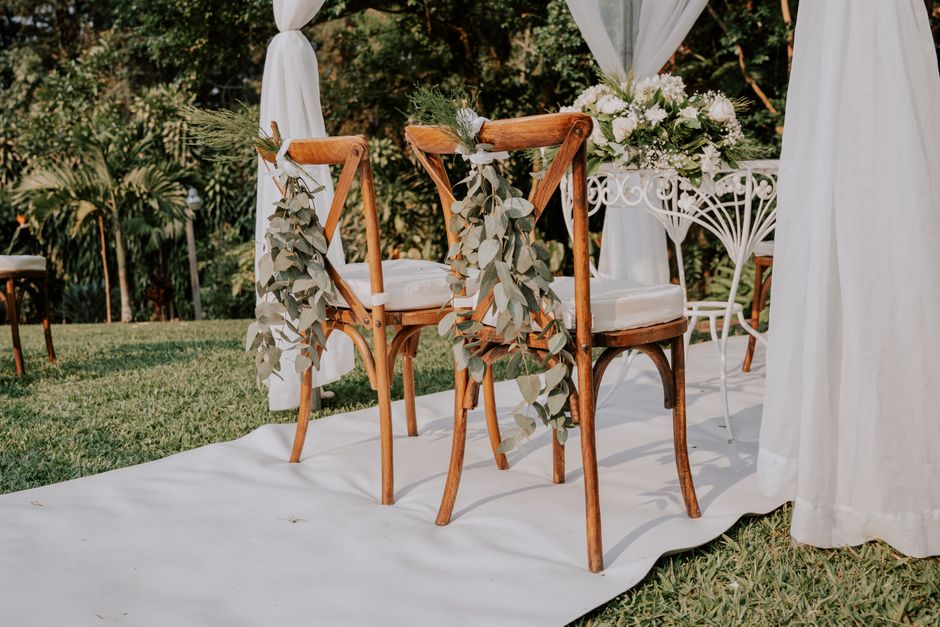
For a ready-made option, the Ling's Moment 9FT Eucalyptus and Willow Leaf Garland free-standing set of four is made for aisle and chair decoration at ceremonies, usually priced at a mid-range level for the set, and the four pieces cover both sides of a short aisle. Because they stand on their own, you do not need to attach them to chairs, which helps if your venue limits what you can fix to furniture.
To make a garland look fuller, fluff each stem by hand and bend the leaves so they face outward rather than flat. Add a few fresh flowers in matching colors where the garland meets the arch for a polished transition. If you plan to reuse the greenery afterward, store each piece flat in a large box with tissue paper so the stems keep their shape.
Greenery also works well beside other decorations. Lanterns, candles or a runner can all sit among the leaves, which gives you a layered look without having to commit to a single idea. For more ideas on dressing the seating itself, see our guide to wedding pew decoration ideas.
Lanterns for Warm, Lasting Glow
Lanterns bring height, shadow and warmth to an aisle, and they work in daylight as well as at dusk. Metal lanterns with a handle can stand on the ground, sit on a low stand or hang from shepherd's hooks at the end of each row. They suit rustic, vintage and garden themes particularly well.
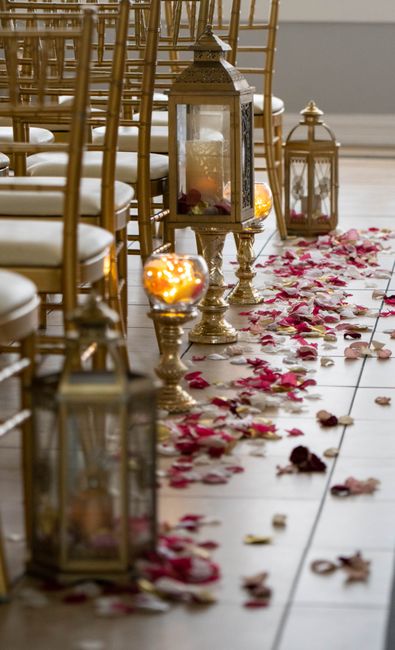
For a budget-friendly bulk option, the Kate Aspen Decorative Lanterns set of 6 are small vintage-style metal lanterns, about 4.7 inches tall, that usually run around $25 to $35 per set. They are sized for a tealight or a small flameless candle, so they work best in groups, placed in threes at the end of each row or lined up along the edge of a runner.
When you use lanterns outdoors, choose battery candles or very short real candles and check the wind first. Real flames inside open lanterns can blow out or tip, and many venues will not allow them near dry grass. Weight matters too, so tuck a small stone or a few inches of sand into the bottom of each lantern to stop it toppling.
If lanterns are the centerpiece of your decor plan, our full guide to wedding lantern ideas covers hanging, grouping and styling them across the whole venue. For the aisle, aim for odd numbers in each group and vary the heights slightly, since that looks more natural than a perfectly even row.
Candles and Glass Vases for Aisle Markers
Candles in glass give the aisle a soft, elegant feel without the weight of a full floral installation. Tall cylinder vases are especially useful because the same set can hold candles, flowers or greenery, so you can adjust the plan up until the day.
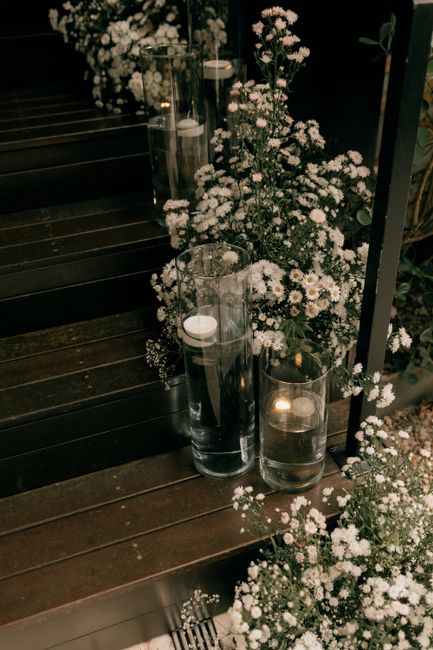
The Royal Imports Glass Cylinder Vases Set of 3, typically around $22 to $30 for graduated 6, 8 and 11-inch heights, can hold a tall floral arrangement, pillar candles or layered fillers, which means one purchase covers several looks. Placing the three heights together makes a small cluster that reads as a deliberate marker instead of a single lonely vase.
For the candles themselves, many venues prefer flameless options. The Eywamage Flameless Pillar Candles with Remote come as a set of three battery-operated candles in smoke grey glass, usually priced in the moderate range, and the remote lets you switch them all on at once. That last detail saves a lot of time if you have to light a long aisle just before guests arrive.
A practical tip is to set the vases at the end of every second or third row rather than every row. This keeps the budget in check and leaves a clear path for guests who need to pass through to their seats. If you are building a wider lighting plan, our guide to wedding reception lighting ideas shows how to carry the same warm tones into the evening.
String Lights for Evening Ceremonies
If your ceremony runs close to sunset, lights turn a plain aisle into something guests remember. Warm white fairy lights are the safest choice, since they mimic candlelight and do not clash with greenery or flowers. They are also light enough to wrap around poles, weave through garlands or run along the ends of chairs.
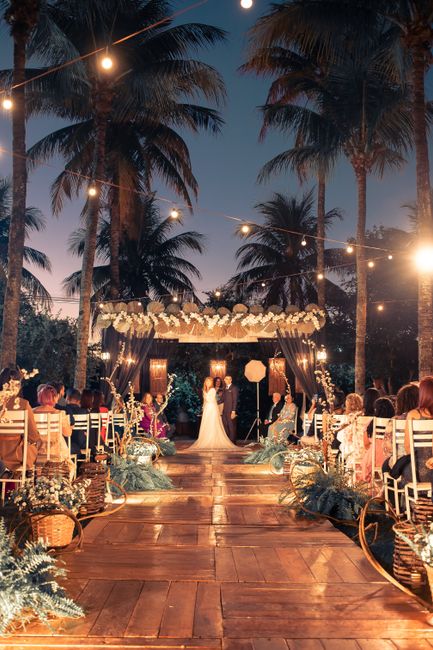
The Twinkle Star 33FT 100 LED Plug-in String Lights in Warm White offer eight modes, are waterproof for indoor or outdoor use, and are usually priced at a budget level, so one strand per garland is an easy way to add glow. Choose the steady mode for the ceremony, since flashing or fading settings can distract guests and show up as flicker in video.
Because the strand is plug-in, think about power before you commit. Measure the distance from the nearest outlet to the start and end of your aisle, then plan extension cords that run along the edge of the grass or beneath the runner, not across the center where someone might trip. Tape cords down with gaffer tape on hard floors, and ask the venue where outlets are before you finalize placement.
Test every strand a few days early. Lights that worked last year can fail after storage, and finding a dead section ten minutes before guests arrive is a stressful way to start. Pack a spare strand and a few extra zip ties in your day-of kit so a quick fix does not rely on borrowing from the venue.
Runners, Petals and Ground Details
The ground is part of the aisle too. A runner defines the path, hides uneven grass or a worn floor, and gives photographers a clean leading line toward the front. Ivory and white are the most flexible colors, though a deep tone can work well in a venue with pale floors.
If you are weighing fabric against paper, or deciding how long a runner needs to be, our guide to wedding aisle runner ideas covers materials, anchoring on grass and sizing. In short, order a runner at least a foot or two longer than the aisle so the end tucks neatly beneath the arch, and anchor it with landscape staples on grass or double-sided carpet tape indoors.
Petals are the classic finishing touch, but check the rules first. Many venues ban loose petals because they stain stone and are slippery underfoot, and some outdoor sites do not allow them because of the cleanup. If petals are permitted, scatter them along the edges rather than down the middle, and use dried or real petals instead of plastic, which can look cheap in close-up photos.
A final small detail is the first step. A small cluster of greenery, a sign or a pair of lanterns at the start of the aisle gives the entrance a clear starting point and signals to guests where the ceremony begins. It also gives your photographer a natural frame for the moment you step into view.
Budget, Timeline and a Weather Plan
A simple aisle can cost less than you might think. A greenery garland set, a few lantern groups and one string of lights typically total between $100 and $250, depending on how long your aisle is and how many pieces you choose. Adding a runner and vases raises that figure, but you can usually phase purchases across a few weeks.
Work backward from the ceremony date. Order everything at least three weeks ahead so you have time for returns or replacements. Do a full test setup one or two weeks before, laying out every piece in a spare room or garden so you know what you have and can write a simple diagram. The diagram is what a friend or vendor will follow on the day.
On the day, set up the aisle about two to three hours before guests arrive. Start at the front and work backward, so you are not walking over finished decor. Assign one trusted helper to the job, give them the diagram, and leave the final check to yourself or your planner.
Finally, plan for the weather. Pack extra stakes and weights for wind, towels for damp seats and a backup layout for an indoor space if the forecast looks uncertain. Having a second plan on paper takes the stress out of a last-minute change, and guests rarely notice a switch when the decor still looks intentional.
Wedding Aisle Decoration FAQ
- How many decorations do I need for a wedding aisle?
Plan one marker every 4 to 6 feet on both sides of the aisle. A 30-foot aisle usually needs about twelve to sixteen pieces in total. If your budget is tight, decorate every second or third row and put the largest pieces near the front.
- What is the cheapest way to decorate a wedding aisle?
Greenery garlands, battery candles in jars and a single strand of warm white lights are the lowest-cost combination. They can be reused afterward on the sweetheart table, the arch or the reception, which spreads the cost across several parts of the day.
- Can I decorate an outdoor wedding aisle without power?
Yes. Use battery-powered candles, solar lanterns or lanterns with real tealights in sheltered spots. Garlands and runners need no power at all. If you want string lights, a small battery pack or a portable power station near the front can supply them without long cords.
- How early can I set up the aisle decorations?
Artificial greenery and glass can be set up the day before if the venue allows it and the area is secure. Flowers, petals and candles are best placed on the day, usually two to three hours before guests arrive, so they look fresh and stay safe.
- Do I need an aisle runner?
No, but it helps on grass, sand or uneven floors because it defines the path and makes walking easier in heels. If your venue has a polished floor or a pretty stone aisle, you can skip it and spend the money on lighting or flowers.
- How do I stop aisle decorations blowing over outdoors?
Weight the bottom of each piece with stones or sand, use stakes for freestanding stands, and choose heavier glass or metal over light plastic. Test the setup in a breeze beforehand, and keep a few extra weights in your day-of kit.