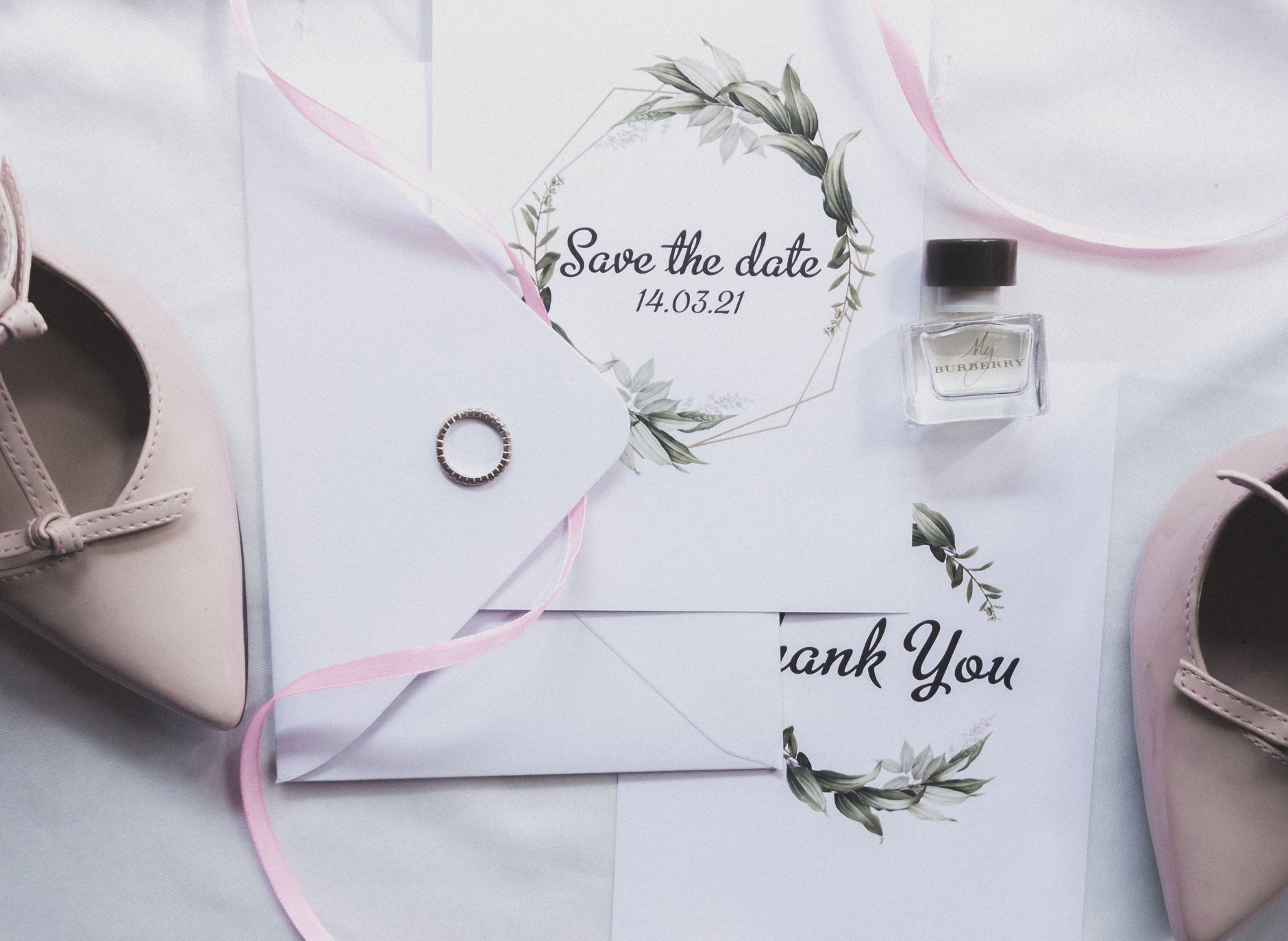
Planning advice


Wedding invitation ideas set the tone for everything that follows, since your invitation is usually the first physical object a guest holds that tells them who you are as a couple and what kind of celebration to expect. Before anyone tastes the cake or hears the toast, they are running a finger over cardstock, reading your names in a font you chose, and forming an impression of the day ahead.
The invitation suite has also become one of the more flexible parts of wedding planning. Couples now mix printed invitations with digital RSVP tracking, hand-letter envelopes themselves to save on calligraphy fees, and use small design touches like wax seals or vellum wraps to make a modest paper stock look considerably more expensive than it was. None of this requires a background in graphic design.
This guide walks through the full invitation process: what information belongs on the card, how to choose a style that matches your venue, wording and etiquette questions that trip up most couples, and the small finishing touches that separate a forgettable invitation from one guests keep. Along the way, we point to specific products worth adding to your stationery cart.
Whether you are ordering a fully custom suite from a stationer or assembling invitations yourself the weekend before your save-the-dates go out, the fundamentals below apply to every budget and timeline.
A wedding invitation has a job to do beyond looking attractive: it needs to communicate every logistical detail a guest requires without overwhelming the design. At minimum, include the names of the couple, the wedding date, the ceremony start time, the venue name and address, and a line indicating whether a reception follows at the same location or a different one.
Beyond the essentials, most couples add a dress code line if the event has one, a wedding website URL for guests who want registry or travel details, and an RSVP deadline, typically three to four weeks before the wedding. Some invitations also note whether the event is adults-only or include a small map or transportation note for destination weddings.
Keep the invitation itself focused on the ceremony and reception basics, and push secondary details, hotel blocks, shuttle schedules, registry links, to an insert card or your wedding website. Cramming too much text onto the main card makes it harder to read and clutters the design you worked hard to choose. If you are also planning how guests will drop off cards on the day itself, our wedding card holder ideas guide pairs naturally with your invitation suite's color palette.
One detail couples frequently forget: proofread the venue address and date at least three times, and have a second person proofread separately before you send anything to print. A typo on a wedding invitation is expensive and slow to fix once cards are ordered in bulk.
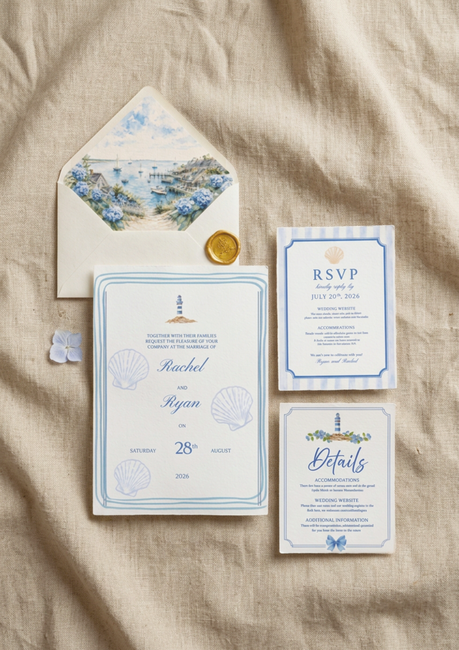
Invitation style should echo the formality and setting of your wedding rather than simply reflect whatever is trending. Formal black-tie weddings generally call for letterpress or foil-stamped invitations on heavy cardstock, often paired with a vellum overlay and a wax seal. Garden and outdoor weddings lean toward botanical illustrations, watercolor florals, or soft sage and terracotta palettes. Modern city weddings often use minimalist typography, a single accent color, and clean, thick-edge cardstock.
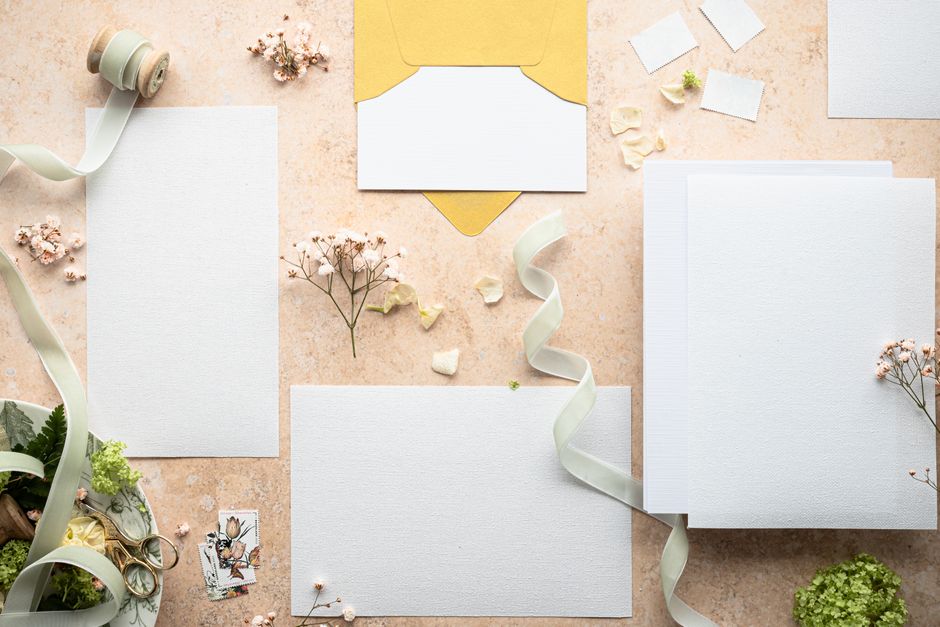
If you want full control over the design without hiring a stationer, a print-at-home kit is the fastest way to get a coordinated suite. The Wedding Invitation Kit with Envelopes in Minimalist Florals typically runs $25 to $35 for a set of 25 blank invitations and matching envelopes, giving you a professional-looking base you can print at home or through a local shop. Reviewers note the cardstock is noticeably thicker than typical inkjet paper, which keeps the finished invitations from feeling flimsy.
Whatever style you land on, order one physical sample before committing to a full print run. Screen colors and printed colors rarely match exactly, and a sample catches issues like text that reads too small or a font that looks different on cardstock than it did in your design software.
DIY invitations get a reputation for looking homemade in the wrong way, but a few targeted upgrades close most of the gap between a kitchen-table project and a professionally designed suite. The biggest lever is texture: adding one dimensional element, a wax seal, a ribbon tie, or a layered card, instantly reads as more considered than a single flat card.
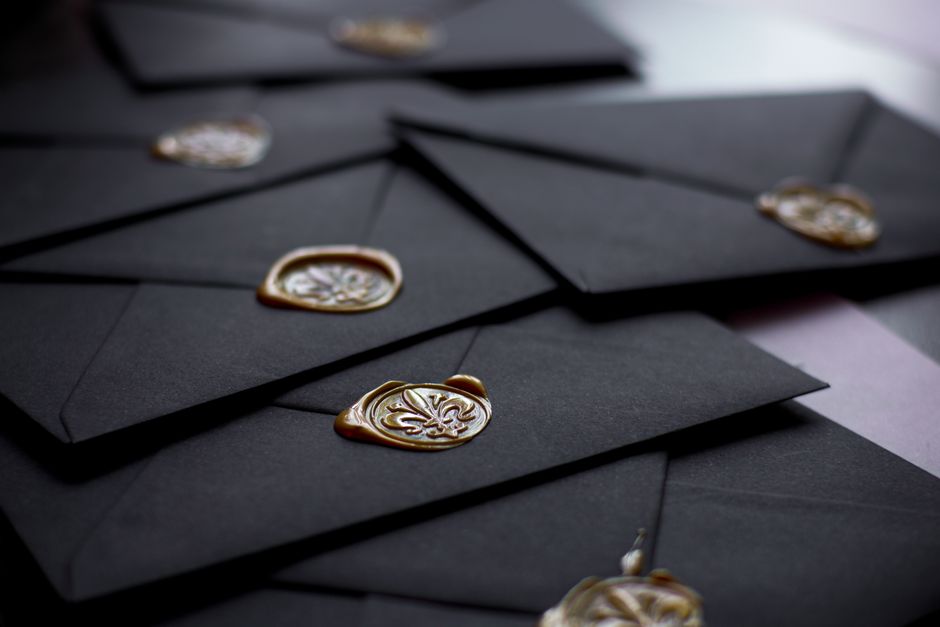
A wax seal is one of the least expensive ways to add that texture. The Draupnir Wax Seal Stamp Kit includes 21 vintage-style stamp heads with a wood handle and typically costs $18 to $24, which covers an entire wedding's worth of envelopes and leaves extras for thank-you notes later. Practice on scrap envelopes first: getting a clean, bubble-free seal takes a few tries, and wax that is too hot or too cool tends to crack when the envelope is handled.
Other low-cost DIY upgrades include a contrasting inner envelope liner, a thin ribbon wrapped around the invitation stack before it goes into the outer envelope, or a wax-sealed belly band instead of a full inner envelope, which also cuts down on postage weight. Assemble invitations in batches, printing, cutting, sealing, over a few evenings rather than one long session, since accuracy tends to drop after the first hour of repetitive assembly work.
Wording trips up more couples than any other part of the invitation. The traditional formula lists the hosts first (historically the bride's parents, though modern invitations increasingly list the couple or both families jointly), followed by a request line, the couple's names, and the date, time, and location spelled out in full rather than abbreviated.
A standard modern example reads: "Together with their families, [Full Name] and [Full Name] request the pleasure of your company at their marriage on Saturday, the tenth of October, two thousand twenty-six, at four o'clock in the afternoon, at [Venue Name], [City, State]." Couples hosting the wedding themselves might simplify to: "[Full Name] and [Full Name] invite you to celebrate their marriage."
For etiquette, spell out numbers and time rather than using digits on formal invitations, list names in the order that reflects who is hosting, and avoid registry information directly on the invitation itself, that detail belongs on your wedding website or an insert card, since printing it on the main card can come across as presumptuous to more traditional guests. If parents are divorced and both contributing, list them on separate lines rather than as a single hyphenated household unless they specifically request otherwise.
Casual and destination weddings have more wording freedom. A relaxed beach wedding invitation can drop formal phrasing entirely in favor of something like "Let's celebrate! [Names] are tying the knot," provided the essential logistics are still clear.
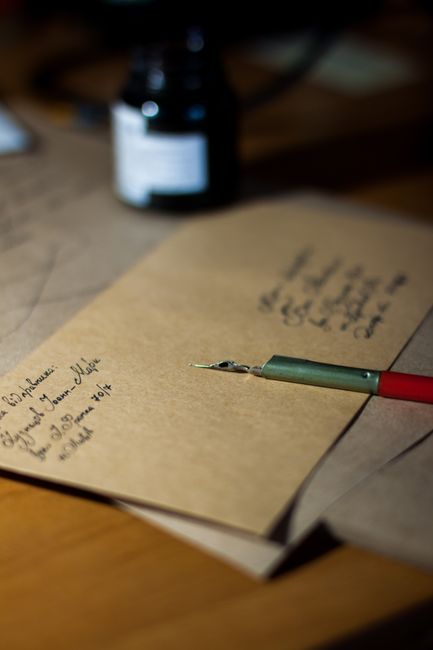
The outer envelope is the first thing a guest actually touches, and hand-lettered addressing remains one of the most noticeable upgrades a couple can make without hiring a full-service stationer. Professional calligraphers typically charge $3 to $7 per envelope, which adds up quickly for guest lists over 100, making DIY calligraphy an appealing cost-saver if you are willing to practice.
The NC Calligraphy Pen Set includes a wooden dip pen, a glass dip pen, twelve nibs, and five ink colors for around $16 to $20, giving beginners enough practice material to develop a consistent hand before addressing real envelopes. Practice on the same envelope stock you plan to mail, since ink behaves differently on glossy versus matte finishes, and budget at least two weeks of practice sessions before addressing your actual guest list.
If hand calligraphy feels like too steep a learning curve, printable calligraphy-style fonts through a local print shop or an at-home printer with the right template achieve a similar look in a fraction of the time. Either approach beats a plain typed label, which tends to read as impersonal on a wedding envelope regardless of how nice the invitation inside looks.
Vellum, a translucent paper that softens whatever is printed or placed beneath it, has become one of the most popular finishing touches for 2026 invitation suites. Wrapped around a stack of cards and tied or sealed, it adds visual layering without requiring a completely different print job, and it pairs naturally with a wax seal for closure.
The Vellum Invitation Wrap for 5x7 Wedding Invitations, sold in sets of 20 and priced around $10 to $14, comes pre-folded and sized to fit standard 5x7 invitation suites without any trimming. It works equally well over a single invitation card or a full stack that includes an RSVP and details card, and it is translucent enough to let color and typography show through without obscuring the text.
Other finishing touches worth considering include a thin cotton ribbon in a color pulled from your florals, a small pressed flower tucked under the vellum, or a monogram wax seal that repeats on your programs and place cards for a cohesive look across the whole day. Keep embellishments consistent with the overall weight of the invitation, a heavy ribbon on a delicate card can look mismatched, and vice versa. Repeating the same color palette and font pairing on your wedding welcome sign ideas ties the invitation suite to the day-of decor for a cohesive look from mailbox to venue.
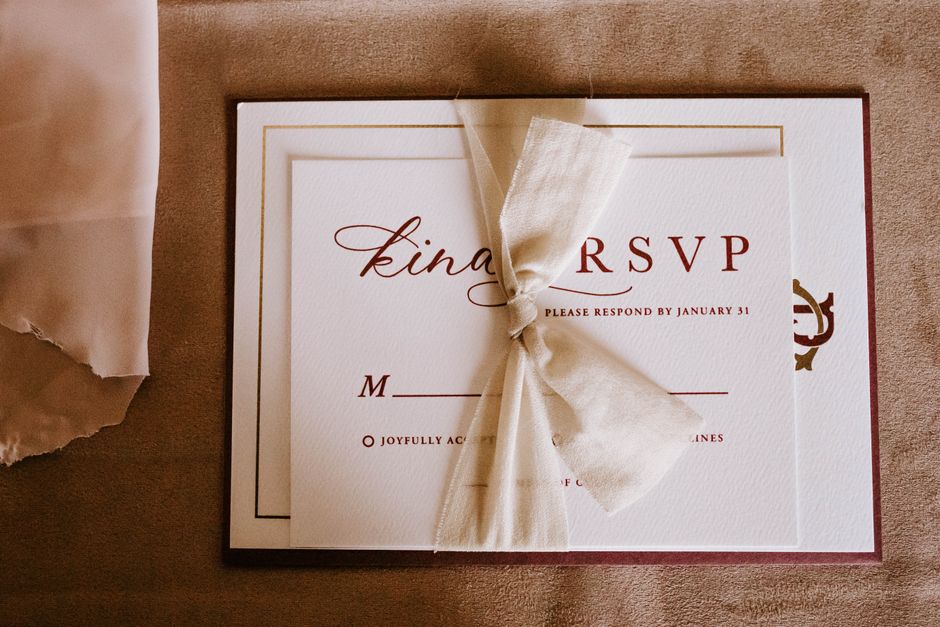
RSVP cards remain standard even as more couples add digital response options through a wedding website, since a physical card gives older or less tech-comfortable guests an easy way to respond and gives you a paper trail for meal choices or plus-one confirmations. Set the RSVP deadline three to four weeks before the wedding, which gives you enough buffer to finalize a headcount for catering and seating charts.
The RSVP Wedding Return Cards with A6 Envelopes, sold in packs of 50 for around $16 to $22, come pre-cut to a standard 4x6 size that fits neatly alongside most invitation suites without needing custom trimming. Pre-addressing and pre-stamping the return envelopes measurably increases response rates, since it removes any friction between a guest deciding to RSVP and actually dropping the card in the mail.
If you offer a digital RSVP option alongside the physical card, make the choice clear rather than requiring both. Listing a QR code or website URL directly on the RSVP card, with the mail-in option as a backup, tends to get the fastest overall response rate across a mixed-age guest list.
Timing matters as much as design when it comes to wedding invitations. Order your invitations eight to ten weeks before the wedding to leave room for proofing, printing, and any reprints if an error slips through the first proof. Mail invitations six to eight weeks before the wedding for a local event, and eight to twelve weeks ahead for a destination wedding where guests need extra time to book travel.
Save-the-dates, sent separately six to eight months in advance, are worth the extra cost for weddings with a significant number of out-of-town guests or a holiday-weekend date, since they give people a much longer runway to request time off and book flights. For local weddings with a smaller guest list, some couples skip save-the-dates entirely and rely on the formal invitation alone.
Build in a buffer for addressing, whether by hand or through a calligrapher, since this step is frequently underestimated. Addressing 100 envelopes by hand realistically takes eight to twelve hours across several sessions, not one evening.
Wedding invitations typically run $3 to $12 per invitation depending on printing method and embellishments, with letterpress and foil-stamped suites at the higher end and digital-print or DIY kits at the lower end. Since one invitation usually covers an entire household rather than each individual guest, total costs are often lower than couples initially expect when they price by headcount instead of by household.
Most couples use a single invitation covering both events when the ceremony and reception happen at the same venue or nearby. If the ceremony is private or has limited seating while the reception is open to a wider guest list, a separate reception-only card lets you invite additional guests to celebrate without overcrowding the ceremony space.
Yes, most etiquette guides still consider printed registry details on the invitation itself to be presumptuous. Registry information belongs on your wedding website, with the URL printed on an insert card or the invitation itself, letting guests seek out the information rather than having it presented alongside the invite.
Online stationers and print-on-demand kits have improved significantly, and many now offer paper stock and printing quality comparable to local print shops at a lower price point. Always order a physical proof before your full print run, since screen colors rarely match printed colors exactly, and check reviews specifically mentioning cardstock weight if ordering a DIY kit.
Address the outer envelope with only the invited guest's name unless you are extending a plus-one, in which case add "and Guest" or the plus-one's name if known. Avoid ambiguous wording like "and family" unless you genuinely intend to invite an entire household, since it frequently creates confusion about who is actually invited.
Order 10 to 15 extra invitations beyond your final headcount to cover addressing mistakes, last-minute additions, and keepsake copies for yourselves and both sets of parents. Reprinting a small batch later, if a print run sells in fixed quantities, often costs more per unit than ordering a few extra up front.