Wedding Welcome Sign Ideas: Acrylic, Mirror & DIY Designs


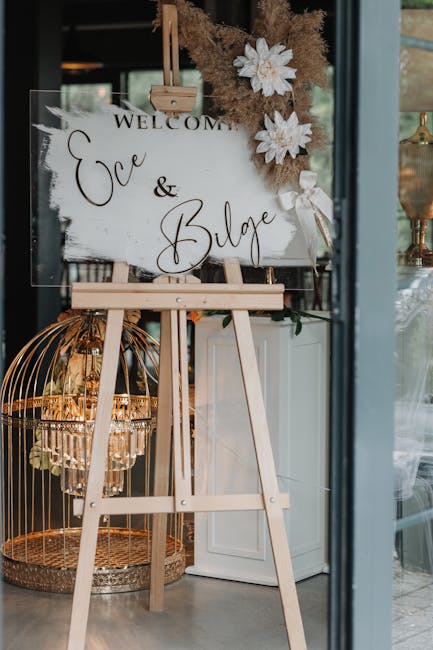
The first thing your guests see when they arrive is not the flowers, the cake, or even you — it is your welcome sign. Whether it is a sleek piece of acrylic resting on a brass easel at the chapel entrance, an antique mirror leaning against vintage suitcases, or a hand-lettered chalkboard propped beside a basket of programs, this single piece of décor sets the tone and orients everyone who walks through the door. Good wedding welcome sign ideas should not just be pretty — they should do work.
This guide walks through every popular style of wedding welcome sign for 2026 and shows you how to choose the right one for your venue, palette and budget. We cover the four most-requested materials — acrylic, mirror, chalkboard and wood — along with their real price ranges, how to display each so it photographs well, and what to write beyond the obvious "Welcome to our wedding."
If you are working with a tight timeline, you will also find a fully DIY route at the end that produces a wedding-magazine-worthy sign in a single weekend for under . Every product we recommend has been verified in stock with strong reviews as of May 2026.
Why your welcome sign sets the tone
A welcome sign is the only piece of stationery that almost every guest pauses in front of and photographs. Couples often spend weeks agonising over their place cards and then grab a generic chalkboard at the last minute for the entrance — the result is a beautiful reception with an inconsistent visual front door. A welcome sign should echo the typography, palette and material language of the rest of the day.
The other quiet job a welcome sign does is logistical. At venues with multiple events on the same evening, or estate weddings where guests arrive at a gate before the ceremony space, the sign is what tells people they are in the right place. A clear "Sarah & James — May 12, 2026 — Please find your seat in the garden" replaces three confused calls to your planner.
Your welcome sign also becomes part of the permanent record of the day. It appears in your photographer's establishing shots and your wedding film's opening sequence — and, if you choose a reusable material, on your living-room wall a year later.
Acrylic welcome signs: the modern minimalist choice
Acrylic has overtaken every other material for wedding signage in 2026 for one simple reason: it disappears. A clear acrylic panel reads like calligraphy floating in mid-air, which means it complements every venue style from a glass-walled atrium to a stone barn. Lettering is typically applied in white, gold or black UV-printed vinyl; the most popular palette right now is bone-white script on clear acrylic with a fine-line illustration of the venue or a single floral sprig.
Expect to pay to for a custom-printed 18" × 24" panel from a wedding stationer, or roughly half that if you order a blank and letter it yourself. The Andaz Press Acrylic Blanks DIY Wedding Sign is the most consistently five-star option on Amazon — a 16" × 24" panel of scratch-resistant lucite with smooth polished edges, sized to fit standard floor easels, for around to depending on the size you choose.
A few practical notes the Etsy listings tend to skip. Never put a clear acrylic sign in front of a busy backdrop — the lettering vanishes against patterned wallpaper; stage it against greenery, a draped fabric panel or a solid-colour wall. Fingerprints are the enemy: bring a microfibre cloth and ask the venue staff to wipe the sign down ten minutes before guests arrive. And if you are outdoors in direct sun, position the sign so the lettering is back-lit rather than front-lit — that is the angle that photographs as floating script.
Mirror welcome signs: an elegant statement piece
A mirror sign is the choice for couples who want vintage romance and a touch of drama. Antique gilded frames, art-deco rectangles and beveled ovals all photograph beautifully because the mirror picks up the candlelight, the florals and the colours of guests' outfits, turning the sign itself into a living part of the scene. White or gold calligraphy on a clean mirror surface is the most-photographed wedding entrance look of the past three years.
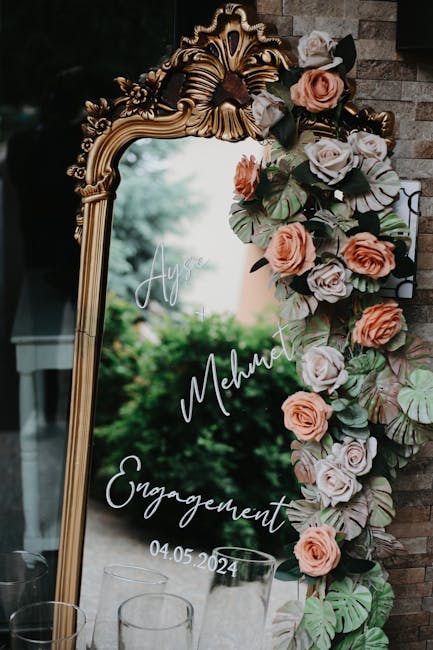
Sourcing the mirror is the tricky part. Antique shops and estate sales are the dream — to for a five-foot ornate gold or silver mirror in good condition — but supply is unpredictable. Facebook Marketplace and Chairish are the most reliable hunting grounds; search "vintage floor mirror" or "ornate framed mirror" and filter by your local area. New beveled wall mirrors from Ikea or Wayfair can be re-framed with thrifted moulding for a convincing result.
For the lettering, hire a wedding calligrapher for to for a one-night rental of the artwork, or do it yourself with a white liquid chalk marker. Lightly chalk-trace your design first using transfer paper, then ink over it. If you mess up, the chalk marker wipes off with a damp cloth — meaning a mirror sign is one of the most forgiving DIY surfaces. The other consideration is weight: large floor mirrors can be 40 to 60 pounds and need a built-in stand, a heavy easel or wall mounting.
Chalkboard welcome signs: rustic charm for any budget
The chalkboard is the workhorse of wedding signage. It is the most affordable framed option, it is endlessly reusable, and — done well — it produces a sign that looks completely intentional even in a black-tie ballroom. The trick is to avoid the generic café A-frame look by choosing a generously sized board with a clean black-painted wooden frame, or by surrounding a smaller chalkboard with greenery and florals to elevate it into a focal piece.
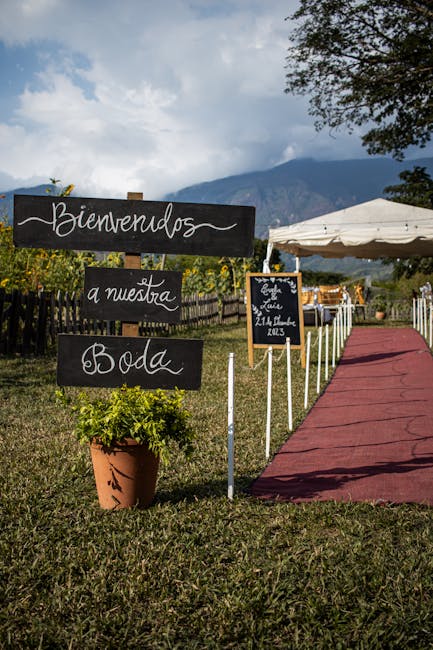
For ceremony entrances and outdoor weddings, an A-frame double-sided chalkboard sits sturdily on grass or gravel without an easel and folds flat for storage. The HUAZI 40" × 20" Outdoor Chalkboard A-Frame Sign is the long-time five-star pick — Russian pine frame, magnetic surface, double-sided so you can letter the back as a "Thank you for celebrating with us" exit sign, around to .
Lettering technique matters more on chalkboard than on any other surface. Traditional chalk smudges, photographs flat, and disappears against bright window light. Use liquid chalk markers instead — they go on opaque white, photograph beautifully, and wipe off cleanly. We recommend the CHALKY CROWN Liquid Chalk Marker 5-Pack for the boldest, most consistent line — at around to for five pens with reversible chisel and bullet tips, it is the cheapest material in this whole guide. Bring an extra pack on the day; couples consistently underestimate how much ink a large welcome sign uses.
Wooden and custom-painted welcome signs
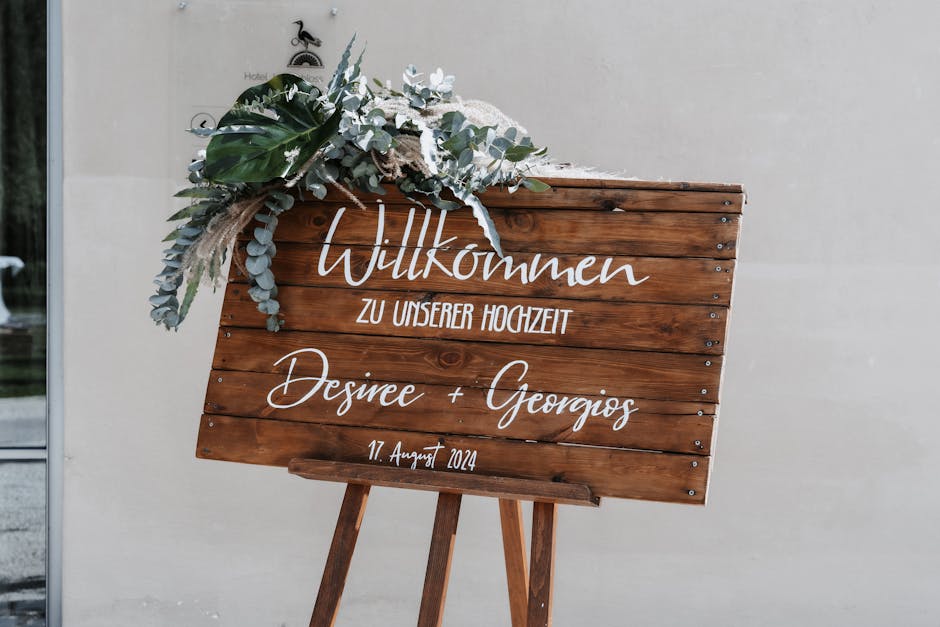
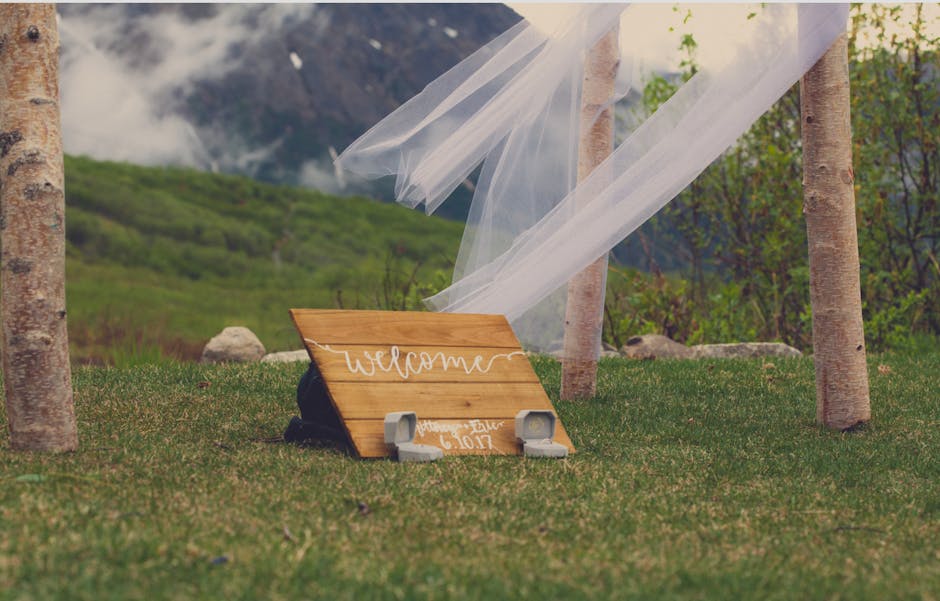
Wood is the right material when your wedding leans rustic, barn, garden or coastal. A reclaimed barn-board sign with hand-painted white lettering is iconic for farm weddings, and a beach-driftwood sign with sand-coloured letters works beautifully for a Cape Cod ceremony. Wooden signs are also the most durable of the four and the easiest to repurpose as home décor afterward.
The biggest decision is finish. Whitewashed pine in a thin black frame is the most popular 2026 look — bright and modern without the chalk-cafe vibe, and pairs well with a green ceremony arch or any colour palette. Stained walnut or dark oak gives a more formal, almost art-deco feel, especially with gold lettering.
Almost every wooden sign looks better when surrounded by greenery rather than left bare. A flexible eucalyptus garland draped along the top edge or trailing down one side adds depth and floral language without obscuring the lettering. The FLORLAB 6.2 ft Faux Eucalyptus Garland is the most realistic option we have tested in the to range — silver-dollar leaves, lambs-ear and magnolia on a flexible vine, reusable for the reception table runner afterward.
Where (and how) to display your sign for maximum impact
The single best display upgrade for any welcome sign — regardless of material — is the right easel. Skip the cheap aluminium artist easels from craft stores; they sag, they tip in light wind, and they look exactly like what they are. A solid hardwood floor easel is one of the few items where the difference between the budget option and the proper version is immediately visible in photos. Choose 65" tall as the standard wedding height — that centres an 18" × 24" sign at adult eye level.
The most recommended easel on the wedding planner forums is the Lucia and Luciana 65" Wedding Welcome Sign Floor Easel — handmade in the USA from beveled poplar with zinc-plated hardware, available in natural, white, gold, rose gold, silver and black, holds up to 20 pounds (enough for any standard sign including a heavy mirror), and assembles in under ten minutes. At to it is the single most reused piece of décor from any wedding.
Position matters as much as the easel. Set the sign six to eight feet inside the entrance so guests walk past the threshold before they see it, with a tall floral arrangement to one side to balance the composition. If you can, light it: a small uplight from below, or warm-white fairy lights wrapped through nearby greenery, makes the sign glow in golden-hour and evening shots.
DIY wedding welcome sign: a simple weekend project
If your budget will not stretch to a custom-printed sign, a thoughtfully made DIY sign can be indistinguishable from one that cost in photos — and it is one of the most genuinely rewarding pre-wedding craft projects to do with your partner or your maid of honour.
Here is the streamlined process. First, pick your base — a blank 18" × 24" acrylic panel is the most forgiving for beginners because mistakes wipe off; chalkboard is the second most forgiving; raw wood is the trickiest. Second, lay out your design in Canva (free, with hundreds of wedding sign templates) and print a full-size version on tiled letter-paper that you tape together. Third, slide the template behind your acrylic or use transfer paper for chalkboard and wood, and trace lightly with a pencil. Fourth, ink over your tracing with a white liquid chalk marker — moving slowly, holding the marker at a consistent angle, resting your palm on a clean cloth.
Two tips save more couples than any others. First, use faux-calligraphy: draw your letters in single strokes first, then thicken every downstroke. This produces an elegant brush-script look without a real calligraphy pen. Second, do not aim for perfect — aim for confident. Hesitant lettering reads wobbly; even slightly imperfect lettering done with conviction reads custom. Finish with a fine border or wax-sealed monogram, and pair the sign with greenery on the day.
Wedding Welcome Sign FAQ
- How big should a wedding welcome sign be?
The industry default is 18" × 24" for an indoor reception, scaling up to 24" × 36" for an outdoor ceremony where guests see the sign from further away. Anything smaller than 16" × 20" disappears in establishing photos; anything larger than 36" × 48" starts to feel like signage rather than décor. If you are choosing between two sizes, always size up — a slightly large sign looks intentional, a slightly small one looks under-budgeted.
- What should a wedding welcome sign say?
The minimum is the couple's first names and the date — for example, "Sarah & James — May 12, 2026." Most couples then add a short greeting ("Welcome to the wedding of...") and any practical detail guests need, such as "Ceremony begins at 4 pm in the garden." Resist including too much; three lines reads beautifully, seven lines reads like a memo.
- How far in advance should I order a custom welcome sign?
Order at least six weeks before the wedding for any custom-printed acrylic, mirror or wooden sign, and eight to ten weeks if the design includes hand-lettering or a venue illustration. Stationery shops are bottlenecked during peak season (April through October), and last-minute orders incur rush fees of 30 to 50 percent. For a DIY sign, allow two weekends — one for materials, one for the lettering.
- Can I reuse my wedding welcome sign as home décor?
Acrylic, mirror and wooden signs all reuse beautifully — many couples re-letter the surface with a milestone date (first anniversary, baby's birthday) and display the same piece on their living-room wall. Mirrors are the easiest because the chalk-marker lettering simply wipes off. Acrylic and wood reuse most easily if your original lettering is your shared monogram or last name.
- Should my welcome sign match my invitations?
Yes — but match the design language, not the literal artwork. The fonts, colour palette, floral motifs and overall mood should feel like they were designed by the same hand. Reusing exact invitation artwork at full scale tends to look flat — proportions designed for a 5" × 7" card rarely translate to 18" × 24". The cleanest approach is to ask the stationer who designed your invitations to produce a coordinating sign as a package.
- Where should I place the welcome sign at an outdoor wedding?
Position the sign six to eight feet inside the ceremony entrance, on the side opposite the photographer's primary shooting position. For garden and beach weddings, anchor the easel with discreet sandbags or a weighted base — even a light breeze tips a 65" easel — and avoid orienting a mirror or acrylic surface directly into afternoon glare.