Wedding Unity Ceremony Ideas: Sand, Candle, and Beyond in 2026


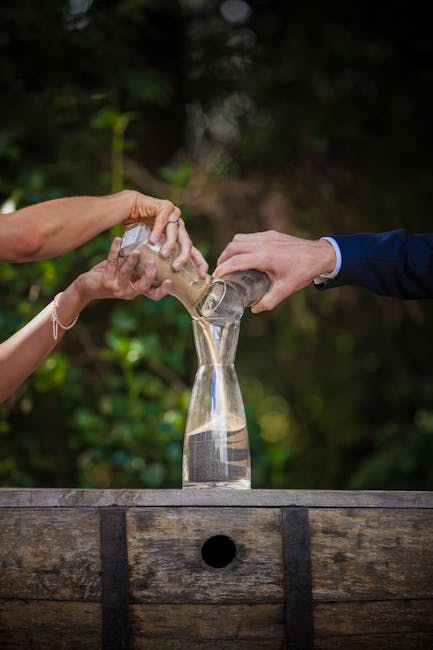
The unity ceremony is one of the few wedding traditions that has actually expanded in the last decade rather than gotten quieter. Where couples a generation ago picked between a unity candle and a sand ceremony, modern weddings draw from a much longer menu — handfasting cords, wine box time capsules, unity paintings, even shared first sips of a custom blend. The wedding unity ceremony ideas couples reach for in 2026 are less about following a script and more about choosing a small, photographable ritual that says something specific about how the two of you came together.
Part of the shift is religious — fewer couples want a ritual tied to a single faith tradition, so the candle ceremonies that originated in Christian and Catholic services have given way to options that work in a backyard, a beach, or a courthouse just as well as a church. Part of it is photographic — the unity moment is where ceremony photographers earn their close-up shot, and a sand pour, a wax seal, or a knotted cord photograph more interestingly than a lit candle. And part of it is sentimental — the keepsakes these ceremonies produce sit on mantels long after the dress is packed away.
This guide walks through the unity ceremony options that actually show up in 2026 weddings — sand, candle, wine box, handfasting, and the modern unity painting trend — with practical notes on what each one involves, what it costs, and how to pick the right one without layering three rituals into a fifteen-minute program.
What a unity ceremony actually is in 2026
A unity ceremony is a short symbolic ritual placed inside the wedding ceremony — usually right after the vows — where the couple performs an action that represents their joining. The action takes ninety seconds to four minutes, and it is optional in every faith tradition and required in none.
The role the unity ceremony plays is mostly emotional pacing. The vows are the most charged moment of the ceremony; the unity ritual gives the couple, the officiant, and the guests a brief beat of physical action before the pronouncement, the kiss, and the recessional. It also gives photographers a framed shot they can build the ceremony album around.
Couples in 2026 typically pick one ritual rather than stacking several. Doubling up pushes ceremony length past twenty-five minutes, when guests start checking phones. Pick one, do it well, keep the other ideas in mind for a future vow renewal.
The unity sand ceremony — the most-photographed option in 2026
The sand ceremony is currently the most popular unity ritual in American weddings, and it has been for about a decade. The mechanics are simple — each partner pours a different colored sand from an individual vase into a single central vase, layering the colors as they go. The result is a striped or marbled keepsake the couple takes home and keeps as a permanent record of the ceremony.
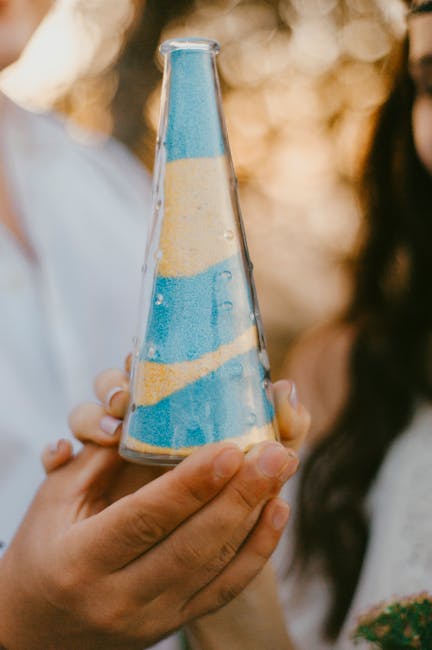
The reason sand has become the default is partly that it works in any venue — outdoor, beach, indoor, religious, or civil — and partly that it produces a dramatic visual that photographs well from any angle. Wind is not an issue if you use a heavier sand grade and pour from a low height. Blended-family couples often add a third color for the children, which turns it into a small family unity moment.
A reliable starter set is the Sand Ceremony Kit for Wedding with Heart and Spiral Vase. It comes with a heart-shaped central vase, two pouring vases, and two colors of sand (purple and white) for around $30 to $45. The heart shape catches the layering more cleanly than a straight cylinder, and the included sand is heavy enough that you do not need to worry about a breeze. Additional craft sand for a blended-family pour runs about $5 a bag.
Rehearse the pour once before the ceremony, ideally at the wedding rehearsal dinner. The most common minor stumble is one partner pouring much faster than the other, which produces uneven layering that doesn't photograph as well.
The classic unity candle ceremony
The unity candle is the original American unity ritual, and it remains the right choice for a traditional church or chapel ceremony. The setup is three candles — two taper candles for each partner's individual life, and a single pillar in the centre. Each partner lights their taper from a family candle (often lit earlier by a parent), then together they light the centre pillar.
The ritual reads beautifully in any indoor venue, but it has a real limitation: it does not work outdoors. Even a slight breeze blows out tapers, and the lit-tapers-to-pillar moment is the entire visual. If your ceremony is outdoor, pick another ritual or move the unity moment indoors.
A clean candle set with the right proportions is the VABA Unity Ceremony Candles 6-inch Pillar and 10-inch Tapers. The set includes one cream pillar and two cream tapers in a matte finish, eco-friendly wax, and runs around $25 to $40. The 6-inch pillar is the right height to photograph cleanly without dwarfing the couple, and the matte cream pairs well with both warm and cool palettes.
Light the family candles ten minutes before the ceremony rather than during the processional — wax dripping during a long aisle walk is the second-most-common minor stumble after a slow-pouring sand partner.
The wine box and love letter ceremony — a unity ritual with a future
The wine box ceremony is the unity option that produces the longest-lasting keepsake. Each partner writes a sealed love letter to the other before the wedding, and during the ceremony, both letters and a chosen bottle of wine are placed inside a wooden box, which the couple hammers shut at the altar. The box is opened on a specific future anniversary — most commonly the fifth or tenth — at which point the couple reads the letters and shares the wine.
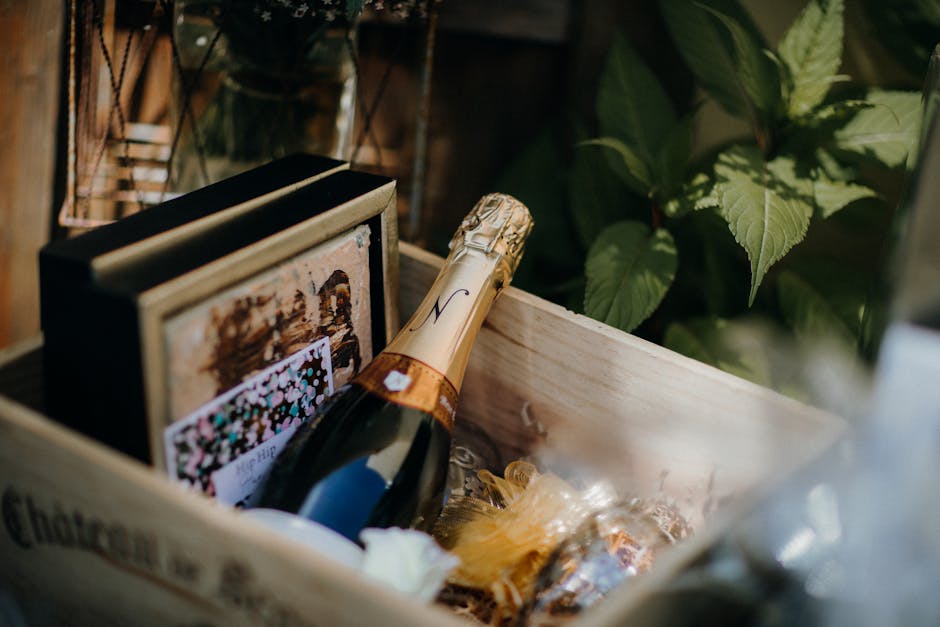
The ritual works particularly well at outdoor and rustic venues because nailing the box shut produces a satisfying physical moment that doesn't depend on flame. Many couples build in a clause — open the box on the first anniversary if there's been a hard year, otherwise wait for year five — which turns the ritual into a small marriage tool rather than just a keepsake.
The most-purchased option is the Weddingstar Love Letter Ceremony Wine Box Set, a walnut-veneer box that comes with a lock and key, two etched "I Do" wine glasses, custom stationery for the letters, and a sample script for the officiant, for around $55 to $75. The lock-and-key version skips the hammering moment in favour of a quieter sealing — useful in indoor church ceremonies where a hammer feels out of place. For a rustic ceremony, an unlocked nailed-shut box reads better than a locked one.
If wine is not central to your relationship, the same ritual works with a bottle of bourbon, a sealed coffee bean blend, or a favourite craft beer. Pair the ritual naturally with your reception drinks plan — see our wedding signature drink ideas guide for ideas that echo the same flavour profile across the night.
Handfasting — the ancient ritual having a modern moment
Handfasting is a Celtic tradition where the couple's hands are bound together with a length of cord while the officiant recites a series of blessings. It is the literal origin of the phrase "tying the knot." The ritual has had a strong revival in 2026 weddings, partly because it is religiously flexible — pagan, Christian, secular, and interfaith couples all use it — and partly because the visual is striking in a way few other unity rituals are.
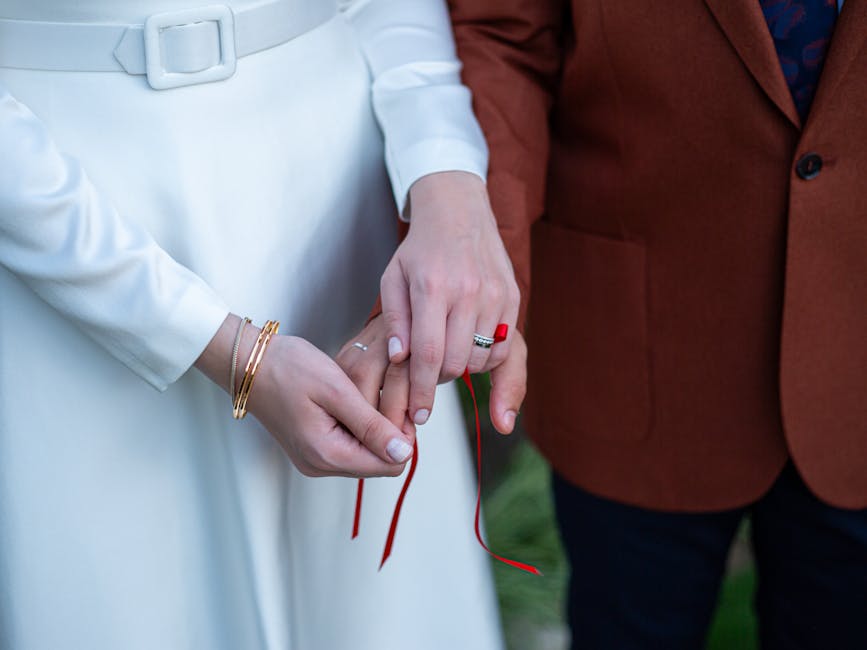
The setup is the simplest of any unity ritual. The officiant or a chosen witness loops a six-foot cord over the couple's joined hands in a figure-eight, ties a single knot at the end, and the couple pulls the cord into a loose handfasted braid as they exchange vows. The whole ritual takes about two minutes and the resulting knotted cord becomes a keepsake that many couples display in a shadow box or hang above their bed for the first year of marriage.
A reliable cord choice is the Braided Together Celtic Knot Handfasting Cord. It is six feet long, hand-braided in four ribbon strands with a Celtic knot detail, and runs around $30 to $40 in a wide range of color combinations — black and silver, ivory and gold, navy and rose, and several seasonal palettes. Pick colors that echo your ceremony palette so the cord reads as part of the visual rather than as a separate accessory.
Handfasting pairs well with personalised vows because the binding action gives them a physical anchor. The visual reads to guests unfamiliar with the tradition — the officiant explains the symbolism in two sentences and the cord carries the rest. If your officiant is doing handfasting for the first time, walk through the figure-eight loop at the rehearsal.
Unity painting and other modern unity ceremony alternatives
The unity painting has emerged as the most distinctive of the modern alternatives. Each partner pours a different colored paint onto a blank canvas at the altar, the colors swirl together into an abstract mix, and the canvas dries during the reception and hangs in the couple's home as a permanent piece of art. The ritual is particularly good for art-leaning couples and creates a keepsake that gets seen daily for years.
A complete kit is the Quzzil Wedding Unity Painting Canvas Set, which comes with a customisable canvas (you can have the couple's names and date pre-printed), an easel, two paint jars, three colors of acrylic paint, and six brushes, for around $40 to $55. The canvas is roughly 11 by 14 inches, which is large enough to read from the front row but small enough to not look like a billboard at the altar. The paint dries in about ninety minutes, so by the end of the reception the canvas is ready to take home.
Other modern alternatives include a unity tree planting (each partner adds soil from a meaningful place, and the tree is planted in the couple's yard), a salt-blending ceremony (the dry-friendly cousin of the sand ceremony), and a stones ceremony where each guest blesses a stone that becomes part of the couple's home garden.
If you want a small ritual without a kit, the simplest modern unity ceremony is a shared first sip — each partner brings a flask of a meaningful liquid (favourite coffee, a parent's recipe, the cocktail you ordered on your first date), and the two are blended in a single cup at the altar. Costs nothing, symbolism is direct.
How to pick the right unity ceremony for your wedding
The choice comes down to four questions. Indoor or outdoor — candle ceremonies need indoor venues, sand and handfasting work anywhere, wine box and unity painting work best at venues where the keepsake can be moved without breaking. Religious or secular — candle ceremonies have the strongest religious association, sand and handfasting are flexible, wine box and unity painting are secular. Fast or slow — handfasting runs under two minutes, sand and candle take three to four, wine box runs four to six.
The fourth question is what you want to keep. Candle ceremonies produce no keepsake. Sand and unity painting produce a visual keepsake. Handfasting leaves a small fabric cord. The wine box produces both the box and a future-dated experience. Couples who prefer experiences gravitate to the wine box; couples who like visible reminders pick sand or painting.
Whichever you pick, brief your officiant — and read the master of ceremonies guide if you are still selecting one — on the timing and symbolism. A unity ceremony explained well takes ninety seconds; explained poorly, it stretches by five minutes.
Wedding Unity Ceremony FAQ
- Do you have to have a unity ceremony at your wedding?
No. Unity ceremonies are optional in every faith tradition and required in none. Many couples skip the unity moment entirely, especially in shorter civil ceremonies or destination weddings. If you are pressed for ceremony time or the rituals do not feel meaningful to you, skipping is a respected choice and your officiant can simply move from vows to the pronouncement. Most modern wedding ceremonies run twenty minutes total whether they include a unity ritual or not.
- When does the unity ceremony happen during the wedding?
The unity ceremony almost always sits between the vows and the pronouncement of marriage. The order is: processional, welcome, readings, vows, ring exchange, unity ritual, pronouncement, kiss, recessional. Placing it after the vows lets the symbolic action follow the verbal commitment, which is the emotional pattern most ceremonies use. A few couples place it before the vows to settle nerves, but the post-vows position is the one ninety percent of officiants recommend.
- Which unity ceremony is best for a blended family?
The sand ceremony is the most flexible for blended families because each child can pour an additional color from a small individual vase, turning the ritual into a family unity moment. The unity painting works similarly — each child contributes a paint color. Avoid the candle ceremony for blended families with young children, since handing a lit taper to a five-year-old at a busy ceremony altar is logistically risky. Pick a ritual that gives each family member a small, age-appropriate role.
- How long does a unity ceremony take?
Most unity ceremonies run two to four minutes from the officiant's introduction through the action and back to the next part of the ceremony. The shared first sip and handfasting take about ninety seconds. The sand ceremony and candle lighting take three minutes. The wine box ceremony with letter sealing runs four to six minutes. Time the ritual at the rehearsal so it does not pad your ceremony beyond the twenty-minute mark guests start to feel.
- Can you do a unity ceremony outside?
Yes, with one caveat: candle ceremonies almost always fail outdoors because of wind. The sand ceremony, handfasting, wine box, unity painting, and shared sip rituals all work outdoors with no special setup. If you have your heart set on a candle ritual at an outdoor wedding, use enclosed hurricane glass holders rather than open tapers, or move the unity moment indoors at the reception venue immediately after the recessional.
- Do guests participate in the unity ceremony?
Usually not directly, but several rituals build in optional participation. A stones ceremony has guests bless a small stone before the wedding, which becomes part of the unity moment. A ribbon-tying handfasting has guests each tie a ribbon onto the cord. If guest involvement matters to you, the stones ceremony is the easiest to coordinate and the most-used option in 2026 community-style weddings.