What to Look For in a Wedding Dress: 2026 Buyer's Guide


What Actually Matters When Buying a Wedding Dress
Most brides spend weeks evaluating wedding dresses and still miss the elements that matter most. The dress that looks beautiful in the salon mirror does not always photograph beautifully, and the dress that photographs beautifully does not always wear comfortably for a 12-hour day. Knowing what to look for — fit, construction, fabric, and the small details — separates a good dress decision from one that produces years of mild regret.
The framework below is organized by what to evaluate in the order that matters. Fit first, construction second, fabric third, specific design details fourth. This order prevents the most common mistake: falling in love with a dress that looks dreamy on the hanger and is wrong for your body, your venue, or your life.
Fit: The Element That Matters Most
Fit is more important than silhouette, fabric, or brand. A $400 dress that fits perfectly photographs better than a $4,000 dress that does not. Evaluate fit across five checkpoints:
- Shoulders and straps: if the dress has straps, they should sit exactly on your shoulder line without biting into the skin or slipping off. Strapless dresses should hold themselves up without constant adjustment.
- Bust: the fabric across the bust should lie smooth, without gaping, pulling, or bunching. If you need to wear shapewear to avoid gapping, the dress is not the right shape for your body.
- Waist: the dress should fall where your natural waist actually is, not 2 inches above or below. A waistline in the wrong place shortens or elongates your torso unflatteringly.
- Hips: the fabric should skim the hips, not cling to them or stand out from them. For fitted silhouettes, look for smooth lines; for A-line and ball gowns, the fabric should flow away from the hips without pulling.
- Length: the hem should allow walking without tripping, with enough length to cover the shoes when standing and dance-moving without lifting it constantly.
Fit problems can be solved with alterations — but only up to a point. A dress that needs more than 2 inches of fabric added or removed usually looks different after alterations than it did at purchase. Try dresses that are close to your current size, not aspirational ones.
Construction Quality
The interior of the dress tells you whether it will hold up through the day. Look specifically for:
- Boning (internal structure): quality dresses have strong boning sewn into the bodice. Without boning, strapless dresses slide down and fitted bodices collapse.
- Lining: the dress should be fully lined, not just a shell of the primary fabric. Unlined dresses show shapewear lines and reveal every underlayer in photos.
- Bust cups: sewn-in cups (not removable inserts) produce the cleanest shape for strapless and open-back dresses.
- Seam finishing: look at the inside of the dress. Seams should be clean, finished (not raw), and flat. Rough unfinished seams indicate rushed construction.
- Zipper quality: the zipper should run smoothly and stay aligned. A zipper that catches fabric or needs force is a warning sign.
- Bustling system: if the dress has a train, ask the bridal salon to show you how the bustle works. A well-designed bustle transforms the dress for reception dancing; a bad one requires constant fussing.
Ask to see multiple examples of a specific dress (not just the sample). Construction quality varies across units even within a single style.
Fabric: What Each Option Signals
Fabric drives how the dress moves, how it photographs, and how it feels. The major 2026 options:
- Silk satin: glossy, fluid, drapes beautifully. Expensive and wrinkle-prone, but photographs exquisitely in evening light.
- Silk mikado: heavier, structured, with a soft sheen. The fabric of the 2026 ball-gown comeback.
- Silk crepe: matte, drapey, modern. Photographs as elegant rather than shiny. The workhorse of modern column dresses.
- Chiffon: light, flowing, best for garden and beach weddings. Less structured; shows every undergarment line.
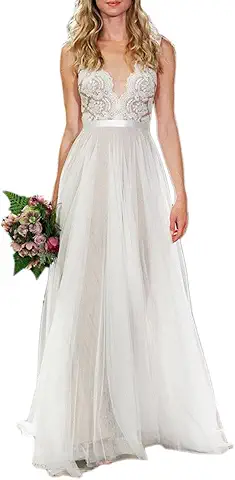
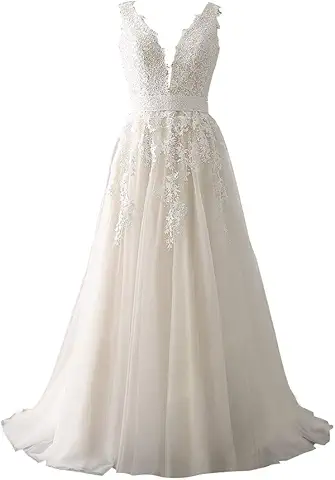
- Tulle: lightweight, dimensional, used for skirts and overlays. Can read princess-y or modern depending on how it's used.
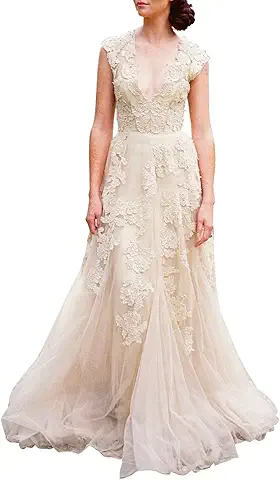
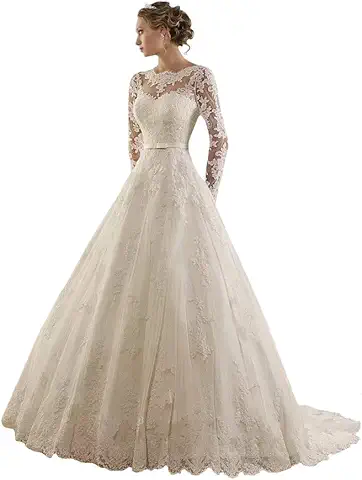
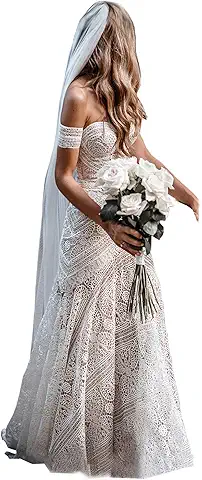
- Lace: traditional, romantic, variable quality. French and Italian laces are the most refined; cheaper laces read as synthetic.
- Organza: crisp, structured, used for skirts and details. Holds shape but is less drapey.
Touch each fabric option. The feel in your hand indicates the weight and drape. Fabrics that feel heavy and smooth will drape beautifully; fabrics that feel stiff or synthetic often photograph as cheap.
Silhouette: Match to Your Body
Four silhouettes dominate 2026 collections. Each flatters different body types:
- A-line: fitted through the bodice, flared from the waist. The most universally flattering silhouette. Works on every body type.
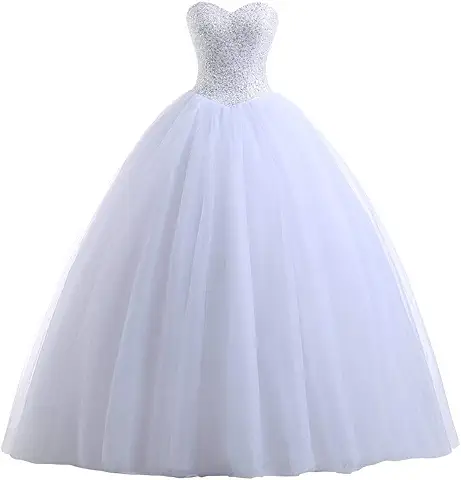
- Ball gown: fitted bodice with a dramatic full skirt. Flattering for creating waist definition and hourglass shape. Best for formal weddings.
- Sheath / column: fitted throughout, following body lines. Best for tall, slim, or rectangular frames. Requires confidence and excellent shapewear.
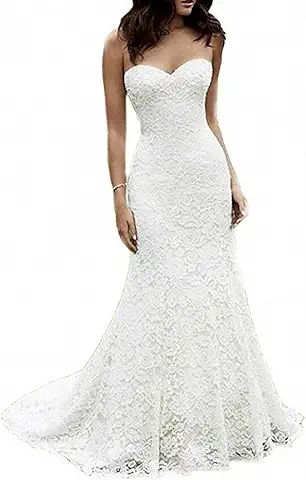
- Mermaid: fitted to the knee, then flaring dramatically. Most dramatic and figure-defining. Works for hourglass frames; challenging for others.
Try all four. Brides who walk in thinking 'I'm definitely an A-line' often find they look best in a ball gown. The mirror reveals what the imagination cannot — trust what you see, not what you expected.
Details That Age Well vs Date Quickly
Wedding dress details affect how the photos age. Some details look current in every era; others lock the photo to a specific moment.
Details that age well:
- Simple, clean silhouettes without heavy embellishment
- Quality lace in restrained amounts (not dress-covered)
- A single focal detail (a bow at the waist, a unique neckline)
- Natural-looking embroidery rather than dense beadwork
- Thoughtful proportions (sleeve length, neckline depth, train length)
Details that date quickly:
- Heavy 3D floral applique across the entire dress
- Trend-specific necklines (the illusion neckline peaked years ago)
- Saturated metallic embellishment
- Extreme silhouettes (mini hemlines on wedding dresses, sheer mesh inserts)
- Puff sleeves peaked a few years ago and are receding; tread carefully
Buy a dress you want to look at in photos 20 years from now — not just one that is trending this season.
The Questions to Ask Your Salon
Questions that separate good salons from average ones:
- What is the actual production timeline from order to delivery?
- Is the dress ordered custom or pulled from inventory?
- What alterations can you perform in-house? What is the typical alterations cost?
- Can I see the dress off the mannequin before buying?
- What is your policy on size changes, cancellations, and refunds?
- If there is a production defect, what happens?
- Can you provide care and storage instructions for the period between first try-on and wedding?
- How many fittings does the full alterations process typically require?
Ask these questions before buying, not after. The questions themselves also help the consultant understand you are a serious buyer, which often produces better attention and more candid guidance.
The Final Fit Timeline
Once you purchase, the timeline to the wedding:
- 4 to 6 months before: dress arrives from manufacturer
- 3 to 4 months before: first fitting, initial alterations discussion
- 2 months before: major alterations complete
- 6 to 8 weeks before: second fitting for refinement
- 2 to 3 weeks before: final fitting, bustle practice
- 1 week before: final inspection and pickup
- Wedding morning: put the dress on 60 to 90 minutes before leaving for the ceremony, not in a rush
Skip any of these steps and you risk a dress that does not quite fit on the day. The effort is not glamorous but the photographs reward it. The bride who takes the time to get fit right consistently feels more confident, which shows up in every expression captured on camera.