Bride Robe Ideas for Wedding Morning Getting Ready


The robe a bride wears on wedding morning shows up in more photographs than almost anything else she puts on that day, save for the gown itself. It appears in the flatlay shots, the hair-and-makeup sequence, the champagne toast with her mother, and the quiet moment right before the dress goes on. A thin polyester robe from a drugstore three-pack photographs exactly like what it is, while a proper bride robe reads as intentional and elevates every frame around it.
Choosing a bride robe involves more decisions than it first appears: fabric weight, personalization style, how it should contrast against the bridesmaids, sizing for comfort during a long styling session, and timing the order so a monogram doesn't arrive the week of the wedding. Getting these choices right is the difference between a robe that looks like an afterthought and one that becomes a keepsake worn on anniversaries for years afterward.
This guide walks through fabric selection, personalization options actually worth paying for, how to stand out from a matching bridesmaid set, sizing for photo-ready comfort, and slippers and accessories that round out the getting-ready look. Every product mentioned below is verified on Amazon at the time of writing.
Why the Bride Robe Matters More Than You'd Think
Photographers consistently name the getting-ready hour as one of the most useful blocks of the day for candid, usable images, and the bride's robe is the visual anchor of nearly every frame in that sequence. Unlike the gown, which is only worn for a few hours starting at the ceremony, the robe is on camera during the entire morning: hair, makeup, the first sip of coffee, the group toast, and the moment right before the dress comes out of the garment bag.
A robe that fits poorly or bunches at the waist creates a distraction in shots that are otherwise unscripted and difficult to redo. A robe that drapes cleanly and photographs with a soft sheen does the opposite: it becomes the quiet, elegant backdrop that makes candid shots look editorial rather than accidental.
There's also a practical dimension. A robe that opens fully at the front, rather than pulling over the head, protects a finished hairstyle and makeup application in a way a t-shirt or a button-down cannot always guarantee. That single design detail is why the robe format has become the default getting-ready outfit for brides rather than an optional extra.
Satin vs Silk vs Cotton: Choosing the Right Fabric
Fabric is the single biggest factor in how a bride robe photographs and how comfortable it feels through three or four hours in a styling chair. Three categories cover almost everything actually sold for this purpose in 2026.
Polyester satin is the most common choice and the best value. It photographs with a soft, consistent sheen, drapes cleanly without clinging, and typically runs $30 to $55 for a bridal-labeled robe. The trade-off is breathability — a glossy satin can feel warm during a long summer styling session, so for hot-weather weddings, look for a "matte satin" or microfiber-satin blend rather than high-shine poly.
Mulberry silk sits at the premium end, usually $90 to $200. The drape and light reflection are genuinely different from satin and read beautifully in close-up detail shots, but the price is hard to justify for anyone not specifically chasing the silk look for editorial-style photography.
Cotton and waffle-weave robes are the most comfortable to wear but the least photogenic for a traditional bridal aesthetic — they read as spa wear rather than wedding-morning attire, which suits a casual or boho wedding but isn't the standard pick for classic getting-ready photos.
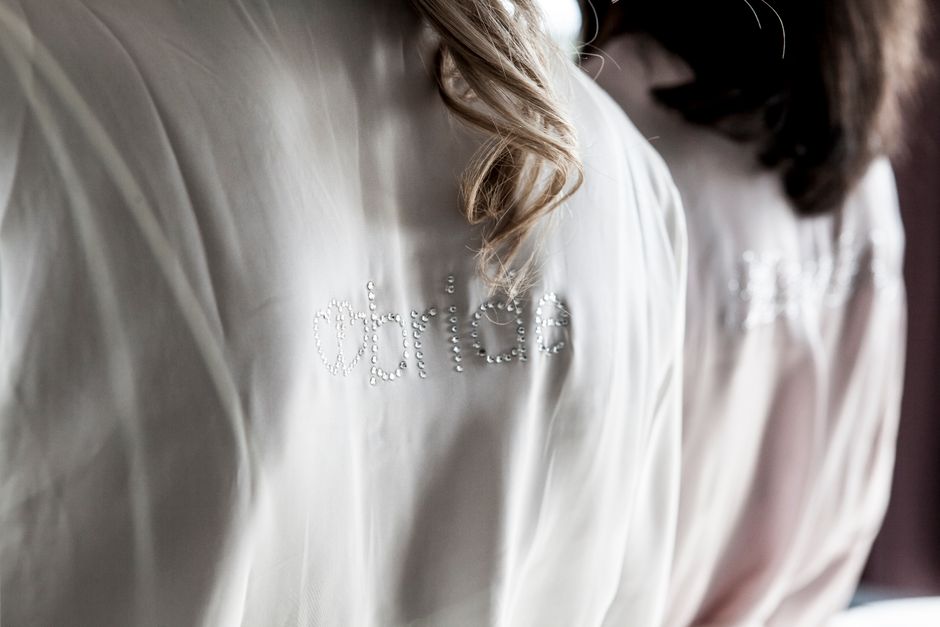
A dependable example in the satin category is the Classy Bride Monogrammed Satin Robe in Bridal White, which runs roughly $45 with a three-letter monogram embroidered on the left chest in a choice of thread color and font. The satin-charmeuse blend has enough weight to drape well in photos without the higher price tag of true silk.
Personalized and Monogrammed Bride Robes Worth the Upcharge
Personalization is where a bride robe separates itself from a bridesmaid set, and it's usually worth the extra cost because the robe becomes a keepsake rather than disposable wedding-morning wear.
The most popular option for brides specifically is a "Mrs." robe — the new last name embroidered across the back in place of a first-name monogram. It photographs well from behind during the walk to the dress and doubles as an obvious, sentimental detail for the wedding album. It's also one of the few personalization styles that stays relevant well past the wedding day, since it can be worn on the honeymoon and every anniversary morning after.
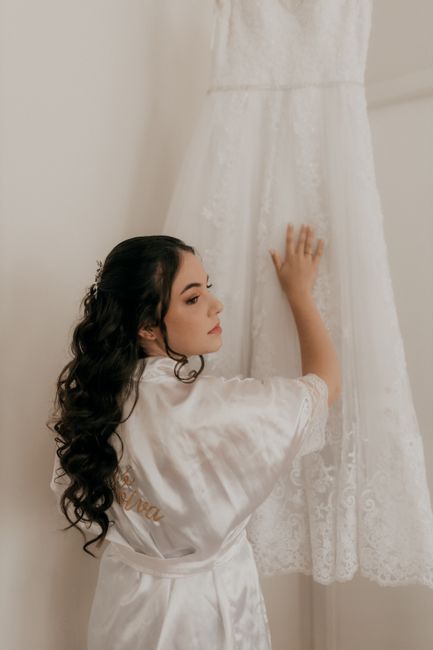
The Classy Bride Personalized Mrs. Satin Bridal Robe in White is a widely used version of this idea, priced around $50, with the new surname embroidered across the back in a font and thread color chosen at checkout.
For brides who prefer initials over a surname, a chest monogram reads more classic and matches a bridesmaid set that uses the same personalization style.
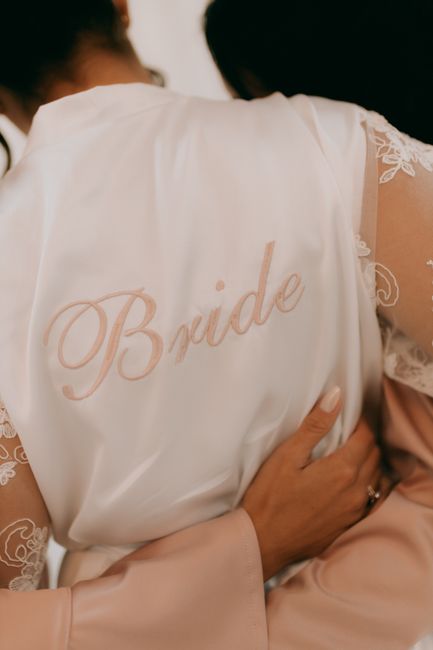
The Monogrammed Satin Bridal Robe with Monogram Initials on the Front offers this option at a comparable price point, with initials embroidered in a script font on the left chest — a detail that reads clearly in both close-up and wide getting-ready shots.
Standing Out From Your Bridal Party
If bridesmaids are wearing matching robes — and our bridesmaid robe ideas guide covers that category in depth — the bride's robe should look deliberately different rather than blend into the set. The most reliable approach is a clear color contrast: white or ivory for the bride against blush, sage, or charcoal for the bridesmaids, or the reverse if the bridesmaids are already in white or cream.
Text is the second lever. "Bride" printed or embroidered across the back, in a font that differs from whatever text the bridesmaids' robes carry, makes the bride instantly identifiable in group shots where she isn't centered in the frame. This matters more than it sounds — coordinators and photographers both cite mixed-up bride identification as a recurring issue in large bridal parties wearing similar robes.
A lace trim or ruffle detail is a third differentiator that works well without requiring a full color change. It adds visual texture that separates the bride's robe from a plainer bridesmaid set while still keeping the overall palette cohesive across the group.
Sizing and Fit for Photo-Ready Comfort
Sizing mistakes are common with bride robes because many shoppers default to ordering up "to be safe." A robe that's too large drags at the hem, gapes open unpredictably during hair and makeup, and photographs as sloppy rather than relaxed. A robe that's too tight pulls at the shoulders and won't tie cleanly at the waist.
Wrap-style robes with a fabric tie are the most forgiving format — the tie absorbs an inch or two of size variance, so sizing to actual measurements rather than a size up tends to produce better photos. Kimono-style robes without an interior tie are less forgiving and should match the brand's size chart closely.
Sleeve length matters more than most brides expect. Robes intended for hair-and-makeup need wrist-length or three-quarter sleeves at minimum — short sleeves photograph as beachwear rather than bridal when arms are raised during application, and they offer no coverage once hairspray and foundation are in the air. Check the listing's measurement chart in inches rather than relying on S/M/L labels alone, since sizing varies noticeably between brands in this category.
Slippers and Getting-Ready Accessories
A robe rarely appears alone in getting-ready photography — slippers are the second most-photographed detail after the robe itself, especially in the flatlay shots taken before hair-and-makeup begins. Matching slippers complete the look in group photos and add a comfortable, spa-like touch to a morning that otherwise involves standing for hours.
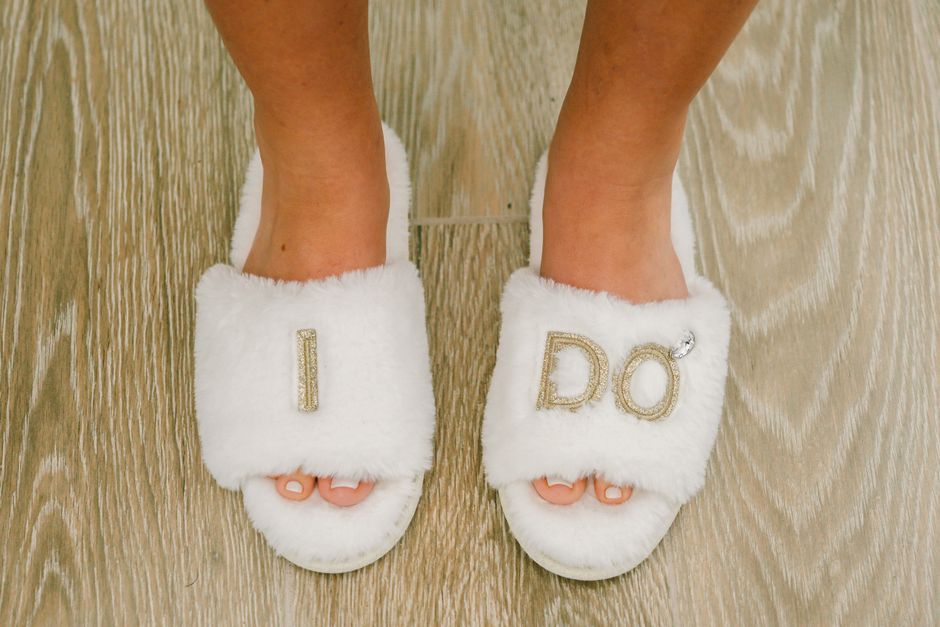
The SATINIOR Bride Slippers for Wedding Day are a common choice for this role, priced around $18 with a soft faux-fur upper in white and a rubber sole that holds up on hard hotel-suite flooring. They pair well with a white or ivory robe and photograph clearly against most flooring colors in flatlay shots.
Beyond slippers, a satin eye mask or headband in a matching fabric rounds out the set for brides who want every prop in the getting-ready sequence to feel coordinated rather than assembled piecemeal.
When to Order and How to Care for the Robe
Personalized robes typically need five to ten business days for embroidery production, plus standard shipping, so ordering at least four to six weeks before the wedding leaves enough buffer for a re-order if a monogram is misspelled or a size runs off. Non-personalized robes from Prime-eligible sellers can usually be ordered closer to the date, but earlier is still safer during the busy spring and fall wedding seasons when embroidery queues run longer.
Most satin bride robes are machine washable on a delicate cycle, though hand washing preserves the sheen longer, especially for silk. Skip the dryer — satin and silk both hold their drape better air-dried on a padded hanger, and high heat can dull the fabric's finish over repeated washes.
Because the robe often becomes honeymoon or anniversary wear afterward, it's worth treating the purchase as a longer-term piece rather than single-use wedding decor. A robe that's cared for properly typically holds its color and shape for years past the wedding day.
Styling the Robe for Getting-Ready Photos
Photographers generally ask for the robe to stay untied and open, rather than cinched at the waist, for the early detail shots — it drapes more naturally over a slip or bra top and avoids the bunched-fabric look that a tightly knotted tie can create in photos. Save the fully tied, cinched-waist look for the walking and candid shots later in the morning.
Good natural window light does more for a robe's appearance than any styling trick. Position the getting-ready chair near a window rather than under overhead lighting, since satin and silk both reflect direct light in a way that can wash out camera sensors under harsh fixtures.
A final detail worth planning: hang the robe on a decorative wooden or velvet hanger, not the wire hanger it may ship on, for the classic robe-on-a-hanger detail shot that opens most wedding galleries.
Bride Robe FAQ
- What should I wear under my robe on wedding morning?
Most brides wear a strapless or convertible bra and a slip or seamless underwear, since these stay hidden under the robe's fabric and match whatever undergarments are planned for the dress. Avoid anything with straps that would show in an off-the-shoulder robe photo, and put the actual wedding-day undergarments on early so there's no mid-morning wardrobe change.
- What color robe should the bride wear?
White or ivory is the traditional choice and photographs the most classically bridal, especially against colored bridesmaid robes. Blush is a common alternative for brides who want a softer tone or who are pairing with a white or cream bridesmaid set. The main rule is contrast: choose a color that visually separates the bride from the rest of the party in group shots.
- Should my robe match the bridesmaids' robes?
Generally no. A clear contrast in color, text, or trim helps the bride read instantly as the bride in every group photo, rather than blending into a uniform set. Many brides use the same brand or fabric as the bridesmaids for cohesion, but in a distinctly different color or with "Bride" text where the bridesmaids' robes say "Bridesmaid" or their names.
- Is silk or satin better for a bride robe?
Satin is the better value for most brides — it photographs nearly as well as silk at a third of the price and holds up fine for a few wears. Silk is worth the upgrade mainly for brides planning close-up editorial-style photography or who want a piece they'll wear regularly for years afterward, since silk breathes better over repeated washing.
- When should I buy my wedding morning robe?
Order at least four to six weeks ahead if the robe is personalized, since embroidery production alone can take five to ten business days before shipping even starts. Non-personalized robes from Prime sellers can be ordered a couple of weeks out, but earlier ordering avoids the risk of a size or color issue with no time to fix it.
- Can I wear my bride robe after the wedding?
Yes, and many brides do — a "Mrs." robe or monogrammed satin robe works well as honeymoon or anniversary sleepwear. Hand washing or a gentle machine cycle, combined with air drying, keeps the fabric's sheen and shape intact for repeated wear well beyond the wedding.