
Style and attire


Most wedding dresses spend weeks folded in a garment bag, packed in a shipping box, or squeezed into a car trunk on the drive to the venue, and a wedding dress steamer is usually the fastest way to undo that damage before anyone sees the gown on a hanger. Pressing a full skirt with a traditional iron is slow, risky around beading and lace, and nearly impossible on a floor-length train, which is why most bridal shops and dry cleaners reach for a garment steamer instead of an ironing board.
The good news is that steaming a wedding dress does not require special training or an expensive appliance built just for bridalwear. A well-chosen handheld or standing steamer, used with a bit of patience, will relax packing creases in tulle, silk, chiffon, and crepe without flattening embroidery or melting delicate trims the way a hot iron can.
This guide walks through the type of steamer that fits your dress and your morning-of logistics, a step-by-step method for steaming safely, and what to pack as backup if a steamer is not close at hand. Whether you are steaming the gown yourself the night before or handing this job to a bridesmaid on the wedding morning, the right tool and technique make the difference between a crisp photo-ready gown and one with visible creases across the bodice.
Bridal fabrics wrinkle differently than a cotton shirt or a suit jacket, and understanding why helps explain why a steamer works better than an iron for this job. Silk and silk-blend fabrics hold a crease wherever they are folded because the fibers are thin and take a set quickly under pressure. Tulle and organza are stiffer, so packing folds show up as sharp, visible lines rather than soft creases, and both fabrics can scorch or melt under direct iron heat.
Shipping and storage make the problem worse. Dresses that travel from a bridal salon usually arrive folded into a box, and gowns pulled from long-term preservation boxes or off a closet rod after months on a hanger both develop set-in lines along the seams and waist. A dress that travels to a destination wedding in a suitcase, even a well-packed one, almost always needs more steaming than one hanging untouched in a closet for a week.
Steam works where an iron cannot because it loosens the fiber structure with moisture and heat rather than flattening it with direct pressure. That makes it safe for hand-sewn beading, lace appliqué, and sequins that would catch or melt against an iron's soleplate. It also reaches into layers — crinoline, tulle underskirts, and boning channels — that a flat iron simply cannot access.
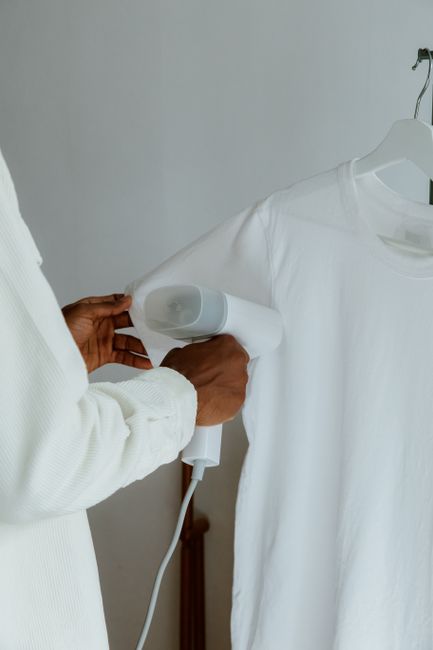
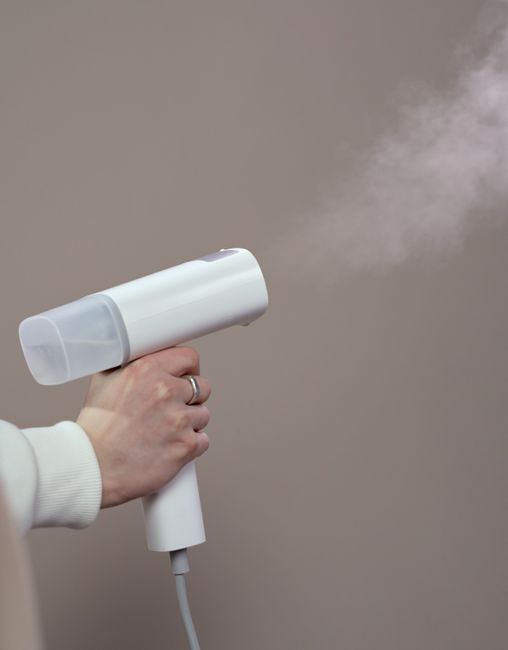
A handheld steamer is the right call for spot-treating a bodice, sleeves, or a veil, and it is the only practical option for touch-ups in a hotel room or getting-ready suite where a full-size unit will not fit in a suitcase. Heat-up time matters most in this category, since a wedding morning rarely allows for a ten-minute wait before the first burst of steam.
The HiLIFE Steamer for Clothes is a strong pick for this job, heating up in under a minute with a 300ml tank and 1100 watts of steam output, and it is compact enough to pack in a garment bag pocket alongside the dress. It works well on blouses, bridesmaid dresses, and suit jackets too, so it earns its space in the getting-ready kit even after the ceremony.
Keep the nozzle moving in slow, continuous passes rather than holding it in one spot, and steam from the inside of the fabric where possible so any moisture dries against the lining instead of the visible outer layer. A handheld unit is not the best choice for a heavily layered ball gown skirt or a long cathedral train — for those, a standing steamer does the work faster and with less arm fatigue.
A standing steamer is worth the extra counter space for anyone steaming a ball gown, a dress with multiple tulle layers, or a train longer than a few feet. The larger water tank means fewer refills mid-session, and most standing models include a garment hanger and pole that let the dress hang at full length while you work, which keeps the skirt from dragging on the floor.
The PurSteam Standing Garment Steamer comes with a rolling stand, a fabric brush attachment, and enough continuous steam to work through a full skirt without stopping to reheat, and it runs around $60 to $90 depending on the bundle. The included brush helps release stubborn creases along seams and waistbands where fabric layers overlap.
Start at the top of the gown and work downward in sections, letting each panel of fabric cool for a few seconds before moving to the next — pulling the fabric taut with your free hand as you go helps the steam penetrate evenly instead of just sitting on the surface.
Heavier fabrics — mikado, duchess satin, and dresses with dense beading or crystal embellishment — benefit from a steamer with stronger, more continuous output and a foot-pedal on-off switch that keeps both hands free to hold and turn the dress. This category costs more, but bridal shops and tailors rely on this style of steamer for a reason: it finishes a full gown noticeably faster than a handheld unit.
The Rowenta IS6200 Compact Valet Steamer is a professional-grade option with a foot-operated switch, a telescoping pole, and 1500 watts of continuous steam, and it typically runs $130 to $170. It is the same style of steamer many alteration shops use for final gown pressing before a fitting, which makes it a reasonable investment for a mother of the bride or a wedding coordinator who expects to steam more than one gown a season.
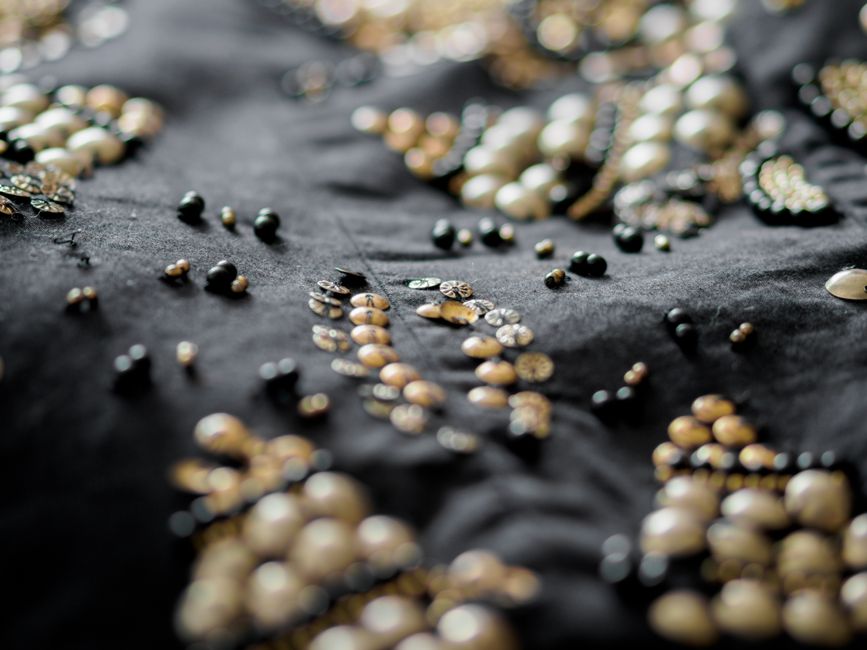
For beaded or sequined panels, hold the steamer head an inch or two away from the fabric rather than pressing it directly against the embellishment, and let the steam do the work instead of dragging the nozzle across raised beading, which can loosen threads over time.
1. Hang the dress on a sturdy, padded hanger in a well-ventilated room, ideally near a bathroom or a spot where a little condensation on the floor is not a problem. 2. Fill the steamer's tank with distilled water if the manual recommends it — tap water can leave mineral spots on light-colored silk over repeated use. 3. Start at the top of the bodice and work down, holding the fabric taut with one hand while steaming with the other. 4. Move the steamer head continuously; never hold it still in one spot, especially near lace, beading, or a delicate neckline. 5. Work the skirt in vertical sections, rotating the dress on the hanger as needed to reach the back and sides. 6. Let each section air-dry for a minute or two before touching or repacking it.
For precise work around a fitted bodice, sweetheart neckline, or cap sleeves, a smaller handheld unit like the Conair Turbo ExtremeSteam Handheld Steamer gives more control than a full-size wand, and at roughly $25 to $35 it is inexpensive enough to keep as a dedicated backup even if a standing steamer handles the bulk of the work.
Steam the dress the night before the wedding whenever the schedule allows it, ideally after it has hung for at least a few hours to let gravity pull out some of the packing creases on its own. Steaming the morning of works too, but budget at least 30 to 45 minutes so whoever is handling it is not rushing through a beaded bodice five minutes before photos start.
Destination weddings and gowns that travel by air are the trickiest case, since airline luggage compression can set new creases into a dress that was pressed perfectly at home. If a steamer is not available at the venue or hotel, the Downy Wrinkle Releaser Spray is a reasonable emergency stand-in for light creasing — mist lightly, smooth the fabric by hand, and let it air-dry away from direct sun. It will not replace a steamer for deep-set creases, but it earns a spot in any wedding day emergency kit for exactly this scenario, alongside the other essentials covered in our wedding day emergency kit guide.
Whoever ends up steaming the dress — you, a bridesmaid, a parent, or the venue's on-site coordinator — should know the plan in advance. Building a 30-minute steaming window into your wedding day timeline keeps this step from becoming a last-minute scramble, and it is worth confirming with the venue whether an outlet is available near wherever the dress will be hanging.
A few habits cause most of the steaming problems brides run into, and nearly all of them are easy to avoid once you know what to watch for.
Pair careful steaming with the right hanger and garment bag in the days leading up to the wedding, since a padded, wide-shoulder hanger prevents new creases from forming at the shoulder seams — a detail covered in more depth in our wedding dress preservation kit guide.
Yes, as long as the steamer head stays an inch or two away from the embellishment rather than pressing directly against it. Let the steam penetrate the fabric from a slight distance instead of dragging the nozzle across raised beading, which can loosen threads over repeated contact.
A full ball gown or dress with multiple layers typically takes 30 to 60 minutes to steam thoroughly, while a simpler sheath or column dress can often be done in 15 to 20 minutes. Building extra time into the morning-of schedule is worth it, since rushing tends to leave visible creases in hard-to-reach areas.
It is not recommended for most bridal fabrics. Silk, tulle, organza, and chiffon can scorch, melt, or develop a shiny patch under direct iron heat, and an iron cannot safely reach layered underskirts or beaded trim the way a steamer's moving steam can.
Either can work, but the night before gives creases more time to fully relax and gives you a buffer if touch-ups are needed. If steaming the morning of, budget at least 30 to 45 minutes so the process is not rushed right before photos.
Distilled water is the safer choice for wedding gowns, especially light or ivory fabrics, since tap water's minerals can leave small spots on the fabric after repeated steaming sessions. Check the steamer's manual, since some models specifically require distilled water to avoid clogging.
A wrinkle release spray is a reasonable backup for light creasing — mist lightly, smooth the fabric by hand, and allow it to air-dry away from direct sunlight. It will not fully resolve deep-set packing creases the way a steamer will, so it works best as an emergency measure rather than a primary plan.