Wedding Day Timeline: Hour-by-Hour Schedule Template


A wedding day timeline is the single document that keeps every vendor, family member, and wedding party on the same schedule from the first curling iron to the last dance. Without one, minutes disappear fast: hair and makeup runs long, the photographer waits on the wedding party, and the ceremony starts fifteen minutes behind before dinner service ever begins. A tight wedding day schedule template doesn't need to be rigid or stressful; it needs realistic buffers, clear handoffs between vendors, and a single source of truth that the planner, photographer, and DJ can all reference.
Most couples build their timeline backward from the ceremony start time, then work forward through the reception. That single decision point anchors everything else: hair and makeup call times, the first look, family portraits, and the drive to the venue. Building forward from "wake-up time" instead tends to create drift, since a ten-minute delay at 9 a.m. becomes a thirty-minute delay by 4 p.m.
This guide walks through a full wedding day timeline hour by hour, from the getting-ready block through the reception send-off, along with the buffer windows experienced planners build in and the mistakes that most often blow up an otherwise well-planned schedule.
Start With the Ceremony Time and Work Backward
Pick the ceremony start time first, then subtract from there. A typical 4 p.m. ceremony means hair and makeup usually begins between 9 and 10 a.m. for a wedding party of four to six people, since each person needs roughly 45 minutes for hair and 30–45 minutes for makeup when working with one artist team. Photography call time is generally 2–2.5 hours before the ceremony to capture getting-ready details, a first look if the couple is doing one, and wedding party portraits before guests arrive.
A simple framework that works for most timelines:
Ceremony time minus 6–7 hours: hair and makeup begins. Ceremony time minus 2.5 hours: photographer arrives for detail and getting-ready shots. Ceremony time minus 1.5 hours: first look and couple's portraits, if scheduled. Ceremony time minus 45 minutes: wedding party and family formals begin, guests start arriving. Ceremony time minus 15 minutes: wedding party lines up, seating wraps up.
Written out this way, the framework is easy to adapt whether the ceremony starts at noon or at 6 p.m. — the key is that every block references the ceremony time rather than a fixed clock hour, so if the ceremony shifts by 30 minutes, the whole schedule shifts with it instead of falling apart.
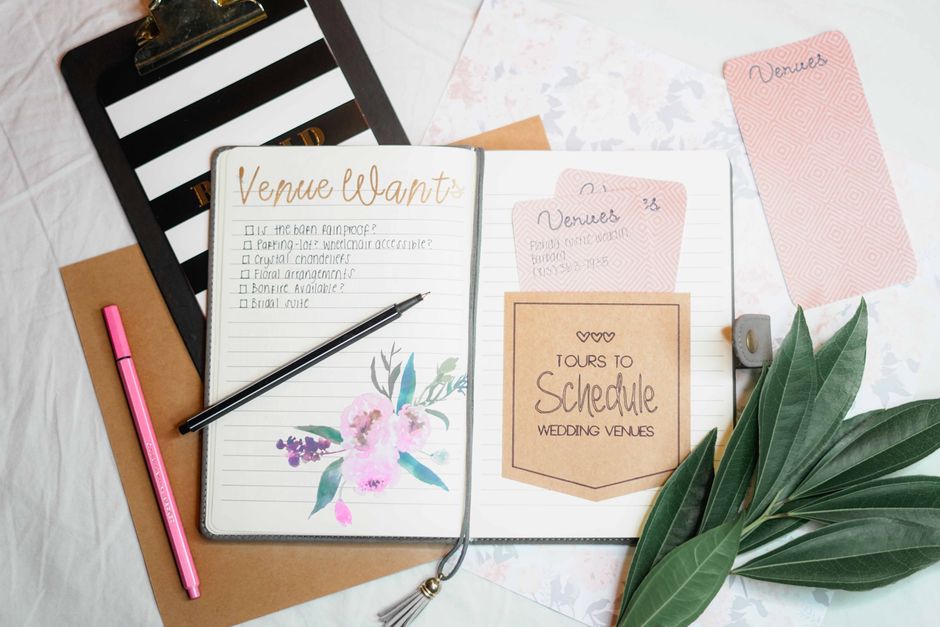
A dedicated wedding planner keeps a version of this framework for every timeline they build, which is one reason a Timeless Premium Linen Wedding Planner Book and Organizer (around $38) is worth keeping even for couples planning without a coordinator — its dedicated timeline and vendor-contact pages give every helper on the day a paper backup if phones die or signal drops.
Getting Ready: Hair, Makeup, and Detail Photography
The getting-ready block is where timelines most often slip, because it's the first domino. Build in a 30-minute buffer after the last person is expected to finish hair and makeup, before anyone needs to be dressed. That buffer absorbs the near-universal reality that at least one person runs behind, whether that's a late-arriving stylist or a flower girl who needs a snack break.
Detail photography — rings, invitation suite, shoes, dress, and jewelry — should happen in the first 20–30 minutes the photographer is on site, before the room fills with steamers, coffee cups, and half-empty mimosa glasses. Ask the photographer for their preferred order of operations here; most have a shot list they run through automatically, but flagging any sentimental items (a grandmother's veil, a father's watch) in advance means nothing gets missed in the rush.
If the ceremony and reception are at different venues, build in real drive time plus a 15-minute cushion, not the number a maps app gives you. Wedding party transportation almost always takes longer than a solo drive because it involves loading a group, and Saturday traffic near popular venues rarely matches an app's real-time estimate.
First Look and Pre-Ceremony Portraits
A first look adds roughly 45–60 minutes to the pre-ceremony block, but it buys back significant time after the ceremony, since couple's portraits and most wedding party photos can happen before guests arrive rather than during cocktail hour. Couples skipping a first look need to plan for 30–45 minutes of portraits squeezed into cocktail hour instead, which means the couple misses part of their own cocktail hour and the reception timeline compresses by that same amount.
Family formals are the portion of the day most likely to run long, mostly because family members wander off between groupings. Give the photographer a written list of every combination needed, in shooting order, and assign one member of the wedding party or a parent to physically gather the next group while the current one is being photographed. Cap family formals at 30 minutes for up to 10 combinations; beyond that, add five minutes per additional grouping.
Ceremony Timing and Buffer Windows
Ceremonies rarely run past the time printed on the invitation, but they also rarely start exactly on time. Build a 10–15 minute buffer between the printed guest arrival time and the actual processional start — this is the window where the officiant, wedding party, and any late guests settle in without anyone feeling rushed.
Most ceremonies themselves run 20–30 minutes for a standard format, or up to 45–60 minutes for religious ceremonies with full liturgy, communion, or multiple readings. Confirm the actual length with the officiant directly rather than estimating, since this single number shifts every downstream block of the day.
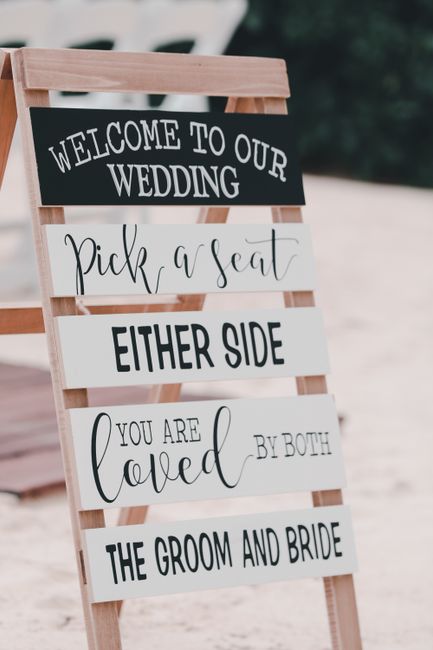
A visible order-of-events sign at the ceremony or reception entrance helps guests self-manage without asking the wedding party or venue staff for updates all afternoon. A personalized wedding timeline sign (typically $45–$65 depending on size and material) posted near the guest book or ceremony entrance keeps the schedule visible without anyone needing to make an announcement.
Cocktail Hour and Reception Entrance
Cocktail hour is typically 60 minutes, though venues sometimes stretch it to 90 minutes if the ceremony and reception share a location and the room needs to be flipped. Use this block for any remaining photos, but tell the photographer explicitly whether the couple wants to spend cocktail hour with guests or continue shooting portraits — this is a common miscommunication that leaves couples missing their own cocktail hour without realizing it was optional.
The reception entrance is the first moment the full guest list sees the couple as newlyweds, so most DJs and planners recommend a clean handoff: guests seated, wedding party lined up outside the room, and a single announcement before the couple's entrance. Building a five-minute buffer here for bathroom breaks and last-minute seating gives the DJ room to start the entrance on cue rather than rushing it.
Reception Timeline: Dinner, Toasts, Dancing, and Send-Off
A standard four-hour reception breaks down roughly as: entrance and welcome (5–10 minutes), first dance or parent dances if done immediately after entrance (10–15 minutes), dinner service (45–75 minutes depending on plated versus buffet), toasts (15–20 minutes for three to four speeches), cake cutting (10 minutes), open dancing (90–120 minutes), and a final send-off (10–15 minutes).
Plated dinners take longer to serve than buffets, particularly for guest counts over 100, so confirm expected service time directly with the caterer rather than guessing. Toasts run long more often than any other reception block — ask each speaker in advance how long they're planning and build a soft two-to-three-minute cap into the program without turning it into a rule announced from the microphone.
Keeping every reception block on a single printed sheet — not just a phone note — means the DJ, planner, and catering captain are all working from the same document instead of three slightly different verbal versions. A Wedding Planner Book and Organizer with countdown calendar and vendor pockets (around $27) keeps the reception-day sheet alongside every vendor contract, so nothing gets left in a car or a different bag on the actual day.
Common Wedding Day Timeline Mistakes to Avoid
The most common timeline mistake is underestimating hair and makeup time for a large wedding party — six or more people with one artist team routinely takes 5–6 hours, not the 3–4 hours many couples assume. The second most common mistake is failing to build in any buffer at all; a timeline with zero slack looks efficient on paper but collapses the moment any single vendor or family member runs five minutes behind.
Forgetting drive time between getting-ready locations, ceremony, and reception venues is another frequent gap, especially when a wedding party splits across two hotels or houses. Add real drive time plus 15 minutes, every time, rather than the fastest possible route.
Finally, many couples build a beautiful timeline and then never share it with anyone but the planner. Send the finalized schedule to every vendor, the full wedding party, and immediate family at least a week out, and print physical copies for anyone managing logistics on the day, since phone batteries and spotty venue Wi-Fi are not a reliable backup plan.
Starting the whole framework from a proven template rather than a blank page saves hours of back-and-forth with vendors. A Wedding Planner with countdown calendar, checklists, and 230 stickers (around $30) includes dedicated day-of timeline pages that many couples photocopy and hand directly to their photographer and DJ.
For couples who want the schedule visible to guests the morning of, pairing the printed vendor timeline with a welcome sign showing the day's order of events gives out-of-town guests a reference point without anyone fielding the same question a dozen times. And since the getting-ready block is where timelines most often slip, reviewing a wedding morning routine the night before helps everyone start the day already on schedule.
Wedding Day Timeline FAQ
- How far in advance should I build my wedding day timeline?
Start finalizing the timeline 4–6 weeks before the wedding, once headcount, vendor arrival times, and the ceremony start time are all confirmed. Share the final version with vendors and wedding party members at least one week out so everyone has time to flag conflicts.
- How much buffer time should I build into a wedding day timeline?
Plan for at least 15–30 minutes of buffer around each major transition — getting ready, ceremony start, and the reception entrance. Buffers absorb small delays before they compound into a schedule that's running significantly behind by the reception.
- Who is responsible for keeping the wedding day on schedule?
A hired wedding planner or day-of coordinator typically owns the timeline on the actual day. Without one, this job usually falls to the maid of honor, best man, or a designated family member who isn't in the wedding party photos, since that person needs to be reachable throughout the day.
- Should hair and makeup start earlier than the timeline suggests?
Yes, when possible. Adding a 30-minute cushion after the last scheduled hair and makeup appointment, before anyone needs to be dressed, absorbs delays without pushing back photography or the ceremony start.
- How long should cocktail hour be on a wedding day timeline?
Sixty minutes is standard, though venues sometimes extend it to 90 minutes if the ceremony and reception share one location and the room needs to be reset. Confirm with the venue directly, since a room flip that runs long directly delays the reception entrance.
- What's the biggest wedding day timeline mistake couples make?
Underestimating hair and makeup time for a full wedding party is the most common error, followed closely by building a timeline with no buffer at all. Both mistakes compound: a late start in the morning pushes every later block back by the same amount, with nothing left to absorb the delay.