

Wedding Program Ideas: 15 Creative Designs for 2026

Wedding program ideas rarely get the attention they deserve. Couples spend months on invitations and save-the-dates, then leave the ceremony program to the final week — even though it is the one piece of stationery every guest holds in their hands while they wait for you to walk down the aisle. A well-designed program does real work: it introduces your wedding party, explains any readings or rituals guests might not recognize, and gives people something to do with their hands during the quiet minutes before the processional starts.
The good news is that programs are one of the more forgiving stationery pieces to get right. Unlike invitations, they do not need to survive the mail, and unlike save-the-dates, they only need to look good for an hour or two. That flexibility opens the door to formats invitations could never pull off — fans for a July ceremony, a single oversized card for a minimalist affair, or a scroll tied with ribbon for a garden wedding with a vintage bent.
This guide walks through fifteen wedding program ideas organized by format, covers what to actually put on the page, and flags a handful of products that make the DIY version easier to execute well. Whether you are ordering from a stationer or printing at home the week of, there is a format here that fits your ceremony, your budget, and your guest count.
Classic Folded and Booklet Programs
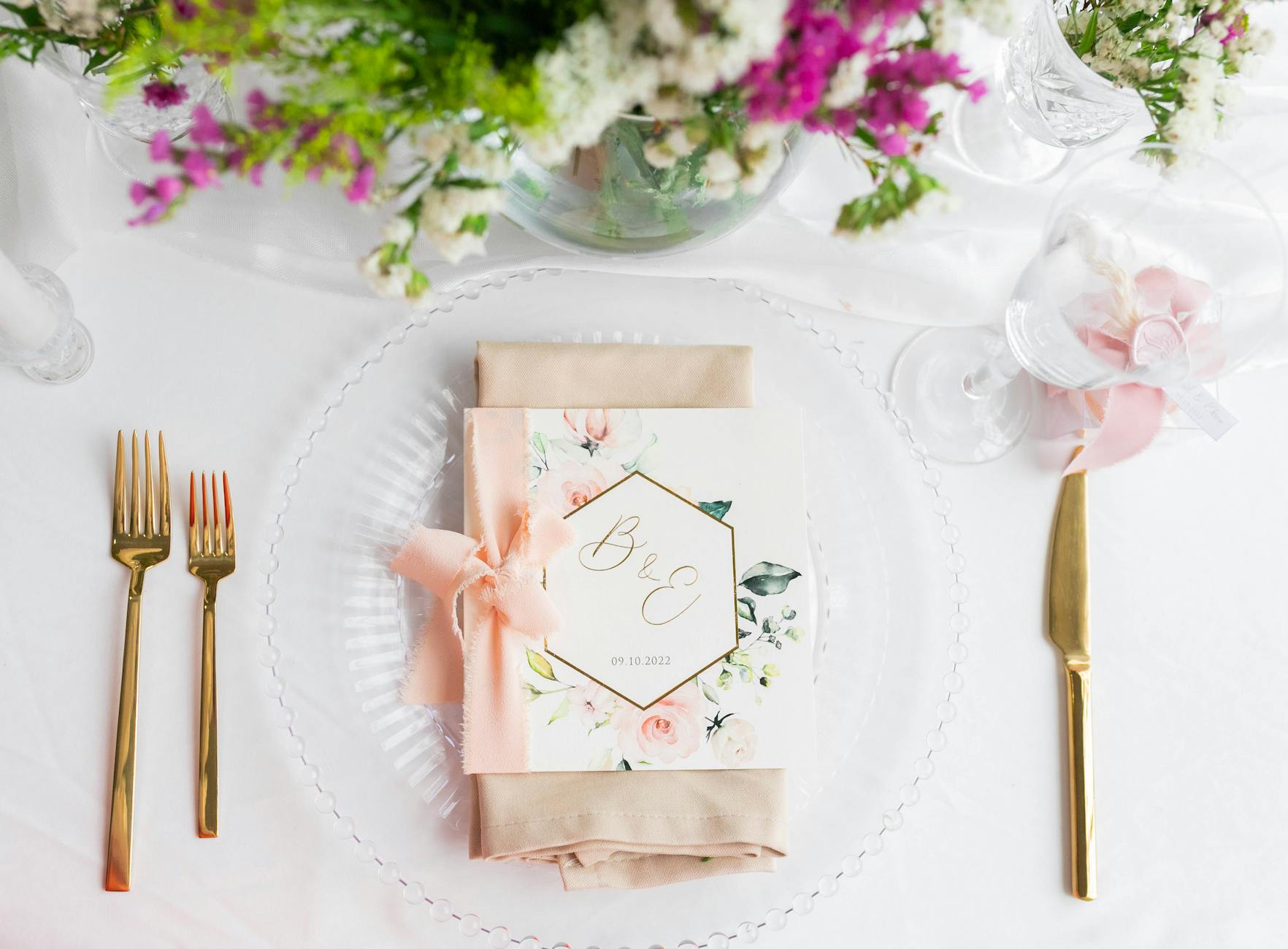
The folded booklet is still the most common wedding program format, and for good reason — it holds the most information without feeling crowded. A standard layout uses a single sheet of 8.5" x 11" cardstock folded in half, giving you a cover panel and three interior pages: the ceremony order, the wedding party introductions, and a closing note or in-memoriam section if you are honoring someone who has passed.
Booklet programs work best for ceremonies with religious or cultural elements guests may not be familiar with, since the extra page space lets you explain a ring warming, a sand ceremony, or a specific liturgical sequence without cramming the text. They also photograph well as a keepsake flat-lay, which is part of why they remain popular for couples working with a wedding photographer on detail shots.
If you are ordering booklets from a print shop, request a proof in the actual paper stock before committing to the full run — cardstock weight changes how crisp a fold looks, and a fold that seems fine on a screen can crack visibly at 100lb weight or higher. Budget folded programs typically run $2 to $5 per guest through a stationer, or well under $1 each if you print and fold them yourself on a home printer with a bone folder.
Wedding Program Fans for Outdoor Ceremonies
For any outdoor ceremony between May and September, program fans solve two problems at once: guests get a place to read the order of events, and they get relief from the heat while they wait. The format prints your ceremony details on one side of a paddle or hand fan and leaves the other side for a photo, a monogram, or a short welcome note.
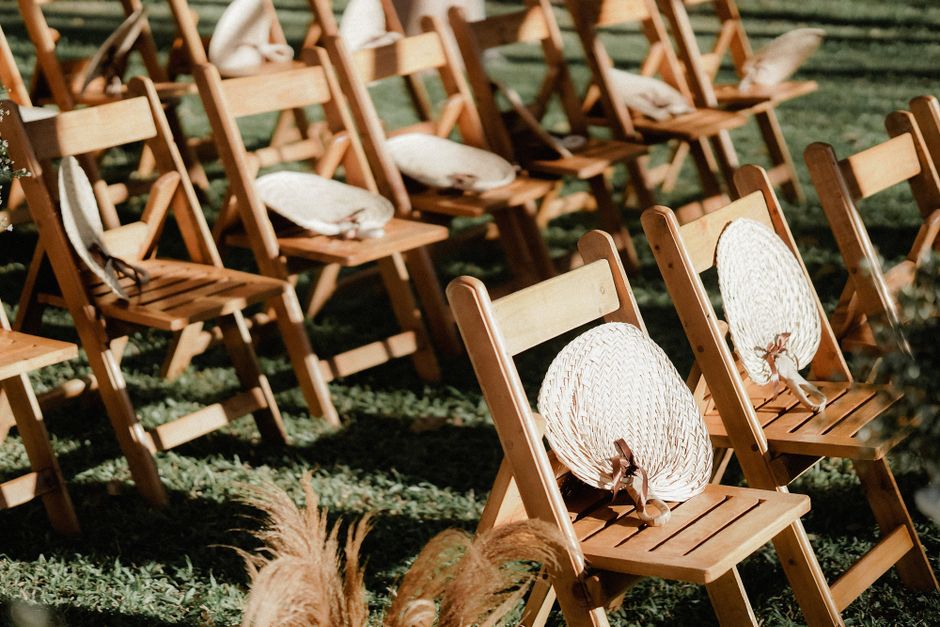
Pre-assembled fan sets take the printing question off your plate entirely. A set like Wedding Program Fans, Set of 100 Fully Assembled arrives with your wording already printed and the wooden paddle attached, which is worth the roughly $80 to $100 price for a mid-size guest list once you count the hours saved over hand-assembling paper and sticks. For smaller ceremonies, a Set of 25 Wedding Program Fans keeps the per-fan cost reasonable without committing to inventory you will not use.
Stage the fans in a low basket or a labeled crate near the entrance rather than placing one on every chair — guests self-serve as they arrive, and you avoid the wind-blown mess of loose fans on empty seats before the ceremony starts. If your ceremony runs under 20 minutes, skip fans altogether; the format earns its keep during longer or more formal services where guests are seated and waiting.
Single-Card and Scroll Programs
Minimalist couples increasingly skip the booklet in favor of a single oversized card — often 5" x 7" or larger — that lists only the essentials: the couple's names, the date, and a short ceremony order. The format reads as modern and uncluttered, and it costs less to print since you are working with one panel instead of a folded multi-page piece.
Scrolls take the same minimalist approach but add a bit of ceremony to the object itself. Print the program on a long strip of paper or a scroll-weight cardstock, roll it, and tie it closed with ribbon or twine that matches your color palette. Guests unroll it themselves, which makes the program feel like a small moment rather than a handout. Scrolls suit garden, vineyard, and destination weddings especially well, where the slightly theatrical unrolling matches the setting.
Both formats depend more on typography than layout, since there is less room to hide a weak font choice behind decorative elements. Stick to one display font for headers and one clean serif or sans-serif for body text, and leave generous margins — a single card crammed edge to edge reads as an afterthought no matter how nice the paper is.
Program Display Ideas: Boxes, Baskets, and Signs
However you print your programs, guests need an obvious, uncluttered spot to pick one up on their way to a seat. A dedicated display does more for the ceremony's first impression than the program design itself, since it is the first stationery moment guests encounter when they arrive.
A Rustic Wedding Programs Box Wood Card Holder suits barn, farm, and garden ceremonies, with a stained wood finish that sits naturally on a welcome table without extra decorating. For a more polished, indoor-formal look, an Amenity Box for Wedding Programs in silver or navy reads more editorial and pairs well with a matching cards-and-gifts table setup later in the reception.
Whatever container you choose, add a small sign — even a handwritten "Please take one" card — so first-arriving guests do not hesitate or grab a stack meant for the whole ceremony. Position the display within a few feet of the entrance, ideally where an usher or greeter is already standing, since a program box tucked off to the side gets missed by half the guest list.
Wax-Sealed and Vintage-Inspired Programs
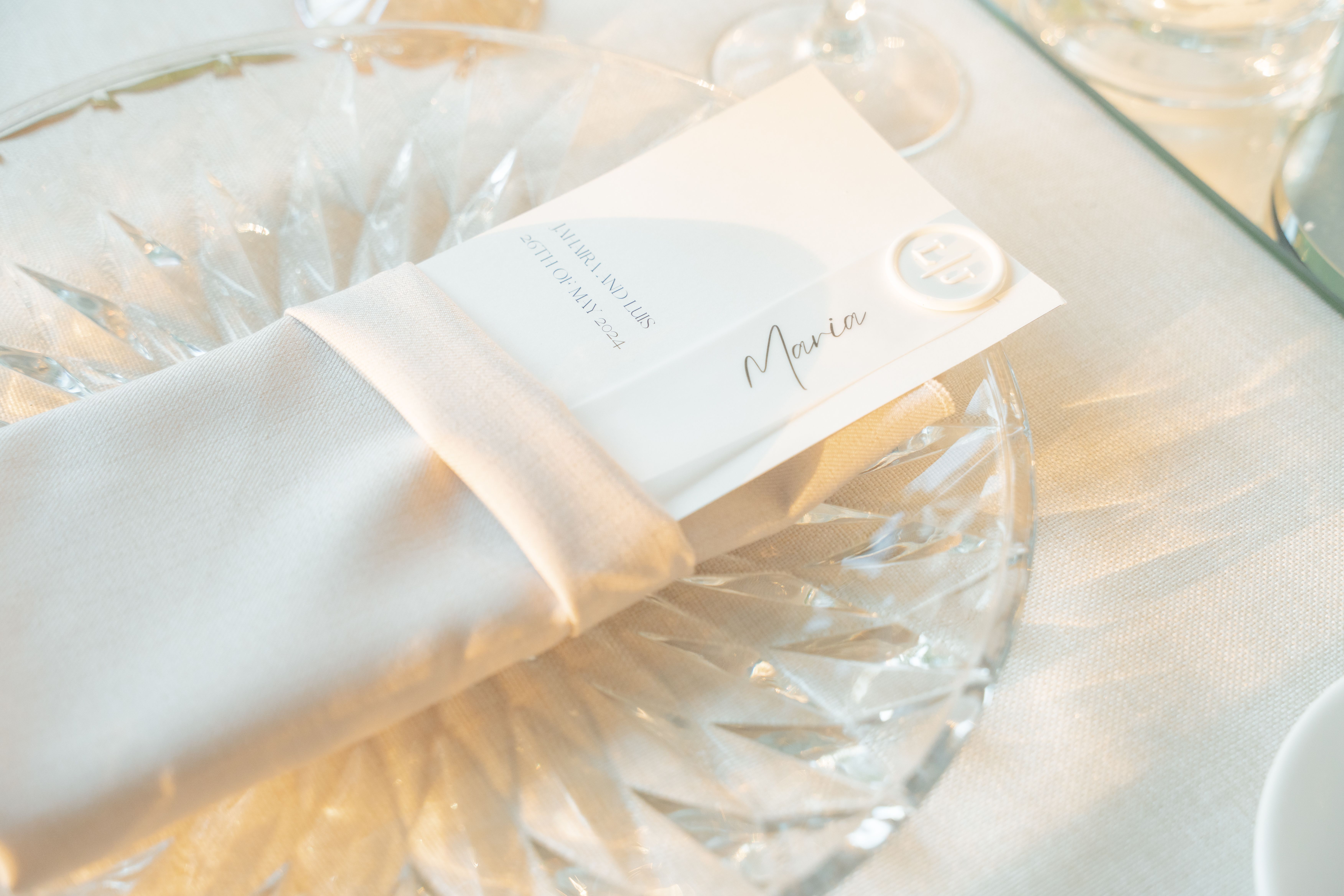
For couples leaning into a vintage, old-world, or formal black-tie aesthetic, a wax seal turns an ordinary folded program into something that feels considered. The seal closes the program like a letter, so guests get a small tactile moment of breaking it open before they read the order of events — a nice parallel if your invitations used the same treatment.
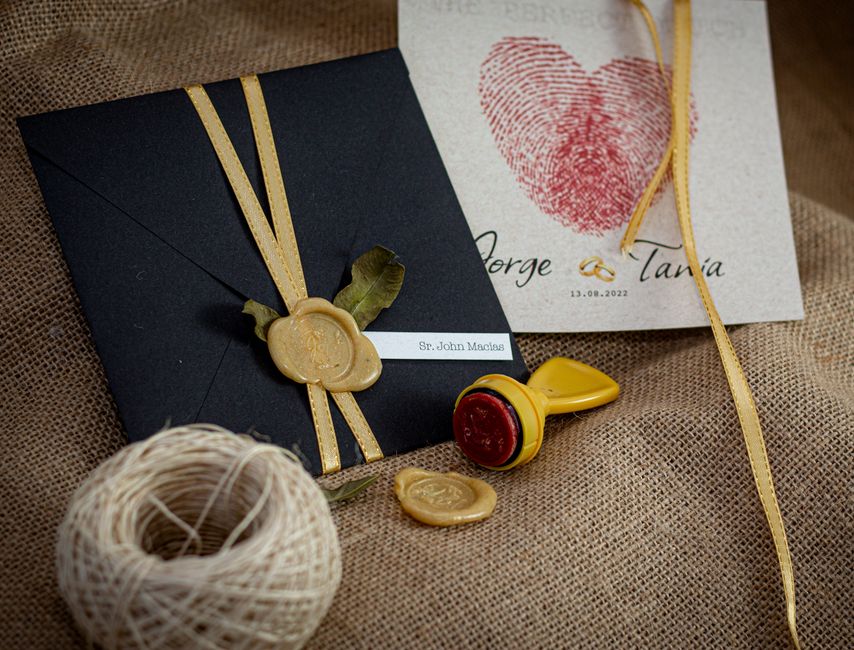
A Wax Seal Stamp Set with Wooden Handle and Brass Heads covers the DIY version well; the set includes several head designs so you are not locked into a single monogram shape, and the wooden handle stays cool enough to use for a stack of 100+ programs in one sitting without hand fatigue. Practice on scrap cardstock first — wax seals are forgiving to redo but unforgiving to rush, and a cracked seal looks worse than no seal at all.
Pair the wax seal with a deckled or torn paper edge and a cream or ivory cardstock for the most convincing vintage effect. This combination costs more in materials and time than a standard printed booklet, so it tends to make the most sense for ceremonies under 75 guests where the extra assembly time stays manageable.
Wording and Layout: What to Include
Regardless of format, most wedding programs share a common structure. Start with the couple's names and the date at the top, followed by the processional order — who walks in and in what sequence. List the wedding party by name and role (maid of honor, best man, bridesmaids, groomsmen, ushers) since this is often the only place guests can match names to faces later at the reception.
Include a brief outline of the ceremony itself: readings, musical selections, any rituals like a unity ceremony or ring warming, and the officiant's name. If you are honoring a deceased family member, a short in-memoriam line belongs near the closing rather than buried mid-program. Close with a thank-you note to guests and, if relevant, reception details like the venue name and start time, so guests who misplace their invitation still know where to go next.
Skip anything guests do not need in the moment — a full guest list, a detailed love story, or extensive vendor credits belong on a wedding website, not a program guests are holding for twenty minutes. The tighter the content, the more likely people actually read it instead of folding it into a pocket unread.
DIY Printable Programs on a Budget
A home-printed program is the least expensive route by a wide margin, and modern cardstock and printers make it hard to tell from a professionally printed piece at arm's length. Design in a free tool, choose a cardstock in the 80lb to 100lb range so pages do not feel flimsy, and print a single test copy before committing to a full run — colors and margins often shift slightly between a screen preview and the printed page.
Budget roughly $0.30 to $0.75 per program in materials if you are printing and folding at home, compared to $2 to $6 per program through a stationer. The time cost is real, though: folding, trimming, and assembling 100+ programs by hand typically takes two to three hours, so factor that into your final week of wedding prep rather than assuming it is a quick task.
If you are short on time but still want a custom look, many stationers offer a "print at home, we design" hybrid — you pay for a designed template only and handle printing yourself, landing at a middle price point with far less time investment than designing from scratch.
Programs That Double as Favors
Some of the most memorable wedding program ideas skip the separate favor entirely and combine the two. A program printed directly onto a fan, as covered above, is the most common version of this, but the idea extends further: a program printed on a seed paper card guests can plant, a program that doubles as a bookmark, or a program folded into a small envelope holding a piece of candy or a tea bag.
This approach works particularly well for couples trying to trim their overall stationery and favor budget without guests noticing anything was cut. It also solves the awkward math of ordering favors and programs separately in slightly different quantities — one combined item means one order, one quantity, and one line item to track as your RSVPs finalize.
If you go this route, make sure the "program" function of the piece is not lost in the "favor" function — guests should still be able to read the ceremony order clearly before the dual-purpose object becomes a keepsake they tuck away.
Wedding Program Ideas FAQ
- How many wedding programs should I order?
Order for 60 to 75 percent of your total guest count rather than one per person — most couples share a program per couple or family rather than one per individual, and singles often skip taking one entirely. For a 150-guest wedding, 100 to 115 programs is typically enough, with a small buffer of 10 extra for your photographer, wedding planner, and keepsake copies for both families.
- What size should a wedding program be?
5" x 7" is the most common size for a folded or single-card program, since it fits comfortably in a guest's hand or clutch without feeling oversized. Booklets often use a folded 5.5" x 8.5" format, while fans typically run 8" to 9" across the paddle. Scrolls vary more widely, usually 4" to 6" wide and 8" to 11" long before rolling.
- Do I need a wedding program if I'm having a small ceremony?
For ceremonies under 30 guests, a program is optional rather than expected, since most guests already know the wedding party and the ceremony flow is usually shorter and simpler. A single elegant card at the entrance can still add polish without the cost of a full print run — many couples with intimate weddings order one framed program as a keepsake rather than individual copies for guests.
- Can I make wedding programs myself without design software?
Yes. Most stationery brands and print-on-demand sites offer free, browser-based wedding program templates that only require typing in your details — no design software or experience needed. These templates typically export as a print-ready PDF, which you can either print at home or send to a local print shop for a cleaner finish on heavier cardstock.
- What information is most often left off wedding programs by mistake?
The officiant's name and the correct pronunciation or spelling of wedding party names are the two details couples most often forget, followed by acknowledging a deceased parent or grandparent when relevant. Read your draft aloud to a friend outside the wedding party before finalizing — details that feel obvious to you are often the ones a program is supposed to clarify for everyone else.
- Should programs match the invitation suite exactly?
Close coordination — same font pairing and color palette — reads more polished than an exact match, and gives you room to simplify the design for a shorter, functional piece. Programs get handled quickly and read once, so an invitation-level layout with multiple design elements often feels heavier than the moment calls for. Matching the palette and one signature design element, like a monogram or a botanical motif, is u
PREV ARTICLE
NEXT ARTICLE
Related articles
Unique ideas
Wedding Favor Tag Ideas: 30+ DIY & Printable Designs
Unique ideas
5 Creative Wedding Guest Book Ideas for 2026
Unique ideas