Wedding Menu Card Ideas for Every Style and Budget
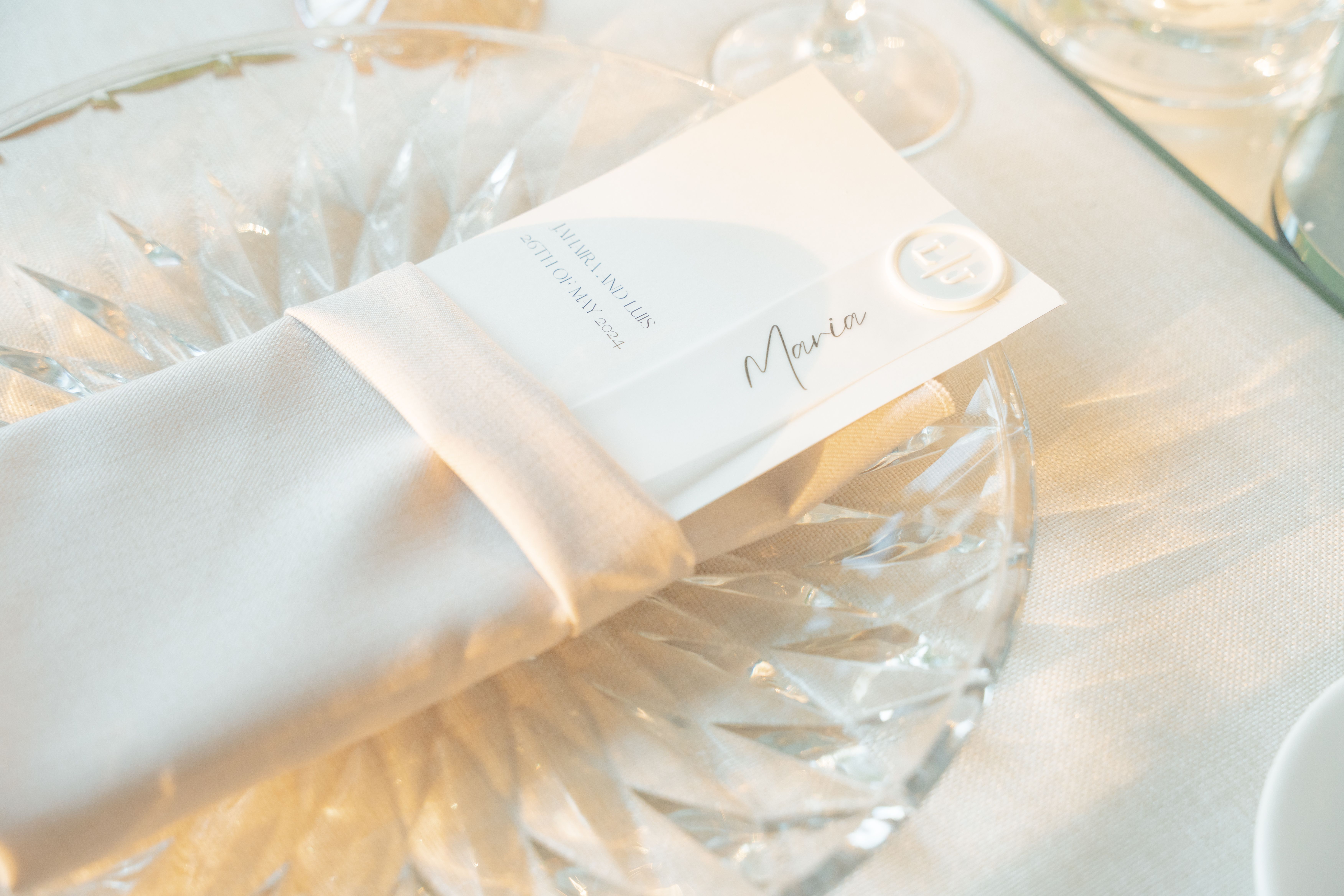
Wedding menu card ideas tend to get pushed to the bottom of the planning list, right behind place cards and table numbers, even though menu cards do more work than either. They tell guests what's coming so nobody has to ask the caterer, they flag dietary options without singling anyone out, and they add a small, tangible layer of polish to a table setting that photographs well up close. Unlike a centerpiece or a floral arrangement, a menu card is something every single guest picks up, reads, and often keeps as a small souvenir of the evening.
The range of options is wider than most couples expect. Menu cards can be printed at home on cardstock for a few dollars a table, ordered fully custom from a stationer, or handwritten in calligraphy for a one-of-a-kind look. Each approach has a different cost, timeline, and skill requirement, and the right choice usually comes down to how much of the design process a couple wants to control versus hand off.
This guide walks through the main production methods, what actually needs to appear on the card, wording and formatting examples, design styles that match different wedding aesthetics, and how to display finished cards on the table so they stay upright and legible through a multi-course dinner. It also covers realistic budgets and how far in advance to start, since menu cards are one of the last stationery items finalized before the wedding.
DIY Printable vs. Custom Printed Menu Cards
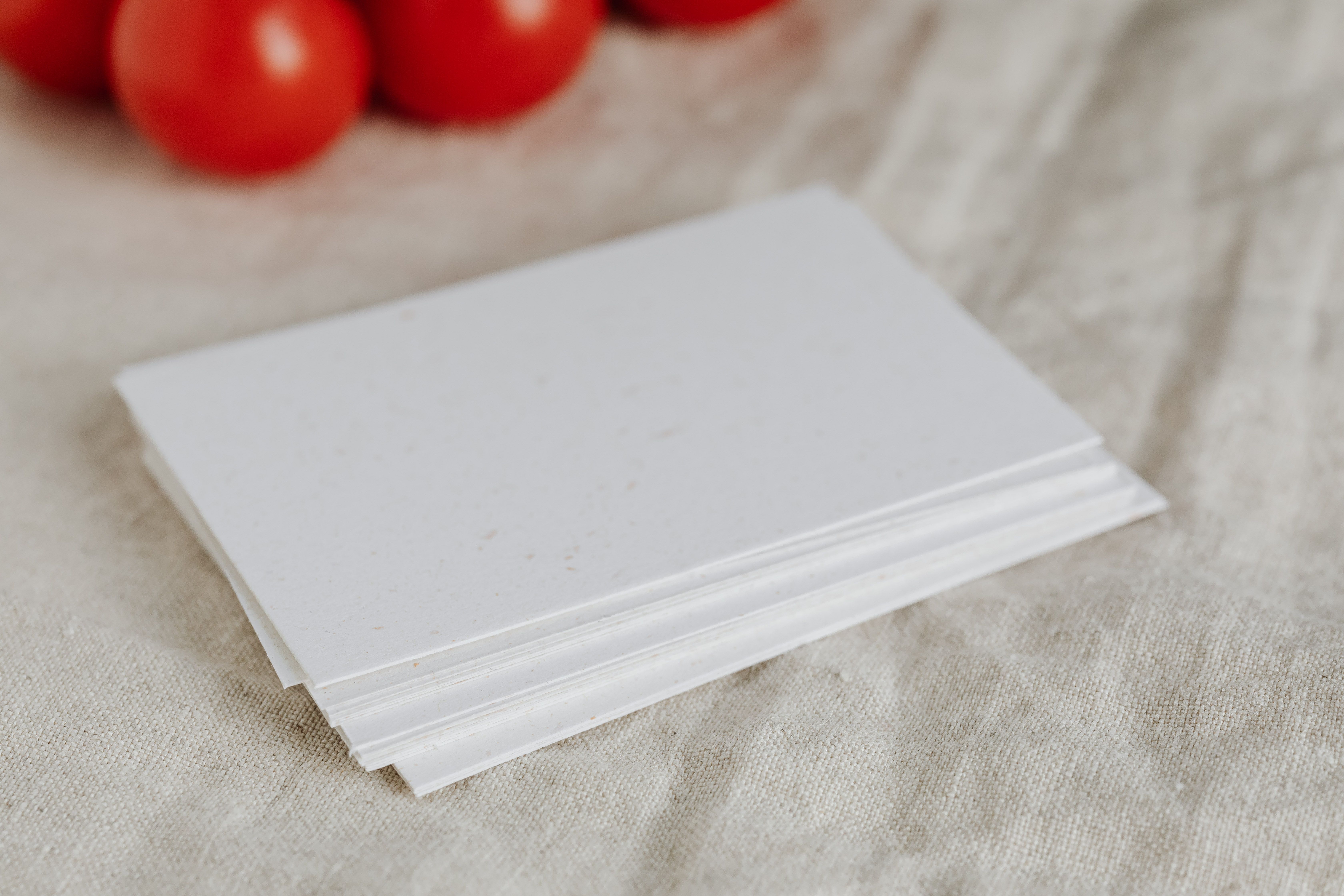
The first decision is production method, and it shapes every choice that follows. DIY printable menu cards are blank or lightly templated cardstock that a couple designs themselves — in Canva, a word processor, or a downloaded template — and prints at home or at a local print shop. This route costs the least, usually $15–30 for enough cardstock to cover 100–150 guests, and gives full control over wording, fonts, and last-minute menu changes if a caterer swaps a dish the week of the wedding.
A pack of premium DIY printable menu cardstock sized for standard dinner place settings runs around $15–20 for 56 sheets and works with any home inkjet or laser printer, which covers most reception guest counts with room to spare for mistakes. The tradeoff is time: someone has to design the layout, proof it for typos, and manage the print run, which can take a few hours even with a template.
Custom printed menu cards, ordered from a stationer or an online print service, cost more — typically $2–5 per card, or $150–400 for a full guest list — but remove the design and printing labor entirely. This route makes sense for couples who want a menu that exactly matches their invitation suite's paper stock, font, and color palette, or who simply don't have time to manage a DIY print run in the final weeks before the wedding.
What to Include and How to Word Your Wedding Menu
A wedding menu card only needs a handful of elements to do its job, and resisting the urge to over-design keeps it legible at a candlelit table. At minimum, include the couple's names or wedding date as a header, the courses in serving order, and a note for any dietary-restriction alternative being served. Optional additions include a small illustration, the venue name, or a short line of appreciation to guests, but none of these are required.
Wording should match the formality of the meal itself. A plated dinner typically lists courses formally: "First Course," "Entrée," "Dessert," each followed by the dish name and, for wine pairings, the pour. A buffet or family-style reception can use looser, more conversational wording, since guests are choosing their own portions rather than being served a fixed sequence. A simple three-course format reads cleanly:
First Course: Butternut squash soup with sage brown butter Entrée: Herb-roasted chicken or pan-seared salmon, with a vegetarian option available on request Dessert: Chocolate hazelnut cake
Keep dish descriptions to one line each. Long, adjective-heavy descriptions ("succulent, farm-fresh, herb-kissed") slow guests down and read as trying too hard on a card meant to be read in ten seconds between courses.
Design Styles: Matching Menu Cards to Your Wedding Aesthetic
Menu cards work best when they echo the same fonts, colors, and paper weight already used on the invitation suite, since a mismatched menu card on an otherwise coordinated table stands out for the wrong reason. A few style directions cover most weddings:
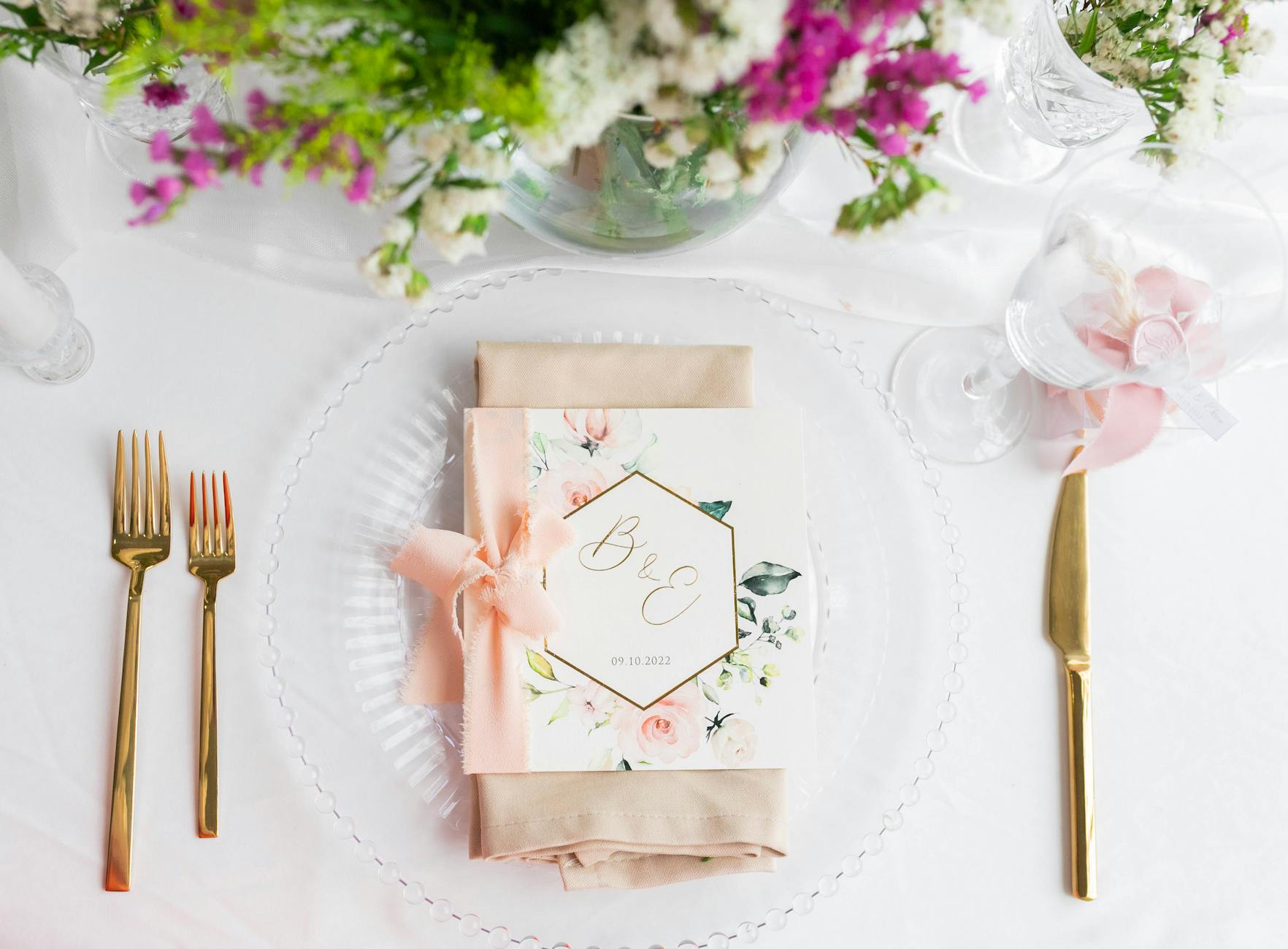
Classic and formal weddings typically use a single serif font, cream or white cardstock, and either black or a single metallic ink — gold, silver, or copper — with generous white space and no illustrations. Modern and minimalist weddings lean toward a clean sans-serif font, a smaller card size, and asymmetrical layouts with the header offset rather than centered. Rustic and garden weddings often add a botanical illustration or a watercolor wash along one edge, paired with a hand-lettered or script-style font for the header.
Whatever direction fits the wedding, picking one font for headers and one for body text — and sticking to it across every stationery piece — reads as far more intentional than mixing three or four typefaces across the invitation, program, and menu.
Displaying Menu Cards on the Table
A well-designed menu card still needs to stay upright and readable through an entire multi-course dinner, which is where a holder or fold earns its cost. The simplest option is a card folded in half and set as a tent on the plate or charger, which needs no additional hardware but can flatten or slide if the cardstock is too thin. A cardstock weight of at least 100lb holds a tent fold reliably; anything lighter tends to curl.
For a flat card rather than a folded tent, a small stand or holder keeps it visible without leaning it against a glass, which risks a spill. A six-pack of clear acrylic sign holders with gold borders, sized for a standard menu card, runs around $15–20 and works double duty for wedding table numbers earlier in the reception if the venue resets between cocktail hour and dinner. The clear acrylic disappears visually next to the place setting rather than competing with the centerpiece.
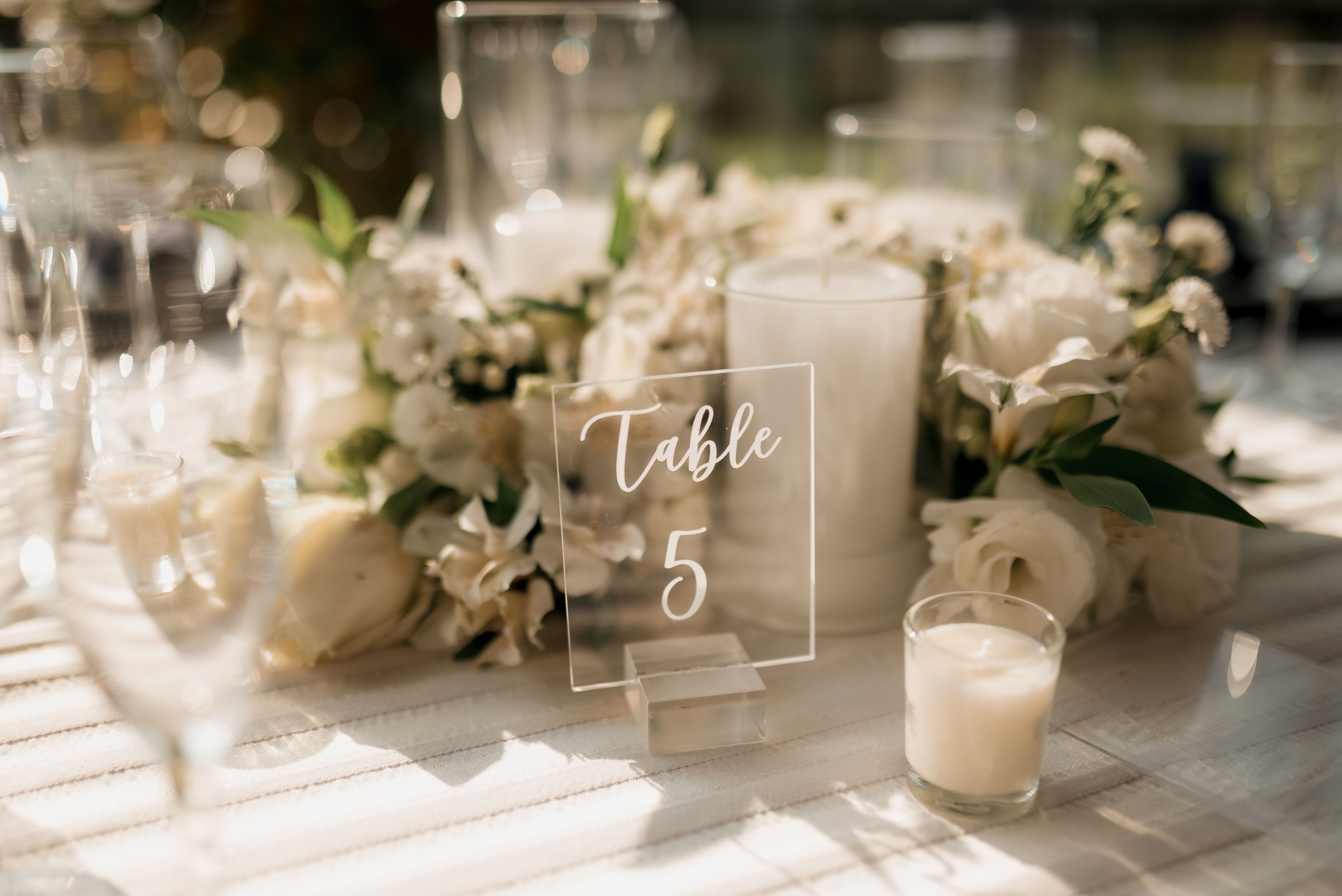
If the table already has a busy centerpiece, a flat card laid directly on the charger or napkin, rather than propped upright, keeps the overall table from feeling cluttered — a detail worth deciding with the florist or planner rather than in isolation. The same holders also double nicely as wedding place card displays if the seating chart calls for individual name cards alongside the menu.
Ready-Made and Personalized Menu Card Options
Couples who want a finished, professionally printed card without managing a DIY layout can order pre-designed, personalized menu cards where a vendor handles the typesetting and printing from a short list of submitted details. A set of personalized printed wedding menu cards covers 25 cards for around $30–45, with the couple's course details and names filled in from a template before printing — a middle ground between a fully custom stationer order and a DIY print run.
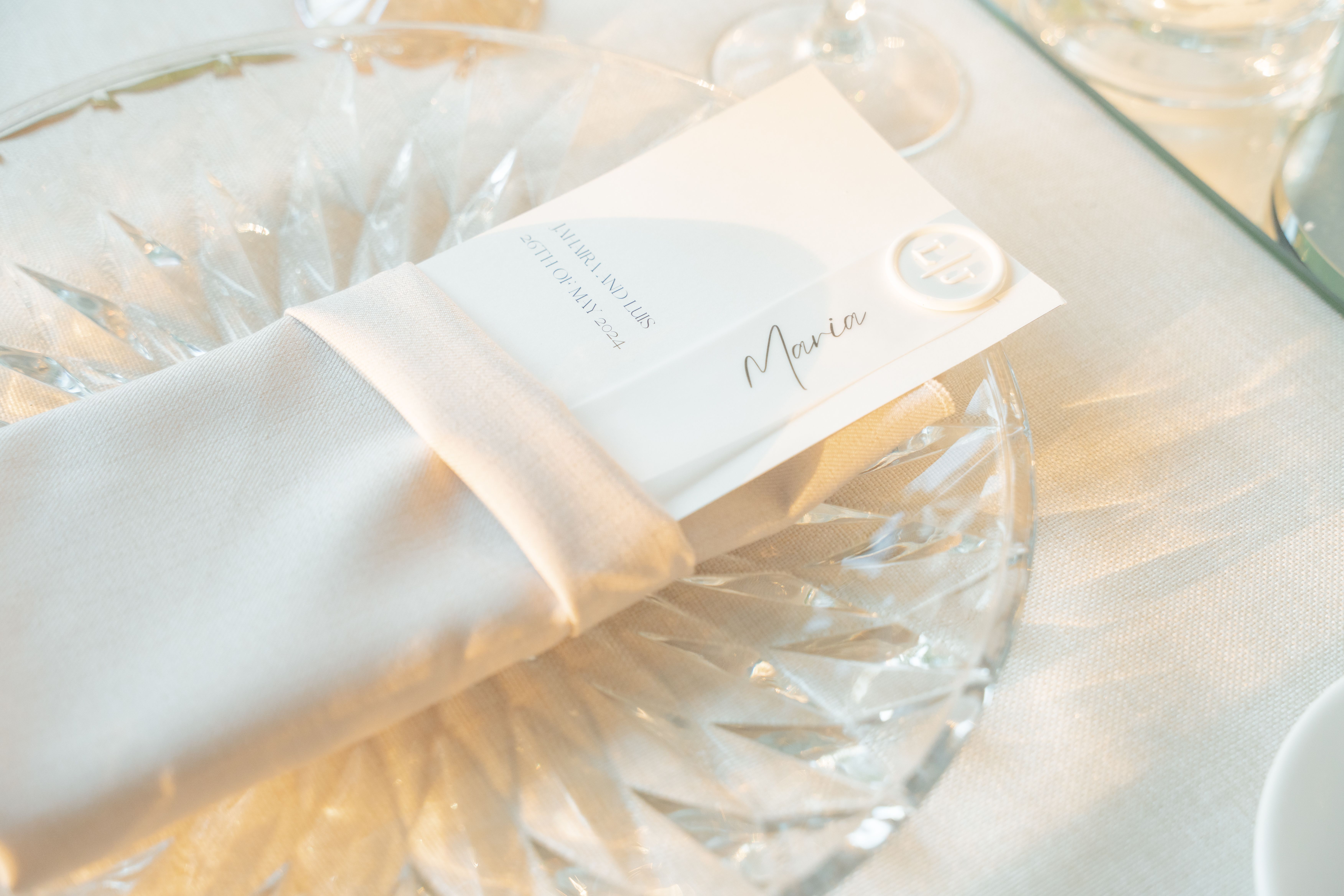
This route is worth it for couples who want the finished look of custom stationery without the per-card cost of a boutique printer, especially for guest counts where a stationer's minimum order or rush fee would push the budget higher than expected. It's also a reasonable backup if the DIY print run runs into printer trouble the week of the wedding — a pre-made option can usually still arrive within about a week with standard shipping.
Handwritten Calligraphy for a Custom Look
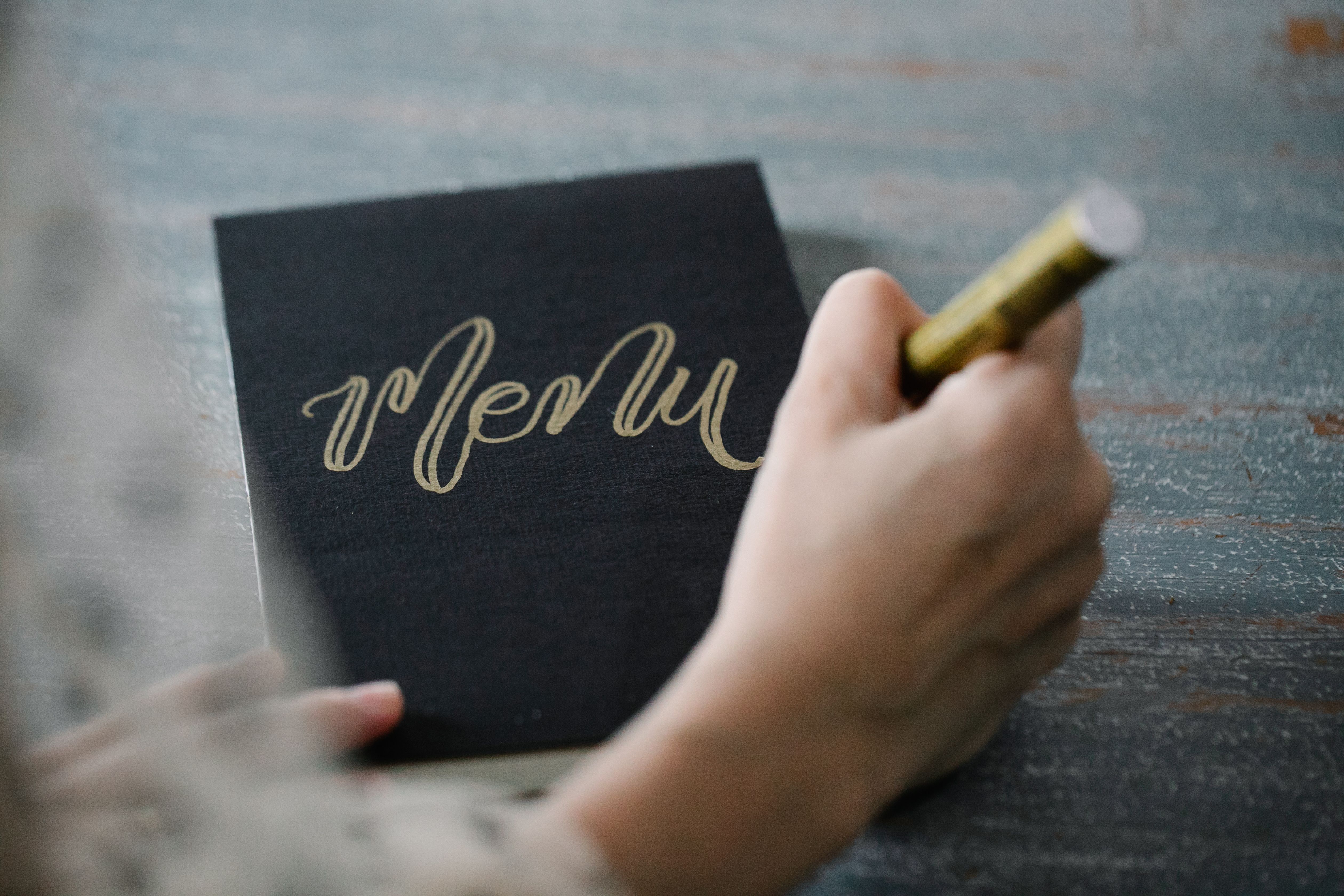
For couples who want something a printer can't replicate, hand-lettered or calligraphy menu cards add a level of texture that reads as distinctly personal, especially paired with a wax seal or a botanical illustration. This works well at a smaller reception where hand-lettering 50–100 cards is realistic in a weekend, but becomes a significant time investment past that guest count unless a calligrapher is hired.
A calligraphy pen and ink set with a gift-box presentation runs around $18–25 and gives a couple or a willing bridesmaid enough ink and replacement nibs to practice before committing pen to final cardstock. Budget at least two to three practice sessions before starting the real batch — calligraphy has a learning curve, and the first attempt rarely matches the last.

If hand-lettering the full run isn't realistic, a hybrid approach works well: print the course details in a clean font and hand-letter only the header or the couple's names, which keeps the personal touch without the full time commitment.
Sealing and Finishing Touches
A small wax seal on a folded menu card, or on the ribbon tying a set of place settings together, adds a finishing detail that photographs well in close-up table shots without adding much to the per-card cost. Wax seals work particularly well on cards using a deckle-edge or folded format, where the seal has an edge or fold to anchor to.
A wax seal stamp kit with colored wax beads and a warming tool covers menu cards, place cards, and invitation envelopes from the same set, which spreads the cost across multiple stationery pieces rather than a single use. Expect to budget an evening for practice — the wax needs a consistent temperature to release cleanly from the stamp, and the first several attempts usually crack or smudge before the technique clicks.
Skip wax seals entirely on humid outdoor venues or in warm months; the wax can soften and lose its shape before guests reach the table, which defeats the purpose of the detail.
Budget and Timeline for Ordering Menu Cards
Menu card costs scale with the production method chosen earlier: DIY printable cardstock runs $0.15–0.30 per card once printed, personalized pre-made sets land around $1.20–1.80 per card, and fully custom stationer orders run $2–5 per card before rush fees. For a 100-guest reception with one card per place setting, that spans roughly $20 at the low end to $500 at the high end — a wide enough range that it's worth deciding early which tier fits the overall stationery budget.
Timing matters more than most couples expect, because menu cards depend on a finalized catering menu, which caterers often don't lock in until four to six weeks before the wedding. Order custom or personalized menu cards as soon as the final menu is confirmed, leaving at least two weeks for production and shipping. DIY cards have more flexibility since printing can happen within days, but even then, proofing for typos before printing 150 cards is worth the extra day it takes.
Wedding Menu Card FAQ
- Do we really need menu cards at a wedding?
They're not required, but they solve a real problem at plated and family-style dinners: guests otherwise have no way to know what's coming or which dish has a vegetarian or allergen-friendly substitution. For a casual buffet reception, a single posted menu sign can substitute for individual cards.
- What size should a wedding menu card be?
Most menu cards run 4x6 or 4x9 inches, sized to sit on a charger plate or napkin without overwhelming the place setting. Taller 4x9 cards work well as a folded tent; flatter 4x6 cards suit a holder or a card laid directly on the plate.
- How far in advance should we order wedding menu cards?
Order as soon as the final catering menu is locked, typically four to six weeks before the wedding. Build in at least two weeks for custom printing and shipping, or a few days for a DIY print run, plus time to proof for typos before the full batch prints.
- Can one menu card work for multiple entrée choices?
Yes — list both options on the same card ("Herb-roasted chicken or pan-seared salmon") rather than printing separate cards per entrée, which avoids a mix-up with place cards or seating assignments and keeps printing simpler.
- Do menu cards need to match the wedding invitations exactly?
Not exactly, but using the same font family, color palette, and paper weight keeps the overall table setting looking coordinated. A menu card in a completely different style than the rest of the stationery suite tends to stand out for the wrong reason.
- What's the cheapest way to do wedding menu cards?
DIY printable cardstock is the lowest-cost route, typically $15–30 for cardstock covering a full guest list when designed at home and printed on a standard inkjet or laser printer. A single shared template designed once and printed for every table keeps costs down further than ordering from a stationer.
PREV ARTICLE
NEXT ARTICLE