Style and attire


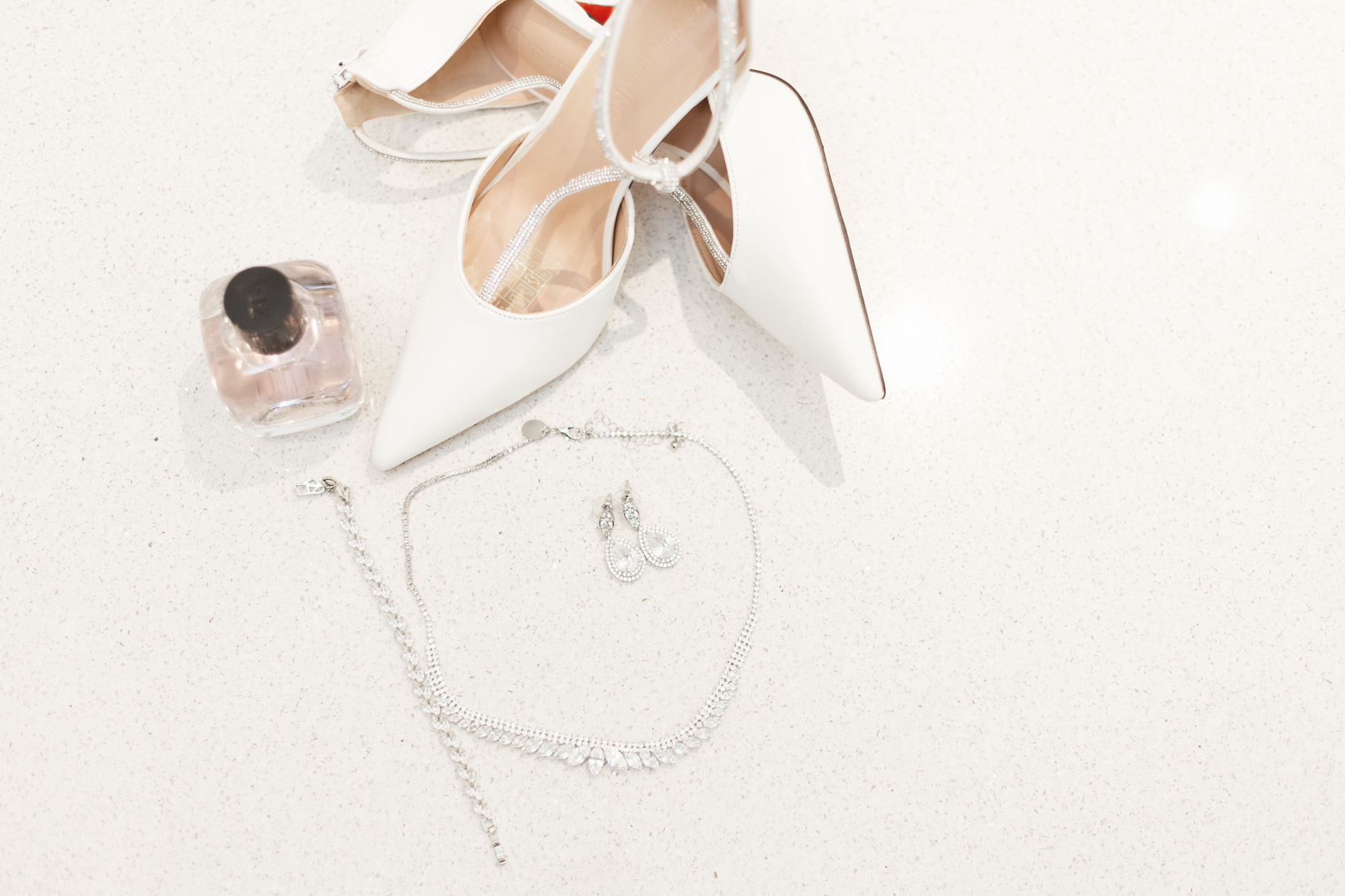
Bridal jewelry ideas usually start with a single question: how much is too much? A wedding dress already carries lace, beading, or a dramatic silhouette, and the jewelry has to work with that rather than compete against it. Get the balance right and the pieces disappear into the overall look in the best way, showing up in photos as a glint of light at the ear or wrist rather than a distraction from the dress itself.
The good news is that bridal jewelry follows a few dependable rules once you know what to look for: neckline dictates necklace length, dress detail dictates how simple or bold the earrings should be, and metal tone should stay consistent across every piece worn that day. This guide walks through earrings, necklaces, bracelets, and full coordinated sets, along with how to think about budget and timing so the jewelry arrives, fits, and photographs the way it should.
Whether you already own a piece with sentimental value and just need to build around it, or you are starting from nothing, the goal is the same: choose pieces that feel like an extension of the dress rather than a separate decision made in isolation.
The neckline of a wedding dress is the single biggest factor in choosing a necklace, and getting this pairing wrong is the most common bridal jewelry mistake. A strapless or sweetheart neckline has open space at the collarbone that a necklace is meant to fill, so a shorter choker-length or collar-style piece usually looks intentional, while a long pendant can visually cut the torso in half. A high neckline, illusion neckline, or a dress with heavy beading at the bodice generally needs no necklace at all, since the dress detail is already doing that visual work — adding a necklace on top tends to look cluttered rather than layered.
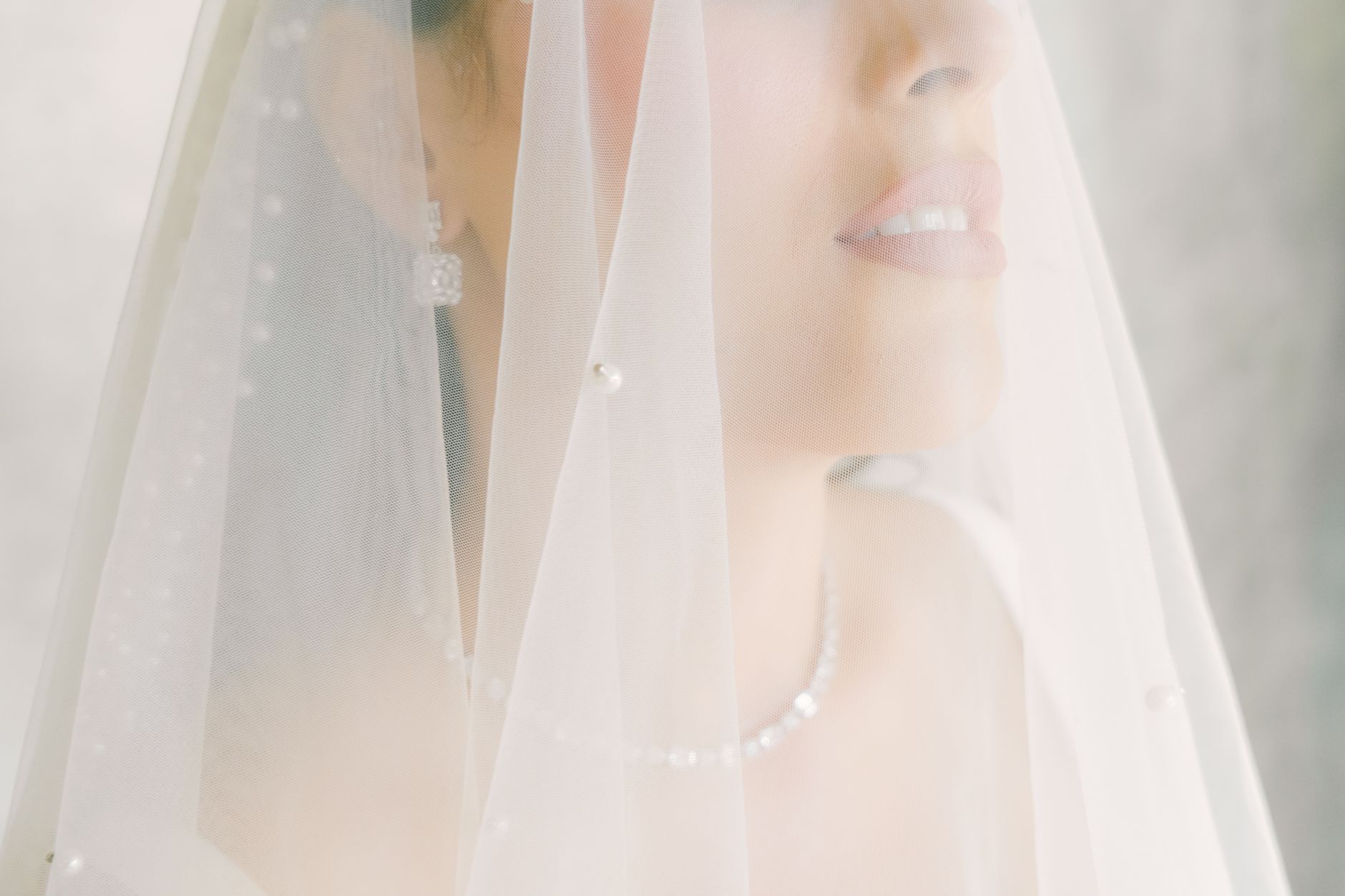
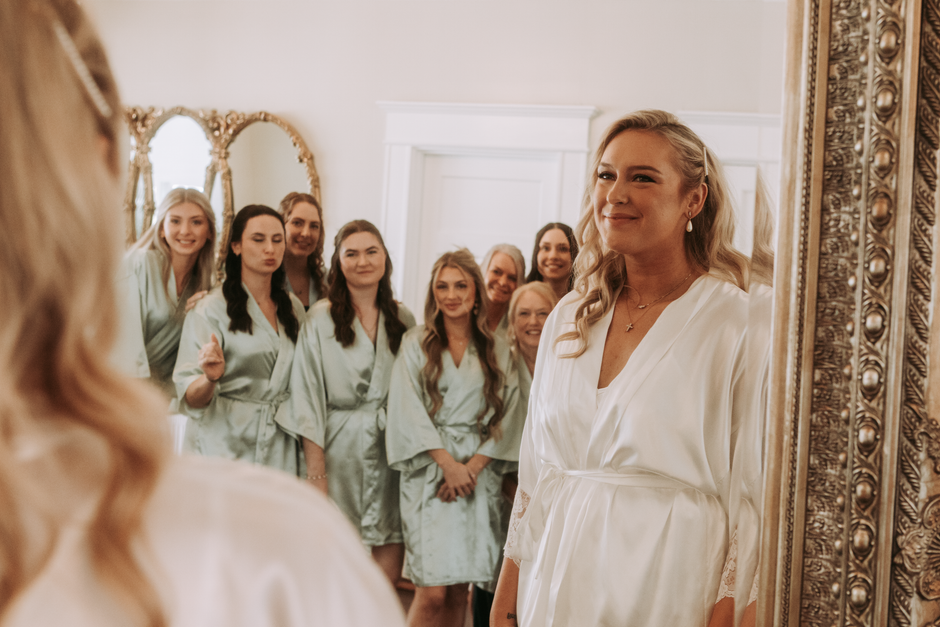
Earrings follow a similar logic but respond more to hairstyle than neckline. An updo that exposes the neck and ears is the moment for a statement earring, since there is nothing else drawing the eye in that area. Hair worn down, especially with waves or a veil, tends to hide smaller studs, so a slightly longer drop earring holds up better against that added visual noise. Sleeve and back detail matter too — a low back or an illusion lace sleeve pattern is often reason enough to skip a bracelet and let the dress carry that section of the outfit uninterrupted.
Before buying anything, it helps to try the dress and a rough jewelry sketch side by side, even if that just means holding a piece up in a mirror while wearing the dress at a fitting. Photos from that fitting are worth keeping on your phone as a reference while shopping, since jewelry that looks right in a store display case doesn't always read the same way against a specific dress and neckline.
Earrings are the easiest bridal jewelry category to get right because they work in nearly every dress scenario, and they are the piece most likely to show up clearly in close-up ceremony and portrait photography. Classic pearl drops remain the most versatile option: they read as timeless rather than trend-driven, pair with both gold and silver-toned accessories elsewhere in the look, and photograph well under both natural daylight and reception lighting. A pair of cultured freshwater pearl bridal drop earrings with cubic zirconia accents covers this exact need for around $25 to $35, and works equally well for the bride, the mother of the bride, or a bridesmaid who wants a coordinated but simpler version of the same style.
For a dress with more visual weight — heavy beading, a dramatic train, or a ballgown silhouette — a slightly larger cubic zirconia drop or chandelier earring can match that energy without looking out of place. The rule of thumb many stylists use is to scale earring size with dress formality: a simple slip dress calls for a small stud, while a cathedral-length veil and full ballgown can carry a longer, more dramatic earring without looking overdone.
A bridal necklace should feel like the exception rather than the default, since a large share of wedding dresses already have enough detail at the neckline or bodice that an additional necklace competes rather than complements. When a necklace does work — usually with strapless, sweetheart, or plain V-neck dresses — a delicate pendant or a fuller crystal collar are the two directions worth considering, and they photograph very differently.
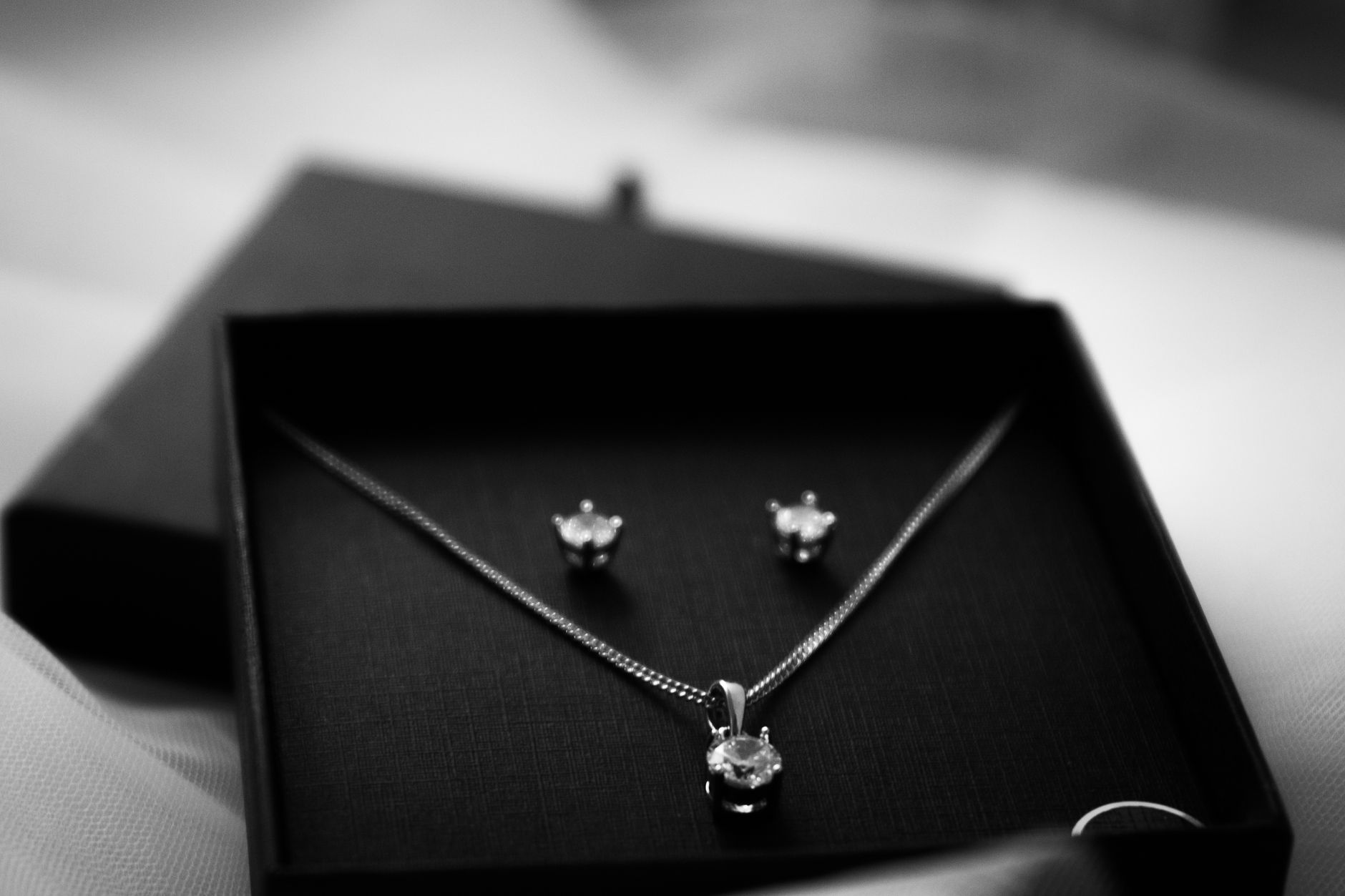
A complete matching set solves the "does this necklace go with these earrings" question in one purchase, which matters for brides who would rather not coordinate multiple separate pieces from different sellers. A 4-piece elegant crystal necklace, earring, bracelet, and ring bridal jewelry set runs around $20 to $30 and gives every visible piece of jewelry — neck, ears, wrist, and hand — the same crystal finish and metal tone, which is difficult to guarantee when shopping each category separately.
If the dress has a plunging back rather than a low front, consider a back necklace or a drop pendant that hangs down the spine instead of the traditional front placement — a detail that surprises very few guests but reads beautifully in the getting-ready and ceremony-exit photos where the back of the dress is visible for an extended stretch.
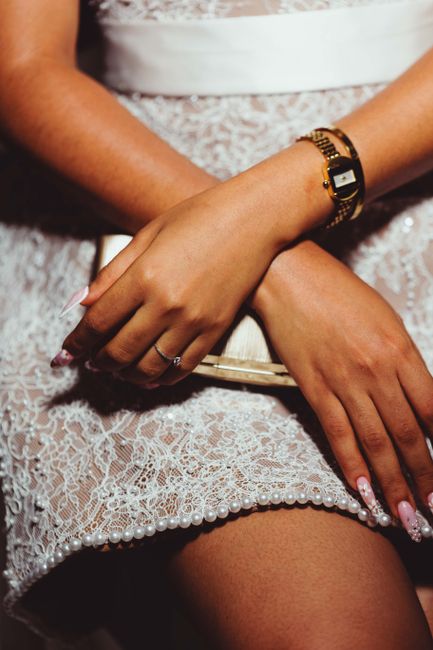
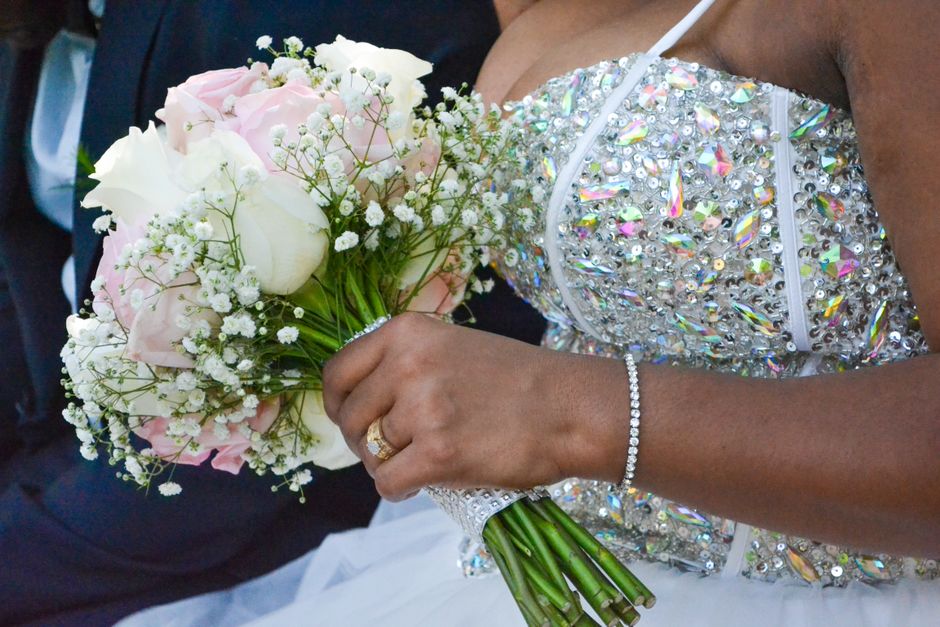
Bracelets are the bridal jewelry category most likely to get skipped, usually because brides forget how much hand and wrist detail shows up in ring exchange photos, bouquet-holding shots, and the first dance. A slim, sparkling bracelet adds polish to those specific moments without adding bulk under a dress sleeve or interfering with a watch, if the groom is wearing one and the couple wants coordinated metal tones across both of their outfits.
A cubic zirconia tennis bracelet remains the most photograph-friendly option because the continuous line of stones catches light evenly from any angle, unlike bracelets with widely spaced charms or stations. A gold-plated cubic zirconia crystal tennis bracelet built specifically for brides and mothers of the bride costs around $30 to $45 and includes an extender, which matters more than it sounds — wrist size can shift slightly with hydration and temperature over the course of a long wedding day, and a bracelet that fit perfectly during a morning try-on can feel tight by the reception.
Fit matters more for bracelets than for any other bridal jewelry category, since a loose bracelet spins around the wrist in photos and a tight one leaves a visible mark by the end of the night. Trying a bracelet on for a few hours before the wedding, not just for a few minutes in front of a mirror, is the only reliable way to catch a fit problem before it becomes a wedding-day annoyance.
For brides who would rather make one purchase decision than four, a coordinated jewelry set — necklace, earrings, bracelet, and sometimes a ring — solves the entire bridal jewelry question at once. The main advantage isn't just convenience: buying a matched set from a single listing guarantees the metal finish, stone cut, and overall style language are consistent across every visible piece, which is genuinely hard to replicate when combining separate purchases from different sellers with slightly different plating processes.
A 4-piece cubic zirconia wedding jewelry set with pendant necklace, dangle earrings, a link tennis bracelet, and an open ring covers every visible jewelry category for around $25 to $35 total, which is often less than buying even two matching pieces separately from higher-end retailers. This kind of set also works well as a bridesmaid gift, since giving each bridesmaid the identical set alongside a slightly different or more elevated version for the bride keeps the whole wedding party visually coordinated without an obvious hierarchy in photos.
The one caution with full sets is over-matching — wearing every single piece from the set at once can look more like a costume jewelry display than an intentional bridal look. Most brides get better results wearing three of the four pieces and either skipping the necklace or the ring depending on the dress neckline and the bridal hair accessories already doing visual work near the face.
Consistency in metal tone matters more than most brides expect walking into this decision. Silver, white gold, and platinum-finish jewelry should stay grouped together, and gold or rose gold pieces should stay in their own group — mixing warm and cool tones across earrings, necklace, and bracelet is one of the more noticeable style mismatches in wedding photography, even though it's an easy problem to avoid by shopping with one metal tone in mind from the start.
Budget for bridal jewelry spans an unusually wide range. Under $20 typically means base-metal plating that looks fine for a single wear but can tarnish if worn again regularly. The $25–45 range, where most of the cubic zirconia and simulated pearl pieces above sit, holds up well for the wedding day and the years of anniversary and event wear that typically follow, and photographs indistinguishably from far more expensive pieces under normal lighting. Above $150, bridal jewelry moves into genuine sterling silver, gold vermeil, or fine jewelry territory — worth considering for a piece with long-term sentimental value, like an heirloom necklace passed down after the wedding, but not necessary for earrings or a bracelet worn once.
Order bridal jewelry at least three to four weeks before the wedding date, longer if anything is being engraved or custom-sized. This buffer allows time for a return or exchange if a piece looks different in person than in photos, and leaves room for a practice run with the full outfit — dress, veil, hair, and jewelry together — before the actual wedding day arrives. For brides working with a jeweler on a custom or heirloom piece rather than a ready-made set, local jewelers can typically turn around a resize or a simple custom order faster than a fully bespoke commission, which is worth asking about directly if the timeline is tight.
Often yes, since a strapless neckline leaves open space at the collarbone that a shorter choker-length or collar-style necklace fills naturally. A long pendant can visually cut the torso and usually looks better with a higher neckline instead.
Simpler pieces generally work best, since lace already carries significant visual texture. Delicate pearl studs or a thin bracelet let the lace stay the focal point rather than competing with a bold statement piece.
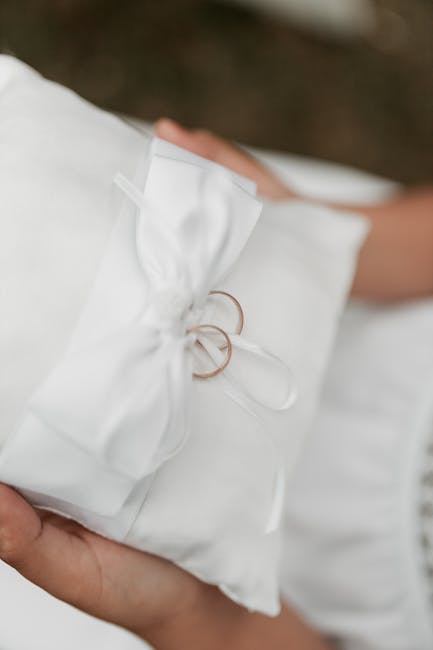
Not necessarily. Rings are typically worn in a fixed metal tone chosen well before the wedding, while other jewelry can flex slightly to match the dress and hair accessories. The main consistency rule is keeping earrings, necklace, and bracelet in the same metal family as each other, not matching the ring specifically.
Jewelry doesn't need to match the wedding's decor color palette — it needs to match the bride's other worn accessories. Silver jewelry with a gold-themed reception is common and goes unnoticed in photos, since guests are looking at the bride, not cross-referencing her earrings against the centerpieces.
A complete look — earrings, necklace, and bracelet — typically runs $50 to $120 in the cubic zirconia and simulated pearl range, which holds up well for the day and photographs the same as much more expensive pieces. Fine jewelry versions of the same categories can run several times that amount.
Three to four weeks before the wedding is a safe minimum, giving time for returns, exchanges, or a last-minute size adjustment. Buy jewelry after the dress is finalized, not before, since the neckline and detail level of the dress should guide the jewelry choice rather than the other way around.