Unique ideas


Wedding lawn game ideas solve a scheduling problem almost every couple runs into: the stretch of time between the ceremony and the reception when guests have nothing to do but stand around with a drink. Photos take longer than anyone plans for, and a silent gap in the timeline is where restless guests start checking their phones or drifting toward their cars. A few games set up on the lawn keep people occupied, mingling, and in a good mood by the time dinner is announced.
Lawn games also do something a photo booth or a playlist cannot: they get strangers talking. Guests from the couple's side and the other side of the aisle rarely have a natural reason to introduce themselves, but a cornhole match or a round of giant Jenga gives them one. That small icebreaker effect is why so many wedding planners now treat games as a standard fixture of cocktail hour rather than an optional extra, right alongside the bar setup and passed appetizers.
This guide covers the games that hold up best at a wedding specifically, not just any backyard barbecue, along with where to place them, whether renting or buying makes more sense for a single afternoon, and how weather and venue surface affect what actually works. Along the way we point to specific products worth considering if you want something ready to set up rather than assembled from scratch.
None of this requires a big budget or a professional rental company. Most of the games below cost less than a single centerpiece and can be packed into a car trunk, which makes them one of the more efficient dollars spent on guest experience anywhere in a wedding budget.
Giant Jenga is close to a default choice at this point, and for good reason. The rules take ten seconds to explain, a game only requires two players active at a time while others watch and cheer, and the visual spectacle of a five-foot tower wobbling before it collapses draws a crowd on its own. It works equally well for a six-year-old flower girl and a grandparent, which is rare among lawn games.
For a set that looks intentional rather than borrowed from a backyard bin, the Jenga GIANT Hardwood Blocks set that stacks to over 5 feet runs around $130 to $150 and is officially licensed, so the blocks are precision-cut hardwood rather than the rough pine found in cheaper knockoffs. That matters more than it sounds like it should, since uneven blocks make the tower topple early and cut games short.
Set the tower up somewhere with a flat, firm surface, since even a slight slope shortens play considerably. If your reception is on grass rather than a patio or dance floor, a plywood base or a few interlocking foam tiles underneath keeps the tower stable enough for a full game instead of a two-minute novelty.
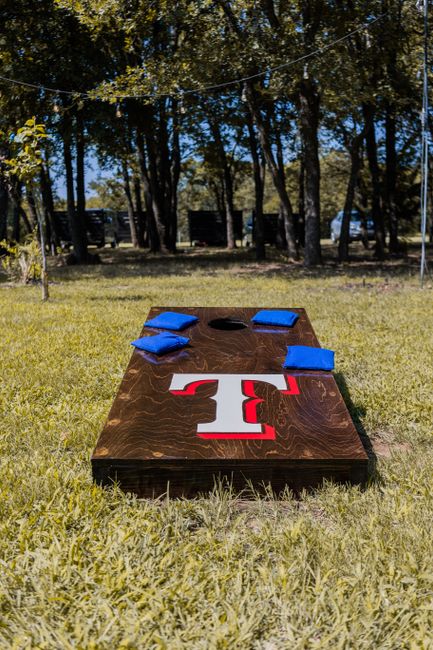
Cornhole has the advantage of being genuinely competitive rather than purely a novelty, which means guests who enjoy games will keep coming back to it throughout the reception rather than playing once and moving on. A bracket-style tournament, even an informal one announced by the DJ, can fill forty-five minutes of downtime without anyone noticing the time pass.
The GoSports Cornhole Bean Bag Toss Game Set with an aluminum frame costs roughly $70 to $90 for a full two-board set with bags included, and the aluminum frame is a meaningful upgrade over all-wood sets since it resists warping if the boards sit out overnight or get rained on before you can pack them away.
Regulation cornhole boards need about 27 feet of clear space between the two targets, which is more room than couples usually budget for game areas. If your venue is tight, a shorter informal distance still works fine for a casual crowd; just be consistent so score disputes do not become their own source of entertainment.
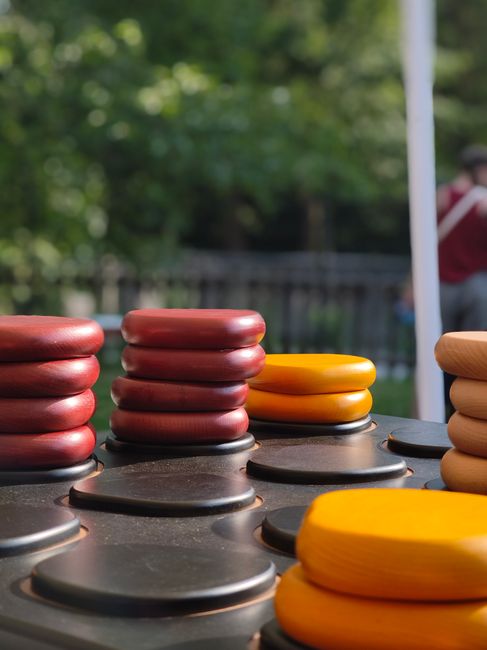
Giant Connect Four earns a spot on this list because it is the rare lawn game that appeals just as much to kids as it does to adults holding a cocktail. The format is instantly familiar, a round takes two to three minutes, and unlike Jenga or cornhole it does not require any hand-eye coordination under pressure, which makes it approachable for guests who are not naturally competitive.
The LDDAL Giant Connect 4 in a Row Game with height-adjustable frame runs about $60 to $80 and folds down small enough to fit in most car trunks, which is a real consideration if you are transporting games between a ceremony and reception site rather than setting up once and leaving them in place.
Because the pieces are lightweight plastic, this game holds up better than most on breezy days when paper score cards and light bean bags tend to blow around. It is also one of the easiest games to demonstrate from across the lawn, since the vertical grid is visible from a distance in a way a flat cornhole board is not.
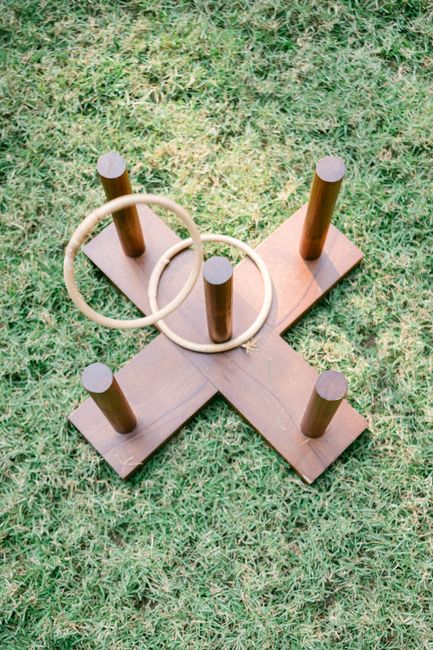
Ring toss earns its place on shorter guest lists and smaller venues where a full cornhole or Jenga setup would eat too much of the available lawn. A single ring toss stand takes up roughly the footprint of a side table, which makes it a practical choice for courtyard receptions, rooftop venues, or any space where square footage is genuinely limited.
The Westant Extra Large Ring Toss Game with 30 rings and a carrying bag costs around $40 to $55, which makes it one of the more affordable options on this list, and the beechwood construction holds up to repeated tossing better than the painted MDF stands found in cheaper sets.
Ring toss also works well as a solo activity, unlike cornhole or Connect Four, which need an opponent to be interesting. That makes it a good fallback game for a guest who arrives early or finds themselves briefly without company during a lull in the timeline.
Placement determines whether lawn games actually get used or sit ignored at the edge of the property. The strongest location is within sight of the bar or cocktail hour setup, since guests holding a drink are more likely to wander toward a game they can see than to go looking for one tucked around a corner. Line of sight from the main gathering area does more for participation than the games themselves.
Avoid placing games directly in a walking path between the ceremony and reception, since a Jenga tower or cornhole board becomes a tripping hazard once guests start moving in larger groups and low light. A dedicated corner of the lawn, ideally with some shade if the wedding falls in summer, keeps games from becoming an obstacle while still staying visible.
If your reception has a formal seating chart and assigned dinner time, consider setting games up specifically during the gap between ceremony and dinner rather than leaving them out all evening. Once dancing starts, most guests move indoors or toward the dance floor anyway, so games left out after dark mostly just need to be broken down in the dark by exhausted groomsmen.
Many couples cluster their lawn games near other cocktail-hour entertainment, such as a photo booth backdrop, so guests naturally circulate between the two rather than treating them as separate stops. Grouping activities in one general area also makes it easier for a single attendant, if you hire one, to keep an eye on both without walking the length of the venue.
For a single afternoon of use, renting can look appealing on paper, but the math often favors buying once you compare actual costs. A local party rental company typically charges $40 to $75 per game per day, plus delivery fees that frequently run another $50 to $100 regardless of how many games you rent. Renting three games for one day can easily land in the $250 to $350 range once delivery is factored in.
Buying the same three games outright, using the products referenced above, runs somewhere between $230 and $280 total, and you keep the games afterward for engagement parties, housewarmings, or simply future backyard use. The math tips further in favor of buying if you are already comfortable transporting items yourself, since that eliminates the delivery fee entirely.
Renting still makes sense in a few specific cases: destination weddings where flying games home is impractical, venues with strict move-in and move-out windows that make owning and storing bulky items inconvenient, or couples who want a wider selection of games for a single big event without committing storage space afterward.
Grass that looks perfectly flat can still cause problems for stacking games like Jenga, since even minor unevenness compounds as a tower gets taller. Testing games on the actual venue surface a day or two before the wedding, rather than assuming a flat lawn will behave like a flat floor, avoids a frustrating discovery on the day itself.
Wind is the more common problem for outdoor games than most couples anticipate. Bean bags and rope rings are heavy enough to resist a light breeze, but paper scorecards, printed rule signs, and lightweight decorative elements near a game area tend to blow away within the first hour. Weighing down any paper signage, or skipping it in favor of a chalkboard sign matched to your wedding welcome sign styling, solves this cleanly.
A brief rain delay does not have to end game time entirely. Hardwood Jenga blocks and aluminum-frame cornhole boards tolerate a quick shower better than particleboard sets, but anything left out overnight should still be dried and packed away rather than left exposed, since prolonged moisture warps wood and swells particleboard permanently. Assign a specific person, often a groomsman, to handle breakdown so games do not become an afterthought at the end of a long night.
Two to three games is enough for most guest lists under 150 people. More than that starts to compete for space and attention, and guests tend to gravitate toward whichever game already has people playing rather than spreading evenly across five or six options.
Ring toss and giant Connect Four take up the least floor space and work well for courtyard, rooftop, or garden venues where a full cornhole setup would not fit comfortably alongside cocktail hour seating and bar service.
Giant Connect Four and ring toss both adapt well to indoor use since they need less clearance than cornhole's 27-foot regulation distance. Jenga also works indoors as long as the floor is level and there is enough clearance for the tower to fall without hitting nearby furniture or guests.
Most wedding lawn games work fine self-serve, especially familiar ones like cornhole and Jenga where guests already know the rules. A simple printed or chalkboard sign with quick instructions is usually enough; a dedicated attendant is really only necessary for a large multi-station setup with a dozen or more games.
Yes, and several couples repurpose a game like giant Connect Four or Jenga for this exact reason, having guests sign a block or ring before playing. If that is the goal, buy an extra unused set specifically for signing so gameplay does not wear away the ink over the course of the reception.
Owned games typically get a second life at engagement parties, housewarmings, or future backyard gatherings, which is part of why buying tends to outperform renting on cost. Some couples also offer them to close friends or family as a small parting gift after the wedding rather than storing bulky game sets long-term.