Wedding Memorial Ideas to Honor Loved Ones Who Have Passed


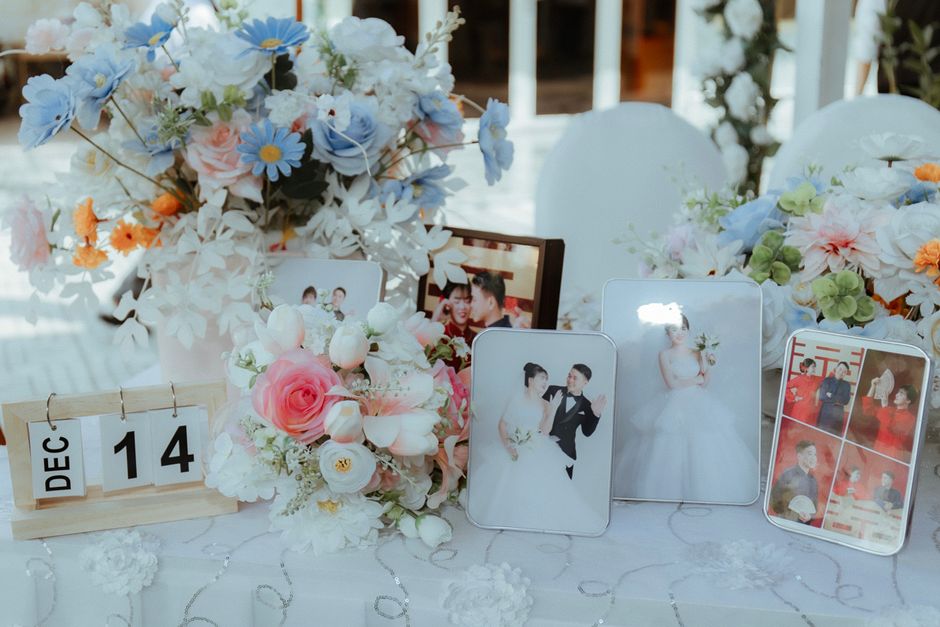
Wedding memorial ideas give couples a way to include the people who shaped them but can't be there to see them marry. A grandmother who taught you to bake, a father who should have walked you down the aisle, a best friend who would have given the loudest toast of the night: their absence is felt most sharply at the moments meant to gather everyone you love in one room. A thoughtful tribute doesn't erase that absence, but it gives it a place to sit, so it isn't quietly carried by one person all evening.
The good news is that honoring someone at a wedding doesn't require turning the celebration into a second funeral. The most effective tributes tend to be small, specific, and easy for guests to notice without feeling obligated to stop and mourn. A framed photo near the guest book, a single empty chair in the front row, a locket tucked into a bouquet, or a candle that stays lit through dinner can say a great deal while leaving room for the joy the day is supposed to hold.
What works for one family can feel wrong for another. Some couples want a visible memory table that invites guests to share stories, while others prefer something private that only the immediate family recognizes. The loss might be recent and raw, or it might be decades old and folded comfortably into family lore. Each of those situations calls for a different approach, and there's no single correct answer.
This guide walks through the most popular ways to remember loved ones at a wedding, from reception displays to ceremony moments to quiet personal gestures, with practical details and a few well-reviewed products that make each idea easier to pull off.
Deciding How Visible Your Tribute Should Be
Before picking specific wedding memorial ideas, it helps to decide how public the tribute should feel. Think of it as a spectrum. At one end are open, shared displays like a memory table or a spoken tribute during the ceremony, which invite every guest into the act of remembering. At the other end are private gestures like wearing a grandfather's cufflinks or sewing a scrap of a mother's dress into a hem, which may go unnoticed by everyone except the couple.
Neither end is better. Open tributes work well when the person who passed was widely known to the guest list, or when the loss affects a large part of the family. Private gestures often suit recent losses, when a public moment could overwhelm a grieving parent or sibling, or when the person was important to the couple but less familiar to most guests.
It's worth talking to close family before finalizing anything. A widowed parent may love the idea of an empty chair in the front row, or may find it too painful to sit beside. A sibling might want to read something, or might dread being asked. Checking in ahead of time avoids surprising someone with an emotional moment they weren't ready for, and it often surfaces meaningful details the couple hadn't considered, like a favorite hymn or a phrase the person always said.
Many couples end up combining one visible element with one or two private ones. That balance lets guests acknowledge the loss without the whole celebration revolving around it.
Setting Up a Memory Table at the Reception
A memory table is one of the most recognizable wedding memorial ideas, and for good reason. It gives guests a clear, gentle place to pause, look at photos, and remember without interrupting the flow of the evening. Most couples place it near the entrance, beside the guest book, or close to the gift table, where people naturally slow down anyway.
The basic setup is simple: a small table or console, framed photos of the people being honored, a sign explaining the display, and a few personal touches. Those touches are what make the table feel specific rather than generic. A grandfather's fishing hat, a well-worn recipe card in a grandmother's handwriting, a favorite book, or a small vase of the flowers someone grew in their garden all tell guests something about who that person was.
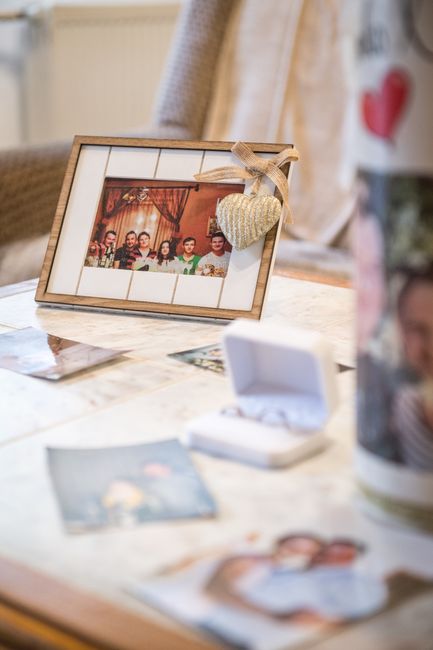
A clear sign ties everything together. The BINCUE 3D In Loving Memory Wedding Sign is a 20 by 10 inch wooden plaque with raised "In Loving Memory" lettering and five small clips along the bottom for hanging photos, usually running around $25 to $35. The built-in clips mean you can skip individual frames entirely and create a simple, cohesive display with snapshots, which also makes it easy to add a photo a relative brings on the day.
Reserving a Seat in the Ceremony
An empty seat in the front row is one of the most quietly powerful ways to honor a parent or grandparent. It places the person exactly where they would have been sitting, and it communicates their absence without anyone needing to say a word. Guests walking down the aisle to find their seats will notice it, and most will understand immediately.
The seat can be marked in several ways. Some couples simply lay a single long-stem flower or the person's favorite hat on the chair. Others drape a shawl, jacket, or folded flag across the back. A framed photo propped against the chair back is another common choice, though it can be knocked over outdoors, so secure it with floral tape or a small easel if the ceremony is on grass.
Let your ushers know the seat should stay empty; a clear sign also keeps a late guest from sliding into it.
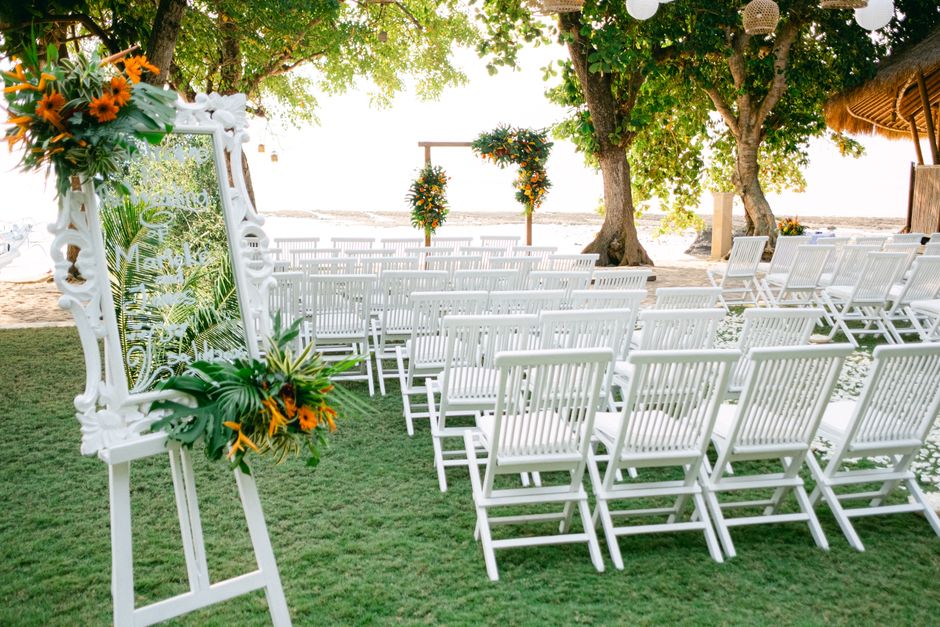
For a soft, fabric option, the Reserved in Loving Memory Canvas Chair Sign measures 15 by 53 inches and attaches with adjustable straps, so it drapes across a chair back and seat like a banner, typically priced around $15 to $25. Because it's canvas rather than rigid wood or acrylic, it won't blow over at an outdoor ceremony, and it folds flat for storage afterward if you want to keep it as a keepsake or reuse it at a future family event.
Carrying Them Down the Aisle
Some of the most personal wedding memorial ideas are the ones that travel with the couple. A photo locket attached to a bridal bouquet means a loved one is, in a very literal sense, walking down the aisle alongside you. It's a gesture that most guests won't see up close, which makes it a good fit for couples who want something meaningful but private.
Bouquet lockets typically clip onto the stems or tie on with ribbon, and they hold one or two tiny photos. Print the photos at a local pharmacy or photo kiosk in wallet size, then trim them to the locket's shape. Some couples add a small scrap of fabric from a loved one's clothing, a pressed petal, or a lock of hair instead of a photo. For more styles and ways to attach them, our guide to wedding bouquet charm ideas covers the full range.
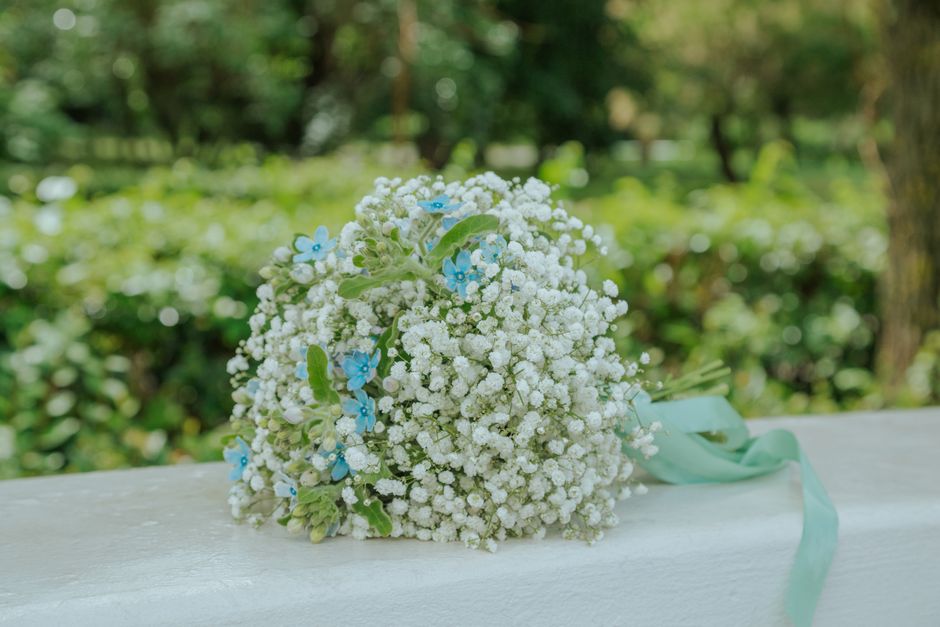
The Wedding Memory Locket Charm for Bouquet is roughly three inches long with a clip-on top, so a florist can attach it in seconds on the morning of the wedding, and it generally sells for around $15 to $25. Because it opens fully, it works for a photo or a tiny keepsake, and it becomes a lasting heirloom that can be passed to a sibling or child for their own wedding later.
Grooms and partners can carry tributes too. A small photo pinned inside a suit jacket, a boutonniere wrapped in fabric from a father's tie, or engraved cufflinks with a grandfather's initials all serve the same purpose without drawing attention.
Lighting a Candle in Their Honor
A memorial candle adds warmth to a tribute in a way that photos alone can't. Many couples light a candle at the start of the ceremony, sometimes during a short spoken acknowledgment, and then move it to the reception so it stays lit through dinner and dancing. Others place it on the memory table from the start and let it glow quietly all evening.
The candle lighting can be woven into existing rituals. Couples who are planning a unity candle or sand ceremony sometimes light a separate memorial candle first, then use its flame to light the unity candle, symbolizing that the people they've lost are part of the new family being formed. Our roundup of wedding unity ceremony ideas has more options that pair well with a remembrance moment.
Venue rules matter here. Many venues, especially historic buildings and outdoor spaces, restrict or ban open flames. Battery-operated candles sidestep that entirely, and they don't need anyone to relight them if a breeze blows through or someone bumps the table.
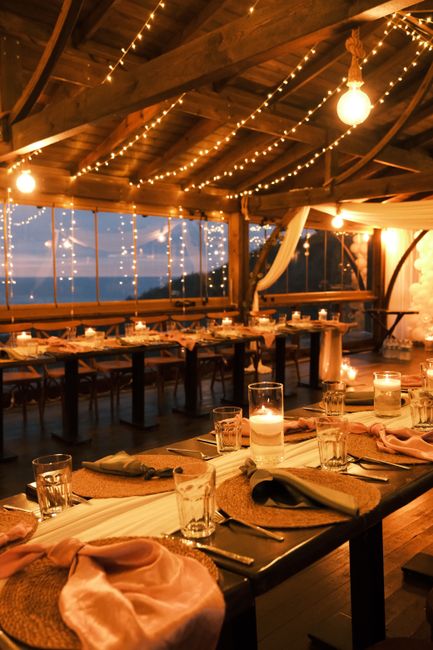
The TNW1 Wedding Remembrance Lantern stands about 9.6 inches tall, runs on three AAA batteries, and carries a message about a candle burning in loving memory, usually costing around $25 to $35. The attached handle lets you set it on a table, hang it from a shepherd's hook at the ceremony, or even suspend it from a tree branch at an outdoor venue, and it doubles as a keepsake for a widowed parent after the wedding.
Including Them in the Ceremony Words
Sometimes the most meaningful tribute is simply saying a name out loud. Many officiants include a brief acknowledgment near the start of the ceremony, something along the lines of recognizing that certain people are deeply missed today and are held in the hearts of everyone present. It takes less than a minute, and for many families it's the moment they remember most.
If a longer tribute feels right, consider asking a family member to read a poem, scripture passage, or short piece of writing that the person loved. A moment of silence works well too, particularly at larger ceremonies where a spoken tribute might feel too personal to share with everyone. Keep it brief: 30 seconds of silence feels meaningful, while two minutes can feel heavy and uncomfortable for guests.
Written tributes are another option, and they're less emotionally demanding for the couple. A line in the ceremony program listing the names of those being remembered lets guests acknowledge the loss privately while they wait for the processional. Our guide to wedding program ideas includes layouts that leave space for a short memorial section.
Quiet, Personal Tributes
Not every tribute needs to be seen. Some of the most treasured wedding memorial ideas are the small, private details that only the couple and a few family members will ever notice.
Heirlooms are the most common example. Wearing a grandmother's earrings, a mother's veil, or a father's watch keeps them physically close throughout the day. A piece of fabric from a loved one's wedding dress, shirt, or favorite scarf can be sewn into the lining of a gown or suit, wrapped around bouquet stems, or used to cover buttons on a jacket.
Food can carry memory too. Serving a grandmother's famous pie alongside the wedding cake, printing a beloved family recipe on the menu, or offering a late-night snack that a parent always made on special occasions all bring someone into the room in a way guests can literally taste. A small card explaining the dish's origin turns it into a gentle story rather than a somber moment.
Balancing Grief and Celebration
A wedding is a celebration, and most people who have passed would want it to feel like one. The goal of a tribute is to make space for grief without letting it take over. A few practical guidelines help keep that balance.
Limit the number of visible tributes. One memory table plus one ceremony moment is plenty for most weddings. Stacking a reserved chair, a candle lighting, a spoken tribute, a slideshow, and a memory table can leave guests feeling like they attended a memorial service with dancing afterward.
Pay attention to timing. Emotional tributes land best early in the ceremony or during a quiet stretch of the reception, not in the middle of toasts or right before the first dance. Placing a memory table near the entrance lets guests visit it on their own schedule.
Consider who is grieving most. For a recent loss, the couple may be steady enough to enjoy a visible tribute while a surviving spouse or parent is not. Offer those family members a role that feels comfortable, like lighting the candle or choosing the photos, rather than asking them to speak in front of everyone.
Wedding Memorial Ideas FAQ
- How do you honor a deceased parent at a wedding?
Common ways to honor a deceased parent include reserving their seat in the front row, carrying their photo in a bouquet locket, wearing a piece of their jewelry, and having the officiant speak their name during the ceremony. Many couples also ask a close relative, such as a grandparent or sibling, to take on part of the parent's traditional role, like the walk down the aisle.
- Where should a memory table go at a wedding reception?
The best spot is somewhere guests naturally pause, such as near the entrance, beside the guest book, or next to the gift or card table. Avoid placing it right next to the dance floor or bar, where it can get crowded or bumped. Good lighting matters too, so guests can actually see the photos after dark.
- Is it appropriate to have a memorial at a wedding?
Yes. Honoring loved ones who have passed is widely accepted and often appreciated by guests. The key is keeping the tribute proportionate: one or two thoughtful elements acknowledge the loss without shifting the tone of the celebration. Check with close family members first, especially if the loss is recent.
- What do you write on a wedding memorial sign?
Popular wording includes "In Loving Memory," "Forever in Our Hearts," and "We Know You Would Be Here Today If Heaven Weren't So Far Away." Some couples list names and relationships under the heading, while others keep the sign simple and let the photos speak. Short phrases read more clearly from a distance than long poems.
- How many people should be included on a memory table?
Include anyone the couple feels was important to them, which for most families means close grandparents, parents, siblings, or very close friends. Many couples include between two and eight people. If the list grows much longer, consider a photo board or a single framed collage so the table doesn't feel crowded.
- Can you have a memorial candle if the venue bans open flames?
Yes. Battery-operated LED candles and lanterns look very similar to real flames, especially in the evening, and they're permitted at almost every venue. They also stay lit all night without supervision, which makes them a practical choice for outdoor weddings where wind would extinguish a real candle.