Wedding Sign Ideas: Ceremony to Reception Signage


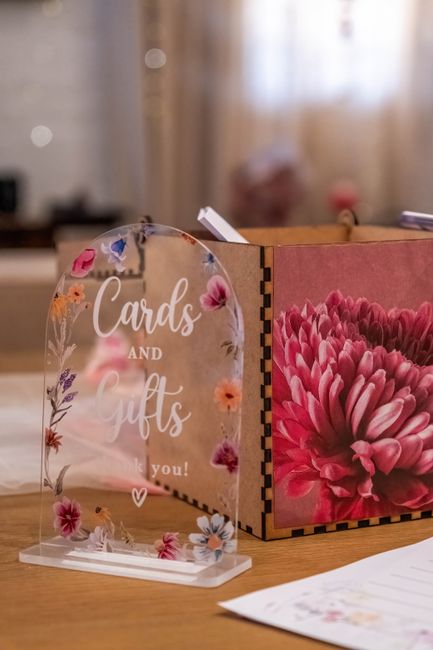
Wedding sign ideas go well beyond the welcome board at the entrance. Signs direct guests, set the tone, answer questions before anyone asks them, and give photographers small details to capture. A few well-placed signs can replace a lot of announcements from the DJ or the officiant.
The challenge is that signage tends to be bought one piece at a time. A welcome sign here, a bar menu there, a chair banner from a different shop. Without a plan, the fonts, colors and materials clash, and the room ends up looking assembled from leftovers instead of designed.
A better approach is to decide on a short list of signs first, choose one material and one lettering style, and then buy or order everything together. That keeps the look consistent and usually saves money on shipping and rush fees.
This guide walks through the signs worth having at each stage of the day, from the aisle to the dessert table, along with materials, sizing, placement and budget advice so you can build a cohesive set without overbuying.
Start With a Signage List
Before browsing, write down every place a guest might pause and wonder what to do. Most weddings need between six and ten signs, and the exact mix depends on your venue and format.
The usual candidates are a welcome sign, a ceremony sign for the processional, seat or reserved signs, a seating chart, a bar or signature drink menu, a buffet or dessert label, a guest book or card box sign, and a send-off sign. Outdoor venues may also need directional signs for parking or restrooms.
Rank them by how much confusion they prevent. A card box sign saves gifts from being left on a chair. A bar menu shortens the line because guests know what is available before they reach the bartender. A seating chart is essential at plated dinners and optional at casual receptions.
Then decide which signs are worth personalizing. Custom lettering makes sense for the welcome sign and bar menu, which sit in the most photographs. Generic phrases such as "Cards" or "Reserved" can be bought ready-made without anyone noticing.
If you already have a welcome sign planned, our guide to wedding welcome sign ideas covers wording and layout in more detail, so you can spend this planning time on the rest of the list.
Ceremony Signs for the Processional
Ceremony signs are the most photographed small signs of the day, mostly because children carry them. A flower girl or ring bearer walking down the aisle with a hand-lettered board gives guests a laugh and gives the photographer a clear, framed moment.
The classic wording is some version of "Here comes the bride." Playful variations include "Daddy, here comes your girl" or "Here comes the sun." Keep the text short, since guests only have a few seconds to read it as the child passes.
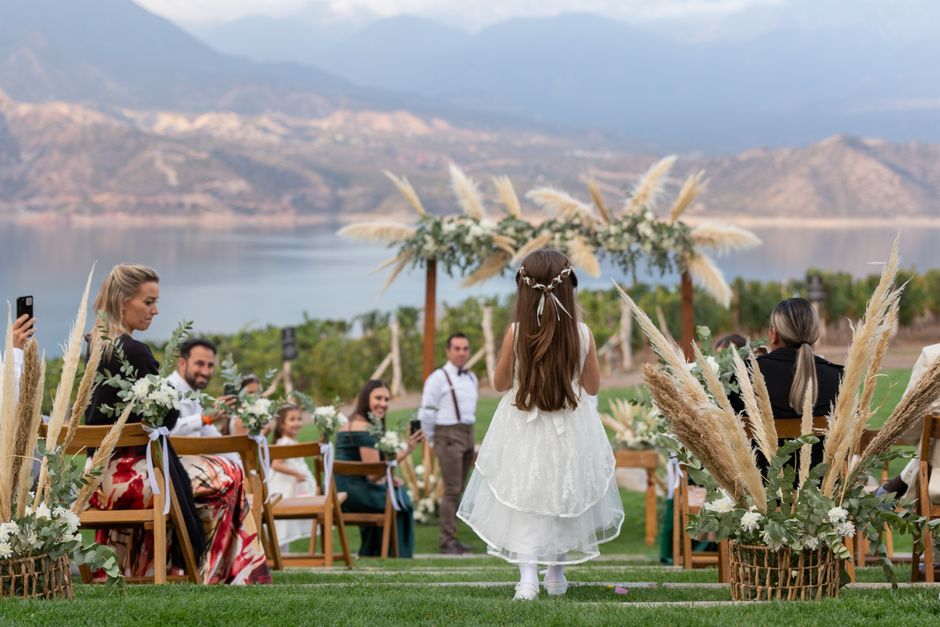
A reliable pick is the Rustic Here Comes the Bride Sign with Ribbon, a 12 by 6 inch wood-grain board with painted lettering and a satin ribbon for hanging or carrying, for around $12 to $20. The size is intentionally larger than a ring pillow so the sign reads clearly in video and photos taken from the back of the aisle.
Practical details matter more than wording here. Make sure the sign is light enough for a small child to hold for the full walk, and use a ribbon loop so it can hang from the neck if they get tired. Rehearse once so the child knows to hold it facing the guests rather than facing their own feet.
If you plan an unplugged ceremony, a sign at the entrance asking guests to put phones away is just as useful. See our unplugged ceremony sign ideas for wording that sounds friendly rather than strict.
Chair Signs and Reserved Seating
Chair signs do two jobs at once. They mark the couple's seats at the sweetheart table or the ceremony altar, and they reserve spots for family so late arrivals do not take them.
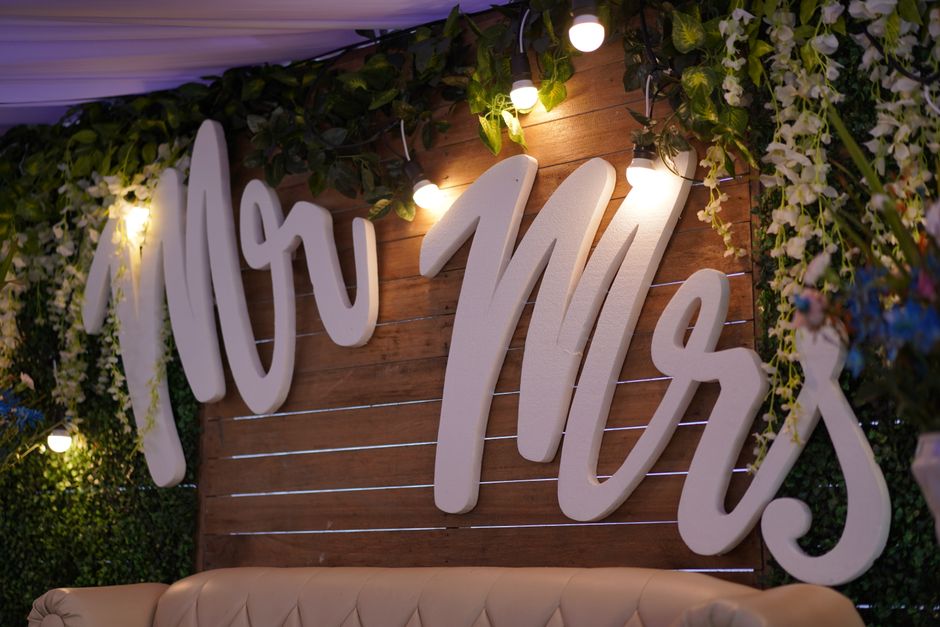
For the couple, a pair of matching chair signs is a classic detail. A set of Mr & Mrs hexagon wood chair signs hangs from the chair back with attached ribbon and needs no assembly beyond unpacking. Laser-cut wood and metal versions both tend to hold up better outdoors than paper or cardstock signs, which can warp or fade if the reception runs into evening dew or direct sun.
Reserved signs for family are simpler. A small card on the first two rows with the words "Reserved for family" is enough, and it is worth assigning someone, such as an usher, to check that the rows are clear before guests arrive. Print the card on thick stock so it stands up to a breeze.
Memorial seating is a quieter use of signage. Many couples reserve a chair for a grandparent or loved one who has passed. For a soft fabric option, the Reserved in Loving Memory Canvas Chair Sign measures 15 by 53 inches and attaches with adjustable straps, so it drapes across a chair back and seat like a banner, typically priced around $15 to $25. Because it is canvas rather than rigid wood or acrylic, it will not blow over at an outdoor ceremony, and it folds flat afterward if you want to keep it.
Tell the officiant or a family member about the memorial chair beforehand so it can be acknowledged briefly, or leave it unspoken if that suits the family better.
Bar and Signature Drink Signs
A bar sign earns its place by shortening the line. When guests can read the menu before they reach the bartender, the wait drops and the questions drop with it. It also lets you highlight a signature cocktail that has personal meaning, such as the couple's first-date drink.
Keep the menu short: two signature cocktails, beer, wine and a non-alcoholic option. Add a one-line description for each cocktail so guests know whether it is sweet, sour or strong. Putting the names of the couple or the story behind each drink in small type adds personality without crowding the sign.
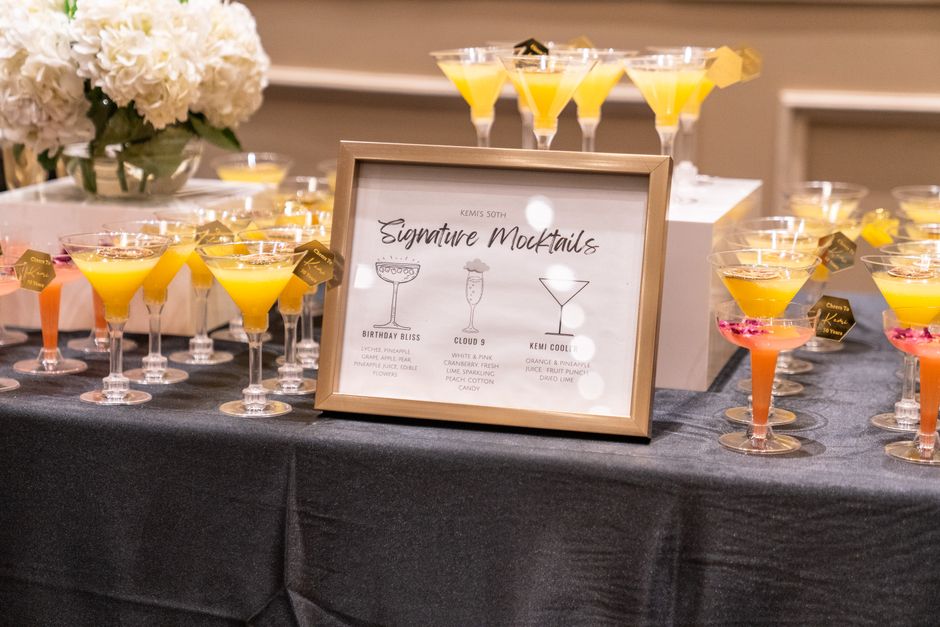
For a ready-made option, the Personalized Signature Cocktail Bar Menu Sign is an acrylic sign you can customize with your own drink names and descriptions, which saves you from designing and printing something yourself. Check the proof carefully before ordering, since a misspelled cocktail name is the kind of error you only notice once the sign is on the bar.
If you prefer a simpler look, the Signature Cocktail Acrylic Wedding Sign comes in a black option and suits a modern bar setup. Whatever style you choose, look closely at customer photos to confirm the lettering is readable at the distance your guests will stand.
Place the sign at eye level on the bar or on a small easel beside it, never flat on the counter where glasses and napkins will cover it. For wording ideas and layout examples, our wedding bar sign ideas guide goes into more depth.
Buffet, Dessert and Candy Table Signs
Food stations are where signage quietly prevents problems. Labels tell guests what each dish is, flag common allergens, and stop the awkward guessing that slows a buffet line. At a dessert table, a small label on each item also helps guests with dietary restrictions choose without asking.
Use the same lettering style as your bar sign so the reception reads as one design. Short labels work best: the dish name, and a short tag such as "vegan," "gluten-free" or "contains nuts" if relevant. Avoid long descriptions, because guests are holding plates and moving.
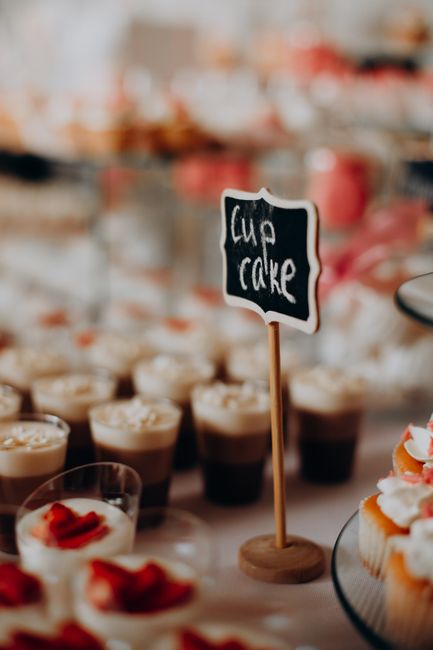
A set of acrylic wedding buffet and dessert signs runs around $18 to $25 and covers labeling for both the candy table and a nearby dessert display, which is a nice way to keep the signage style consistent across both stations.
Keep font sizes large enough to read from three or four feet away. A common mistake is sizing labels for a close-up photo rather than for the guest actually standing at the table. If your caterer provides their own labels, ask to see them in advance so you can decide whether to replace them with a set that matches the rest of the room.
Choosing Materials and Lettering
Material sets the mood of your signage more than any other choice. Clear or frosted acrylic suits modern ballrooms and garden venues, and the transparent surface lets flowers show through behind the lettering. Wood suits rustic barns and outdoor ceremonies, and it tends to survive wind and damp better than paper. Canvas and fabric are soft and light, which makes them good for banners and large chair signs.
Paper and cardstock are the cheapest option and work well indoors for small labels. They struggle outdoors, where wind curls the edges and humidity warps the surface. If you use paper outside, mount it on foam board or place it in a frame with glass or acrylic.
Lettering matters just as much. Pick one script font for headings and one clean sans-serif for details, then use them everywhere. Mixing three or four fonts is the fastest way to make a room feel cluttered. White or gold on clear acrylic, black on wood and dark ink on cream cardstock are all safe combinations.
Contrast is the thing to protect. A beautiful sign that nobody can read from five feet away has failed at its job. When in doubt, print your design at full size on plain paper, tape it to a wall and step back to check legibility.
Sizing, Stands and Placement
Most sign problems come from size and position, not design. A good rule is to match sign size to viewing distance. Signs read at arm's length, such as buffet labels, can be small. Signs read from several feet away, such as a welcome board or seating chart, should be at least 18 by 24 inches.
Stands matter as much as the sign. A tabletop easel suits small acrylic and framed prints, while a wooden floor easel holds a large welcome sign or seating chart. Test the stand with the sign on it, because a heavy board on a lightweight easel will tip in the first breeze. Our wedding easel ideas guide compares the options for indoor and outdoor use.
Place signs where guests naturally pause: at the entrance, at the start of a line, and beside the thing the sign describes. Keep them at eye level, away from glare, and out of the path of foot traffic where they might be knocked over.
Finally, assign someone to set up and collect the signs. Give them a printed list with each sign, its location and its stand, and take a photo of the finished layout before the day. That way nothing is forgotten at the venue and everything comes home afterward.
Wedding Sign Ideas FAQ
- How many signs do I need for a wedding?
Most weddings use six to ten signs. A typical set includes a welcome sign, a ceremony sign, seating or reserved signs, a seating chart, a bar menu, buffet or dessert labels, a card box sign and a send-off sign. Smaller or casual weddings can drop the seating chart and ceremony sign without anyone noticing.
- What is the best material for wedding signs?
It depends on the venue. Acrylic suits modern and garden settings, wood is sturdy outdoors and in rustic venues, and canvas works for large banners. Paper is the cheapest but needs foam board or a frame outdoors, since wind and humidity warp it quickly.
- How far in advance should I order wedding signs?
Order custom signs eight to ten weeks before the wedding. That leaves time for proofs, corrections and shipping delays. Ready-made signs can be bought closer to the date, but ordering a month ahead still avoids rush fees and gives you time to test stands and placement.
- How do I make my wedding signs match?
Choose one material, one script font and one detail font, then use them on every sign. Stick to two or three colors from your palette. Ordering all custom signs from the same seller at the same time also keeps the lettering and finish consistent.
- How big should wedding signs be?
Match the size to viewing distance. Small labels at the buffet can be around 5 by 7 inches, while welcome signs and seating charts read best at 18 by 24 inches or larger. Print your design at full size before ordering to check that it can be read from a few feet away.
- Can I reuse wedding signs after the wedding?
Yes. Acrylic and wood signs store flat and can be reused for showers, anniversaries and parties. Fabric signs fold small. Many couples hang their welcome sign or Mr and Mrs chair signs at home as keepsakes, so choosing a durable material pays off well beyond the wedding.